Western governments and defence planners are scrambling to reduce their dependence on SpaceX’s Starlink after a series of interventions by Elon Musk in the Ukraine conflict exposed the vulnerability of relying on a single, privately owned communications system for national security. The episodes have triggered urgent investment in sovereign satellite infrastructure across Europe and Canada, and raised the question of whether Western governments were naive to let one billionaire hold so much strategic power.
The sovereign satellite scramble
European officials are now expressing serious concern about their structural dependency on a network whose ultimate authority rests with a single individual whose political alignments and business interests may not always coincide with those of Washington’s traditional allies.
The unease runs from national capitals to Brussels. Finland and Ukraine announced a support package worth about $336 million this week to help build a satellite network being pursued by Finnish firms ICEYE and Nokia, with Ukraine taking part and services targeted for 2028, Starlink operates more than 11,000 satellites against roughly 650 for OneWeb, rivals such as OneWeb and Telesat still depend on SpaceX’s Falcon rockets to launch, and Starlink terminals cannot connect to other networks, so a switch would mean replacing thousands of terminals. Tom Withington of the Royal United Services Institute told the WSJ that no single technology will replace Starlink and that combining several will take time.
The latest round of throttling hardened that mood. According to AFP, EU foreign-policy chief Kaja Kallas said the European Defence Agency had mapped the “critical capabilities” Europe lacks and that the gaps must be filled “as soon as possible”. Latvian Prime Minister Andris Kulbergs said Starlink “is the key for Ukraine actually to fight or fight back”, while Dutch Prime Minister Rob Jetten said he had discussed with French President Emmanuel Macron how Europeans could provide more such services.
In the European Parliament, the liberal Renew Europe group wrote to EU officials that Europe “must not leave it up” to Musk and Trump to decide whether Ukraine can defend itself. French Foreign Minister Jean-Noël Barrot has separately accused Musk of using X to try to influence debate in European democracies, according to The Week.
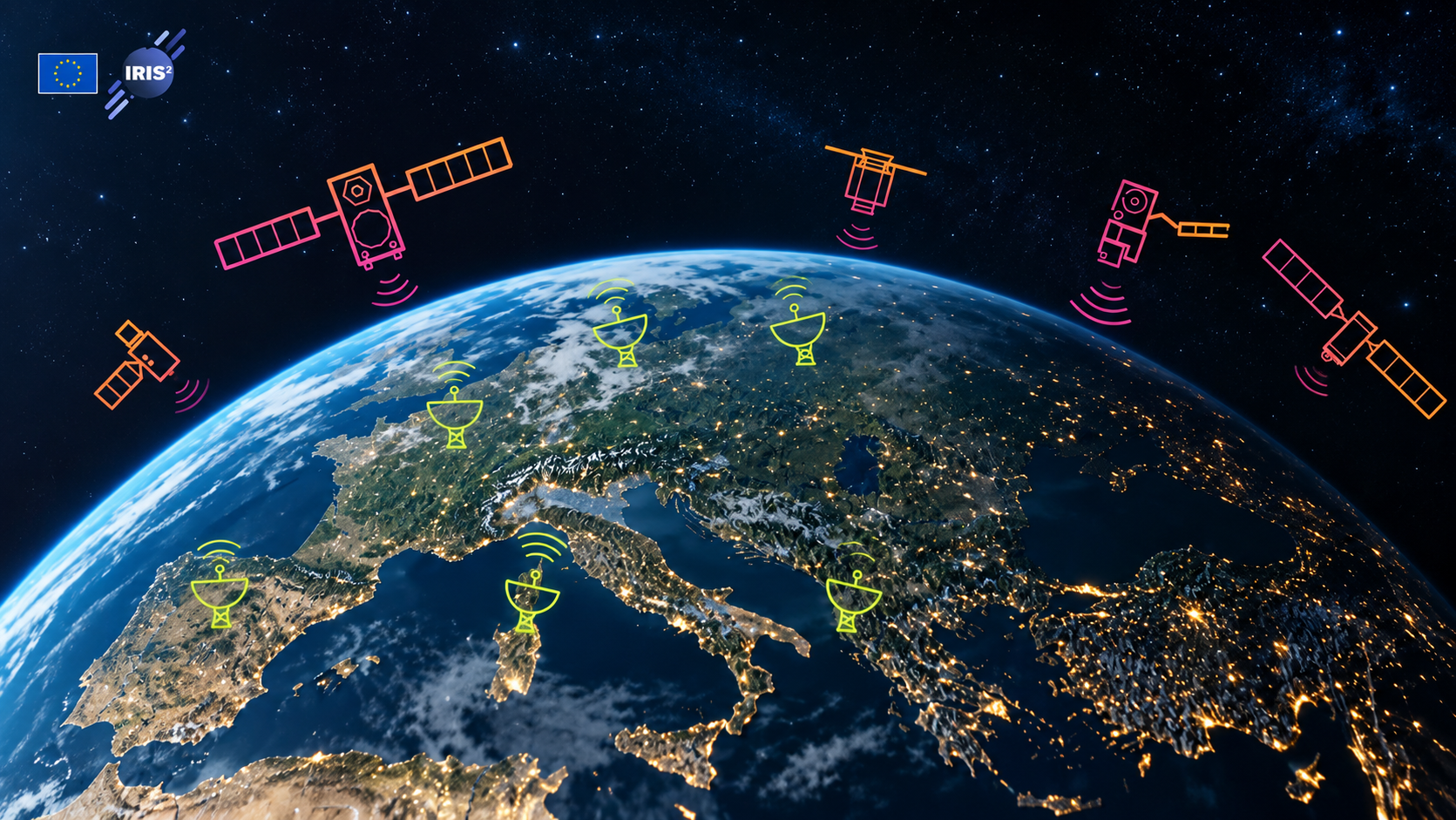
Within the European Union, the conversation has shifted from cautious interest to urgency. Iris², the EU’s flagship constellation, is led by the SpaceRISE consortium of European operators SES, Eutelsat and Hispasat. It will reportedly serve government uses including border and maritime surveillance and secure communications for embassies and military missions. The EU has committed about $2.7 billion in public funding, and Defence and Space Commissioner Andrius Kubilius has pushed partners to accelerate the programme, with first launches now targeted for 2029 and initial services around 2030.
Brussels is also bridging the gap with interim measures. GOVSATCOM, which pools existing member-state satellite capacity, has been operational since January 2026. Kubilius says eight satellites from five countries already provide “military and governmental, secure and encrypted” links “operated in Europe, under European control.”
Industry is moving too. Eutelsat, which operates the OneWeb low-orbit network, expects capital expenditure of roughly $1.3 billion in FY2026–27, up from $665 million, as it renews its constellation. Commission officials, however, caution that Iris² is not a like-for-like replacement for Starlink, and Starlink is unlikely to be displaced soon.
SpaceX’s role in Ukraine: lifeline and liability
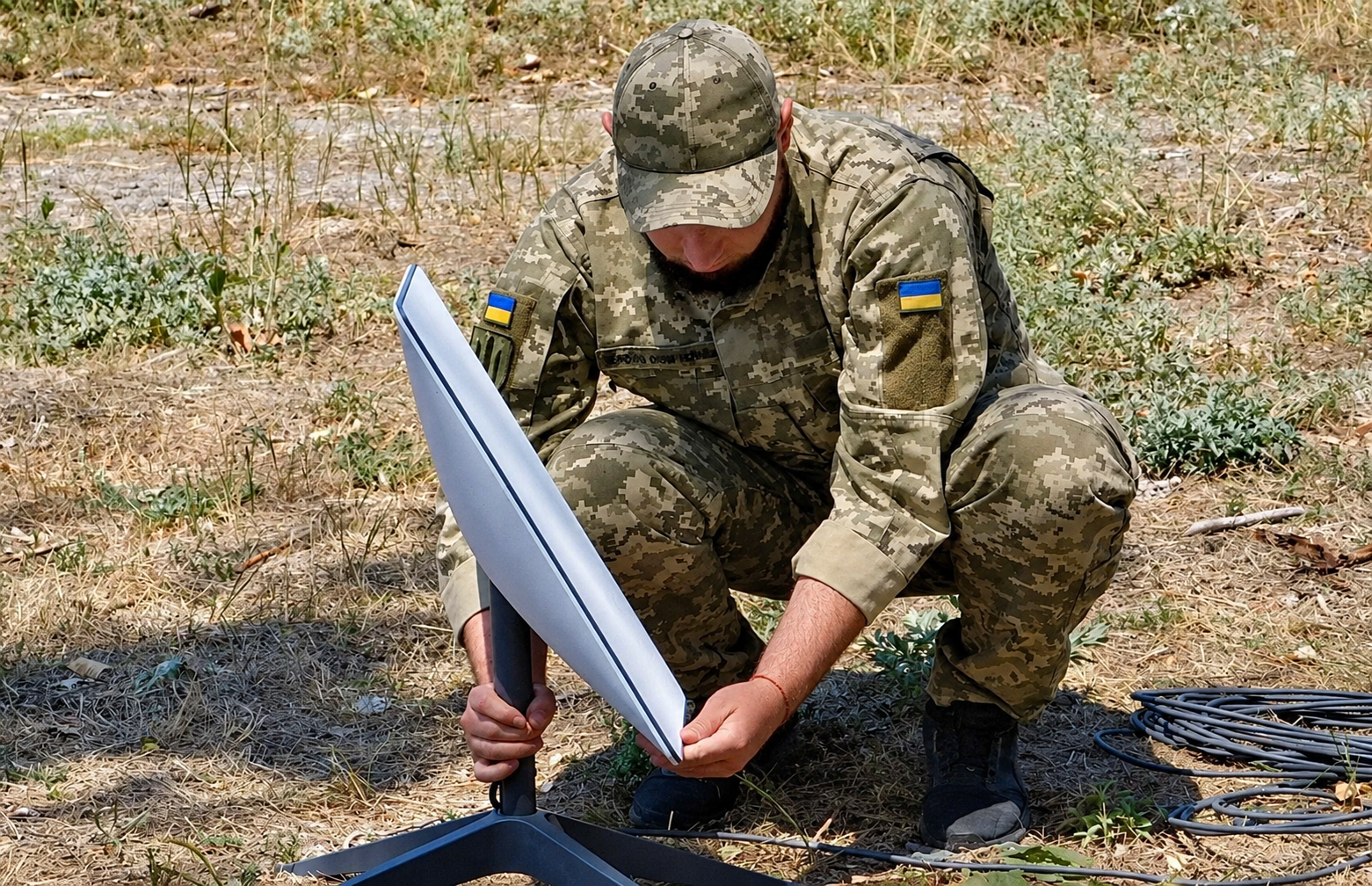
Two days into the conflict, Elon Musk agreed to supply Ukraine with Starlink technology. The gesture was widely celebrated. Starlink terminals kept Ukrainian forces connected despite Russian cyber and jamming efforts – a “gamechanger”, in the words of one senior Ukrainian official – letting commanders stay in contact with dispersed units, share intelligence, and conduct decentralised operations even when ground infrastructure was destroyed or mobile networks knocked offline. SpaceX spent tens of millions of its own money sending equipment to Ukraine, according to Musk. According to the Centre for Security Studies at ETH Zurich, around 50,000 Starlink terminals were in use across Ukraine in 2025.
Yet the arrangement carried structural risk from the outset. Ukraine’s dependence traces to the first hours of the war, when the KA-SAT system previously favoured by Kyiv was hit by a cyberattack just before Russia’s invasion. With no alternative, Kyiv placed its communications in the hands of a private American entrepreneur. Those Ukrainians involved in bringing Starlink to their country “originally overlooked the significance of Elon Musk’s personal control” over vital communications.
The interventions that changed everything
The political fault lines emerged early. In September 2022, Musk ordered employees to cut Starlink service over areas of Ukraine during a counteroffensive to retake territory from Russia. Ukrainian forces were left in a communications blackout: surveillance drones went dark and long-range artillery units, which used Starlink to help aim, floundered. In making the call, Musk took “the outcome of a war into his own hands”, one source told Reuters.
The most dramatic episode concerned Crimea. Walter Isaacson’s 2023 biography of Musk recounts a night when Ukrainian submarine drones, packed with explosives, slid through the Black Sea toward the Russian fleet anchored at Sevastopol – and went dead in the water as their Starlink terminals lost signal near the Crimean coast. Musk feared Ukraine was about to drag him into what he believed could escalate into a nuclear exchange. Isaacson’s account was subsequently clarified: Musk had never enabled Starlink service within 100 kilometres of the Crimean coast, and when the Ukrainians asked him to turn it on to enable their attack, he refused.
Musk himself was unapologetic. “There was an emergency request from government authorities to activate Starlink all the way to Sevastopol,” he posted on X. “The obvious intent being to sink most of the Russian fleet at anchor. If I had agreed to their request, then SpaceX would be explicitly complicit in a major act of war and conflict escalation.”
More recently, tensions resurfaced. Musk said Kyiv had violated the terms of SpaceX’s commercial Starlink service by using it for offensive drone strikes, as President Volodymyr Zelensky confirmed that Starlink and Starshield operations had been restored to speeds available before recent restrictions. A Ukrainian drone travelling at more than 100 mph had suddenly lost its satellite connection, its mission interrupted – not by enemy fire or equipment failure, but by a restriction on a commercial network controlled by Musk’s SpaceX.
Musk’s defence – and the murky question of control
Musk mounted a robust, if contradictory, public defence. In a post on X, he wrote: “Using Starlink, a civilian commercial service, for offensive drone strike operations is explicitly a violation of the terms of use. Ukraine military violated Starlink terms of service and used it for offensive drone strikes to kill people.” He was simultaneously defiant about Starlink’s indispensability: “Starlink is critical to the defence of Ukraine, as it is the only system that cannot be jammed or blown up, at least for now. Were Starlink to be turned off, the Ukrainian front line would collapse immediately. This is NOT a threat, it is simply a statement of fact.” He also insisted that SpaceX “has done more to defend Ukraine than any private company on Earth BY FAR.”
Musk also invoked his stated rationale for the Crimea episode: “Starlink was not meant to be involved in wars. It was so people can watch Netflix and chill and get online for school and do good peaceful things, not drone strikes.”
On who controls the military-grade Starshield system, Musk deflected to Washington. He said the US government, not SpaceX, was responsible for restrictions that disrupted Ukrainian battlefield communications, and that decisions over Starshield were ultimately controlled by President Donald Trump. Secretary of State Marco Rubio, however, said the United States and Trump had “nothing to do” with Starlink’s decisions after Ukrainian claims that speed restrictions had been imposed. Senator Adam Schiff in his response commented: “Either the President was lying or Musk was lying, but the decision to slow down satellite speed and access has life or death consequences for Ukraine.”
The distinction between Starlink, a commercial service, and Starshield, designed for government and defence use, did little to reassure European allies watching the episode unfold.
Europe’s answer moves from planning to deployment
The European Commission and the SpaceRISE consortium have signed an implementation agreement to roll out Iris², adding 66 satellites in low Earth orbit and bringing the main constellation to 348 satellites. Once operational, it will provide sovereign, secure and highly reliable connectivity for European governments, defence and security forces, and emergency services across Europe.