Libya’s eastern parliament has ratified a 2019 maritime agreement with Turkey, giving Ankara a diplomatic win in its dispute with Greece over Mediterranean sea borders and gas. The European Union immediately rejected the pact as “null and void”.
The House of Representatives, which backs military commander Khalifa Haftar, voted unanimously on Tuesday (October 20), according to spokesman Abdallah Bliheq. It also repealed its 2020 resolutions rejecting the deal and cutting ties with Ankara. With the vote, both of Libya’s rival power centres now support the agreement, which the Tripoli government of then-leader Fayez al-Sarraj signed in November 2019.
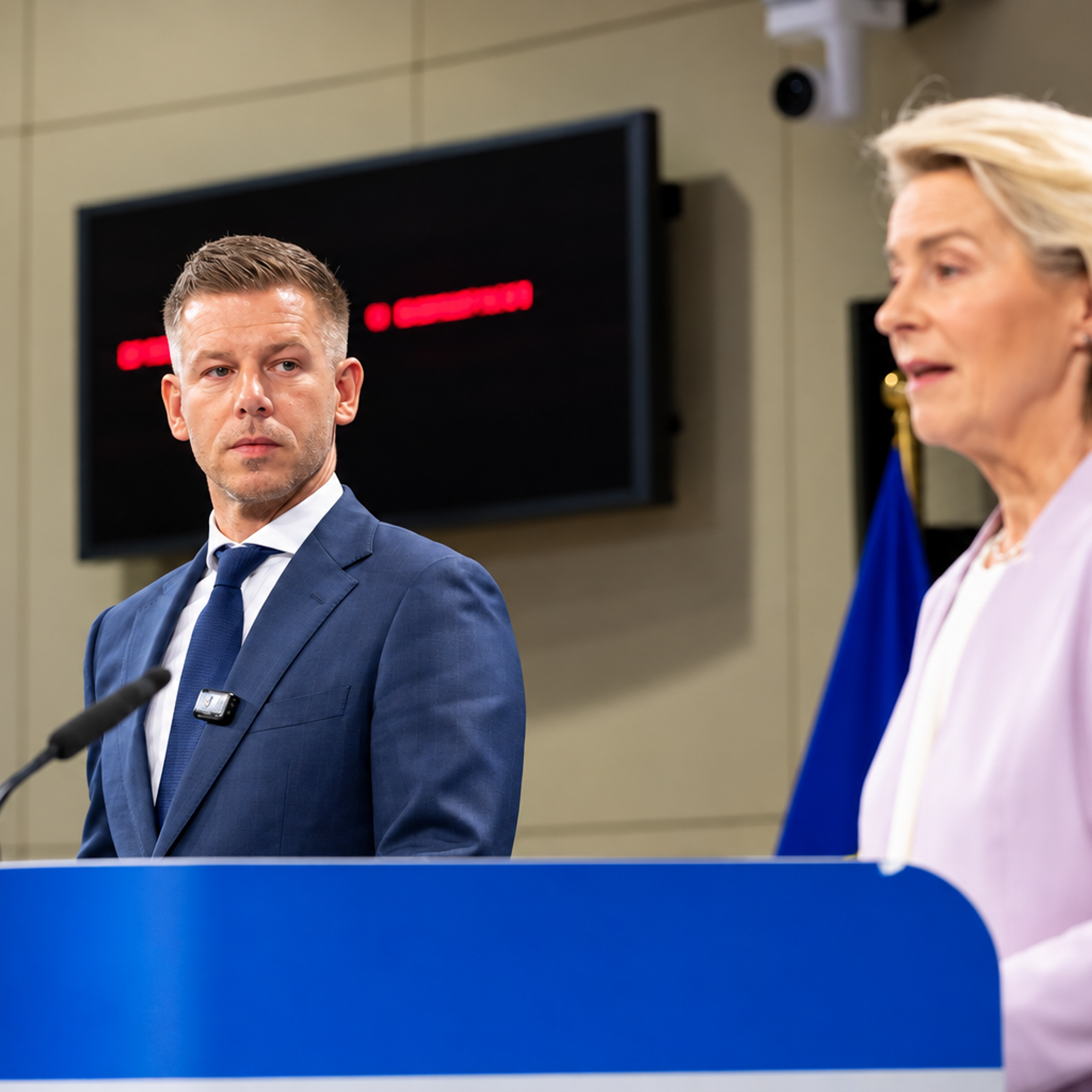
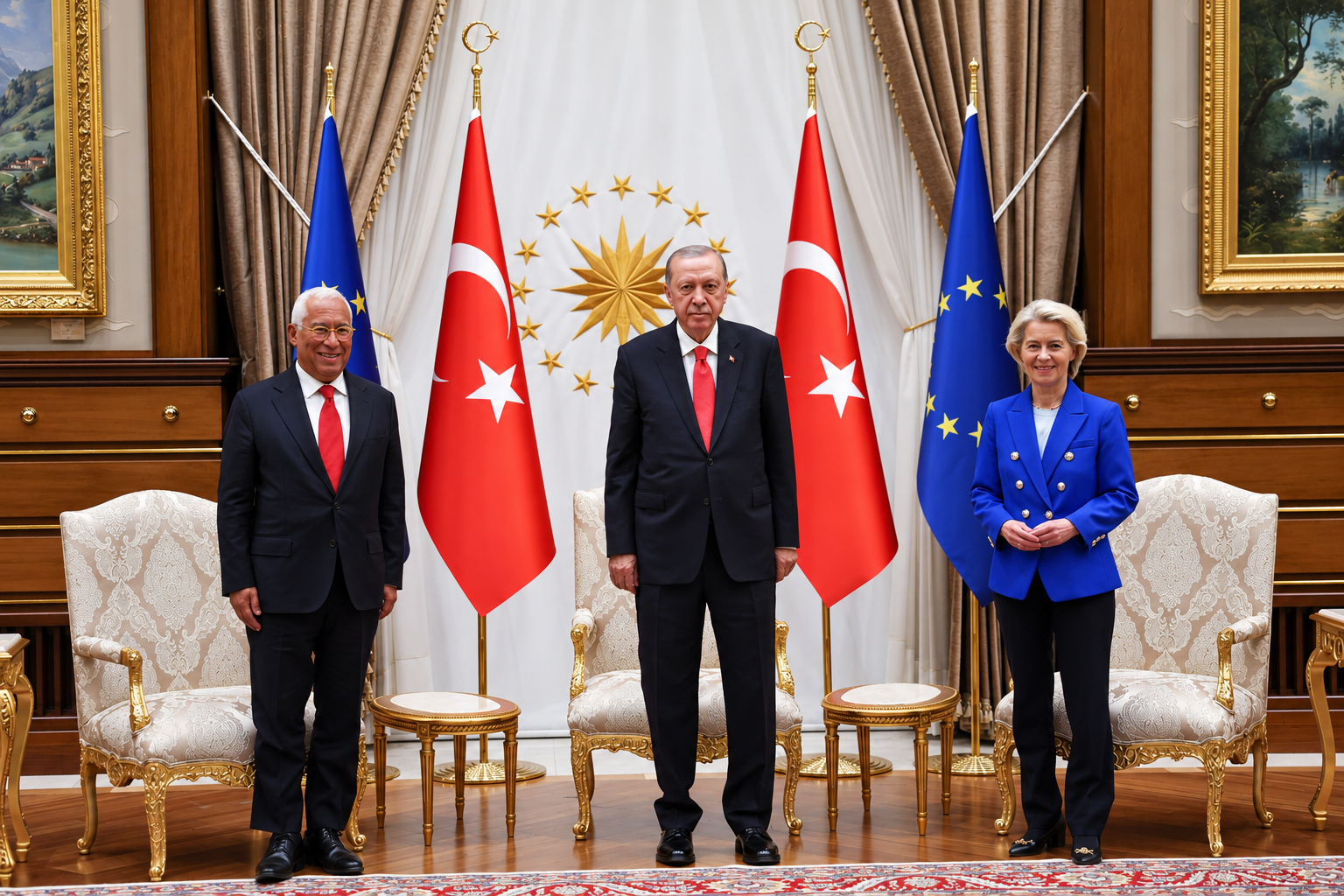
European Commission President Ursula von der Leyen and European Council President António Costa said the EU’s position is unchanged. They argued the deal infringes the sovereign rights of third states and violates the Law of the Sea, and reaffirmed solidarity with Greece and Cyprus. EU foreign policy chief Kaja Kallas later issued a formal statement on behalf of the bloc. Turkey welcomed the vote. Presidential communications director Burhanettin Duran called it a step forward in bilateral ties and said Ankara would keep defending its interests under its “Blue Homeland” doctrine.
A reversal in the east
Libya remains split between the UN-recognised government in Tripoli, led by Prime Minister Abdulhamid Dbeibah, and an eastern administration aligned with the House and controlled by Haftar and his family. Their forces hold most of the country’s territory and oilfields.
The east opposed the memorandum from the start. As recently as December 2025, parliament speaker Aguila Saleh, seen as close to Cairo, called it illegitimate and non-binding, though open to renegotiation. Days earlier, Haftar had met Egypt’s president in Cairo to begin maritime demarcation talks outside Turkish auspices. Saleh was ousted earlier this month, which Reuters says helped clear the way for the vote.
Haftar’s son Saddam, deputy commander of his forces, welcomed the ratification as a way to protect Libya's economic interests. Turkish Foreign Minister Hakan Fidan phoned both Saddam Haftar and Dbeibah to thank them, a sign Ankara has moved from backing one side to courting both. Fidan dismissed criticism of the deal, calling the ratification a formality because it was already in effect for Turkey.
The dispute behind the deal
Greece, Turkey and Cyprus have never agreed on sea borders in the eastern Mediterranean, and the stakes rose after major gas discoveries over the past decade. The core question is whether islands generate their own maritime zones. Greece says they do under the UN Convention on the Law of the Sea (UNCLOS). Turkey never signed the treaty and argues that small islands should not carry the same weight as a mainland coastline, and that borders should follow “equitable” principles. The flashpoint is Kastellorizo, a Greek island about two kilometres off Turkey's coast.
Turkey packages this stance as “Blue Homeland”, a doctrine that claims broad sea zones in the Black Sea, the Aegean and the eastern Mediterranean, and rejects full maritime zones for Greek islands near its coast. A Turkish naval officer coined the term in 2006, and it entered official policy in October 2018, when then-Defence Minister Hulusi Akar unveiled a map of the claimed areas. In November 2019, Turkey put the doctrine into practice by signing the memorandum with Tripoli, drawing a sea line between the two countries’ coasts that cuts across waters south of Crete. The line overlaps areas claimed by Greece, Cyprus and Egypt.
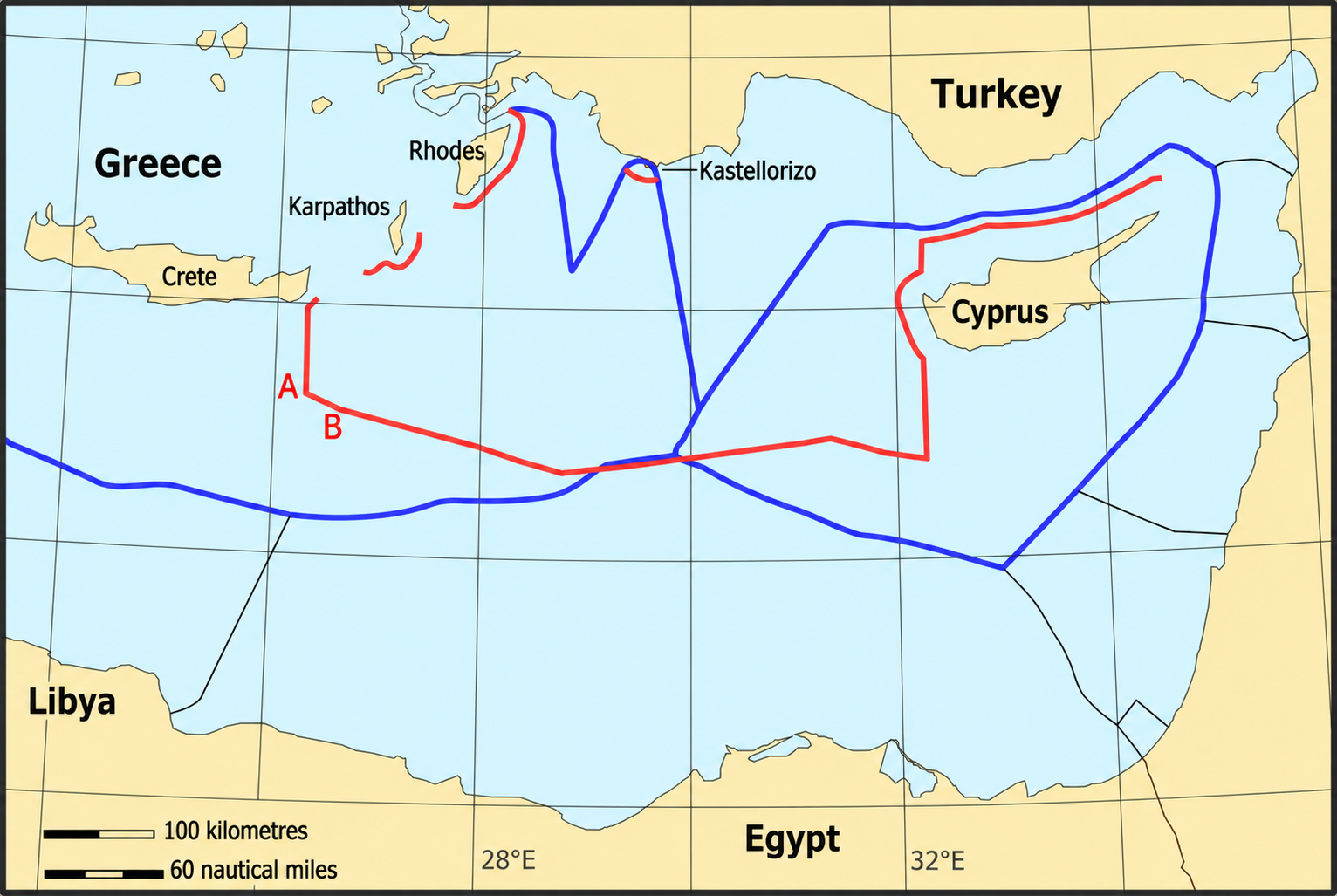
France, Egypt, Greece and Cyprus condemned the deal within weeks. The European Council said in 2019 that it could not produce legal consequences for third states. In 2020, Greece and Egypt answered with an agreement in Cairo that partially demarcates an exclusive economic zone between them, with the remaining lines to be settled through consultations.
Athens, Cairo and the limits of lobbying
Greece’s Foreign Ministry called the vote a unilateral parliamentary act without legal basis, saying Turkey and Libya lack opposite or adjacent coasts that could justify dividing the sea. Egypt followed on October 21, calling the memorandum “null and void” and saying the vote has no legal effect on Cairo. Its Foreign Ministry argued the deal infringes Egypt’s continental shelf and exclusive economic zone, conflicts with its declared maritime boundaries and breaches UNCLOS. Israel also condemned the ratification on October 21. The vote also stings because it came from the eastern camp Egypt has long treated as a partner on its western border.
Before the vote, Athens lobbied Egypt, Israel and the United Arab Emirates, all with ties to Haftar’s camp, according to Middle East Eye. The effort failed. Cairo and Abu Dhabi have both warmed to Ankara in recent years, and Israel was reportedly weighing its own interests in Libya. Egypt also reportedly asked Washington last year to block ratification, without success. The same outlet cites a single anonymous Libyan source who claims the Trump administration agreed with Turkey on a wider plan to unite Libya under one government, with the ratification as one step. Neither Washington nor Ankara has confirmed this, and there is no evidence the United States backed the vote.
What comes next
Ratification settles no boundary, since a bilateral deal cannot bind third states. But it shifts the politics. Greece had argued the pact lacked legitimacy because eastern Libya rejected it; with both Libyan power centres now behind it, that argument is harder to make. Because Turkey is not a party to UNCLOS, there is no compulsory forum to rule on the dispute, so it will likely play out through naval patrols and diplomacy.
Seabed activity is the nearest test. Turkey has previously issued Navtex maritime notices for cable-laying south of Rhodes and east of Crete, in waters covered by the memorandum, and Greece has answered each with its own. Surveys for the Great Sea Interconnector, the planned Greece-Cyprus power link, could resume soon, with contractor Nexans having asked Athens for authorisation. Analyst Jalel Harchaoui of the Royal United Services Institute has argued the vote could open the way to a larger Turkish military presence in eastern Libya.
In the European Parliament, President Roberta Metsola told a Greek MEP raising the issue that “we share your concerns.” In Athens, the concern is Turkey’s reported plan to write its maritime claims into domestic law. Foreign Minister George Gerapetritis warned that such unilateral steps would carry only domestic validity, have no international application, and shatter the recent calm between the two NATO members.