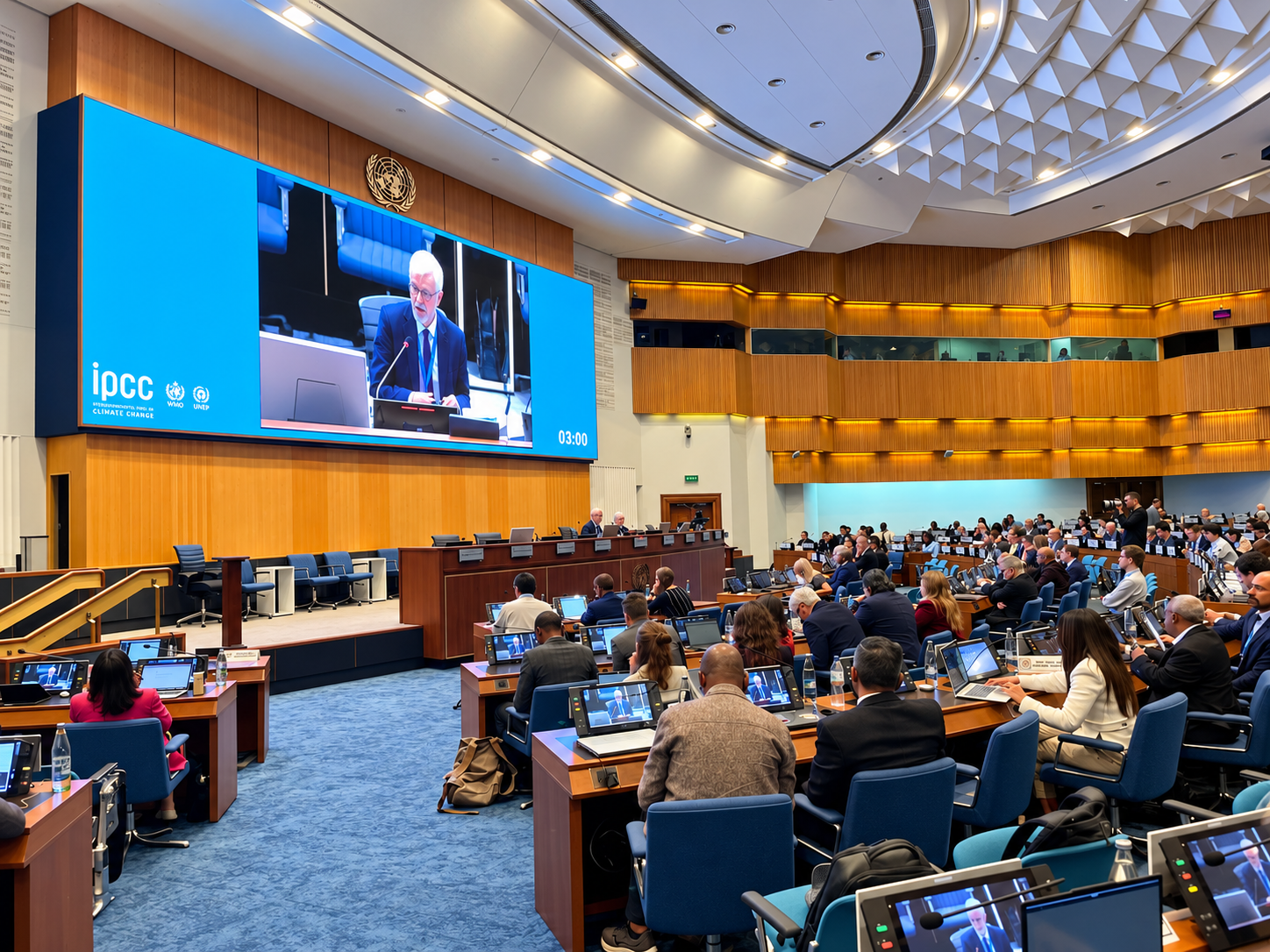
The 65th plenary session of the Intergovernmental Panel on Climate Change (IPCC), the United Nations body of scientists that reviews climate research for governments, has failed. The meeting, held in Ethiopia's capital, Addis Ababa, drew about 334 delegates, including 225 panel members representing 115 countries. Due to differences between governments, the meeting could not agree on publication dates for its next set of IPCC major reports and budgets. Since 2024, IPCC meetings have failed to settle these two crucial matters. Delegates were also due to approve records of earlier meetings and discuss other matters, including how the panel might use artificial intelligence.
The sixth consecutive failure puts global climate reports at risk of arriving after the end of the current “stocktake”, a five-year review process the UN undertakes to assess how governments have progressed in meeting their commitments under the 2015 Paris Agreement. The second stocktake is currently underway. The IPCC publications serve as a policy benchmark for the stocktake reviews. The ongoing stocktake concludes in 2028 with Conference of the Parties 33 (COP33), and the IPCC reports could be used for the review if they are out by then.
However, the IPCC meeting ended in deadlock on both the publication schedule and the budget. Chair Jim Skea suspended it on Friday evening (October 16), saying it would no longer be inclusive to continue because many developing-country delegates had already left. The IPCC says it will reconvene at the “earliest opportunity” but has set no date. Indeed, many considered this meeting the last realistic chance to finalise the decisions.
What is at stake
The IPCC, established in 1988 under the UN’s weather and environment agencies, does not conduct its own research. Instead, hundreds of volunteer scientists assess thousands of published studies, and governments then approve the summaries line by line. The result is the scientific reference that countries rely on when setting climate policy. Its seventh assessment cycle, known as AR7, will produce three reports: the first on the physical science of climate change, the second on its impacts and how societies can adapt, and the third on how to cut the greenhouse gas emissions that cause warming.
The reports are expected to inform the second “global stocktake”, which starts at COP30 in November 2026 in Turkey and concludes at COP33 in 2028, assessing countries’ collective progress toward the goals of the 2015 Paris Agreement and helping shape their next round of climate commitments. The first stocktake, completed in 2023 at COP28 in Dubai, relied on the previous IPCC cycle. That summit ended with countries committing for the first time to “transitioning away from fossil fuels” in energy systems. Delays to the IPCC’s assessments could leave negotiators without the latest scientific evidence needed to evaluate progress and strengthen climate action. IPCC Chair Skea has warned that reaching the 2028 target will depend on a decision by year-end.
Two camps, one calendar
The current disputes between the two camps come down to the reports release dates. The IPCC report co-chairs prefer that all three reports be approved by mid-2028. A rival proposal, put forward by India and Saudi Arabia, would delay the impacts report to April 2029 and the emissions report to July 2029, after the current stocktake ends. India, Kenya, Russia, and Saudi Arabia were among the loudest voices pushing for later dates. China, Saudi Arabia and India also pushed back strongly on aligning the reports with the stocktake, according to Climate Home News. Their argument is about capacity: developing countries, they say, need more time to prepare, review and approve such large reports. That is a real concern. The reports run to thousands of pages, and many governments have small teams to scrutinise them.
On the other side are many developed countries and small island states, nations on the front line of rising seas. Bill Hare, who heads the research group Climate Analytics, says most countries across regions and income levels back a stocktake-aligned schedule, including the least developed countries. The Netherlands warned that publishing after the stocktake would sharply reduce the reports’ relevance to policy. Vanuatu, a Pacific island nation, told delegates that every year of delay costs frontline communities.
Marshall Islands climate envoy Tina Stege, whose Pacific nation sits barely above sea level, said it was “a travesty that a handful of countries continue to delay the IPCC’s reports.” Greenpeace East Asia’s Zhe Yao said that failing to decide serves those who want to hold back climate action, adding that “climate vulnerable countries cannot wait.” Supporters of a faster timeline also note that the stocktake can draw on other scientific sources. China said the reports didn't need to be tied to it, and Kenya said publishing afterwards wouldn't mean science couldn't inform policy.
Funding squeeze behind the standoff
The deadlock also has a money problem. The IPCC says it needs about $ 40 million to complete AR7. Contributions in 2025 were $ 6.43 million lower than in 2023. By early July this year, only 16 countries and organisations had given, totalling $3.4 million. At 2025 funding levels, the IPCC’s trust fund would run dry by the end of 2028.
The United States, historically its biggest donor, has not contributed since 2024. Countries also failed to approve budgets for 2026 and 2027. Delegates from several countries said two governments threatened to block any budget unless their conditions were met, putting even already agreed activities at risk. India, Saudi Arabia and Russia objected when Skea asked delegates to approve the 2026 and 2027 budgets to keep work going. India and Saudi Arabia have also argued that parts of the budget favoured one timeline option.
What scientists are doing?
The authors have kept writing. Nearly 120 of them signed an open letter pledging to continue and warning that the world “should not have to face” the second stocktake without the new reports. More than half of the authors are from developing countries, Hare noted, so many are working without certainty about their schedule.
IPCC’s Skea called the outcome a profound disappointment but insisted the scientific work is healthy. Climate advocates are less sanguine. Angela Churie Kallhauge of the Environmental Defense Fund, a US advocacy group, warned that without the science countries risk making decisions in the dark as they prepare their next climate plans. The IPCC has not yet said when it will meet again. If the three IPCC reports are not published before COP33 in 2028, countries could miss the latest environmental data and policy prescriptions that could help them decide their future course of action.