Russia and Ukraine have agreed to pause fighting in a shattered, occupied city on the Dnipro where about 2,000 people are cut off from food, water and electricity. The White House says the deal was brokered not by diplomats or generals but by the US first lady Melania Trump.
The White House said on Friday (October 23) that Melania Trump had “successfully secured” a localised ceasefire in Oleshky, in the Russian-occupied Kherson region of southern Ukraine. Both Moscow and Kyiv have confirmed that a humanitarian operation is coming, and officials on both sides had said in recent days that agreement was close.
What was agreed
In its statement, the White House said both sides had agreed to halt military operations in the city to allow humanitarian aid deliveries and preparations for the evacuation of civilians. The first lady’s office described the pause as “temporary”, and it is unclear how long it will last.
The White House statement says that the ceasefire would begin on October 29, while Ukraine’s top negotiator told the Associated Press that the truce would begin on October 27, two days before the aid mission starts on October 29.
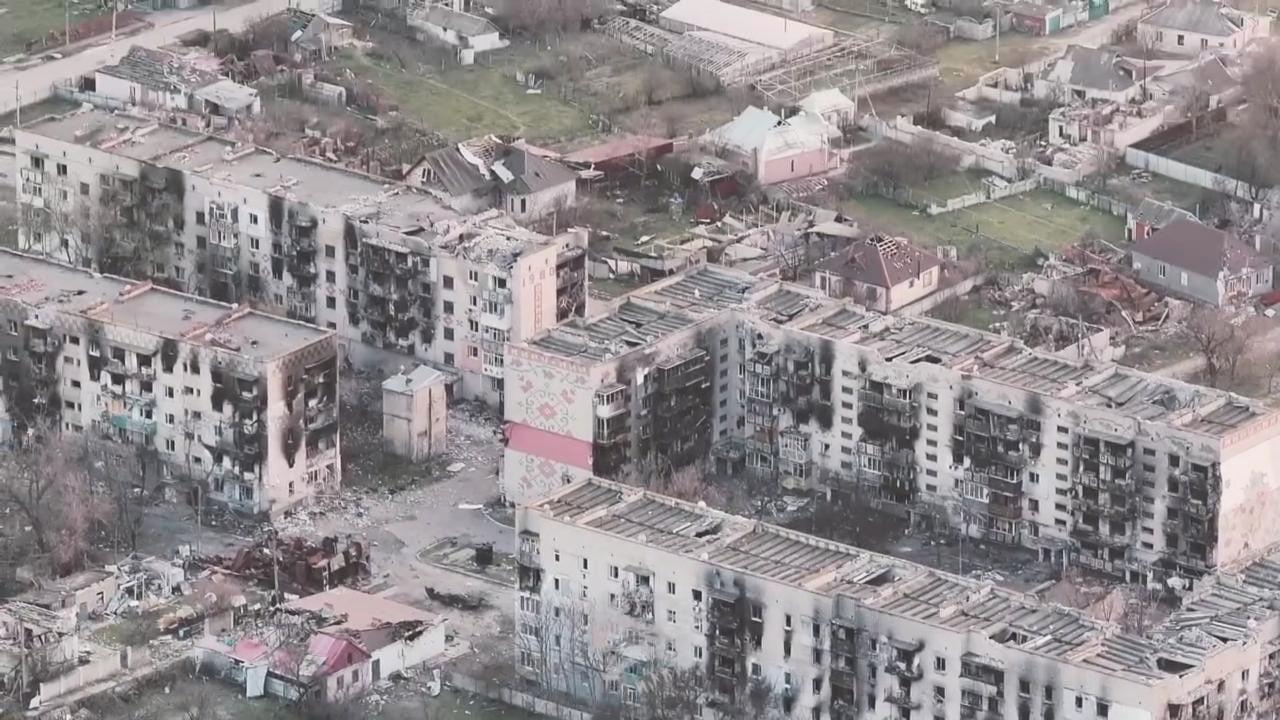
Oleshky lies across the river from Kherson. It has been under Russian occupation since February 2022. The White House says 1,700 to 2,000 people remain, mostly elderly, along with about 50 children, down from roughly 24,000 before the war. The statement acknowledges that there has been no formal demographic count since 2022. Residents have described increasingly desperate conditions, with severe shortages of food, water and electricity. Some are reportedly surviving on weeds, boiled grass, bread and meagre rations.
“The situation in Oleshky is dire,” Melania Trump said in the statement, calling it “a front-line war city on the brink of disaster”. She said she and her representative had worked directly with Russian and Ukrainian leadership to define the terms. Civilian, non-military leaders from both countries would visit residents at home to assess their needs, and anyone who wants to leave would receive coordinated support and transport to their preferred destination. “I anticipate some will want to go to Russia, and some to Ukraine,” she said.
Dmytro Lubinets, Ukraine’s ombudsman, told Reuters on Friday that the mission would involve demining roads into the town, delivering food and evacuating civilians. “A sufficient quantity of humanitarian aid will be delivered to meet the needs of everyone who requires it,” he said. “What’s more, we are working to ensure that this is not just a one-off event, and that it is not limited to Oleshky alone.”
How the first lady got involved
Melania Trump’s role is unusual, but not without precedent. She has made the plight of children in conflict zones a signature cause of her husband’s second term. She has pressed Vladimir Putin over Ukrainian children taken to Russia, and the White House says at least 34 children have been reunited with their families. Zelenskyy’s wife, Olena Zelenska, thanked her in a letter in August 2025 for her efforts on the issue.
The White House says Oleshky came to her attention during a private discussion at her “Fostering the Future Together” event in New York, held alongside the UN General Assembly in September. “All parties have worked around the clock since that moment,” she said.
Her adviser Marc Beckman is said by people familiar with the talks to be in direct contact with both governments. He claims both sides formally recognised her as an intermediary, in writing, and “gave her the power to negotiate this ceasefire”. That claim has not been independently verified.
The Kremlin spokesman, Dmitry Peskov, credited her with a “significant contribution” and said she was coordinating the operation. He said it would require “extensive and complex preparation” and take at least a few days. “Those who wish to leave the town will be able to do so,” he said. Russia’s human rights ombudswoman, Yana Lantratova, confirmed the agreement.
Donald Trump, asked whether his wife might join wider trilateral peace talks, said “it’s not the worst idea I’ve ever heard”.
A long road to the deal
Despite the claim that Melania Trump brokered the ceasefire, efforts to organise a humanitarian truce had been under way for some time. Ukrainian officials had claimed that Russia rejected earlier calls. Pope Leo XIV, who phoned Putin from hospital after lung surgery, discussed the issue with Volodymyr Zelenskyy. The UN, EU officials and the Council of Europe also called for a ceasefire. As recently as October 18, Lubinets said he thought that the agreement was close, without mentioning the first lady’s involvement.
Ukraine has for weeks pushed for a civilian evacuation from Oleshky and nearby settlements, at times using drones to airdrop emergency food and medical supplies into the town.
Reasons for caution
Local truces in this war have often failed to hold. On October 13, Donald Trump unilaterally announced an “energy ceasefire” that soon turned out not to exist in practice. Against such a backdrop carrying out evacuations in Oleshky will be particularly difficult even if the agreement holds.
The deal also comes amid a row over Starlink. Ukrainian forces continue to report widespread disruption to the satellite network, despite Donald Trump’s claim that Elon Musk had lifted restrictions. The slowdown, which has affected the communications system used by Ukrainian troops, began last week after Trump and Musk, the founder of Starlink, publicly criticised Zelenskyy over continued strikes on Russian oil refineries.
The restrictions have raised questions and confusion about who ordered the slowdown and why, with Trump and Musk denying responsibility. Asked about it on Friday, Trump said he would speak to Musk if the restrictions remained. “I’ve heard it was fixed, but if it’s not, I’ll speak to him,” he told reporters.
The British prime minister, Andy Burnham, “underlined the importance for Ukraine to have full access” to Starlink in a phone call with Trump on Friday, Downing Street said. Ukrainian officials said throughout the day that speeds remained capped at about 100 mph, with no sign the restrictions had been lifted. “At present, we have not observed any lifting of the restrictions on Starlink,” said Serhii Beskrestnov, a military expert who advises Zelenskyy.