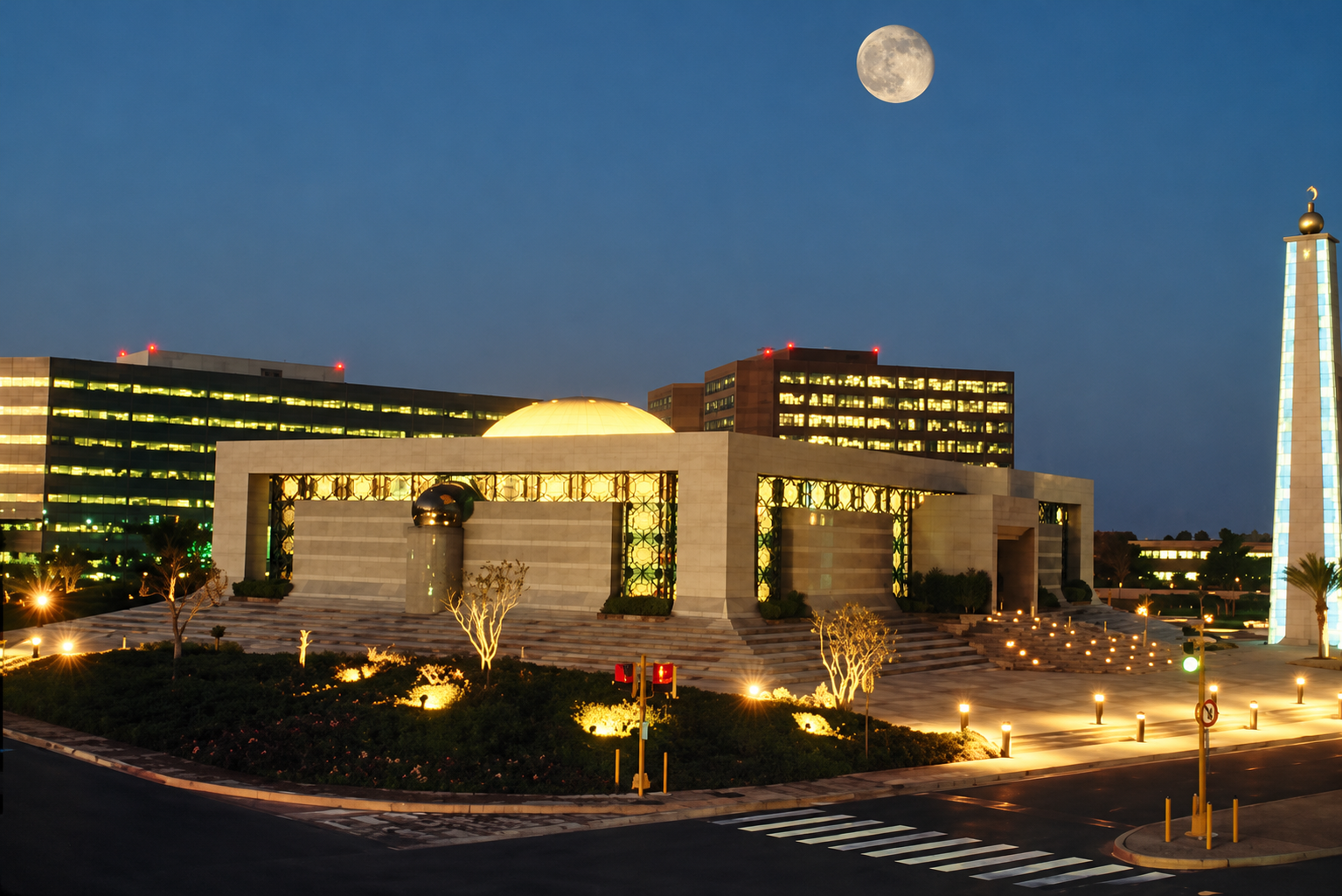
Saudi Arabia’s state-owned oil giant Aramco ordered staff to evacuate its headquarters in Dhahran on October 22, following a series of attacks on the kingdom’s oil infrastructure and airports that have heightened security concerns and disrupted business. The move came nine days after a strike damaged an office tower in the complex, which houses a key operations centre. The latest evacuation underscores the growing threat to Saudi Arabia’s energy infrastructure as hostilities with Yemen’s Iran-aligned Ansar Allah movement, widely known as the Houthis, intensify.
Aramco is the world’s largest crude oil exporter and one of the most profitable companies globally, with operations spanning oil and gas production, refining, petrochemicals and distribution.
Wide-ranging attacks
Aramco’s Dhahran headquarters houses a key operations centre overseeing the company’s activities worldwide. Neither the Saudi government nor the company disclosed the reason for the latest evacuation, but a Bloomberg report said it followed an alarm. Staff were also instructed to work from home.
The Houthis had already attacked the complex on October 13, reportedly damaging three floors of a tower and causing a fire. Saudi authorities described the fire as limited and said there were no casualties. The extent of the structural damage was not immediately clear.
On October 21, an attack on King Fahd International Airport in Dammam, in eastern Saudi Arabia, killed two people – a Saudi national and an Indian resident – and injured eight others. The incident caused material damage and disrupted airport operations. The Houthis subsequently said they had targeted the airport.
In a separate incident, two people were killed when Saudi air defences intercepted a drone targeting a facility at Saudi Aramco’s Shaybah oilfield, the Ministry of Energy said. Two others were injured, but the ministry said the oilfield’s operations were unaffected. The Houthis have also claimed attacks on Saudi oil infrastructure and airports across the kingdom.
Vision 2030 under pressure
Houthi attacks on Saudi airports and oil infrastructure threaten two pillars of Vision 2030: global connectivity and economic diversification. They also increase the kingdom’s security costs and risk undermining investor confidence.
The postponement of “Davos in the Desert”, Saudi Arabia’s flagship investment conference scheduled for October 26–29 in Riyadh, highlights the economic fallout. The Future Investment Initiative (FII), partly modelled on the World Economic Forum’s annual meeting in Davos, brings together global investors, business leaders and policymakers to discuss investment and economic transformation. Reuters reported on October 19 that the 2026 edition had been postponed until 2027 amid regional security concerns.
Amid the continuing attacks, the US State Department has ordered non-emergency government employees and their family members to leave Saudi Arabia. In a post on X on Wednesday, State Department spokesperson Tommy Pigott said: “Iranian-supported Houthis have increasingly engaged in hostilities against Saudi Arabia, including attacks on civilian airports and other critical infrastructure resulting in civilian casualties and severe travel disruptions.”
Why did the war restart?
The latest escalation follows the collapse of a four-year period of relative calm on July 13, when Yemeni government forces backed by the Saudi-led coalition struck Sanaa International Airport to prevent an Iranian carrier, Mahan Air, from landing. The strike targeted the airport’s runway after the internationally recognised Yemeni government said it was seeking to prevent the flight from landing without authorisation. The Houthis retaliated by launching missiles and drones at Abha International Airport in southern Saudi Arabia, threatening further attacks.
The fighting has since escalated, with the Houthis targeting Saudi airports and energy infrastructure. Saudi Arabia has continued to oppose Iranian flights to Houthi-controlled Sanaa, while the group has warned of further attacks on Saudi territory. On October 10, a strike on Riyadh’s King Khalid International Airport killed at least 12 people and injured more than 300, making it the deadliest attack on Saudi soil in more than a decade.
The conflict is rooted in Yemen’s civil war. The Houthis and their allies captured the capital, Sanaa, in September 2014, prompting a Saudi-led coalition to intervene in March 2015 in support of the internationally-recognised Yemeni government.
Riyadh viewed the rise of the Iran-aligned group as a security threat. The war eventually reached a stalemate, with the Houthis also launching cross-border attacks on Saudi territory. A Houthi attack near the Jeddah Formula One Grand Prix in March 2022 underscored the threat to the kingdom’s economic ambitions.
A United Nations-brokered truce took effect in April 2022. Cross-border attacks largely ceased as Riyadh pursued talks with the Houthis on a longer-term settlement. The July 13 airport strike, followed by renewed Houthi attacks on Saudi territory, ended that period of relative calm and opened a new phase of escalation.