The American Israel Public Affairs Committee (AIPAC), the most influential pro-Israel lobby in the United States, said this week that it will stop endorsing congressional candidates and making direct contributions after the 2026 cycle ends on November 4. But its super PAC, the United Democracy Project (UDP), which has spent $62 million so far this year, will keep spending in federal elections.
In a letter to members, AIPAC said it will focus on mobilising individual donors and developing new fundraising methods. Spokesperson Deryn Sousa said its mission and strategy remain to defend Israel. Arab News reported the timing of the change.
What is AIPAC?
AIPAC is the best-known pro-Israel lobbying group in the US. Isaiah “Si” Kenen founded its predecessor, the American Zionist Committee for Public Affairs, in 1951. It became a separate lobbying entity in 1954 and took its current name in 1959 to broaden its appeal. Its stated aim is to strengthen the US-Israel relationship, and it lobbies Congress and the executive branch. AIPAC describes itself as non-partisan.
For decades, its influence rested on lobbying and member networks. That changed in the 2020s. Ahead of the 2022 elections, it began endorsing federal candidates and created a political action committee and the UDP. UDP spending grew from $26 million in the 2022 cycle to $38 million in 2024 and $62 million so far this year. Its most cited success came in 2024, when UDP spent about $14.5 million to unseat Rep. Jamaal Bowman. This cycle, AIPAC told members it helped 290 pro-Israel candidates win and helped block 29 of its detractors.
Mounting backlash
Its standing has weakened since Israel started killing Gazans en masse. South Africa and rights groups such as Amnesty International have called Israel’s killings a genocide. American public opinion has shifted: a Pew survey in April found 60 per cent of Americans view Israel unfavourably, including 80 per cent of Democrats and Democratic-leaning independents. The Chicago Council on Global Affairs found favourability at its lowest since 1978.
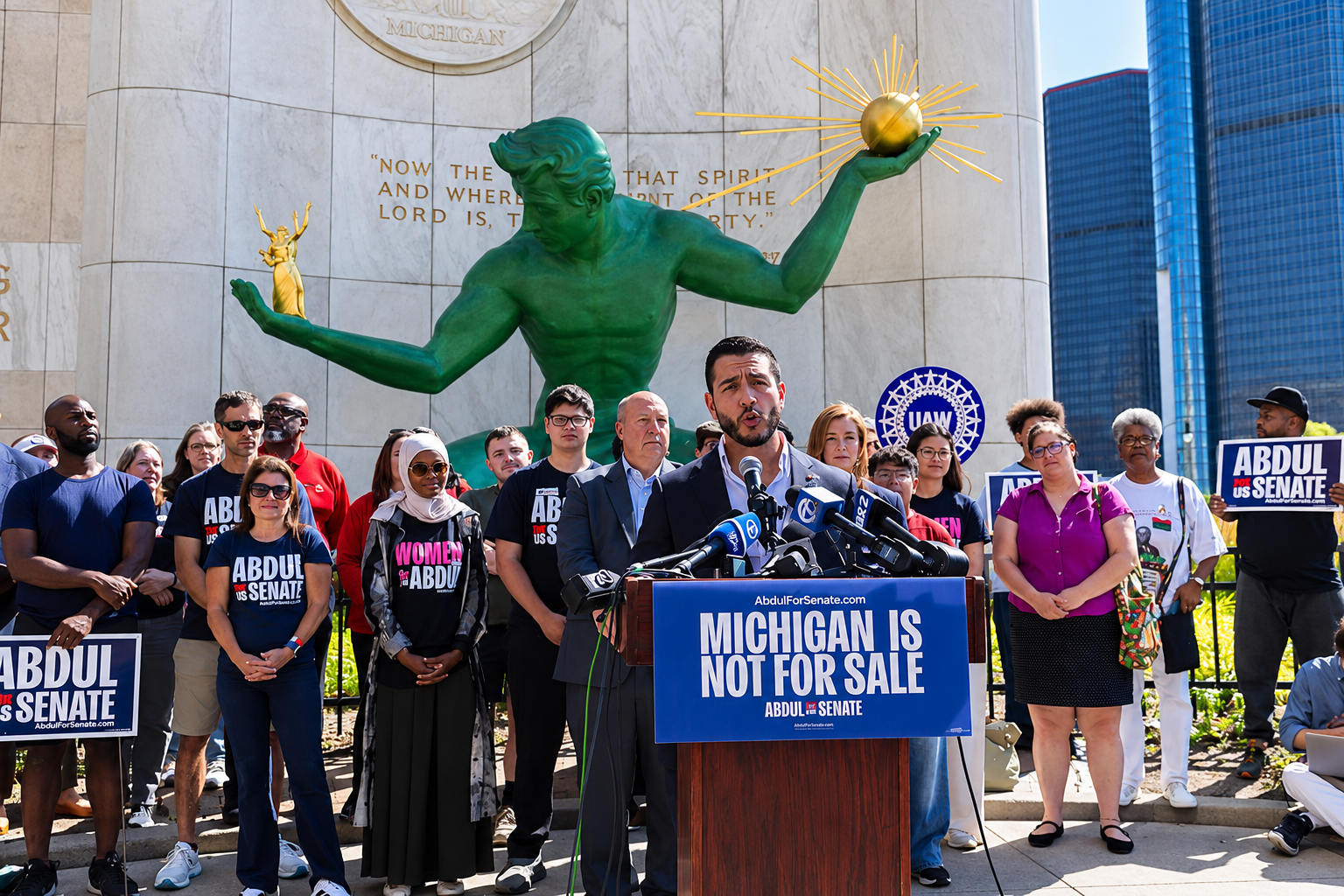
The backlash has also shown up at the ballot box. UDP lost its biggest single bet when Abdul El-Sayed won Michigan’s Democratic Senate nomination after it spent more than $30 million against him. Truthout reported other primary losses, including Peggy Flanagan in Minnesota and Darializa Avila Chevalier in New York. A new group, American Priorities, formed in February to counter AIPAC and plans to spend over $10 million backing pro-Palestine candidates.
What changes and what does not
The announcement reverses part of a strategy AIPAC adopted only recently, when it began publicly endorsing federal candidates and set up both its PAC and the UDP ahead of 2022. Federal Election Commission (FEC) filings show the PAC contributed nearly $25 million to candidates and committees through September, while UDP spent more than $53 million on independent expenditures. Unlike a traditional PAC, a super PAC can raise and spend unlimited sums, provided it does not coordinate directly with campaigns. Because UDP is the larger channel and stays intact, the change mainly affects the endorsement label and the smaller direct-giving arm.
Michigan is the test
The Michigan Senate race is a major test of AIPAC’s power. UDP spent about $30.6 million in the Democratic primary, the most it has put into any single race. It backed Rep. Haley Stevens against El-Sayed, a critic of Israel’s alleged apartheid. Despite the heavy spending, El-Sayed won the nomination in August.
UDP has since returned to the race. A new FEC filing shows it spent $95,000 on mailers opposing El-Sayed in the general election, where he faces Republican Mike Rogers. That runs against AIPAC’s usual practice. Hamid Bendaas, communications director at the Institute for Middle East Understanding (IMEU) Policy Project, noted that the group typically stays out of general elections to preserve its bipartisan standing.
Because of the current backlash, AIPAC is working on an acceptable format to support Rogers. He reportedly told AIPAC’s board chair he had significant reservations about a planned ad campaign, and a UDP spokesman said the board had not decided how it would aid him. However, at an October debate, Rogers said he welcomes AIPAC’s support. The spokesman said the super PAC continues to work to defeat El-Sayed. Democracy Now, citing a New York Times report, said AIPAC plans to spend $9 million to help Rogers. El-Sayed also alleged that Rogers attended three AIPAC fundraising events in a single day.
Public opinion and the critics’ reading
The war in Gaza has been central to the shift in American views of Israel. Bendaas read AIPAC’s announcement as an admission that a Zionist group’s endorsement now harms candidates. He called it a survival strategy that preserves the group’s financial influence while distancing candidates from its name. He also warned that spending could become less transparent, including through committees whose backers may not be public until after voting.
Critics point to indirect funding as one reason for scepticism. UDP gave $750,000 to a group called EDW Action Fund in May, though EDW’s leader disputed that the money was earmarked for a particular candidate. UDP reports its spending to the FEC, and super PACs must act independently of campaigns. Bendaas said AIPAC remains powerful but has lost what he called its sheen of being beyond challenge.