President Luiz Inácio Lula da Silva has defeated Senator Flávio Bolsonaro in Brazil’s presidential runoff, winning 51.79 per cent of valid votes to his rival’s 48.21 per cent, according to Brazil’s Superior Electoral Court. His lead of nearly 4.4 million votes is now unassailable. The result confounded the polls: the average of 45 runoff surveys had put Flávio on 51.0 per cent and Lula on 49.0 per cent. Lula had finished the first round, on October 4, behind on 45 per cent to 47 per cent.
Lula said in his victory speech: “People went to vote because we convinced them it was important to preserve democracy.” Taking aim at Washington, which had leaned on Brazil with tariffs during the campaign, he declared: “This country will not accept being anyone’s backyard.” He also vowed to regulate social media companies, after his campaign accused Meta of favouring his opponent, an accusation Meta denied.
Flávio Bolsonaro, however, refused to concede. Speaking tersely in Brasília, he said: “I am going to request the annulment of these elections.” He also called the decision to extend voting unacceptable and a dirty trick. On first-round night, by contrast, he had struck a confident note: “Brazil wants change, that’s the reading of what happened today.”
What happened between the rounds
Lula’s team targeted the 33.4 million people, or 21.08 per cent of the electorate, who abstained in the first round, the highest share since 1998. After the first-round defeat, the left mounted large rallies on an anti-Bolsonaro “never again” theme and revamped its social media strategy.
After the first round defeat, Lula also adopted a more security-focused slogan. The campaign hit the issues that worried voters most, since cost of living and security were the main concerns.
The first-round also-rans totalled 9.3 million votes: Augusto Cury 3.4 million, Renan Santos 2.7 million, Ronaldo Caiado 2.6 million and Romeu Zema 0.3 million. That is roughly 7 per cent of the electorate, and it was a mixed pool of centrists, libertarians and centre-right voters. Most analysts had projected that these votes would go overwhelmingly to Bolsonaro. But that doesn’t seem to be the case as Lula’s victory clearly points at a split.
Turnout in the run-offs rose from 79.1 per cent to 81.0 per cent of registered voters, almost three million more people, whereas in 2022 the rise between rounds was only from 79.1 per cent to 79.4 per cent. Other tallies put runoff turnout slightly lower, at 80.8 per cent. Abstention fell by three million votes between the rounds. Lula added 10.4 million votes between the two rounds and Flávio 3.7 million.
Women’s swing in favour of Lula
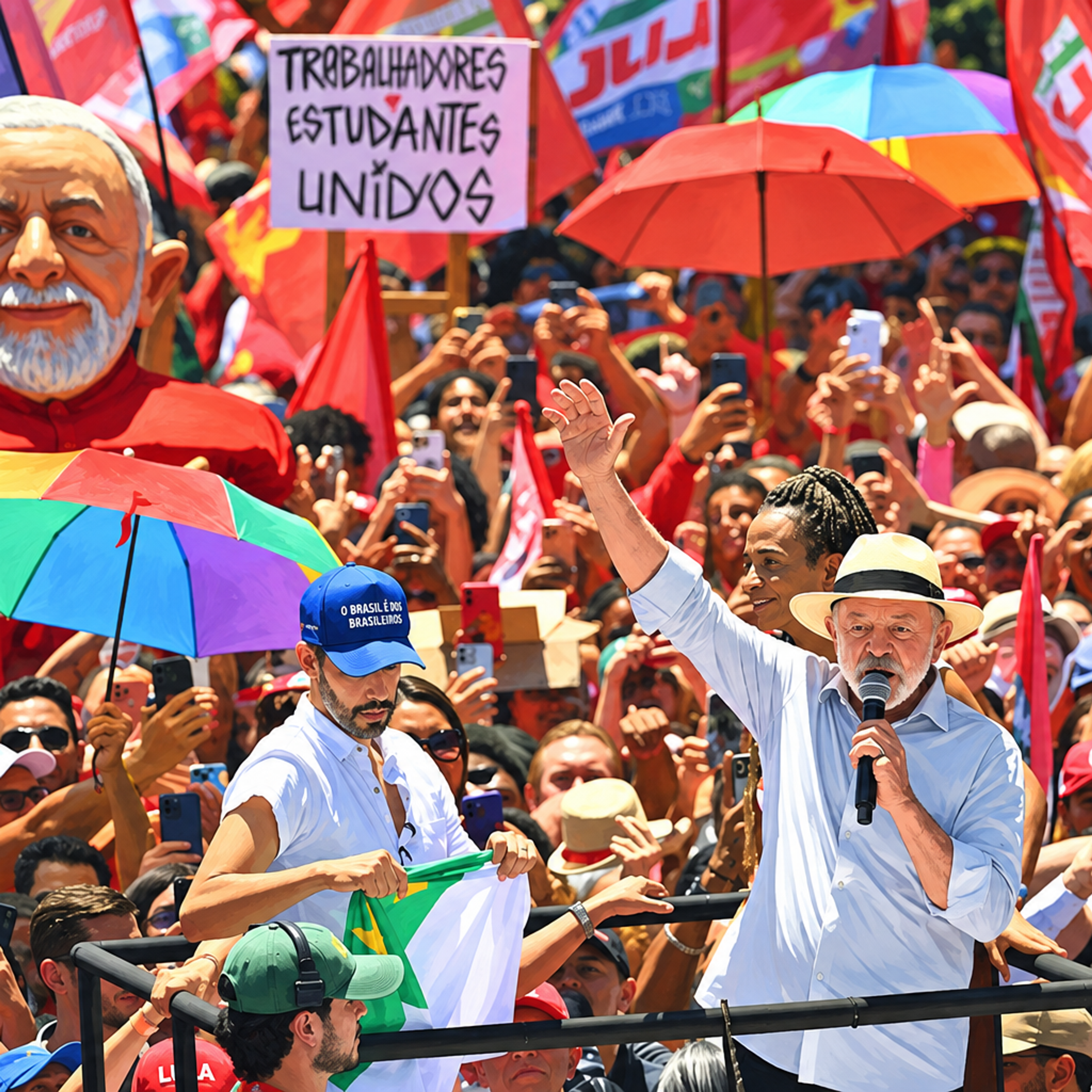
On October 11, thousands of Lula supporters packed São Paulo’s Avenida Paulista. But, more importantly, Flávio’s campaign was dogged by scandal: a Vorcaro-linked affair spread to his campaign after investigators reviewed messages, though he denies wrongdoing. A public rupture with his stepmother Michelle Bolsonaro also complicated his appeal to evangelical women. The gender gap hurt him too, since a October 15 Datafolha poll showed Lula ahead among women, 49 per cent to 40 per cent, while Flávio led among men, 52 per cent to 40 per cent. The same poll found him well ahead among evangelicals, though polls differ on the size of that lead.
The Trump factor cut against him as well. His rallies featured large US flags and giant Trump balloons, and Lula made sovereignty a central theme. On polling day, a Supreme Court ruling extended voting by two hours after some polling stations had closed, at Lula's request, because buses had been pulled from circulation in several cities.
Regional and state figures
The Northeast again carried Lula. It gave him about 13.6 million net votes, and turnout there rose 1.9 points. The other regions leaned to Flávio. The South, Southeast and Centre-West together delivered him about 9.3 million net votes, about 4.6 million of them from the South. In the Southeast, Flávio took 51.4 per cent to Lula’s 39.7 per cent in the first round, and runoff turnout rose 2.4 points there and 2.3 in the South.
The most prominent swing came in Minas Gerais, the bellwether state. Flávio won 48.2 per cent to 43.3 per cent in round one, but Lula took 50.4 per cent in the runoff, with a margin of 99,621 votes. Overall, Lula led in 13 states and abroad, and Flávio in 13 states plus the Federal District. Of the roughly 2,900 municipalities Flávio won in round one, 211 flipped to Lula.