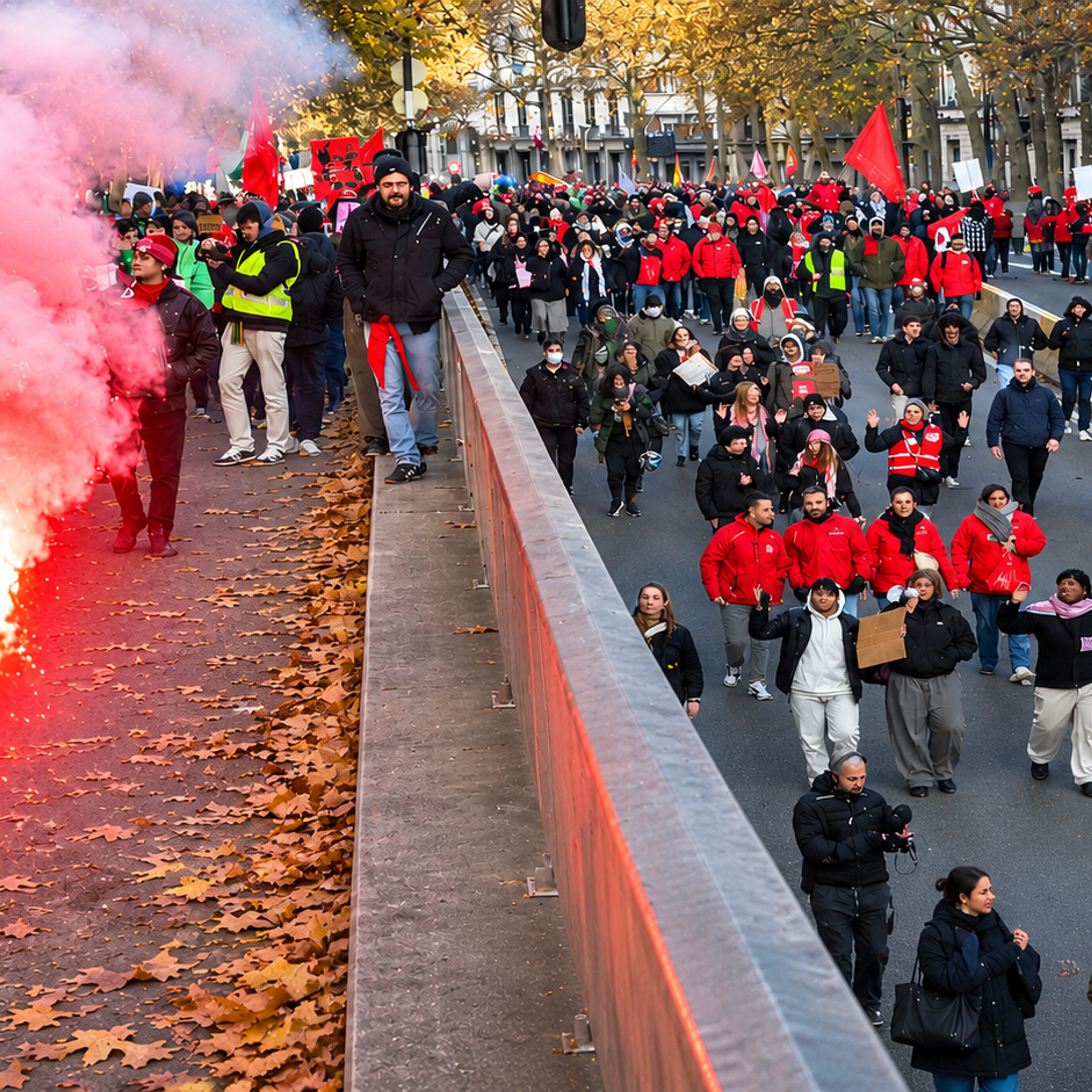
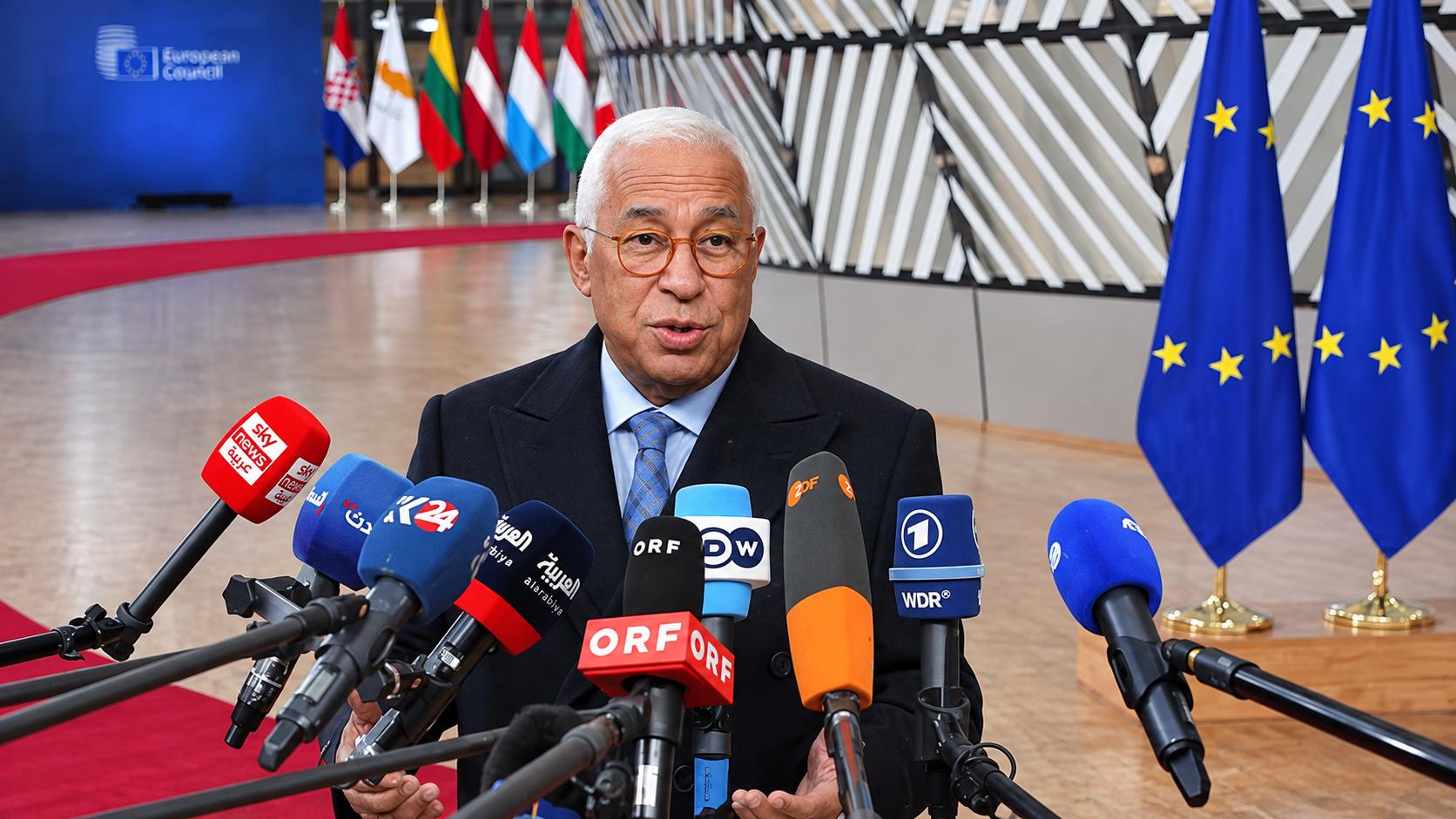
The European Union talks on the upcoming seven-year budget collapsed in Brussels on November 26 as countries clashed over two major contested issues. They are cutting welfare schemes and agricultural subsidies and funding Ukraine's war efforts.
On the first clash, EU countries are divided into a frugal group and a "Friends of Cohesion" group, with opposite demands on the EU budget. The frugal group wants to cut EU-wide welfare programmes and agricultural subsidies; the Cohesion group wants to continue the subsidies and welfare programmes. Austria, Denmark, Finland, Germany, the Netherlands and Sweden represent the first group. In contrast, the mostly “beneficiary” and middle-income countries form the second group, which includes Bulgaria, Croatia, Cyprus, the Czech Republic, Estonia, Greece, Hungary, Italy, Latvia, Lithuania, Malta, Portugal, Poland, Romania, Slovakia, Slovenia and Spain.
While the frugal group thinks European Council President Antonio Costa’s almost €2 trillion budget proposal is too generous, the Cohesion camp argues for continuing welfare schemes, even by borrowing. Yet leaders of both the camps are united over Ukraine funding. They want to loan about €45 billion to Kyiv. This proposal has opened a second clash, with Bulgaria, Slovakia, Hungary, and the Czech Republic refusing to participate in the loan, arguing that it would never be repaid. German Chancellor Friedrich Merz threatened to veto the multi-year budget if all EU countries do not agree to shoulder Ukraine funding. He also proposed that future Ukraine funding decisions be made by a majority vote rather than with consensus of all 27 countries.
As of now, Bulgaria budged and agreed to participate in funding for Ukraine's budget and humanitarian needs, not war efforts. The remaining three countries are yet to agree with Merz. As of now, the European Council doesn’t seem worried about the Ukraine funding question; President Costa expressed confidence that they would reach consensus. Though opposition is growing across Europe to funding Ukraine, the majority of European governments maintain a strong stance that war funding for Ukraine is non-negotiable, and they want to muster as much support as possible. For instance, Slovakia, Hungary, and the Czech Republic were left out of 2025’s €90 billion loan. However, Merz now insists that such options could not be given.
So, while clashing about their own budgets, why EU countries want to fund Kyiv is an interesting question. European governments have five reasons for doing so.
1. Kyiv's financing gap is nearly €70 billion
Ukraine is projected to face a shortfall of about €70 billion in 2027 despite the €90 billion loan the EU agreed last December for 2026 and 2027. Leaders are weighing a new €45 billion loan, backed by the EU's long-term budget, to cover roughly two-thirds of the gap. Kyiv's government is running short of money as international donations decline, and the country is entering a fifth winter of Russian bombardment with U.S.-brokered peace efforts yet to produce a breakthrough.
2. Leaders say a Ukrainian defeat would cost Europe far more
This is the most important reason being circulated. A study by the risk consultancy Corisk and the Norwegian Institute of International Affairs put the cost to Europe of a partial Russian victory at up to €1.6 trillion, twice the estimated cost of a Ukrainian victory. The figure includes higher defence spending, new NATO deployments on the eastern flank and the welfare costs of as many as 10 million Ukrainian refugees.
Tymofiy Mylovanov, president of the Kyiv School of Economics and a former Ukrainian economy minister, made the argument in budget terms. “An aggressive Russia is there for decades now, and the real question is what's the cheapest way to contain it,” he told Politico. “The cheapest way is (through funding) Ukraine because it’s willing to fight.” Frederik Wesslau of the European Council on Foreign Relations put it more bluntly. “A victorious Russia would mean massive increases in European defense spending,” he emphasised.
3. Governments closest to Russia call it their own security
For Baltic, Nordic and Polish leaders, the case rests on security rather than cost. “We can all realise that the longer the war goes on, there is a risk for citizens to get tired of this,” Sweden's EU Affairs Minister Jessica Rosencrantz told Politico, but support for Ukraine “is existential; it’s not a nice-to-have.”
Estonia's Kristen Michal framed it in terms of blood rather than budgets as he arrived at the summit. “Europe and Ukraine are linked because Ukraine is fighting for us,” he said. “We are only counting euros … they are shedding blood." Poland's Donald Tusk, whose country borders both Ukraine and Russia's Kaliningrad exclave, warned that penny-pinching carries its own price. “A cheap Europe could turn out to be a very expensive mistake,” he said. "Security comes at a price." Denmark's Mette Frederiksen, who backs Merz’s push to tie Ukraine funding to the EU budget, described Ukraine as "Europe's first line of defence.”
4. Berlin wants the money locked in before the politics shift
German Chancellor Friedrich Merz has made his backing for the whole budget conditional on all 27 members committing to close Ukraine’s gap, calling that an “essential prerequisite” in a letter to Costa. He wants long-term Ukraine funding written into the seven-year budget. Diplomats link the push to elections next year, in particular France’s presidential vote in April. They fear a victory for far-right leader Marine Le Pen could disrupt European finances and weaken support for Kyiv. Funding fixed into a seven-year budget would be harder to unpick.
Merz is acting against his own polls. An ARD survey in October put his approval at 10 per cent, the lowest for any chancellor since the series began in 1997. Wesslau said Merz and French President Emmanuel Macron are “ahead of their respective publics” on Ukraine. “The challenge is that these leaders are weak domestically and often have a hard time justifying military and financial assistance to Ukraine,” he said, adding, “But leadership is about leading - especially on issues that go against the grain.”
5. Most funding goes back to EU
Germany is Europe's largest single donor to Ukraine, having allocated €54 billion in military, financial and humanitarian aid since 2022, according to the Kiel Institute's Ukraine Support Tracker. However, most of the funding would come back to the EU, especially Germany. Russia argues that most of the war budget would go back to Germany, as its companies, such as Rheinmetall, supply weapons to Ukraine. European powers are also improving their defence preparedness by working with Kyiv on defence-tech innovation and production. For instance, Germany's armed forces are learning a great deal from Ukraine’s drone warfare. Several countries, including Britain, Germany, Poland, Denmark, Estonia and others, are producing drones and munitions for Ukraine, and they consider this an essential investment.
The holdouts
However, a few governments oppose this funding, arguing it would only prolong the war. For instance, Slovakia is maintaining the hardest line. Slovak Prime Minister Robert Fico called Merz’s demand “blackmail” and reminded Berlin that Slovakia holds the same veto. Czech Prime Minister Andrej Babiš called the proposal “absolutely unacceptable,” arguing Prague should not pay interest on loans for Kyiv while its own subsidies are cut. Hungary, Slovakia, Bulgaria and the Czech Republic have sought exemptions from the latest financing package. Only Bulgaria has so far budged and agreed to contribute, but only to the budget-support portion of the aid.
Compromise ideas
The European Commission is proposing three ideas: convince all countries and go ahead with the funding; exempt the refusing countries and share the burden among the willing countries; and add other European countries, such as the UK, to the list and share the funding costs. However, the Commission could find a way to convince the outstanding members, or it could simply go ahead without them, as Merz using a veto would further intensify the intra-EU clash over Ukraine funding and create bad public relations.