Maize stalks stood like broken spears in the hard red earth of Masitala village in central Malawi. By the third month of the drought in 2001, even the birds had stopped visiting the fields. William Kamkwamba, a 14-year-old boy, walked the path between his family's fields and the dusty track leading to the secondary school he could no longer afford to attend. At night, the family sat in darkness because kerosene was too expensive. His father, Trywell, a farmer, worried about the next harvest. His mother, Agnes, stretched the remaining maize flour to feed their seven children. William's six sisters went to sleep early so they wouldn’t feel hunger.
Kamkwamba was awake and could not stop thinking about the library. The small library at a local secondary school still held books. He began visiting it regularly, looking for something that might help him understand how machines worked. One day, he found a book with a blue cover: Using Energy. Its diagrams showed windmills, blades, generators and electrical systems. Kamkwamba could not understand every English word, but the illustrations spoke to him enough. Wind could generate electricity. Electricity could power machines. With the right equipment, it might even help pump water to fields.
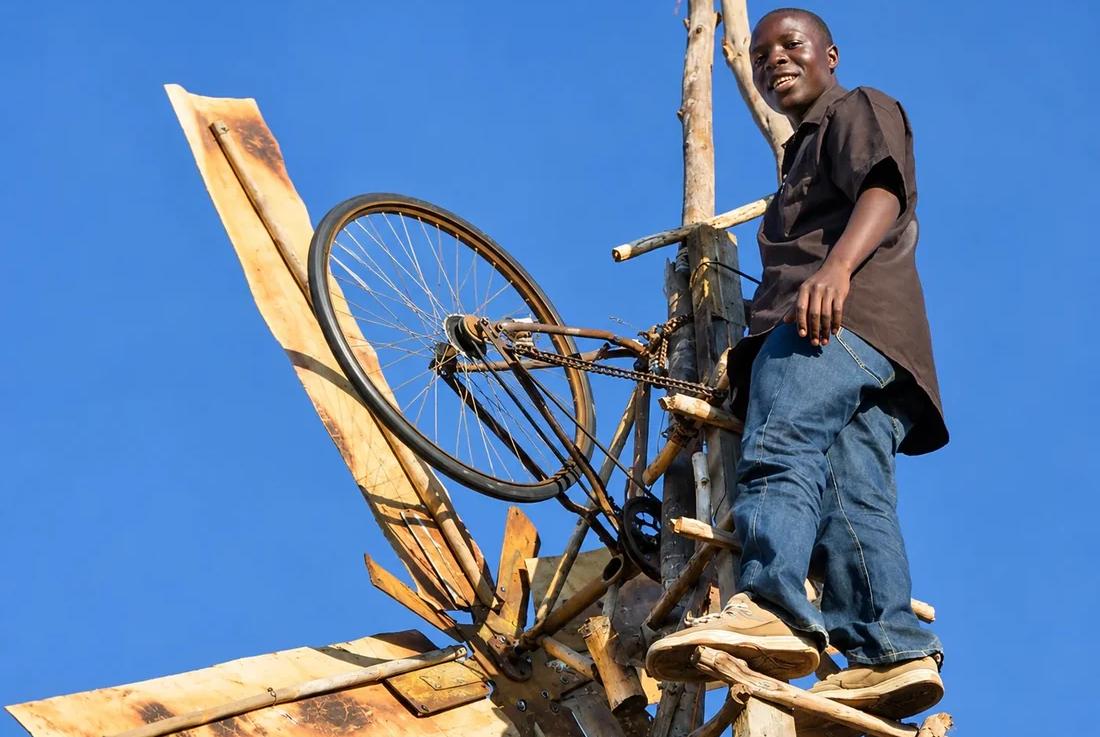
He decided to build a windmill, though he neither had equipment nor the expertise. He collected a bicycle frame, a tractor fan, PVC pipes, blue-gum poles, rubber from old flip-flops, wires and other discarded items. He worked behind his family's house, cutting, bending and assembling the components. His mother watched him drag the scrap home and wondered what he was doing. His fellow villagers thought he was wasting his time; some laughed at him, and others questioned his chance of success. Kamkwamba persisted. He measured the parts, fashioned blades from PVC pipes and attached them to a makeshift tower. When the structure finally rose, at approximately 16 feet (5 metres), it looked precarious.
The powerful moment
Then came the moment he had been waiting for. The blades began turning. The generator produced electricity. A bulb flickered before glowing steadily. Kamkwamba stood beneath the tower, watching the light. It was weak and imperfect, but it represented something extraordinary: a machine he had built himself from discarded materials that produced electricity. He eventually expanded the installation to power four lights and two radios in the family home. His family could now read and listen to the radio after sunset without relying on expensive kerosene.
Neighbours who had initially doubted him began visiting. Some brought mobile phones to charge. The boy who had been ridiculed for building a contraption from junk had become a source of curiosity and admiration. The windmill was only the beginning. William went on to build additional windmills, experiment with irrigation systems and develop a solar-powered water pump that brought clean drinking water to his village. These innovations helped his family cultivate crops more reliably and reduced their dependence on rainfall. Women who had previously spent hours walking to collect water gained time for other activities. Drip irrigation also enabled families to diversify cultivation beyond rain-fed maize, growing crops such as beans, soybeans, potatoes and groundnuts.
From a village workshop to the world stage
William Kamkwamba was the wunderkind who believed in himself. William was born on August 5, 1987, in Dowa, Malawi, and grew up in Masitala, in the Kasungu district. He was the only son among seven children born to farmers Trywell and Agnes. His family depended primarily on maize and tobacco cultivation. The 2001–02 food crisis in Malawi was devastating. Drought, flooding, poor harvests and the government's handling of the national grain reserve resulted in acute food shortages. As maize prices soared, many families struggled to afford food. William's family could no longer pay the school fees of approximately $80 a year, forcing him to leave secondary school.
His determination to continue learning, however, eventually changed his life. After local newspapers reported on his windmill, William began attracting attention beyond his village. In 2007, he spoke at TEDGlobal in Arusha, Tanzania, as one of the first TED Fellows. His story of building a windmill from scrap materials captured international attention. The recognition opened doors. He returned to formal education, attended the African Leadership Academy in South Africa, and later graduated from Dartmouth College in New Hampshire, USA, in 2014 with a degree in Environmental Studies.
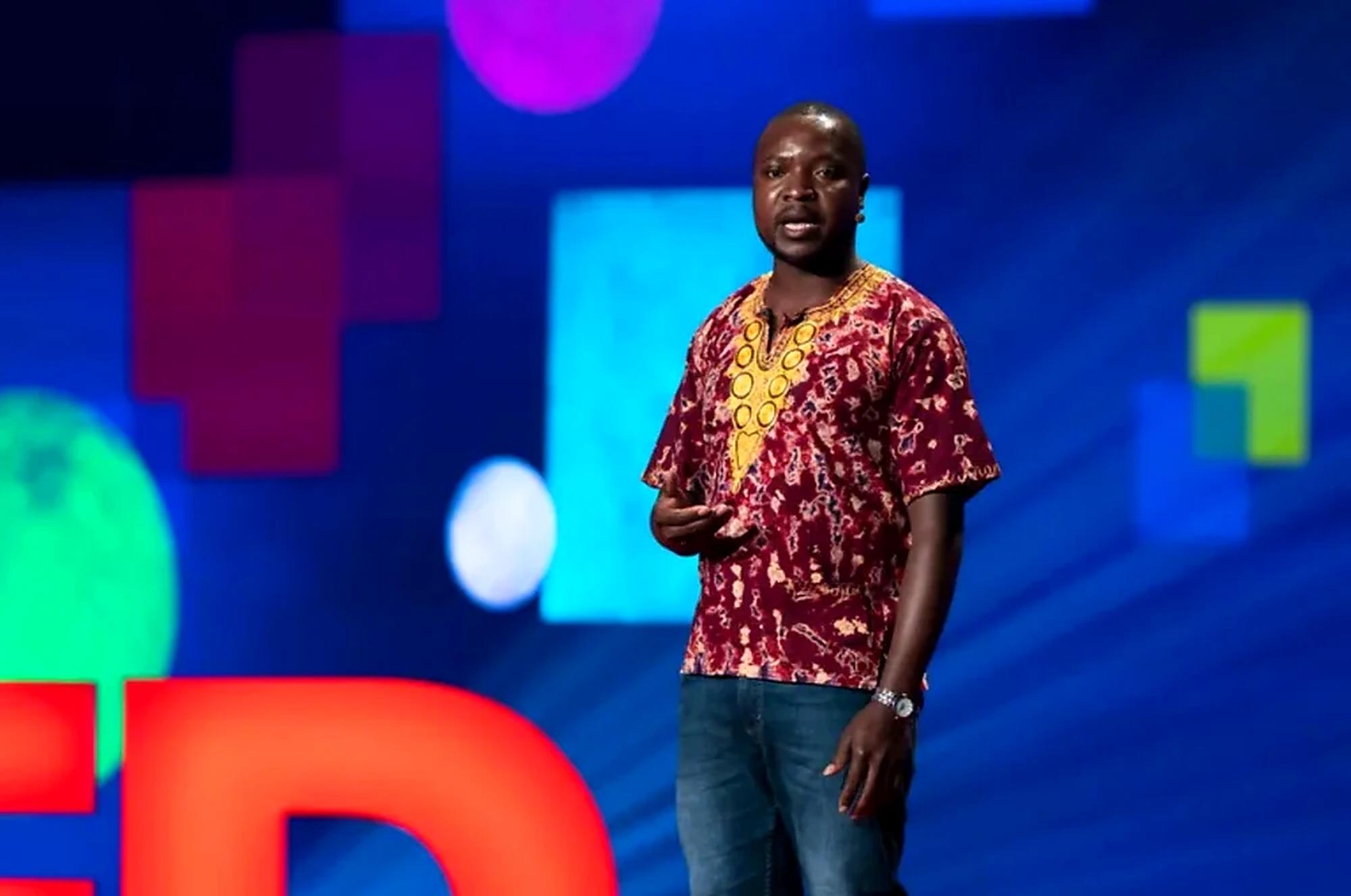
In 2009, he co-authored his memoir, The Boy Who Harnessed the Wind, with journalist Bryan Mealer. The book became a New York Times bestseller, sold more than a million copies and was translated into 20 languages. In 2019, a Netflix adaptation directed by and starring Chiwetel Ejiofor introduced his story to an even wider international audience. Kamkwamba subsequently worked as a Global Fellow with IDEO.org and collaborated on initiatives promoting appropriate technology and practical problem-solving. His work has included developing electric motorcycles and maize mills using recycled materials.
Training young innovators
Nearly 25 years after his first windmill, Kamkwamba, now 39, is turning his attention to a larger ambition: ensuring young Malawians have access to the tools, training, and mentorship he lacked as a teenager. He co-founded the Moving Windmills Project in 2008, a nonprofit initiative working with communities in the Kasungu area. Its activities include clean-water systems, solar energy installations for schools and community centres, school renovations and practical skills training.
Through the initiative, Kamkwamba has also supported school renovations, new classrooms, libraries, computer facilities, and solar lighting, while establishing community-based learning hubs that offer access to electricity, clean water, and practical training. Its youth programmes have introduced children to engineering and design through hands-on activities, helping develop a new generation of local problem-solvers.
The organisation is now working with MASS Design Group to establish the Moving Windmills Innovation Center in Kasungu town. The planned facility will feature a well-equipped machine shop and collaborative spaces where young people can develop practical solutions to problems in agriculture, energy and everyday life. “Talent is universal, but opportunities are not,” Kamkwamba has said in recent talks. “If you can give young people an opportunity to design solutions to the problems they are facing in their communities, you would be amazed what they can come up with,” he explained.
As a teenager, Kamkwamba had the curiosity and determination to build a windmill but lacked access to proper equipment, technical guidance and mentors. “I wish I had a mentor when I started creating the windmill,” he has said. “I want to help young people and guide them in their path from early stages.” The centre aims to bridge that gap by giving aspiring innovators access to machinery, practical training and people who can help turn their ideas into workable solutions.
In a country where agriculture remains central to livelihoods and food security remains a challenge, Kamkwamba believes locally developed innovations can make a difference. Rather than waiting for technologies and solutions to arrive from elsewhere, young people should be equipped to develop them within their own communities. In September 2025, speaking at the International Government Communication Forum in Sharjah, he urged young people not to allow difficulties to derail their ambitions. “Everything is possible if you focus on your goals,” he said, emphasising persistence and determination.
Kamkwamba divides his time between Malawi and the United States but remains connected to the community where his journey began. The boy who once searched scrap heaps for bicycle parts and discarded machinery is now helping build a place where other young people can experiment, invent and develop technologies of their own. His first windmill was an attempt to bring light into a darkened home. The innovation centre represents a much bigger ambition: to ensure that the next generation does not have to build its dreams without the tools and opportunities to realise them.