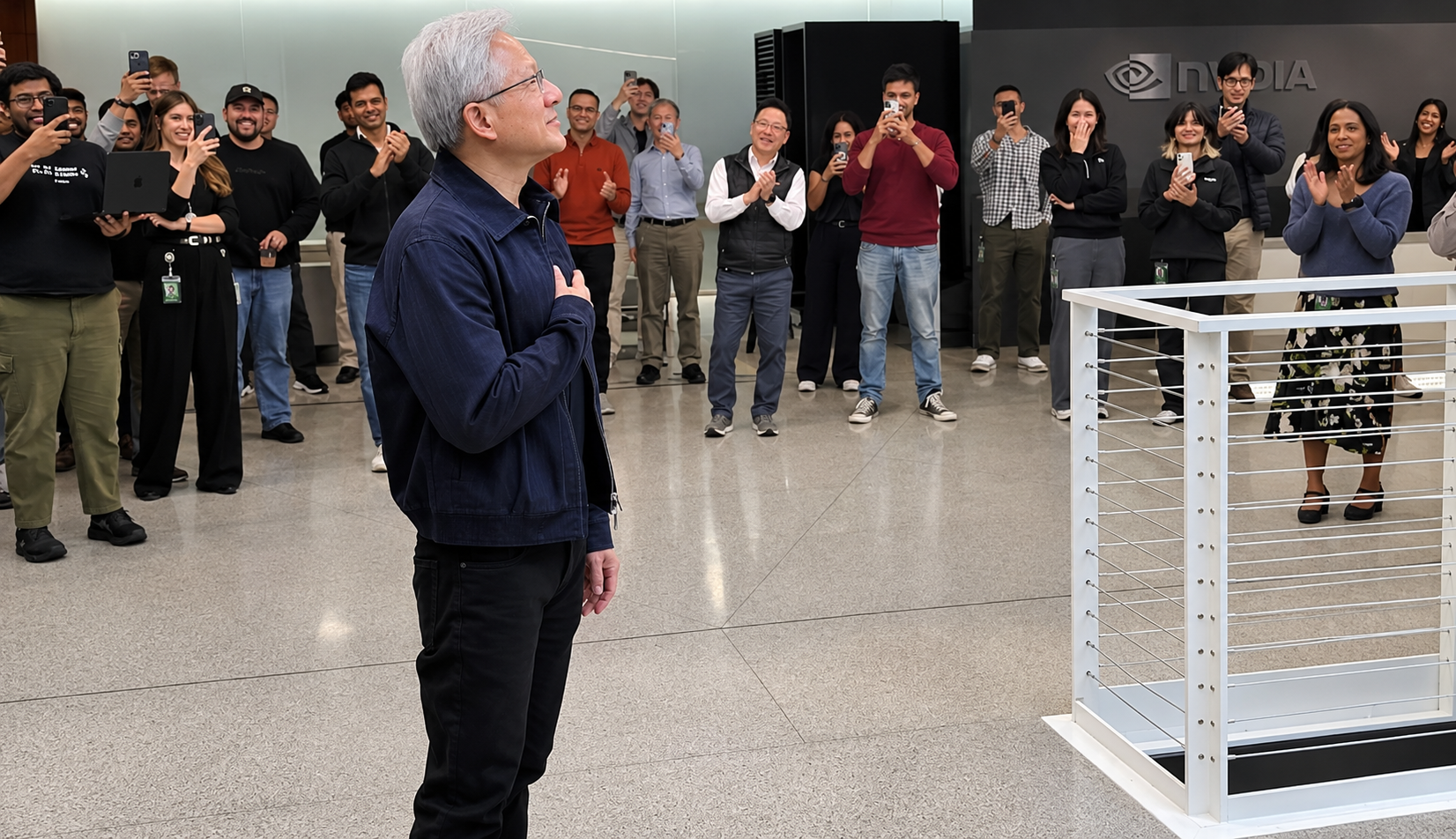
Nvidia, the chipmaker at the centre of the global artificial intelligence boom, has reinstated its co-founder Jensen Huang as chief executive, ending a leadership vacuum that lasted less than two weeks. The more consequential question is whether the board that took him back can show it acted on its own judgement. It had signalled days earlier that it would not do so, and it moved after public pressure from US President Donald Trump.
The board announced on Monday (November 23), by way of a unanimous vote, that Huang had been restored as president and chief executive. He also rejoins the board, with immediate effect. He had stepped down 11 days earlier following reports of multiple extramarital affairs, including one with an Nvidia executive and another with the Chinese businesswoman Alice Huang, whom US officials have alleged was working with Chinese intelligence.
A reversal within days
The decision marks a sharp departure from the board’s stance only days earlier. Less than a week before the vote, the chairman, Harvey Jones, had said that Nvidia would not rehire Huang because his personal conduct was inconsistent with the company’s code of conduct. The chief financial officer, Colette Kress, had been named interim chief executive, and the board was reportedly not interested in bringing Huang back. According to Bloomberg, the Treasury Secretary, Scott Bessent, had urged directors to look outside the company for a successor.
Pressure for a reversal then built from several directions. More than 175,000 people signed a letter backing Huang. Having said earlier that he would not mind a reinstatement, Trump posted on Truth Social overnight that rehiring Huang would be ‘the best thing for the Company’. After the vote, Trump told CNBC that he had been represented at the board’s deliberations, although he would not say whether he had attended a meeting himself. Elon Musk, a Trump ally, also welcomed the return.
Commercial considerations were also in play. Huang’s departure had threatened Nvidia’s business in China, with some customers cancelling or delaying orders and putting billions of dollars in revenue at risk.
Trump's China argument
Speaking after the announcement, Trump offered a geopolitical justification. He said he had a unique relationship with the Chinese president, Xi Jinping, and that Beijing could end up paying Huang ‘a fortune’ to run a company in China. He suggested that Huawei or another Chinese company might approach Huang if he felt badly treated in the United States. Trump added that he wanted Huang to ‘make a big apology and go back’. These remarks are Trump’s own account; neither the board nor any official source has confirmed that such a prospect influenced the decision.
The national-security question
Nvidia said that, on the basis of input from the US government, the board was confident that Huang’s reinstatement poses no national security risk. The board’s statement did not mention the affairs. The assurance has not settled the matter. The New York Times reported that Alice Huang remained in contact with an official from China’s top spy agency for more than a year during the relationship, and the Republican senator John Cornyn publicly asked what the ‘no risk’ conclusion was based on.
Governance and political scrutiny
Governance experts said the board’s about-turn raises questions about its independence. Trump holds between $11 million and $55 million in Nvidia shares, and that Monday’s rise could have increased his net worth by as much as $17 million. Investors welcomed the decision, and Nvidia’s shares soared. Huang, who ended 33 years as chief executive when he resigned, is widely regarded as central to the company's position in AI computing, and the episode comes as Washington debates chip-export restrictions and China’s access to computing technology.
The case against the reinstatement
Critics see a board that folded. Five days before the vote, Chairman Harvey Jones told investors the board did not intend to bring Huang back, citing conduct inconsistent with the company’s standards. Nothing about that conduct has changed since. The only things that changed were the political pressure, the market reaction and the commercial risk in China. Critics say a board that reverses itself this quickly and under this pressure was never deciding on the merits.
They also point to the sourcing of the board’s central assurance. Nvidia said that it was confident Huang poses no national security risk, based on input from “senior levels” of the US government. The president had publicly urged the reinstatement, and a conclusion drawn from the administration’s own advice looks more like an endorsement than a clearance. Senator John Cornyn's question about what the conclusion rests on remains unanswered.
The timing, too, is hard to defend. The committee examining whether foreign intelligence targeted Huang has not reported. Huang is due to answer questions from House committees on December 1 and 2 about alleged chip smuggling and export-control evasion. The Justice Department is conducting a criminal investigation of Megaspeed, the Singapore-based Nvidia customer where Alice Huang was an executive. The board gave the verdict before the evidence was in. Investors who earlier urged patience, so that boards would not be forced into action by political pressure “from the left or the right”, got the opposite.
Governance specialists add a structural objection. The board has formed committees of independent directors to police the very questions that bear on the chief executive it has just reinstated. Those directors now have to scrutinise a man they restored after saying they would not. Huang has also rejoined the board, which puts the subject of the inquiries back inside the room that oversees them.
Last is the precedent. The company was pushed toward an outcome by a president who owns Nvidia shares, by a letter signed by 175,000 supporters and by customers threatening to cancel orders. Critics argue this tells every future executive that a code of conduct binds only those without leverage over the board, and tells every future board that it can be overridden.
What the board must now demonstrate
The board’s most direct way to answer its critics lies in work already under way. The company’s own investigation is unfinished, and the board has formed one committee to examine whether foreign intelligence efforts targeted Huang and another to review national security and export controls. Trump has himself urged Nvidia to continue its internal investigation of its compliance with US export controls. How transparently those inquiries are run, and whether their findings are published, will largely determine whether the reinstatement is seen as a considered decision or a concession to political pressure.
The board has set the standard against itself. It reversed its own stated position within days, on the word of the same government that pressed it to do so. Now it needs to publish unredacted findings, let the independent committees speak without interference, and show that Huang answers to them and not the reverse. If it does not, Nvidia will have shown that its board bends under pressure, and that is a poor reason for shareholders, regulators and Washington to trust the company with the most sensitive technology in the world.