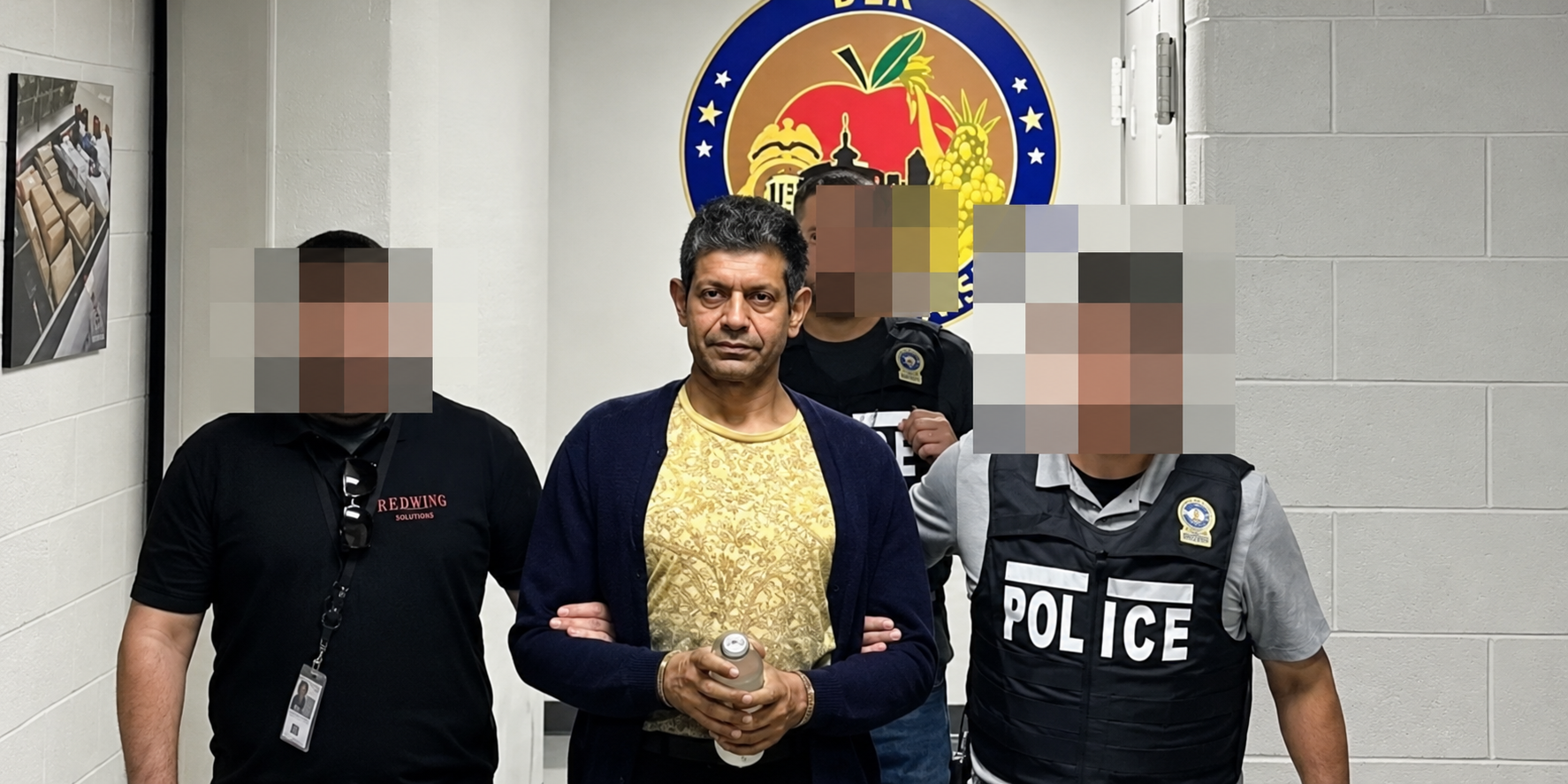
More than three years after an undercover American agent took a $15,000 cash advance in Manhattan for a killing that was never going to happen, a federal judge on Friday sentenced Indian national Nikhil Gupta to 235 months in prison for plotting to assassinate Sikh separatist Gurpatwant Singh Pannun on American soil. The sentence closes the first courtroom chapter of a case that has left the Narendra Modi government explaining how a plot against a US citizen came to be traced, in American court filings, to a person on India’s payroll.
Judge Victor Marrero, the US District Judge in the Southern District of New York, called the sentence “reasonable and appropriate” given the nature of the crime, and he announced it after a hearing of almost 80 minutes. He also said that Gupta, 55, will face deportation to India once he has served his term, which his family followed through an internet link from India.
The sentencing marks the end of a legal process that began with Gupta’s arrest in Prague, followed by nearly a year of extradition proceedings in the Czech Republic, before he was brought to the US to face charges of conspiring to assassinate an American citizen on US soil.
The 55-year-old Delhi resident pleaded guilty on February 13, 2026, to three charges: conspiracy to commit murder-for-hire, murder-for-hire and conspiracy to commit money laundering. The offences carry a combined maximum prison term of 40 years.
The sentence fell short of what prosecutors wanted. The government had asked for 293 months, or just over 24 years. Gupta had pleaded guilty in February to murder-for-hire, conspiracy to commit murder-for-hire and money-laundering conspiracy, offences that together carry up to 40 years.
During the hearing, defence lawyer Isabelle A. Kirshner reiterated that Gupta had been under pressure because of a case against him before the Gujarat Police. Kirshner urged the judge to punish him only for what he did, “not as a rebuke to India.” In his statement, Gupta described himself as “just a simple family man” and acknowledged his responsibility for joining the conspiracy. He apologised to Pannun, the Sikh community and his own family, and said he accepted the sentence. “I’m sorry to Mr Pannun, I’m sorry to the communities I hurt, I’m sorry to my own family,” Gupta said.
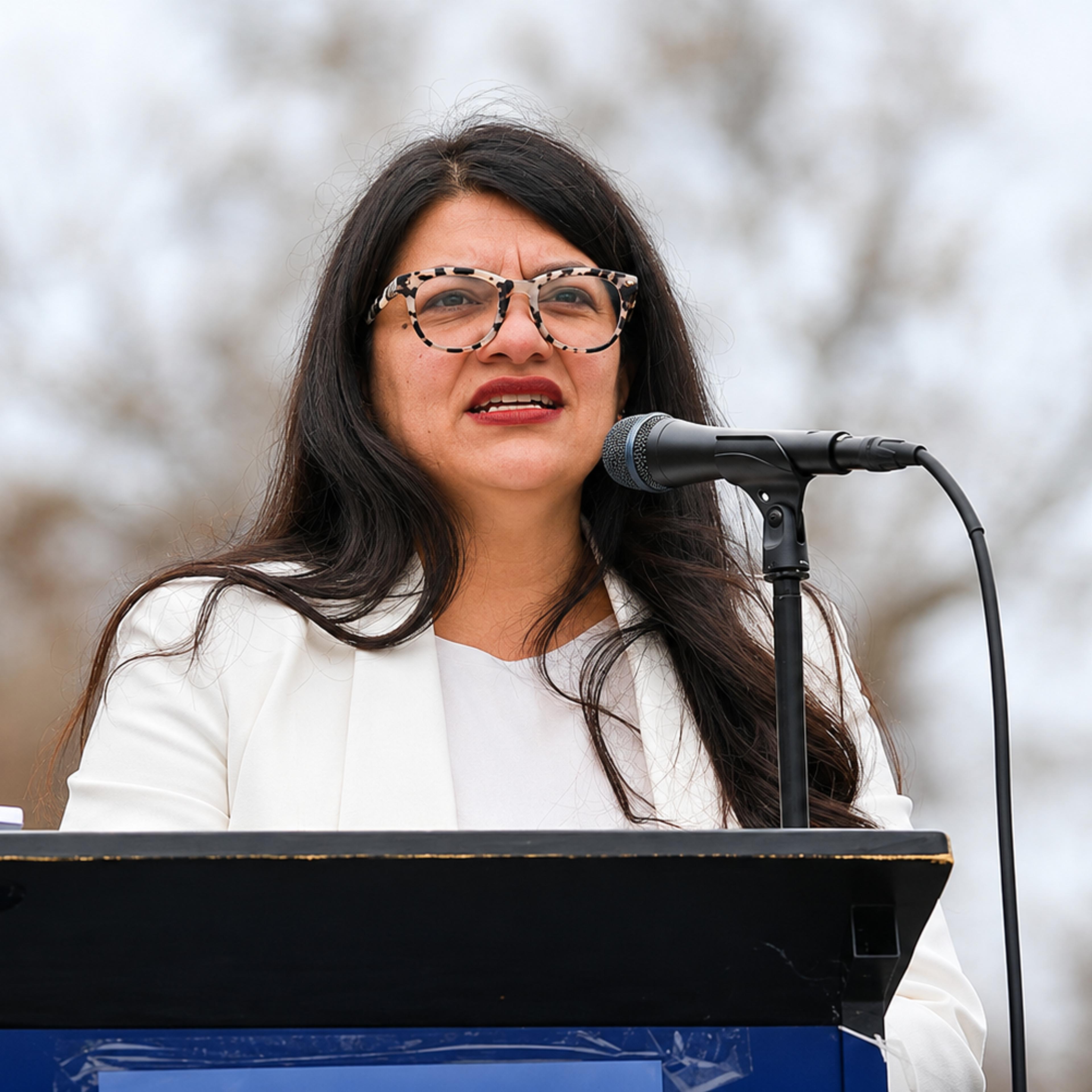
Before the sentence was pronounced, Pannun was allowed to address the court. He criticised the Indian government and spoke about the impact of the alleged assassination plot on his professional and personal life. Pannun was reportedly unmoved by the plea for restraint. He described Gupta as a foot soldier acting for the Indian prime minister, an allegation New Delhi has not accepted. He told the court that self-determination for Punjab remained his lifetime goal.
US prosecutors had said that Gupta acted at the direction of Vikash Yadav, an Indian government employee in the Cabinet Secretariat, which houses the Indian intelligence agency, the Research and Analysis Wing (RA&W), and that a $15,000 advance on a promised $100,000 fee was delivered in New York. The “hitman” who received the money was an undercover US law enforcement officer.
Following Friday’s hearing, Jamie McDonald, US Attorney for the Southern District of New York, said in a statement that Gupta’s sentence should serve as a warning that American authorities would pursue and hold accountable anyone attempting to carry out acts of violence on US soil or against American citizens.
McDonald said Gupta had believed he was beyond the reach of the US justice system, but had been proved wrong. The sentence, he said, held Gupta accountable for his “cold and calculated plot” and demonstrated the US government’s resolve and ability to prosecute such offences, regardless of where the perpetrators were based.
A grievance that crossed borders
The roots of the dispute lie in the Khalistan movement, which seeks a sovereign Sikh homeland carved out of Punjab. Its grievances trace back to June 1984, when Indian Prime Minister Indira Gandhi ordered the army into the Golden Temple in Operation Blue Star. The following year, a bomb destroyed Air India Flight 182 and killed all 329 people aboard, an attack investigators blamed on Sikh militants based in Canada. Support for the cause has since faded in Punjab but has persisted among Sikhs in Western countries. Canada has the largest Sikh population outside India, at about 770,000 people. India designated the leaders of Sikhs for Justice, including Pannun, as terrorists in 2020, though Interpol declined its request for a red notice against Pannun.
Canada’s accusation came first
The sequence that turned a diaspora grievance into a diplomatic crisis began in British Columbia. Hardeep Singh Nijjar, a Canadian citizen and a Khalistan activist, was shot dead outside a Sikh temple in Surrey on June 18, 2023. On September 18, Prime Minister Justin Trudeau told Parliament that Canadian security agencies were pursuing credible allegations of a potential link between agents of the Indian government and the killing. India rejected the claim the next day as absurd and motivated. Each country expelled a diplomat, India suspended visas for Canadians, and by October 19 Canada had withdrawn 41 diplomats from India.
The confrontation escalated a year later. On October 14, 2024, the Royal Canadian Mounted Police (RCMP) alleged that Indian diplomats and consular officials had engaged in clandestine activity linked to serious crime, including homicides and extortion. Canada expelled six Indian diplomats, including the high commissioner, and India expelled six Canadians in return. Four Indian men face trial for Nijjar’s murder. Their guilt is unproven; India says that it has seen no evidence of its involvement.
How the American case came to light
The American case took longer to surface and arrived with far more documentary detail. According to the indictment, an Indian government employee recruited Gupta in May 2023, and Czech authorities arrested him less than two weeks later. That arrest took place on June 30, 2023, at Washington’s request. The public heard nothing until Canada spoke. On November 22, 2023, the Financial Times reported that the US had thwarted a plot to kill a Sikh separatist and had issued a warning to India, and that Washington had shared details with a wider group of allies after Canada’s public accusation. A week later prosecutors unsealed the indictment in a Manhattan federal court.
The document linked the plot directly to Canada. It said Gupta had spoken of “three in Canada” to follow the primary target. Court papers also say that Gupta told the undercover officer Nijjar had been a target too and pressed him to proceed against Pannun now that Nijjar was dead. His lawyer has denied that he had any role in the Canadian plot. Prosecutors also said that the supposed hitman was warned not to strike too close to Modi’s state visit to the United States.
Delhi’s shifting line
India’s response to Washington was notably softer than its response to Ottawa, and it changed over time. New Delhi had set up a high-level inquiry committee before the indictment was unsealed. Modi said that India would look into any information it received. Indian External Affairs Minister S. Jaishankar argued that the two cases could not be treated alike because the Americans had provided inputs and the Canadians had not. In January 2024, India is reported to have given Washington a report acknowledging the involvement of Indian agents while describing them as rogue operatives. By October 2024, the inquiry committee had told US officials that the agent in question no longer worked for the government.
The embarrassment lies in the public record rather than in any single accusation. A US court file now says a person employed by India’s government directed a murder plot on American soil, and India’s explanation moved from outright denial in Canada’s case to an inquiry, a partial concession and a “rogue” framing in the American one. Trudeau said after the indictment that India’s tone appeared to have shifted. India’s official position is that it did not sanction such plots and that the people it has targeted are terrorists under its law. Jaishankar had told Canadian counterparts that such killings are not government policy.
What became of Vikash Yadav
The man US prosecutors say set the plot in motion has so far faced no American court. Vikash Yadav, identified in the indictment as “CC-1”, is wanted by the FBI but has never been handed over. Prosecutors allege that he was an Indian government employee when he directed Gupta, and earlier filings cite WhatsApp exchanges in which he allegedly promised assault rifles and pistols and offered to arrange clearance for an aircraft to carry weapons from India.
The first indictment, unsealed on November 29, 2023, referred only to an unnamed Indian official, but Yadav’s troubles in India began within weeks. Delhi Police’s Special Cell arrested him on December 18, less than three weeks after the US indictment became public, in an extortion case. That case arose from an FIR by a Rohini resident who accused him of extortion and kidnapping and linked him to the gangster Lawrence Bishnoi. A chargesheet was filed in March 2024, and he was released on bail the following month. He had spent four months in Tihar Jail, and his whereabouts after release are not known. That case was unconnected to the Pannun plot, and it stayed out of public view until the US named him.
Washington did so in October 2024. The Justice Department charged Yadav with murder-for-hire in a plot directed from India while he worked for the Cabinet Secretariat. A federal arrest warrant was issued on October 10, and the FBI put him on its Most Wanted list. India’s external affairs ministry said that he was no longer a government employee but gave no further account of where he was. His family said that he rejected the allegations.
Since then he has surfaced only in Indian court records. In August 2025, a Patiala House court issued a non-bailable warrant after he failed to appear in the extortion and kidnapping case. The court cancelled the warrant two days later, after his counsel argued that a lawyers’ strike had kept him away. The Wire observed in February that if the Justice Department seeks his extradition, Gupta’s guilty plea means it will no longer have to convince a judge that a murder plot existed. He remains at large and on the FBI’s Most Wanted list.
What comes next
Relations with Canada have since thawed under Trudeau’s successor. Prime Minister Mark Carney and Modi agreed to restore high commissioners, and the two countries named new envoys in August 2025, ten months after the expulsions. The Nijjar trial is still pending, and Canada’s justice department is fighting to keep sensitive national security information from emerging at it. Pannun says that the FBI and the RCMP warned him in August of a new credible threat to his life. With Yadav still at large and India continuing to deny culpability, Friday’s sentence is unlikely to settle the diplomatic fallout.