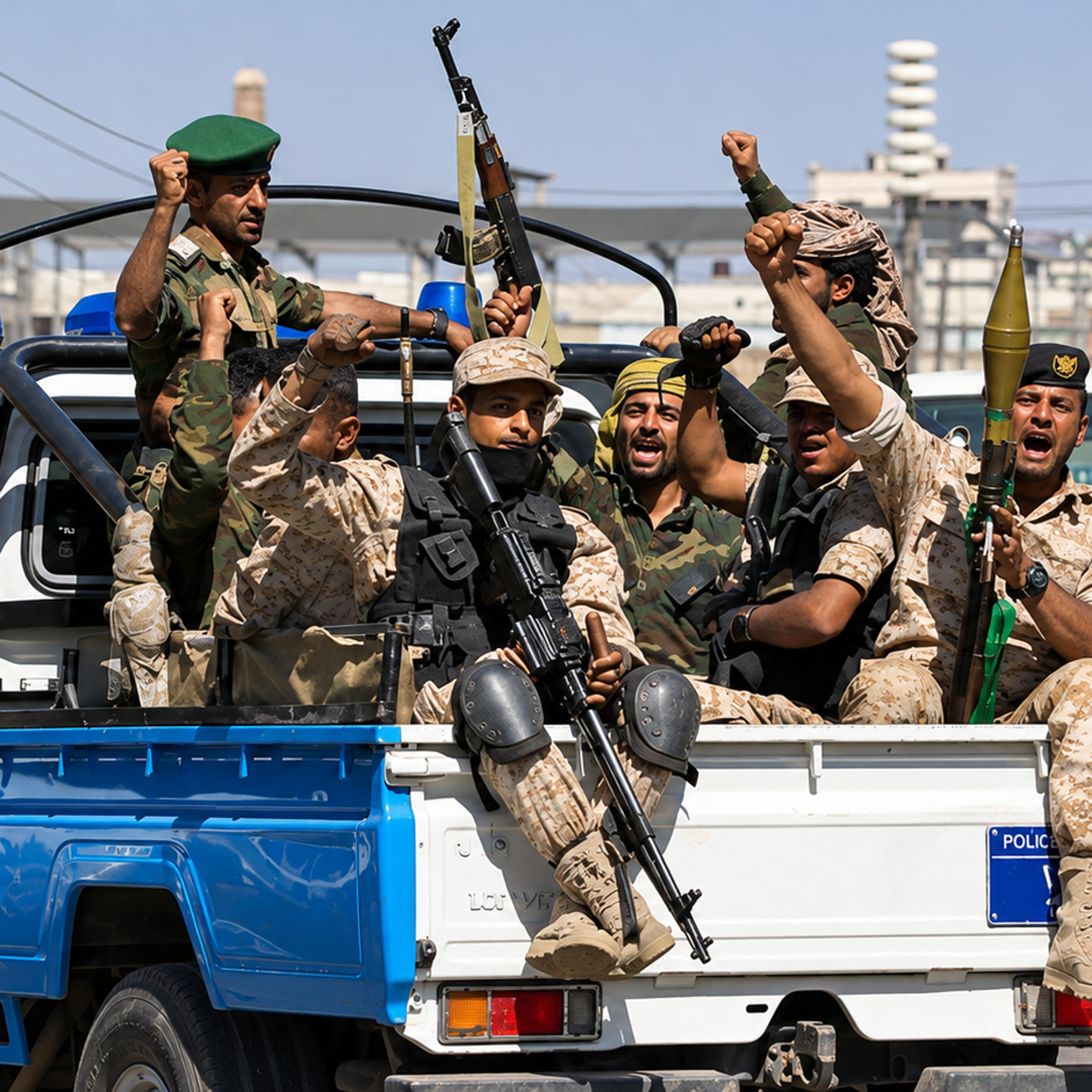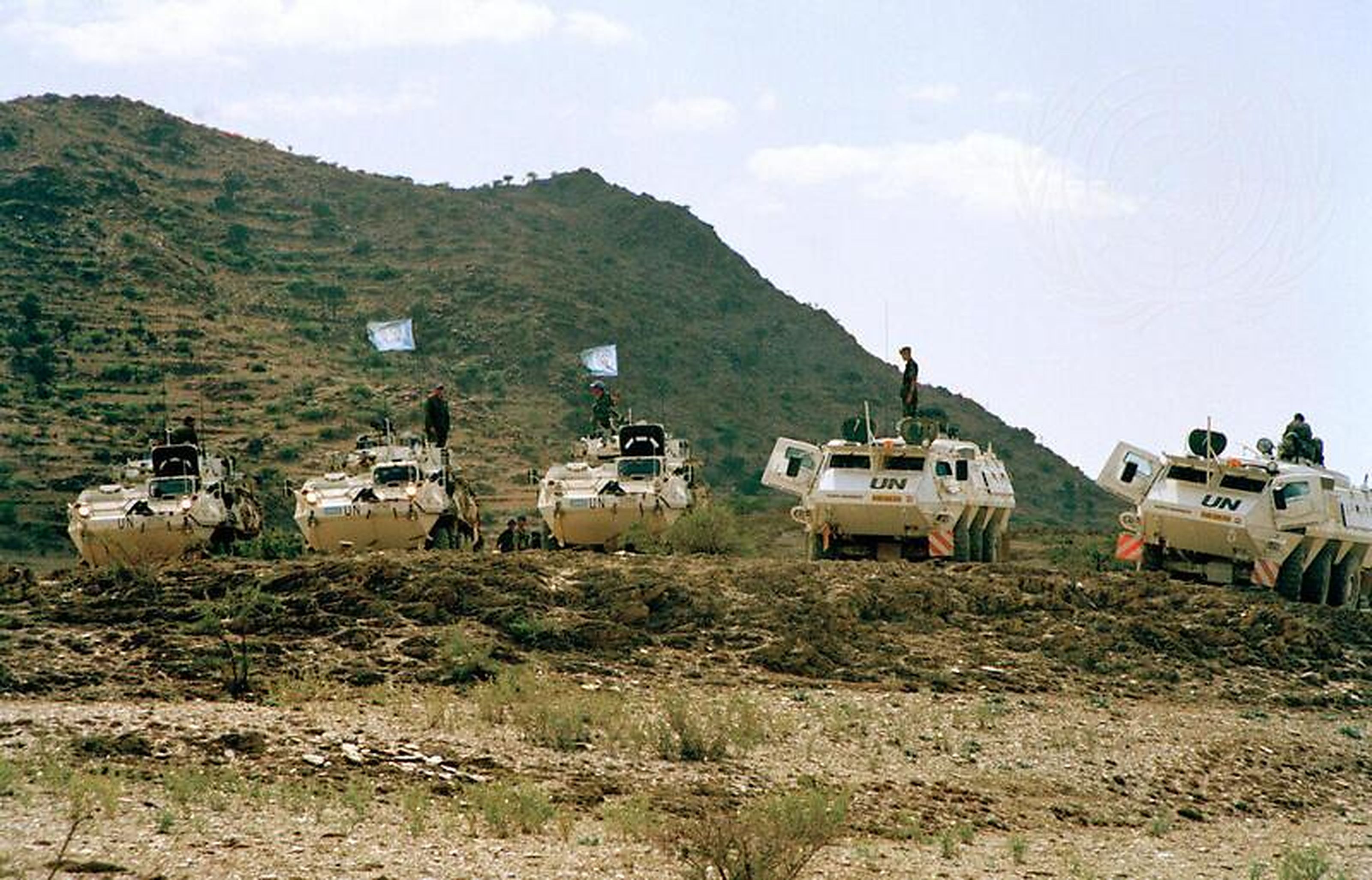
Fighting flared around Badme, the small Eritrean border town whose ownership sparked the 1998-2000 war between Ethiopia and Eritrea that killed up to 80,000 people. Eritrean forces have since reportedly retaken the town, but with Ethiopia battling Tigrayan rebels accused of having Eritrea’s backing, observers warn that the conflict could still pull the two states into direct confrontation.
Diplomatic sources say Ethiopian drone strikes and Eritrean heavy artillery forced civilians to flee the area. Ethiopian federal forces have been pushing the Tigrayan Defence Forces (TDF) towards the Eritrean frontier since the TDF launched an offensive in late September. The TDF is the armed wing of the Tigray People’s Liberation Front (TPLF), which led Ethiopia’s governing coalition from 1991 to 2018 and later dominated politics in Tigray, Ethiopia’s northernmost region. It was formed during the 2020-22 Tigray war from regional security units, defected federal soldiers, local militias and volunteers. Ethiopia alleges that Eritrea supports the TDF. Eritrea denies it.
The Critical Threats Project (CTP), a US conflict monitor, says fighting involving Tigrayan and Eritrean forces around the town began on November 9, after several days of mutual military buildups. It could not verify which side of the border the fighting was taking place on. Some online conflict-mapping accounts claimed Ethiopia captured Badme on November 12. CTP and the Armed Conflict Location & Event Data Project (ACLED) report that Eritrean forces had regained control by November 15, after pulling out in mid-October.
Observers say that the danger of escalation is real. Abdurahman Sayed of the London-based Horn of Africa Center for Regional Integration said the conflict could be triggered at any time. Magnus Taylor of the Brussels-based think tank International Crisis Group believes Addis Ababa's immediate objective is to secure its northern border and cut supply lines between Eritrea and Tigrayan forces. But such a move could draw Ethiopia into a direct clash with Eritrea, turning a conflict involving regional forces into another war between the two countries.
How the war got here
Badme is a small, dusty town with outsized significance. A UN-backed boundary commission ruled after the 1998-2000 war that it belonged to Eritrea. Estimates of that war’s death toll range from tens of thousands to about 80,000. Ethiopia resisted the ruling for years before accepting Eritrea’s claim to Badme as part of the 2018 peace agreement.
The latest confrontation has its roots in another conflict: the 2020-22 Tigray war between Ethiopia’s federal government and the TPLF, and the collapse of the 2022 Pretoria peace deal that ended it. In August, the TPLF accused the Ethiopian army of attacking its forces with heavy artillery near the Sudanese border. Drone strikes in southern Tigray followed. On September 22, reported airstrikes hit schools in Tigray. The TPLF launched its offensive the next day, as part of a wider alliance of armed groups seeking to oust Prime Minister Abiy Ahmed, according to DW. The TPLF describes its campaign as a “defensive war” against federal drone and artillery strikes.
Federal forces then pushed back. Reuters reported on October 4 that they had seized Mekelle, the Tigray capital, from the rebels. Abiy Ahmed later announced a new interim administration for the region. That advance carried the fighting north towards the Eritrean border.
The confrontation spread beyond Tigray, drawing in Eritrea and other neighbours. On October 1, Ethiopia closed its embassy in Asmara, Eritrea's capital, and ordered 10 Eritrean diplomats to leave, citing “hostility and belligerence”. Eritrea responded by cutting ties. A week later, ACLED, a US-based group that tracks political violence worldwide, reported that Eritrean troops and ammunition near the northern Tigrayan town of Adigrat were hit by multiple drone strikes. Eritrea did not deny that its troops had crossed the border. Its information minister accused Ethiopia of building a “fallacious narrative of 'self-defence” to justify aggression.
Loss of life
Civilians are bearing the highest costs. AFP reported that drone strikes killed at least 25 civilians, including children, in late October, among them victims of an attack on a displacement camp. Reuters said that it was not clear who was behind the camp attack. UN spokesman Stéphane Dujarric said the organisation was particularly troubled by the use of drones. A drone strike also hit a truck carrying food aid for displaced people, and a UN warehouse and other aid facilities were looted. The UN says thousands of newly displaced people are sheltering in Debre Birhan in Amhara and Shire in Tigray. Many had already been displaced by the earlier war, in a region where humanitarian needs were already severe. One account of a September assessment by Tigray’s disaster commission put the number of people needing emergency food assistance at about 3.9 million.
Pressure is also growing on Tigray’s own population. In June, Human Rights Watch, the New York-based rights group, said a proclamation issued by Tigray’s TPLF-led regional authorities introduced compulsory military mobilisation, with fines of up to 50,000 birr (about $313) for evaders. In July it documented forced recruitment of civilians, including children as young as 15, and said people fearing conscription were fleeing the region. A TPLF spokesperson denied the allegations.
The war is unfolding against a difficult economic backdrop for Ethiopia. Parliament approved a federal budget of about 2.34 trillion birr (about $14.7bn) for 2026-27, up from 1.92 trillion birr (about $12.0bn). Finance Minister Ahmed Shide attributed the increase largely to costs linked to the Iran war. Economic researcher Abraham Kitima told Al Jazeera that Ethiopia “cannot continue to bear the cost” of fighting for long.
The picture inside Eritrea is harder to establish. It is a closed society, and independent reporting is scarce. What is clear is its military posture: Asmara is in open confrontation with Addis Ababa, with diplomatic ties severed. Human rights groups have long criticised its national service system, which they describe as indefinite conscription. There is no reliable current data on civilian conditions or the economic cost of the confrontation inside Eritrea.
A widening circle
The danger is not confined to the Ethiopia-Eritrea frontier. Addis Ababa’s deteriorating relations with several neighbours suggest the fighting could become part of a broader regional crisis. In early November, Ethiopia expelled six Sudanese diplomats and closed Sudan's consulate in Assosa. Sudan retaliated by closing the Ethiopian consulate in Gedaref and expelling its diplomats. Sudan has complained to the UN Security Council and the African Union that Ethiopia lets the Rapid Support Forces (RSF), the paramilitary group fighting Sudan's army in a civil war, use its territory to launch suicide drone attacks. Ethiopia denies this. It accuses Sudan’s army, Eritrea and Egypt of backing Tigrayan rebels. All three deny the accusation.
Getachew Reda, Ethiopia’s Horn of Africa adviser and a former Tigray leader and TPLF spokesman, told a UN envoy that Eritrean President Isaias Afwerki and Sudan’s army chief, Abdel Fattah al-Burhan, were arming and coordinating armed groups inside Ethiopia. Ethiopia also expelled an Egyptian diplomat in October, in a dispute linked to the Nile dam.
Despite the mounting tensions, international efforts have so far focused on diplomatic appeals rather than punitive action. In early October, the US State Department said rising cross-border tensions had the potential to affect the entire region, without announcing any penalties. G7 foreign ministers who met in Paris on November 9 and 10 expressed great concern in a statement published on November 11 and called for maximum restraint and diplomatic solutions. No sanctions have been announced.
Beneath the border dispute lies a larger strategic question: Ethiopia’s access to the sea. Abiy Ahmed has called Ethiopia’s landlocked status an existential problem and has not ruled out taking Eritrea's port of Assab by force. That ambition adds another layer to an already volatile relationship, raising fears that Ethiopia’s security concerns and maritime goals could collide with Eritrea's sovereignty. Whether the fighting around Badme remains a border skirmish or becomes a full-scale war between the two countries may ultimately depend on how far Addis Ababa is prepared to pursue its quest for sea access, and how Eritrea responds.