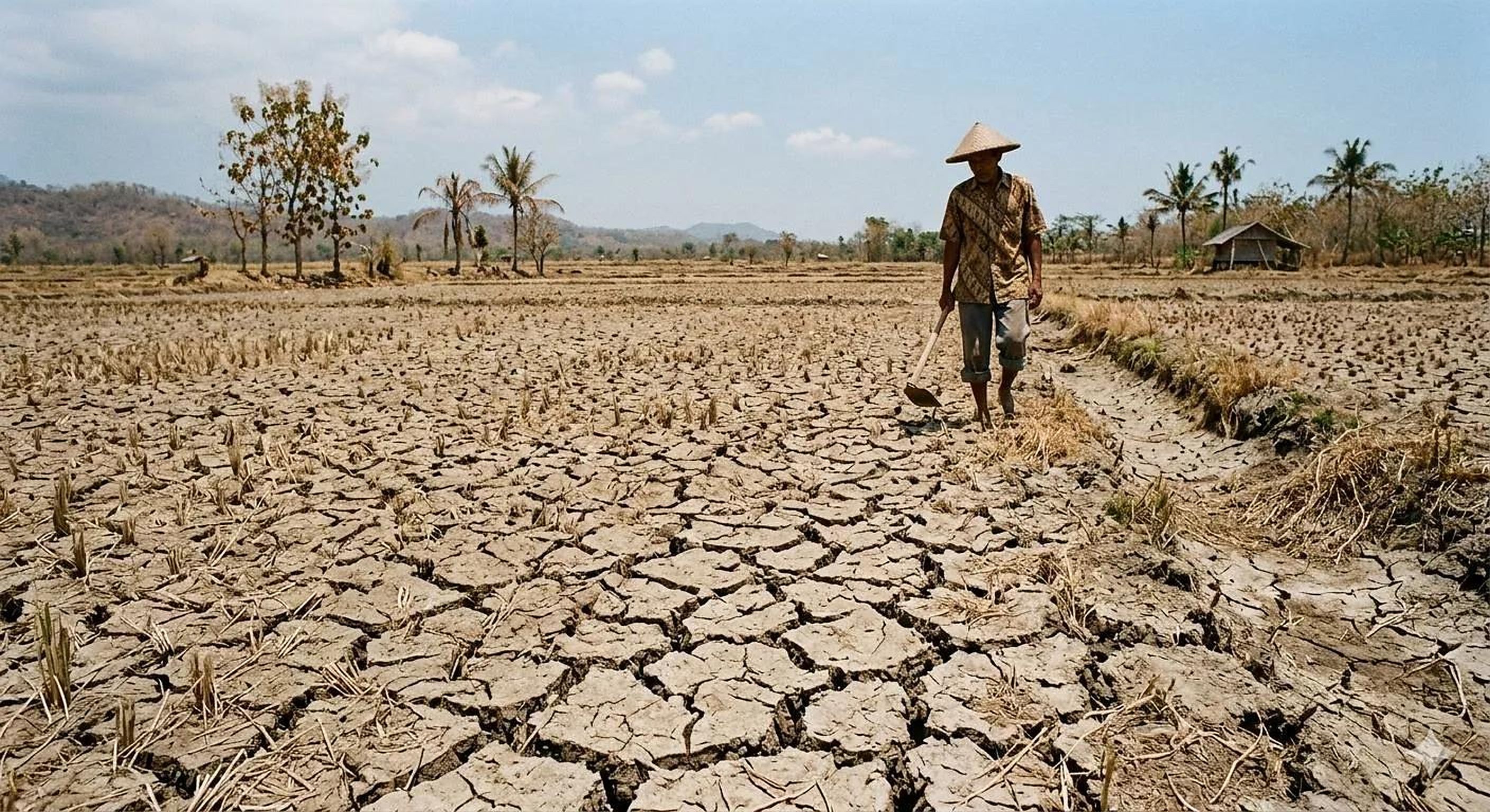
For Sri Lankan farmer A.M. Pathmasena, the climate crisis has acquired a painfully familiar sound: the silence of a well running dry. For the first time in more than three decades, the well beside his home in Galwela Yaya barely provides enough water for his family and two cows. His income from growing cowpeas has disappeared, forcing him to take up daily-wage work to survive.
“The drought has been intensifying. The amount of water seeping into the well is barely enough,” he told Reuters in September.
Thousands of miles away, in Durham, North Carolina, another community is confronting a different version of the same predicament. After months of drought, the American city had just 78 days of easily accessible water remaining in its reservoirs as of November 9. Officials have stressed that this is a projection based on the absence of further inflows, not a countdown to the taps running dry. The city also has access to less readily available sources and emergency supplies.
From rural South Asia to an American city, water insecurity is becoming an increasingly visible consequence of a changing climate. The next great climate emergency may not be another heat record or a devastating wildfire. It could be the struggle to secure enough freshwater to sustain cities, grow food and keep economies running.
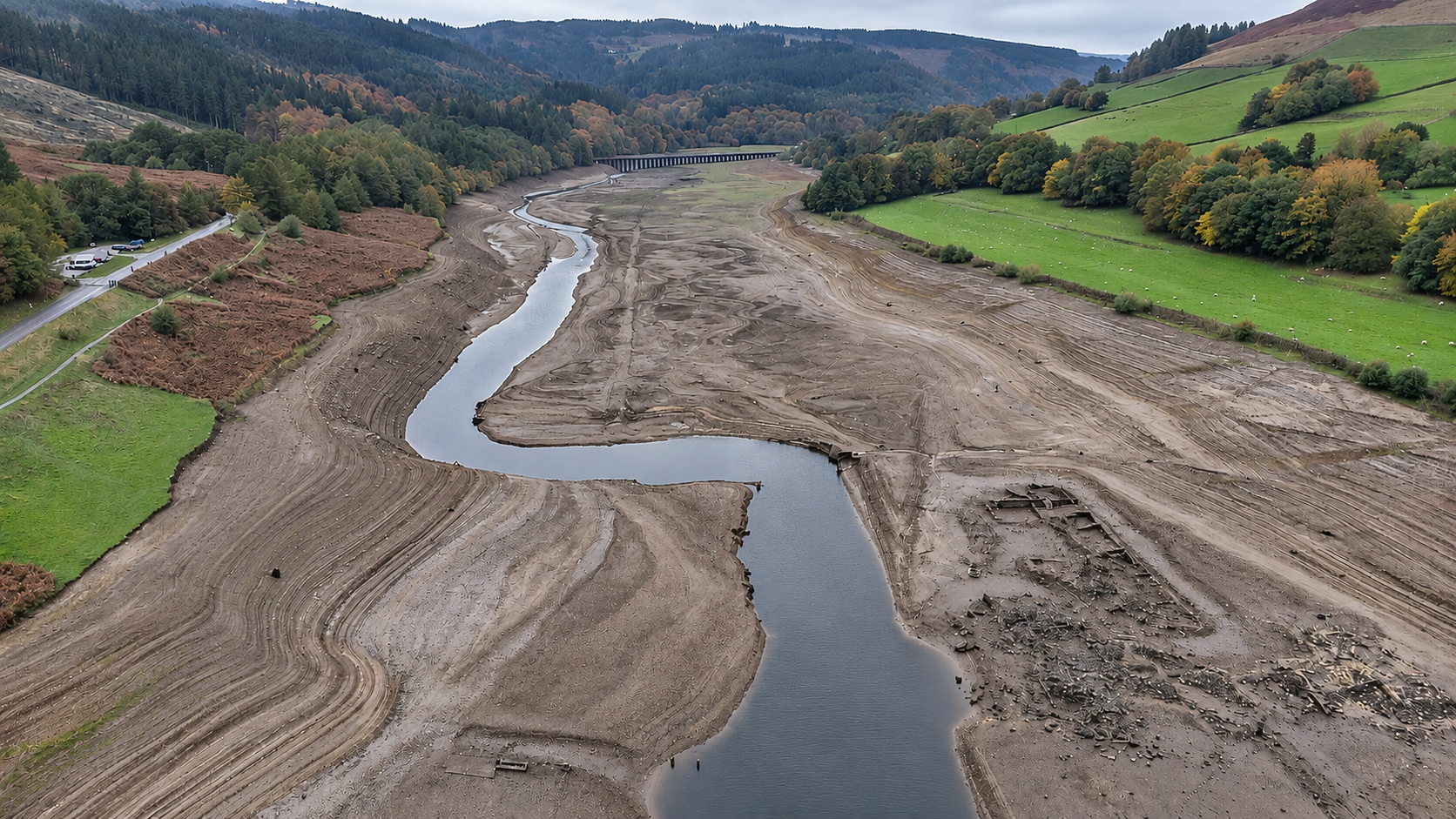
The warning is increasingly evident in the numbers. The World Meteorological Organization’s (WMO) State of Global Water Resources 2025, released in September 2026, found that global river discharge was among the lowest recorded in 35 years. For seven consecutive years, the number of river basins experiencing normal flows remained below the historical average. Global terrestrial water storage has also been declining since the mid-2010s, while every major glaciated region recorded widespread ice loss for the fourth consecutive year.
WMO Secretary-General Celeste Saulo described groundwater, glaciers and seasonal snowpack as the planet's natural savings account, providing a buffer against bad years. “We are depleting that savings account,” she warned.
The report also found that nearly two-thirds of monitored wells worldwide experienced conditions outside their historical norms in 2025, with the balance shifting further towards water deficits.
A crisis that crosses continents
Sri Lanka offers a stark illustration of how water scarcity translates into a human and economic crisis. Some key agricultural districts recorded rainfall deficits of 85-100 per cent below long-term averages during the drought reported in September. Hundreds of small reservoirs and irrigation tanks, which traditionally sustain farms and villages, had fallen to around a tenth of their capacity.
The government arranged water deliveries for tens of thousands of people. In accessible areas, households received supplies every three to five days, while some remote communities waited as long as 23 days.
The consequences extended to household finances and food security. Pathmasena, who previously earned around 20,000 Sri Lankan rupees (about $60) a month from cowpea cultivation, lost his income. His son was forced to shut down a chicken farm because of the heat and water shortages.
“On some days, when we have nothing, we skip meals,” Pathmasena said.
Across the United States, Durham’s predicament illustrates that water insecurity is not confined to traditionally arid or developing regions. The city’s two principal reservoirs were holding roughly a third of their combined capacity in November. It has been purchasing water from neighbouring utilities and drawing on alternative sources to protect supplies.
James Lim, Durham’s water efficiency manager, cautioned residents against interpreting the 78-day estimate as a fixed deadline. “We have that time to implement other strategies,” he said, referring to additional restrictions and alternative sources.
The city’s experience also exposes the importance of infrastructure and regional cooperation: neighbouring municipalities can provide a lifeline when local watersheds fail to replenish.
When water scarcity hits the economy
The pressure is particularly acute in agriculture, which accounts for the largest share of global freshwater withdrawals.
Turkey, which just hosted the COP31 climate summit in Antalya this November, offers a telling example. In the country’s western agricultural region of Söke, cotton farmer Mehmet Kabak has switched to wheat and sunflower, partly because they require less water and are cheaper to cultivate.
The country’s seed-cotton output is expected to fall by 38 per cent year-on-year to 1.2 million metric tonnes in 2026, according to the Turkish Statistical Institute. Farmers in Söke have reduced cotton acreage by about 60 per cent.
Kabak says the financial strain has compounded the effects of drought. “Our input costs increased by 40, 50, 60 per cent continuously,” he told Reuters, referring to irrigation, fuel and fertiliser expenses.
The problem is structural. Agriculture consumes about 79 per cent of Turkey’s water, almost half of which is lost through inefficient infrastructure and irrigation, according to the government.
Ayşegül Selışık, the Food and Agriculture Organization's representative in Turkey, has warned that farmers cannot be expected to shoulder the cost of adaptation alone. “Adaptation is no longer optional for farmers, but it is expensive, and today they largely pay for it themselves,” she told Reuters.
The economic stakes are considerable. World Bank analysis published in 2022 estimated that a 10 per cent reduction in Turkey’s water supply could cost the country sic per cent of its GDP, or about $50 billion, largely because of the impact on agriculture.
India offers another warning. According to the Central Water Commission’s November 12 bulletin, the country’s 178 major reservoirs held 63.25 per cent of their total usable capacity, nearly 30 per cent below the corresponding period last year. Southern India’s 50 major reservoirs were at just 39.74 per cent of capacity, almost 47 per cent below normal levels. Andhra Pradesh, Telangana and Tamil Nadu were among the worst affected.
The implications extend beyond irrigation. Reservoirs also support drinking-water supplies and hydropower generation. Lower storage can therefore place pressure on food production, electricity availability and industrial activity simultaneously.
A disrupted natural water cycle
The emerging crisis is not simply that the world is running out of water. It is that freshwater is becoming less predictable and increasingly unevenly distributed.
Rising temperatures accelerate evaporation and intensify the atmosphere’s capacity to hold moisture. This can produce heavier rainfall and flooding in some regions while worsening prolonged dry spells in others. The WMO has warned that a strengthening El Niño could increase the risk of drought in some areas and flooding in others. Its influence varies geographically and interacts with longer-term climate change and local water-management conditions.
The retreat of glaciers adds another dimension. Mountains supply an estimated 55-60 per cent of global annual freshwater flows, according to UNESCO. Himalayan glaciers, for instance, sustain rivers on which millions of people across South and Central Asia depend. Their accelerated retreat can initially increase meltwater and flood risks, but eventually reduce the reliability of dry-season flows.
The United Nations University Institute for Water, Environment and Health has described the predicament in a January 2026 report as an era of ‘water bankruptcy’. Its director, Kaveh Madani, argues that some river basins and aquifers have been pushed beyond sustainable limits by excessive extraction and environmental degradation.
The price of waiting
There is no single technological solution. Desalination, wastewater recycling, rainwater harvesting and efficient irrigation can help, but they cannot indefinitely compensate for depleted aquifers, damaged watersheds and unchecked consumption.
Governments must rethink how water is allocated and conserved. That means regulating groundwater extraction, repairing leaking distribution networks, modernising irrigation, protecting wetlands and investing in resilient infrastructure. Countries sharing rivers and aquifers will also have to cooperate more closely.
As Selışık has argued in the context of COP31, success should be measured “not by pledges, but by how much finance reaches the farm and the watershed.” The challenge is as much political as environmental. Wealthier cities and industries can often secure alternative supplies, while small farmers and low-income households bear a disproportionate share of the cost. The world has spent decades measuring the climate crisis in degrees Celsius. But the more immediate test of resilience may be whether societies can protect the water systems on which their economies and survival depend.
A city can adapt to a hotter summer. A farmer may recover from a failed harvest. But when an aquifer is depleted, a river basin pushed beyond its limits or a glacier retreats beyond recovery, the consequences can endure for generations.
The next climate emergency may not be measured in degrees. It may be measured in the number of wells that run dry, the harvests that fail and the millions of people whose access to water can no longer be taken for granted.