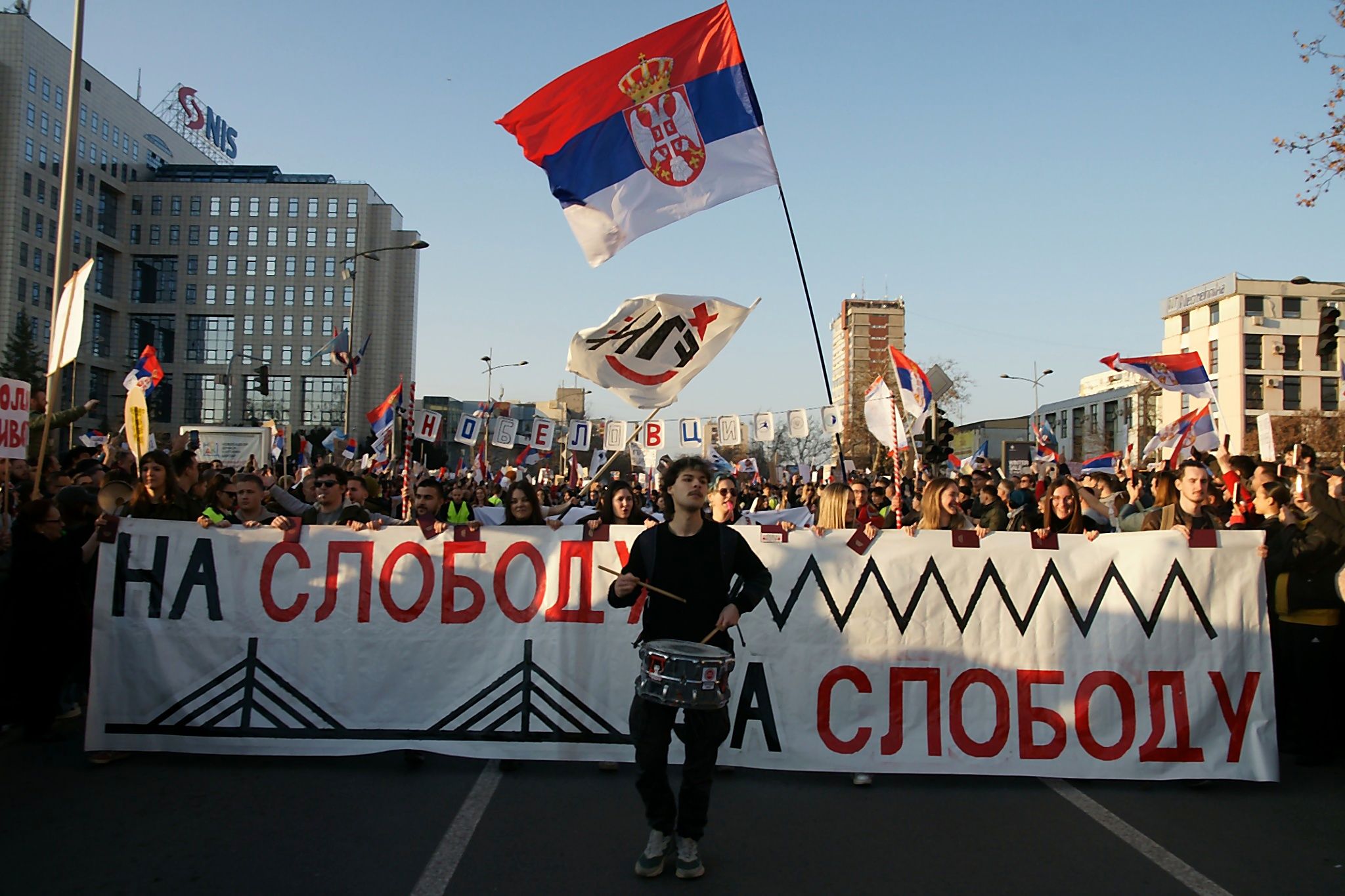
At 9.31 pm on October 25, Aleksandar Vučić, who had led Serbia for nearly 15 years, appeared before the press and conceded defeat to the Student List, which he called the “student-blockader” list. At the same time, tens of thousands of people were already celebrating in central Belgrade, with music playing and songs filling streets lined with police, even though the election results had not yet reached them. I was among them. At 9.34 pm, a young man approached me and said: “Spread the word – Vučić has conceded defeat.” Suddenly, the singing and car horns faded as people began whispering the news to one another. Within a minute, I saw young people around me crying with joy and hugging. A couple of young women fell to the ground with their eyes full of tears, visibly shocked and happy. People stopped their cars and joined the crowds at intersections, and traffic in central Belgrade came to a complete halt. Fireworks soon lit up the sky, as the students’ victory marked the beginning of a new political era in Serbia.
That victory was confirmed in full on 5 November, when the Republic Electoral Commission announced the results from all 8,392 polling stations in the snap parliamentary elections. The Student List won 53.01 per cent of the vote, securing 140 seats and an outright majority in the 250-seat parliament, while the list led by Vučić received 38.98 per cent, resulting in 103 seats. Neither the other opposition lists nor the smaller groups aligned with the ruling establishment crossed the electoral threshold, and the remaining seven seats went to minority parties. The final results came just days after the second anniversary of the Novi Sad railway station canopy collapse on 1 November 2024, which killed 16 people and triggered a nationwide wave of student-led protests against corruption and government impunity. With 68.89 per cent of eligible voters casting their ballots, the election recorded the highest turnout in a Serbian parliamentary race this century.
The high turnout was hardly surprising, given the student movement’s success in mobilising large segments of the population through months of protests, university blockades, marches and other grassroots activities, which was a clear break from previous elections in which Vučić would mobilise his loyal voter base in large numbers. Talking to NWS, Ilija Srdanović, a professor of medicine and leading candidate on the Student List, describes the student movement as an unprecedented phenomenon in political history: “It is unique for many reasons, above all for its non-violent methods of challenging a longstanding authoritarian regime. But in a large part it is also a consequence of an authentic model of undemocratic governance presented in Aleksandar Vučić who, historically speaking, is far from a significant figure.” Serbian media projects Prof. Srdanović as a potential candidate for prime minister. However, the Student List is yet to confirm a name.
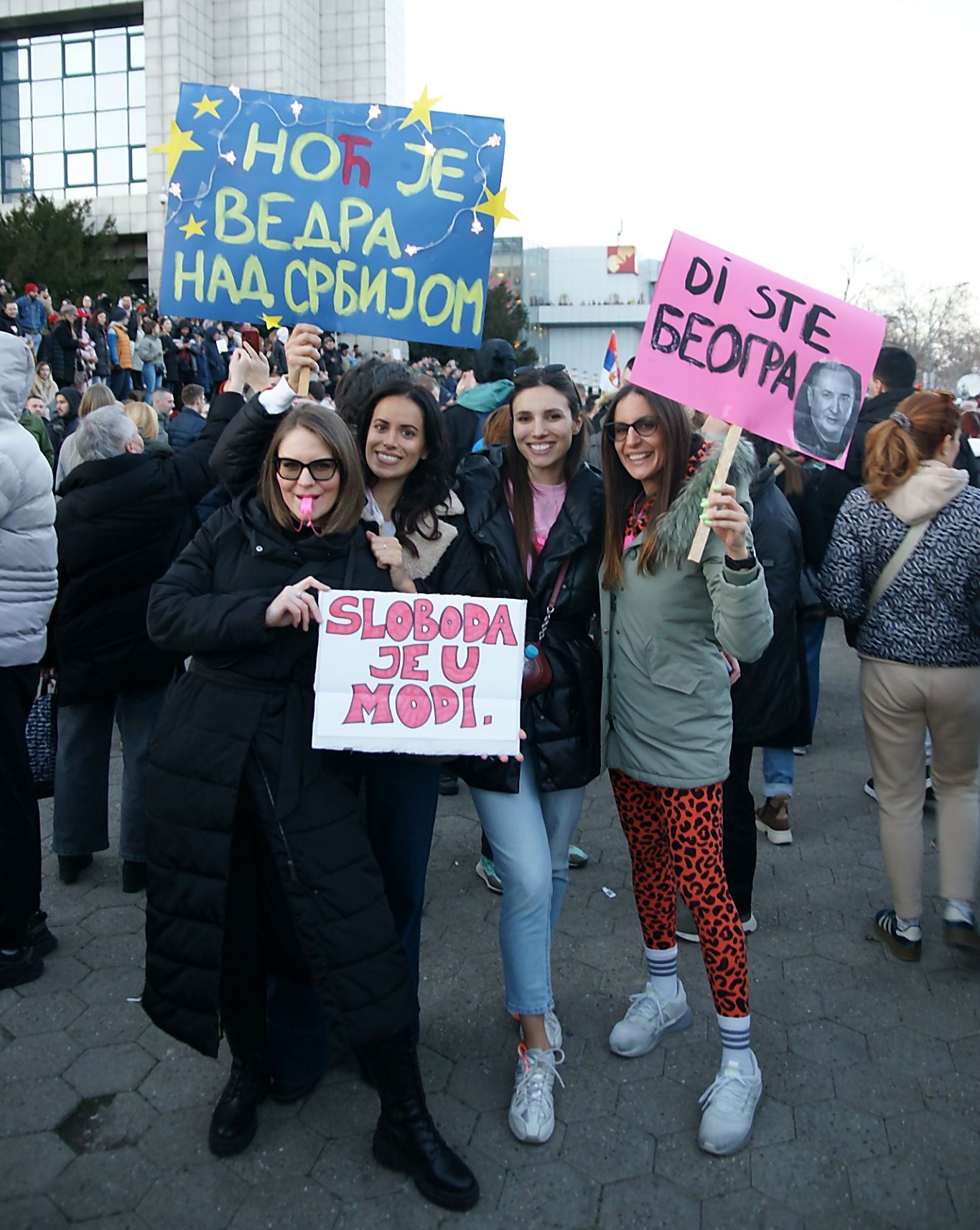
University blockades transformed into a nationwide movement
The entire movement was sparked by one minor incident. On November 22, 2024, students and professors of Belgrade’s Faculty of Dramatic Arts were attacked by a group of drivers while observing 15 minutes of silence for those killed in the Novi Sad railway station canopy collapse. Three days later, at a student plenum, a female student proposed blocking the faculty, a decision supported by a group of professors and the dean. The students voted to begin a blockade that soon spread to universities across Serbia. It later turned out that the attackers had links to Vučić’s ruling party. At the time, few could have imagined that what seemed like an isolated incident would grow into a nationwide movement capable of bringing down the government.
One after another, universities across Serbia began joining the blockades in solidarity with their Belgrade colleagues, demanding accountability for the attack. In the following months, Serbia saw the rise of an unforeseen movement that would reshape its political landscape. The student movement initially asked for full accountability for the Novi Sad railway station disaster and the prosecution of those responsible for attacking students and professors, as well as the dismissal of criminal proceedings against protesters who had been arrested. After the authorities repeatedly failed to address these demands adequately in the summer of 2025, the students called for early parliamentary elections.
Vučić’s era - A legacy of scandals and impunity
Long before the Novi Sad railway station canopy collapse (for which no one was convicted to this day), a series of unresolved scandals had already fuelled public anger against Vučić’s ruling elite. In 2016, the overnight demolition of private structures in Belgrade’s central Savamala district by masked men, while police ignored emergency calls, became a symbol of the authorities’ impunity. In 2016, Vučić initially dismissed the controversy, calling those who carried out the night demolitions “complete idiots”, before acknowledging that the highest levels of Belgrade’s city authorities were responsible. Seven years later, Vučić admitted he decided to clear the structures to make way for the Belgrade Waterfront project.
In the Krušik arms factory scandal, exposed by whistleblower Aleksandar Obradović, questions were raised about preferential weapons deals involving a private company represented by the father of - at the time- the interior minister, while the whistleblower himself faced prosecution. The 2019 discovery of a large-scale marijuana plantation at Jovanjica agricultural estate, followed by allegations that members of the police and intelligence services had helped protect the cultivation, further fuelled suspicions of links between organised crime and state institutions. Public outrage was also stirred by the Doljevac toll-gate accident, in which a woman was killed in a crash involving a vehicle carrying a senior ruling-party official. Although the driver was convicted, two crucial minutes of CCTV footage were never made public, fuelling suspicions about whether the convicted individual was actually behind the wheel.
Over the years, many high-level individuals related to the ruling party were accused of either plagiarising doctoral dissertations or obtaining their academic qualifications through fraud, including current and former ministers and the present Governor of the National Bank of Serbia. Unlike many contemporary authoritarian leaders, Vučić relied on political pragmatism rather than a fixed ideological agenda. He presented himself as pro-European in Brussels, a partner of China and Russia abroad and a defender of traditional values at home. Public anger, however, centred on the gap between this international image and domestic realities: concentrated power, weakened institutions, media control, electoral irregularities and a lack of accountability.
Gaining support beyond students
The scale of the movement is reflected in a remarkable statistic - according to the Archive of Public Gatherings, all six largest political gatherings in Serbia’s recorded history have been student-led events held between late 2024 and October 2026, ranging from mass protests and election rallies to commemorations of the victims of the railway station canopy collapse. The estimated attendance at these six gatherings ranged from 100,000 to 325,000 people, which is huge for a small country of 6.5 million people.
In a statement to NWS, the representatives of the student movement said that one of their first public declarations was that they had no leaders - something entirely new on Serbia’s political scene. “That made us a breath of fresh air in contrast to the established personality cults in politics”, they stated and also explained their decision-making processes through student plenums, open assemblies where students make decisions through direct democratic participation: “Our direct democratic methods have demonstrated that decisions can be made collectively, with every student having a voice and every proposal being heard.”
Dejan Jovanovic, a student at the Faculty of Technical Sciences in Novi Sad, told NWS that the student movement has built strong public trust over the past two years, mainly through its sincerity and youthful energy. “This support and mutual trust between students and citizens have grown into the only force capable of challenging the regime after years of corruption and the destruction of the country.” Luka Šešum, a computer science student, adds that the desire for a change of government after 14 years was only the starting point: “The credibility and reputation of the candidates on the list proved decisive in the election”.
Citizens backed the students’ movement even though no student appeared on the actual electoral list. The students had made it clear in advance that their list would consist of their professors and other experts, explicitly ruling out professional politicians from other parties or movements.
Beyond conventional politics: A movement on the road
One of the most distinctive features of Serbia’s student movement was its creativity in finding ways to mobilise people beyond conventional political campaigning. Before and during the election campaign, students organised multi-day marches between major cities, covering hundreds and thousands of kilometres on foot and turning their journeys into opportunities to connect with local communities along the way. This reporter personally had the opportunity to take part and report from a 3-day march from Novi Sad to Belgrade, days before the decisive election night.
In villages and smaller towns along the route, students were welcomed by large groups of residents who came out to greet them with homemade food and drinks, music, fireworks and overwhelming enthusiasm. Those encounters felt less like political gatherings and more like New Year’s Eve celebrations. For me personally, the march was the most exciting and emotionally moving experience of my journalistic career so far. It culminated in the capital city of Belgrade, where tens of thousands of people welcomed the marchers with applause, tears of joy and a red carpet.
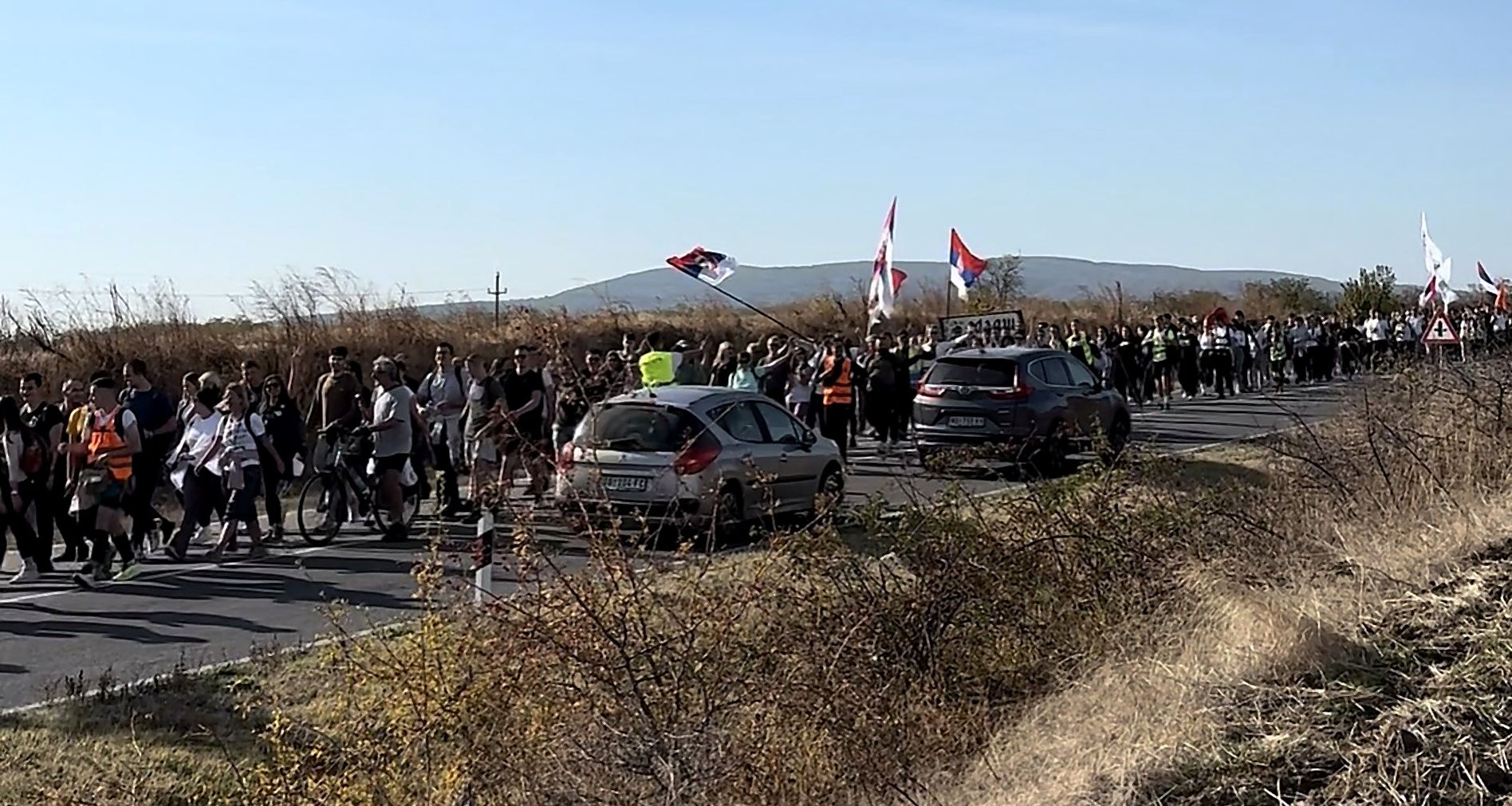
I felt these moments revealed something that traditional political campaigns often struggle to achieve: a genuine connection with people who are often left behind in the big scheme of politics. But students also took their message beyond Serbia’s borders, cycling about 1,300 km through six European countries over two weeks. They crossed Serbia, Hungary, Slovakia, Austria, Germany and France before reaching Strasbourg to draw the European Union’s attention to the emergence of a powerful new grassroots movement.
“The world’s brainiest parliament”
The reputable scientific journal Science recently reported that Serbia may have elected “the world’s brainiest parliament”, as more than half of Student’s Lists’ future representatives in parliament hold either a PhD or a master’s degree. Most opposition parties decided to withdraw their own electoral lists and endorse students instead. The few that chose to contest the election independently fell far short of the electoral threshold, winning less than 1 per cent of the vote, including the high-profile Party of Freedom and Justice, a major opposition party. In the previous election (2023), this party was part of the Serbia against Violence coalition, which at the time secured 23.66 per cent of the vote- clear evidence of the downfall of Serbia’s party-centric opposition. In a way, the election ultimately became a referendum-style contest, with voters effectively choosing between the students’ movement and Vučić’s regime, leaving little space for other political actors to manoeuvre.
Between Russia and the West
As the victory fanfare fades, the winners now face a host of challenges ahead. Although the formation of a new government is still weeks away, the Student List will already have to confront difficult questions, including how to reconcile the views of its newly elected representatives on Serbia’s future foreign policy. The European Commission’s latest report offers a sobering assessment of Serbia’s EU accession process, recording no progress in the negotiations in 2026 (effectively since 2021, as Serbia hasn’t opened any of the negotiation chapters since then) and setbacks in several key areas, including freedom of expression, media freedom, public administration and foreign relations, making Serbia fall behind in comparison to the neighbouring EU candidates Montenegro and Albania, who are both on track to join the EU in the following years.
Serbia’s energy dependence makes its relationship with Moscow particularly difficult to change. More than 70 per cent of its natural gas comes from Russia, while Russia retains majority ownership of the country’s main oil company, NIS. The EU sees this dependence and Serbia’s refusal to join sanctions against Moscow as obstacles to accession. The incoming government will have to diversify energy supplies, address Russian ownership of NIS and decide how far it is prepared to align its foreign policy with Brussels. Although Prof. Srdanović has recently reaffirmed Serbia’s commitment to the EU integration process, the issue was largely sidelined during the campaign in favour of topics such as the rule of law and accountability for corruption.
However, as it stands, the new government does not seem likely to impose sanctions on Russia either, a position it reiterated several times during the campaign. Foreign policy therefore remains one of the key areas in which the Student List will be expected to articulate a clearer position in the period ahead. Aleksandra Jerkov from Novi Sad’s Regional Academy for Democratic Development believes that reforming the country's internal political and institutional system will be impossible without the cooperation and support of the European Union. As she puts it: European Union support will be essential in the fight against crime and corruption, as well as in carrying out lustration.”
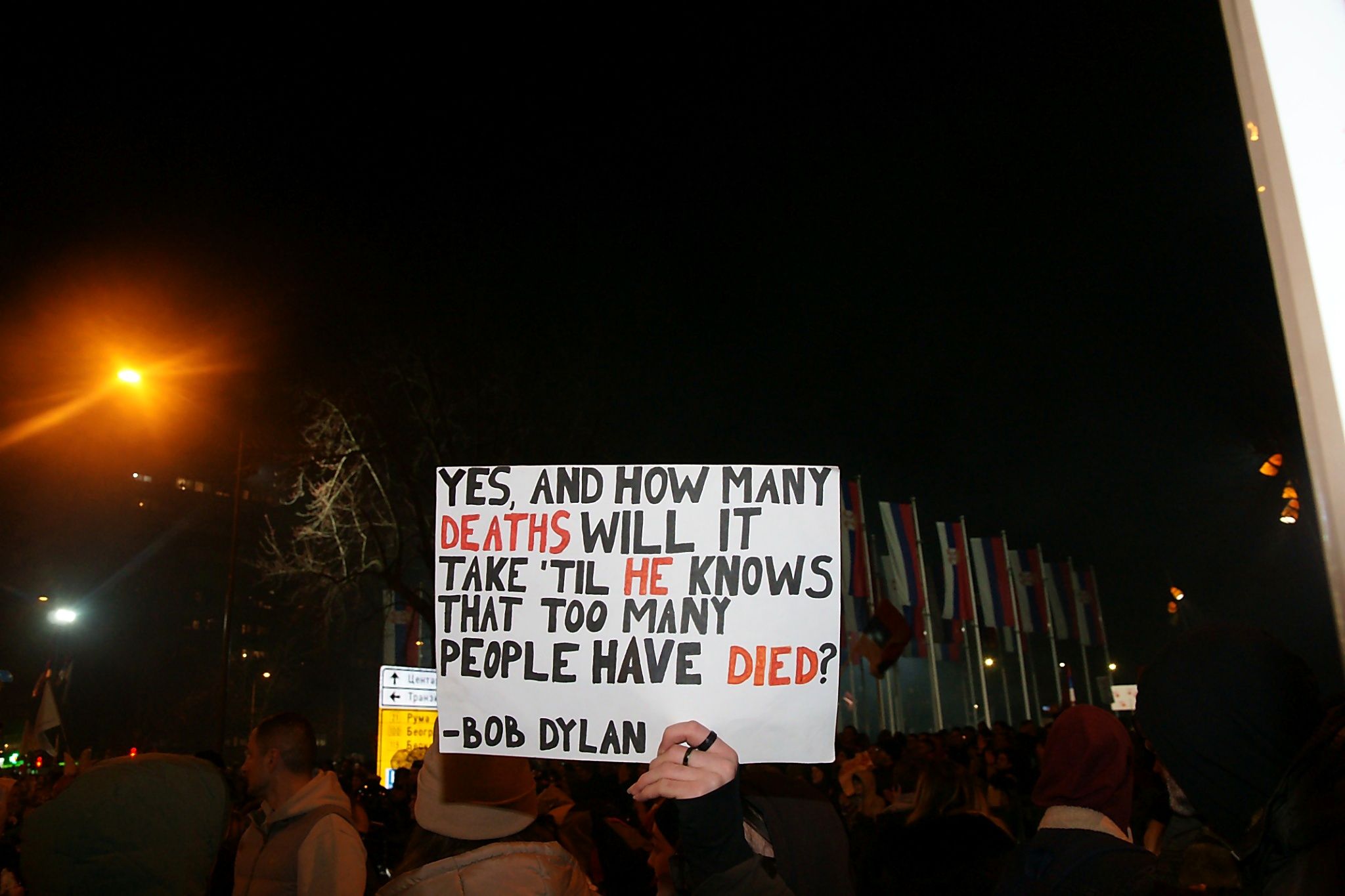
Domestically, the Student List has identified the depoliticisation of public institutions and labour-law reform as priorities. Mario Reljanović, a labour-law expert and elected candidate, said it intended to review employment practices in state institutions and public companies and prepare a new Labour Law in consultation with trade unions and other partners. A four-day working week has also been discussed as a possible reform. The newly elected parliament is scheduled to convene on November 17, beginning the government-formation process. With 140 seats, the Student List has an absolute majority and does not need to negotiate a coalition. Ilija Srdanović has said that decisions on the composition of the government will be made collectively by the parliamentary majority, while Serbia’s EU integration process will continue.
Vučić’s battle for political survival
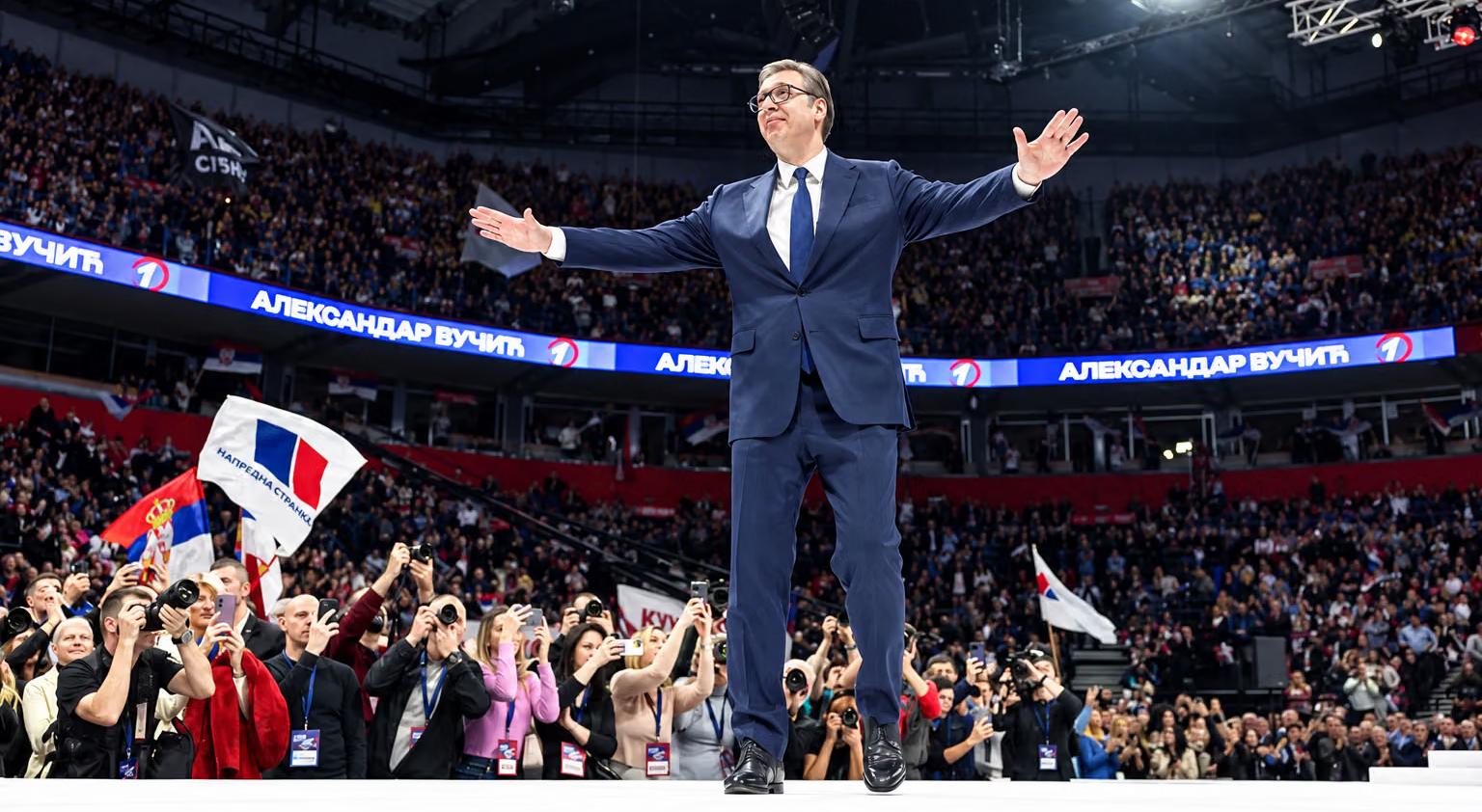
Conceding defeat after 14 years in power, Aleksandar Vučić vowed to continue fighting, making clear that he has no intention of leaving the political stage. Meanwhile, Serbia is heading for another electoral test, with early presidential elections required by December 27. Neither Vučić’s party nor the Student List has announced its candidate for the upcoming election. The only certainty is that Vučić, who for much of his time in power drove his party’s popularity, is constitutionally barred from seeking a third presidential term. He will have to select another candidate, who will have to face the optimism currently sweeping through the student movement and its supporters.