A 30-second campaign advertisement featuring ordinary Mississippians mocking a Republican senator’s response to rising beef prices has become one of the defining moments of the 2026 US midterm elections, helping Democrat Scott Colom defeat incumbent Cindy Hyde-Smith in a state long considered a Republican stronghold. Colom’s victory makes him the first Black person elected to the US Senate from Mississippi since Reconstruction and the first Black person elected to any statewide office in the state since that era.
Colom won by 7,587 votes, securing 479,404 votes against Hyde-Smith’s 471,817, according to the latest reported results. His victory marks a remarkable political reversal in the Magnolia State, where Democrats had long struggled to compete statewide.
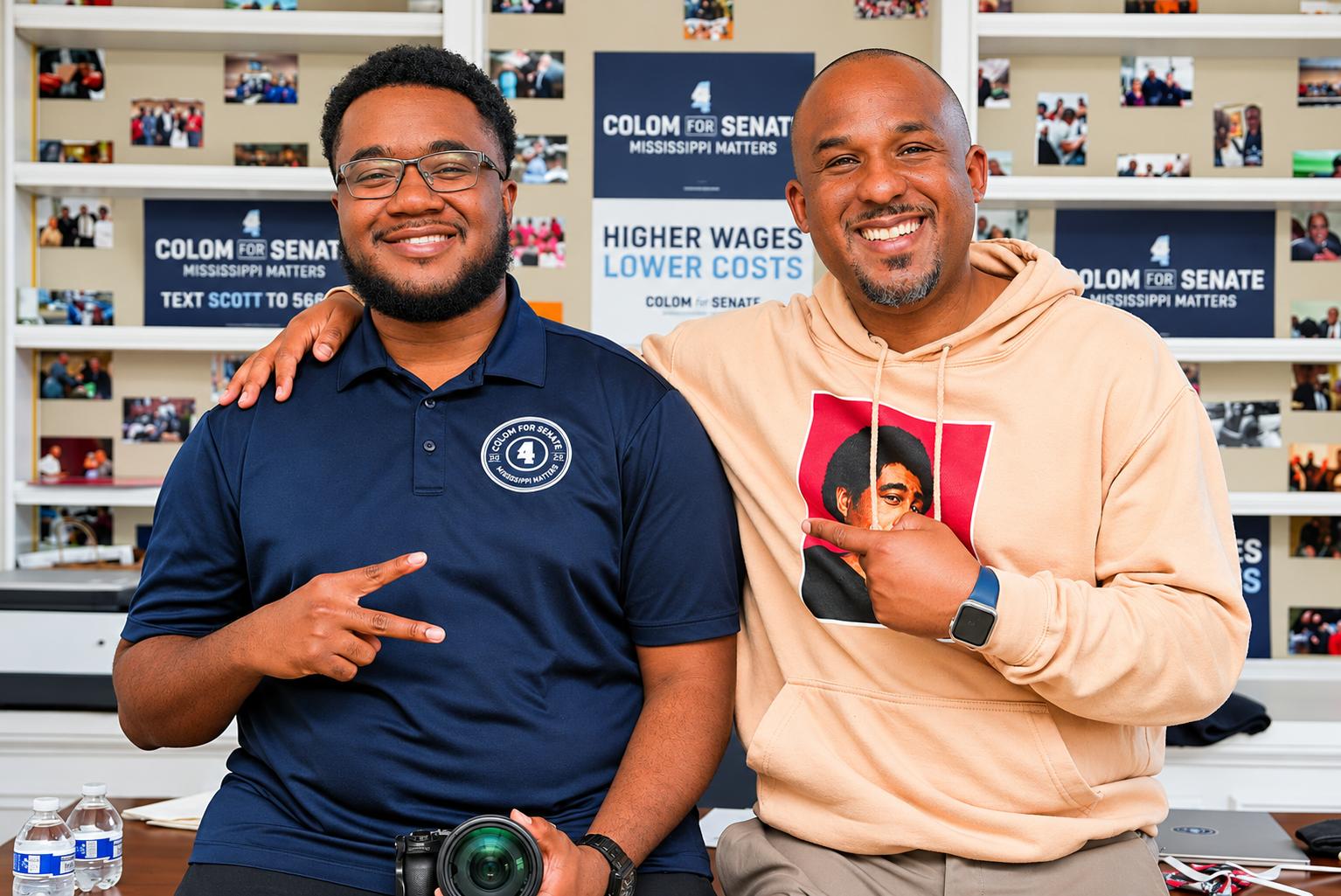
But beyond the historic result, an unlikely figure has emerged as one of the election cycle’s most talked-about campaign strategists: Ryan Sayles, a 27-year-old freelance videographer with no previous political campaign experience.
An advertisement he produced for Colom is now being hailed as a potential model for Democratic digital campaigning. Colom himself called Sayles “the breakout star of this cycle” in a post on X.
The advertisement turned a remark by Hyde-Smith about rising beef prices into a political liability. Asked about the cost of beef, the Republican senator had suggested that consumers had “so many proteins to choose from.” Colom’s campaign seized on the comment, turning it into a pointed message about the cost of living and the disconnect between political leaders and ordinary households.
Rather than featuring the candidate delivering a conventional campaign speech, the 30-second spot showed Mississippi residents reacting bluntly to Hyde-Smith’s remark. Their response was that they would rather pick another senator. Colom appeared for only about five seconds at the end.
The advertisement attracted national attention and eventually outperformed an endorsement video by former President Barack Obama, released a day earlier. It became the campaign’s most successful digital video, helping carry a race that had largely remained a local contest into the national political conversation.
The advertisement helped fuel Colom’s upset victory, Politico reported on November 13.
An ad built on a political gaffe
The idea was to turn Hyde-Smith’s response to beef prices into a memorable line of attack. The script was written by Colom, his twin brother Andrew and campaign manager Gerard Henderson, while Sayles directed the shoot, edited the footage and added music.
The advertisement juxtaposed the senator's comment with the reactions of ordinary voters. One after another, they delivered variations of the same message: if consumers were being told to choose another protein, they would rather choose another senator.
The responses were irreverent and unmistakably local. Sayles leaned into the humour, giving the advertisement an authentic Mississippi flavour rather than the polished feel of a conventional political commercial.
He believes Colom’s brief appearance was central to its success. By keeping the candidate largely off-screen, the advertisement allowed voters themselves to become the central characters. It reinforced a lesson Sayles said he had learnt from the experience: people matter more than politics.
Outperforming Obama
The advertisement’s reach surprised even its creator. Sayles told Politico that he was attending his nephew's football game when the first numbers came in and he realised the video was taking off. Until then, the campaign's biggest digital success had been an endorsement video by Obama, released a day earlier. Sayles had assumed that nothing would surpass it.
The protein advertisement did.
Until its release, he said, the campaign’s digital content had circulated largely within Mississippi. The new video carried the race to a national audience, drawing attention to the campaign and the political possibilities in a state Democrats had traditionally considered difficult to win.
Media outlets described it as the campaign’s top-performing video, although the accounts did not provide comprehensive reach figures.
No sign-offs, no party script
One of the striking aspects of the advertisement’s production was the absence of the usual layers of political approval.
Sayles said that the video was not sent to outside reviewers and did not go through a formal approval process. His lack of campaign experience meant he was unaware of the conventional procedures followed by political advertising teams.
The guiding principle, he said, came from Colom: if the campaign team was happy with the content, it was ready to go.
Sayles joined the campaign almost by accident. He had initially been hired as a freelance photographer for a single campaign event in October. The team liked his work and retained him.
He has since found himself at the centre of growing interest from Democratic operatives seeking to understand how a relatively modest campaign managed to break through online.
Colom has been particularly effusive in his praise. In a post on X earlier this month, he described Sayles as the breakout star of the election cycle and predicted that he would become a major figure among media consultants, crediting him with game-changing work despite limited resources.
The unglamorous machinery behind the virality
Despite the attention, Sayles has been quick to acknowledge that the advertisement’s success was not his alone.
He singled out digital director Lacy Nelson for transforming the campaign’s content distribution strategy. Before she joined, he said, he was shooting, editing and posting virtually everything himself, a process he described as a headache.
Nelson’s arrival helped the campaign get its content in front of a wider audience, turning a locally produced advertisement into a national talking point. Asked what national Democrats could learn from the Mississippi campaign, Sayles emphasised the importance of understanding regional identities and political cultures.
Campaign messages, he argued, must reflect the communities they are intended to reach. What resonates with voters in Mississippi may not work in New York City, and strategists should not assume that a single national message will work everywhere.
“You can’t give Mississippi a New York message,” he said.
He also believes the result should prompt Democrats to rethink their approach to the American South. For years, he said, the party had treated electoral victories in the region as virtually impossible. Colom’s campaign demonstrated that direct engagement with voters and an understanding of local concerns could make a difference, even with limited resources.
Sayles argued that the opportunity had always existed but that Democrats had failed to invest sufficiently in the region. He also acknowledged the years of groundwork by numerous organisations that helped create the conditions for the victory.
Since the advertisement went viral, he said, messages from people in Democratic political circles have been piling up, with several suggesting that they should speak. He has yet to establish who is behind all the approaches, describing the sudden attention as something of a whirlwind.
What it means, and what it doesn’t
The advertisement could provide a blueprint for Democratic campaigning ahead of the 2028 presidential election. Sayles himself has been more cautious, acknowledging that he is no political advertising expert and that this was his first campaign.
Whether a low-budget, locally flavoured, voter-centred approach can be replicated in other states remains to be seen. Nor can a single viral advertisement fully explain Colom’s victory. Strong voter mobilisation, dissatisfaction with the incumbent and the campaign's broader cost-of-living message also contributed to the result.
Nevertheless, the episode offers Democrats an important case study in political communication. A campaign trusted an inexperienced content creator, allowed voters to speak in their own voices and turned an opponent's offhand remark into a compelling electoral message.
For Sayles, the significance of the victory goes beyond the success of a campaign video. “Mississippi, we have hope again,” he told Politico, summing up what Colom’s victory meant to him.
The South, he argued, offers genuine electoral opportunities for Democrats. But realising that potential will require sustained investment, a willingness to listen to local voters and messages that reflect the places in which campaigns are fighting.