A growing rebellion against Nvidia’s leadership has brought together Elon Musk, US President Donald Trump, Silicon Valley heavyweights and thousands of the chipmaker’s employees in an extraordinary campaign to reinstate Jensen Huang, the co-founder whose abrupt departure has plunged the company at the heart of the global artificial intelligence boom into a major leadership crisis.
The campaign, dubbed ‘Stand With Jensen’, has attracted more than 180,000 signatures, with prominent technology entrepreneurs demanding that Nvidia reconsider Huang’s exit before investigations into his personal relationships and potential national security implications are completed. The movement has spread across social media, prompted expressions of employee discontent and drawn support from Taiwan, where Huang enjoys near-celebrity status.
But the pressure has yet to change Nvidia’s position. Reuters reported that the company’s board was not considering reinstating Huang, citing people familiar with its thinking.
Huang resigned on November 11 following revelations about extramarital relationships, including one involving Chinese businesswoman Alice Huang, who is suspected by US intelligence officials of having links to Beijing. The two are not related. Investigations into the allegations remain ongoing, and no definitive public finding has established that Nvidia’s sensitive information was compromised.
The controversy has raised a fundamental question for the global technology industry: can a company whose fortunes are so closely tied to its founder afford to lose him at the height of an unprecedented AI investment boom?
Musk and Silicon Valley rally behind Huang
Musk, whose Tesla and SpaceX businesses are major participants in the AI ecosystem, has become one of the most influential voices demanding Huang's return. The billionaire announced on X on November 13 that he was signing the petition calling for Huang’s reinstatement. “A petition is underway to reinstate Jensen and I'm signing it too,” Musk wrote.
Epic Games chief executive Tim Sweeney joined the campaign with a succinct message: “Save Jensen!” Other prominent supporters include Replit chief executive Amjad Masad and Y Combinator president Garry Tan. Former Uber chief executive Travis Kalanick has also praised Huang as one of the technology industry’s great builders, arguing that his contribution to innovation is too important to overlook.
Musk has offered a commercial argument for Huang’s return, warning that Nvidia could lose critical business relationships built around the founder's personal connections. “Jensen drove supply chain brilliantly at Nvidia, but many of those deals were a handshake with Jensen, not a written contract,” Musk wrote on X. “Without Jensen, at least some of those critical deals will be lost.”
The argument reflects the importance of personal relationships in the semiconductor industry, where manufacturers, equipment suppliers, cloud computing companies and AI developers operate through complex international partnerships. Influential investors have also urged Nvidia’s board not to rush its succession process. Brad Gerstner of Altimeter Capital and Gavin Baker of Atreides Management have argued that all options, including Huang’s possible return, should remain open until the facts are established.
Trump intervenes as Nvidia crisis turns political
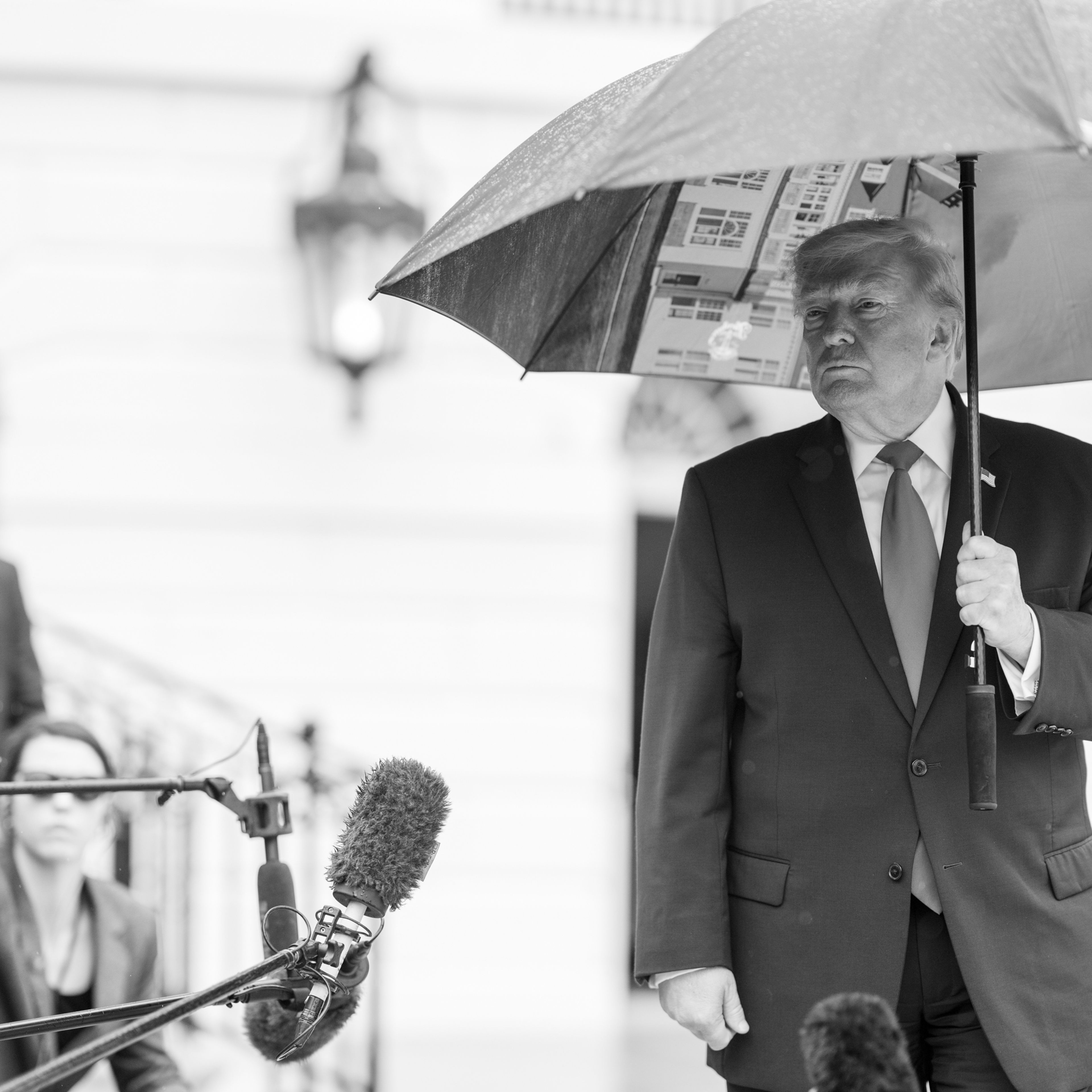
The campaign gained a powerful political supporter when Trump publicly indicated that he would not oppose Huang’s return. Speaking to reporters on November 16, the US president said he believed Huang had “learned a big lesson” and acknowledged the growing demand for his reinstatement. “I would certainly not mind seeing that,” Trump said. “He could return. There’s a big group of people that would like him to return.” Trump also questioned whether Alice Huang was a Chinese intelligence operative, saying he did not know whether the allegations were true.
The president’s intervention is particularly significant because Nvidia has become central to Washington’s technological competition with Beijing. Its advanced graphics processing units (GPUs) power AI systems developed by leading American technology companies, while US restrictions on semiconductor exports to China have made Nvidia a major player in national security debates.
However, Trump’s administration is divided. Treasury Secretary Scott Bessent has advocated bringing in an outsider to lead Nvidia, arguing that the company needs a dramatic shake-up following Huang’s departure.
The contrasting positions reveal how a corporate leadership dispute has become entangled with America's wider ambitions to dominate artificial intelligence.
Employee resignation exposes growing discontent
The unrest has also reached Nvidia’s workforce, where employees have questioned the circumstances surrounding Huang’s departure. Robotics research engineer Darrell Dai announced his resignation on November 15, explicitly linking his decision to Huang’s exit. “His departure led me to decide that my own chapter here should also come to a close,” Dai wrote. Dai praised Huang’s willingness to invest in technologies long before they became commercially successful, particularly Nvidia’s CUDA computing platform, which helped establish its dominance in AI.
He also described a corporate culture in which engineers could communicate directly with the chief executive and pursue ambitious projects. However, Dai acknowledged that Huang should not be exempt from scrutiny. His principal concern was the lack of an explanation from the board. “I do not have all the facts surrounding the allegations, and I cannot prejudge the investigation,” he wrote.
His resignation has become a prominent symbol of employee frustration, although there is no verified evidence of widespread resignations or a mass departure of senior Nvidia executives. Meanwhile, Wired reported that an internal discussion calling for Huang’s return had attracted more than 1,600 comments, most supporting the former chief executive.
Social media campaign gathers momentum
The ‘Stand With Jensen’ petition has become the centrepiece of the reinstatement campaign, drawing attention across X, LinkedIn and technology industry networks. Reuters reported that the campaign had surpassed 180,200 signatures by November 16. The petition’s published tally subsequently put the number at more than 181,000, including thousands of people identifying themselves as current and former Nvidia employees and shareholders.
The campaign’s open letter argues that Huang was removed without meaningful due process and demands his reinstatement while an independent investigation establishes the facts. Musk’s endorsement, Sweeney’s “Save Jensen!” message and Dai’s resignation have helped sustain online attention.
Taiwan's connection to Huang
The support has also spread beyond the US. On November 16, Taiwan’s landmark Taipei 101 skyscraper displayed illuminated messages including “Taiwan Loves Jensen”, reflecting the former chief executive’s popularity on the island where he was born.
Huang’s relationship with Taiwan extends beyond his personal background. The island is central to Nvidia’s manufacturing ecosystem, with Taiwan Semiconductor Manufacturing Company (TSMC) producing its most advanced processors. TSMC is the world’s largest contract chipmaker and supplies major semiconductor companies, making Taiwan indispensable to the global technology supply chain.
Huang has cultivated close relationships with Taiwan’s semiconductor industry over several decades. His departure has therefore prompted concerns about whether Nvidia can maintain the commercial partnerships and strategic relationships that have helped it dominate the AI chip market. The illuminated Taipei 101 display was an expression of public support, but it also underscored the wider economic importance attached to Huang’s leadership.
Allegations complicate prospects of a comeback
Huang’s possible return remains complicated by the circumstances surrounding his resignation. He acknowledged being unfaithful to his wife in an email to employees. Reports have also detailed a relationship with a senior Nvidia executive who reportedly worked under him. The most serious allegations concern Alice Huang, the Chinese businesswoman suspected by US intelligence officials of having links to China’s Ministry of State Security. Investigators are examining whether her alleged connections created national security risks or exposed sensitive business information.
These claims remain unproven, while Beijing has rejected allegations of Chinese espionage, and no definitive public finding has established that Nvidia’s proprietary information was compromised.
The controversy has placed Nvidia’s board in a difficult position. Reinstating Huang before investigations are completed could expose the company to governance, regulatory and reputational risks. Keeping him out, however, could deprive the company of the founder whose vision and relationships helped make it a dominant force in AI.
What happens next?
Nvidia has appointed chief financial officer Colette Kress as interim chief executive and longtime director Harvey Jones as board chairman. The company is considering candidates for a permanent successor. The unfolding confrontation recalls OpenAI’s removal and subsequent reinstatement of Sam Altman in November 2023, when employee and investor pressure forced a dramatic reversal. But Nvidia faces additional complications involving allegations of executive misconduct and possible national security risks.
For now, the ‘Stand With Jensen’ campaign has demonstrated Huang’s extraordinary influence across Silicon Valley, Nvidia’s workforce and Taiwan’s semiconductor industry. Whether that support can overcome the board’s resistance remains uncertain. The larger question is whether Nvidia can preserve the innovation, commercial relationships and strategic vision that made it an AI powerhouse while satisfying demands for corporate accountability.
With investigations continuing, the struggle over Huang’s future has become a test of how much power a founder can retain after leaving the company he built.