SpaceX has achieved a landmark in reusable spaceflight by catching its Starship spacecraft in mid-air after a 22.5-hour journey around Earth, marking the first time an orbital Starship upper stage has been recovered directly by a launch tower. But the historic feat was only half a victory for Elon Musk’s space company: its Super Heavy booster failed to return to the launch site and was destroyed over the Gulf of Mexico, derailing an ambitious attempt to recover both stages of the world’s largest rocket in a single mission.
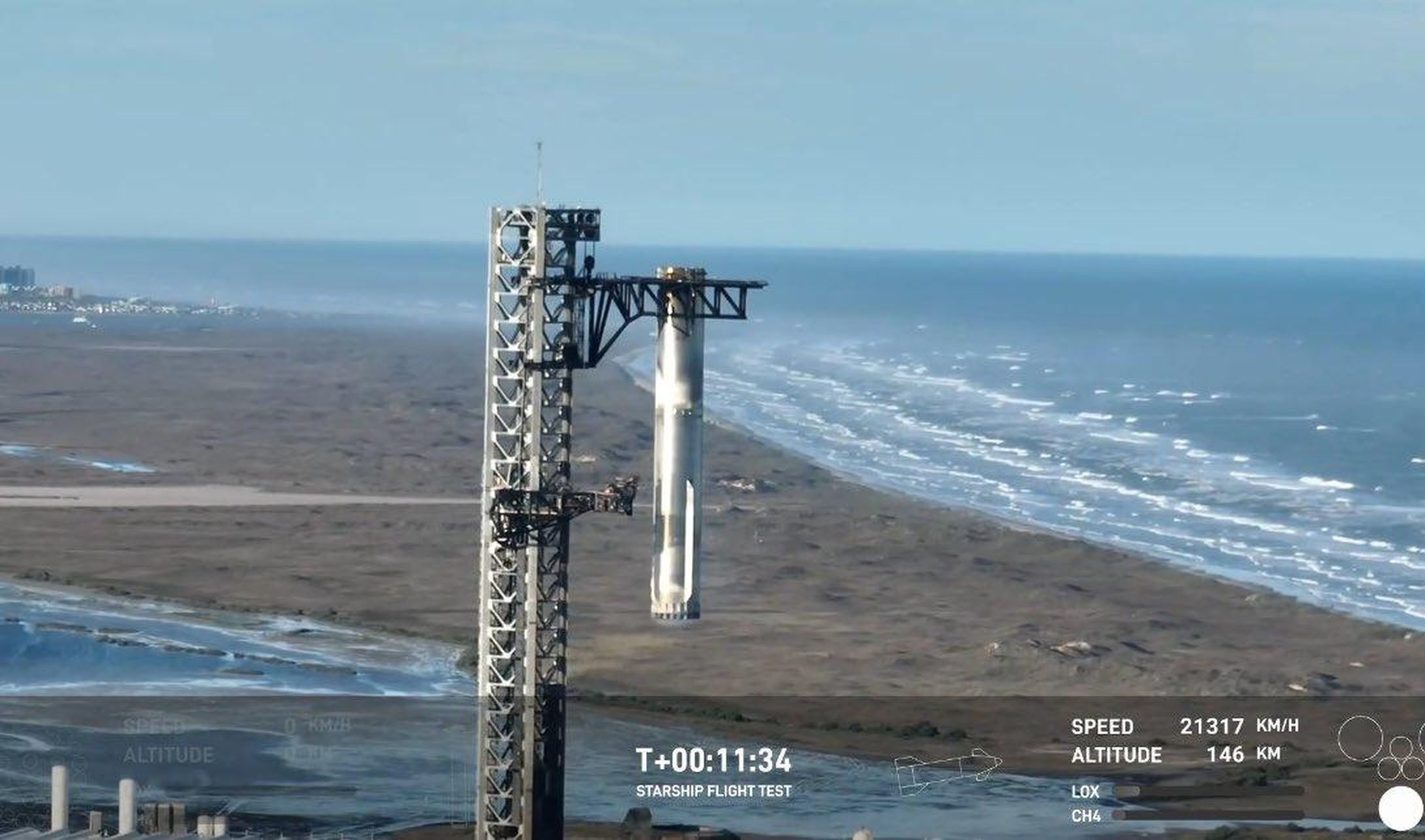
The stainless-steel spacecraft was caught by two giant mechanical arms, popularly known as ‘chopsticks’, at SpaceX’s Starbase launch facility in Boca Chica, South Texas, on Saturday (November 14). It returned to the same site from which it had launched the previous afternoon, having completed 14 revolutions of Earth before navigating atmospheric re-entry and a precision landing manoeuvre.
The achievement represents a significant step towards SpaceX’s ambition of making rockets completely reusable, potentially reducing the cost of space transportation and enabling more frequent launches. However, the failure to recover the booster exposed the engineering challenges that remain before the company can routinely retrieve and relaunch both stages of its massive launch system.
The mission, Starship’s 15th full-scale test flight, was designed to demonstrate a double recovery: the Super Heavy first-stage booster would return to the launch tower shortly after separation, followed by the Starship upper stage after its orbital journey. While the spacecraft completed its mission successfully, the booster had to divert towards an offshore contingency zone after a low-fuel-mass alarm interrupted its boostback manoeuvre.
A historic catch after 22 hours in space
Starship lifted off from Starbase on Friday (November 13), powered by 33 Raptor engines on its Super Heavy booster. The two stages separated approximately two minutes into the flight, with the upper spacecraft continuing towards orbit.
The spacecraft entered low Earth orbit at an altitude of approximately 265 km and deployed 26 next-generation Starlink V3 satellites. It subsequently completed 14 revolutions of Earth before beginning its return to Texas.
Starship first performed a de-orbit burn, reigniting one of its six Raptor engines to alter its trajectory and direct it towards Earth’s atmosphere. It then endured the intense aerodynamic heating of re-entry before executing a controlled descent.
The spacecraft initially approached the ground in a horizontal, belly-first position before reigniting its engines to rotate into a vertical landing configuration. In the final manoeuvre, it descended towards the launch tower, where the mechanical arms closed around it and secured it above the ground.
SpaceX commentator Dan Huot celebrated the achievement during the company’s live broadcast, describing the successful capture as a major milestone in the programme.
The recovery was the first time SpaceX had caught the Starship upper stage after an orbital flight. The company had previously demonstrated the tower-catch technique with its Super Heavy boosters, but recovering the upper spacecraft presented a considerably different challenge because of its orbital speed, atmospheric re-entry and precision landing requirements.
Why the double recovery matters
SpaceX’s long-term objective is to make both stages of Starship fully reusable, recovering them after every mission rather than discarding expensive rocket hardware into the ocean.
The company has already successfully caught Super Heavy boosters on three previous occasions, demonstrating that its launch tower can retrieve the first stage after launch.
Flight 15 was the first attempt to recover both stages in a single mission and the first such attempt involving the upgraded Super Heavy booster.
The distinction between the two recoveries is important. The booster returns relatively soon after stage separation, while the upper spacecraft must travel into orbit, complete its mission, withstand atmospheric re-entry and navigate back to its launch site.
Recovering both stages would allow SpaceX to eliminate the need to manufacture a new rocket for every launch. Instead, the company hopes to inspect, refurbish and relaunch the same hardware, much as commercial aircraft are used repeatedly between maintenance cycles.
The economic implications could be substantial. Conventional rockets are often discarded after use, making the cost of manufacturing replacement hardware a significant component of launch expenditure. Reusability could reduce those costs while allowing a much higher frequency of launches.
Why the booster failed to return
The failure to recover the Super Heavy booster was the principal setback of the mission.
After separating from Starship, the booster began its boostback manoeuvre, designed to reverse its trajectory and return to the launch site. However, the burn ended earlier than planned after a low-fuel-mass alarm was triggered.
SpaceX’s Kate Tice, director of quality management and training, provided a preliminary explanation during the company's live broadcast. “Early indications are that the booster ended its boostback [burn] early due to a low fuel mass alarm,” she said.
Tice added that engineers were still investigating the underlying cause. The preliminary assessment suggested that the guidance, navigation and control system subsequently detected that the booster was no longer in the correct position for a safe return to the tower.
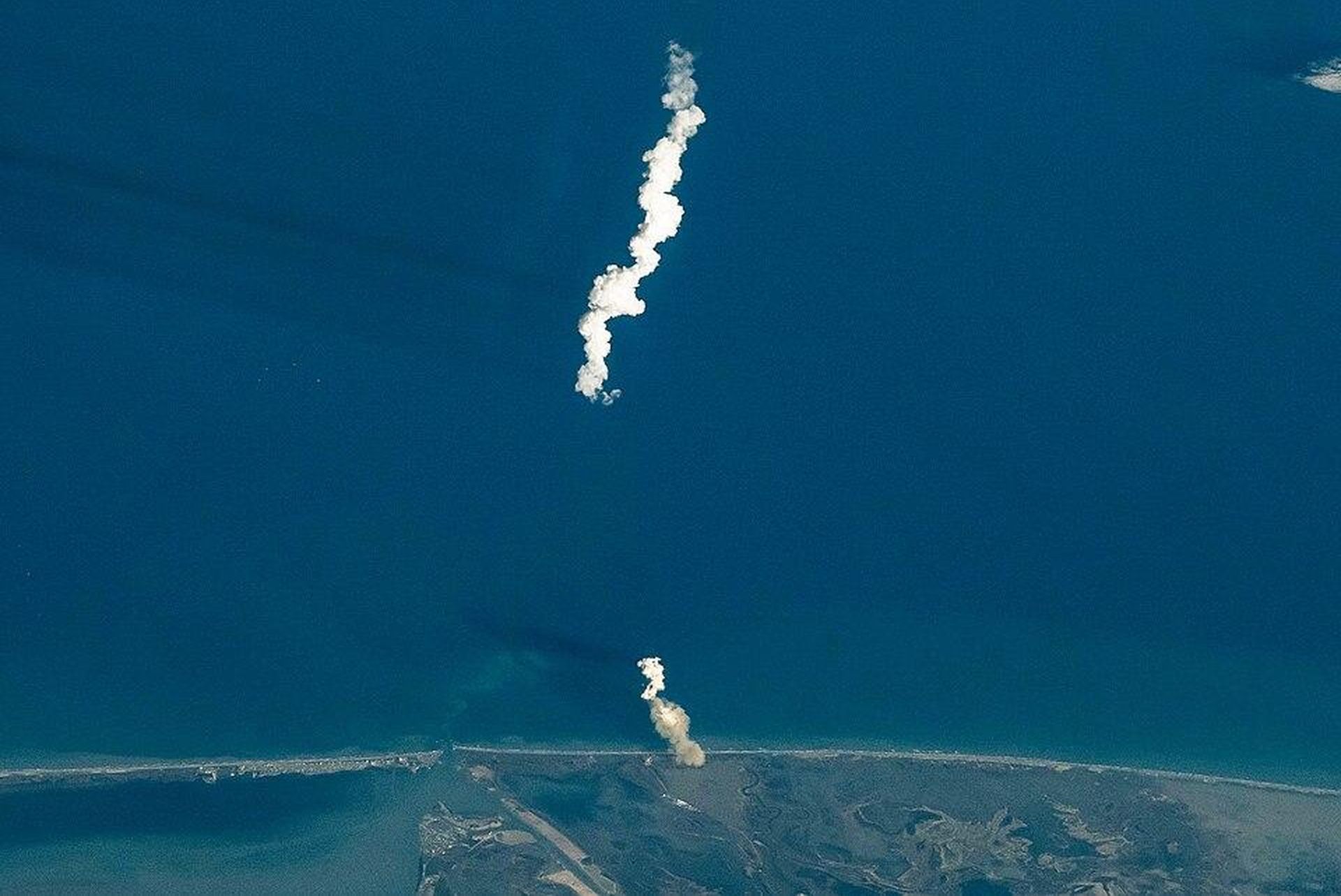
The automated system therefore cancelled the catch attempt and redirected the vehicle towards an offshore contingency zone. According to SpaceX’s mission account, the booster completed its landing burn, with its engines shutting down while it hovered over the Gulf of Mexico. Its flight termination system was then activated, destroying the vehicle.
The distinction is important: the guidance system did not cause the original failure. It detected that the booster was out of position and prevented an unsafe attempt to return to the tower. Engineers are investigating what triggered the low-fuel-mass alarm and why the boostback burn ended prematurely. The incident was particularly significant because Flight 15 was the first recovery attempt involving the upgraded Super Heavy booster.
Why Starship matters to NASA’s lunar ambitions
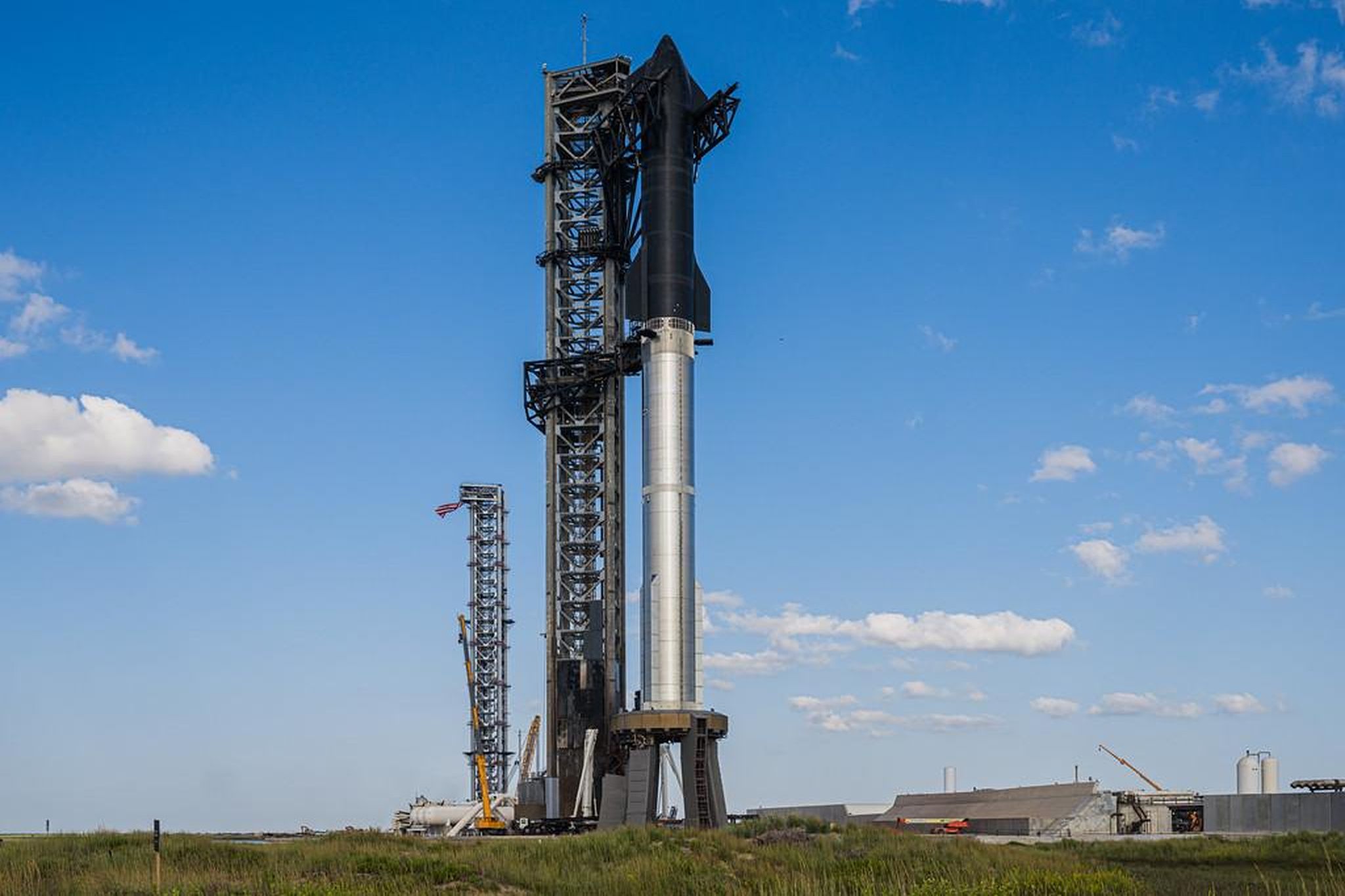
At approximately 124 metres (407 feet) when fully assembled, Starship is the largest and most powerful rocket system ever built. It comprises the Super Heavy first-stage booster and the Starship upper spacecraft, both designed to be recovered and reused.
The programme is central to Musk’s ambition of making human spaceflight more affordable and eventually enabling large-scale transportation to Mars. SpaceX envisages Starship carrying astronauts, scientific equipment, supplies and infrastructure for future missions beyond Earth. Its significance extends well beyond the company’s commercial ambitions.
NASA has selected a modified version of Starship as one of the human landing systems for its Artemis programme, which aims to return astronauts to the lunar surface and establish a sustained human presence there.
Under the programme, SpaceX is developing a lunar-landing version of Starship that will transport astronauts from lunar orbit to the Moon's surface and back. NASA has awarded SpaceX a multibillion-dollar contract for this work.
However, using Starship for lunar missions requires several capabilities that have yet to be demonstrated operationally. These include transferring large quantities of propellant between spacecraft in orbit, supporting crewed missions and ensuring that the vehicle can operate safely and reliably over repeated flights.
The spacecraft’s successful orbital return and tower capture represent an important technological milestone, but they do not establish that it is ready for human spaceflight or lunar operations.
The road to Mars
For Musk, Starship is ultimately intended to serve a much bigger purpose than satellite deployment or commercial launches.
He has repeatedly described the vehicle as the foundation of his ambition to establish a human settlement on Mars. That vision requires a transportation system capable of moving large numbers of people and enormous quantities of equipment between Earth and other planets at a fraction of the cost of conventional spaceflight. The vehicle’s ability to carry substantial payloads, be refuelled in orbit and potentially fly multiple missions using the same hardware is central to that ambition.
But the technical challenges are formidable. Starship must demonstrate reliable orbital refuelling, repeated recovery and reuse of both stages, dependable heat-shield performance and safe operations before it can support the scale of transportation required for sustained lunar or Martian exploration. The successful catch of the upper spacecraft is therefore a major step, but only one part of a much larger engineering programme.
What comes next?
SpaceX will now have to determine why the Super Heavy booster experienced the low-fuel-mass alarm and whether changes to its fuel management, propulsion or flight-control systems are required before another double-recovery attempt. The successful capture of the upper spacecraft, meanwhile, gives the company an important technical achievement to build on. It has demonstrated that Starship can complete an orbital mission, survive atmospheric re-entry and return to its launch site for mechanical capture.
The next challenge is to make that performance repeatable and demonstrate that both stages can be recovered safely, refurbished and launched again. For SpaceX, the ultimate test is not simply whether it can catch a rocket returning from space, but whether it can do so routinely and economically enough to transform the economics of spaceflight.
Flight 15 did not deliver the complete recovery that Musk and his team had hoped for. But the successful mid-air capture of Starship after an orbital journey marks a historic advance in rocket recovery technology, bringing the company closer to its vision of reusable spacecraft and more affordable access to space.