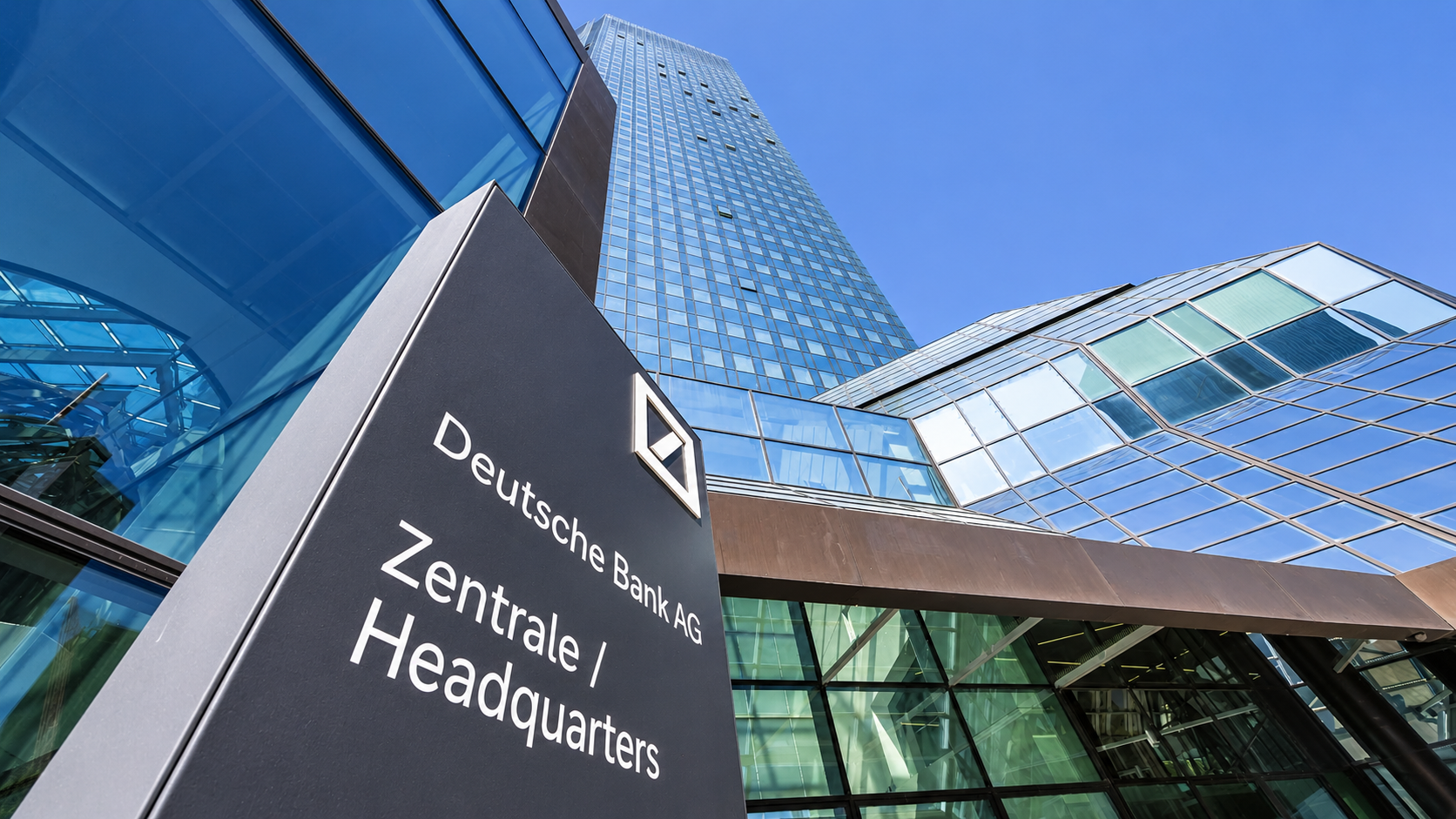
Deutsche Bank is facing renewed scrutiny after a consortium of more than 200 journalists published millions of its internal emails and board papers, alleging that Germany’s biggest lender continued pursuing Russian business despite warnings from its own managers until Moscow’s full-scale invasion of Ukraine in 2022.
The investigation, titled “Inside Deutsche Bank”, draws on some 15 million documents that two insiders passed to journalists and British and US authorities. It also details the bank’s handling of suspicious payments linked to convicted sex offender Jeffrey Epstein and the accidental disclosure of Donald Trump’s tax records. Reuters said it could not independently verify the allegations.
Chief executive Christian Sewing, who sat on the bank’s Russia strategy working group, conceded to business daily Handelsblatt that he was “not without mistakes”. He nevertheless insisted that the course he had set for the bank remained the right one.
Why this matters
The leak threatens to reopen questions about a lender that has spent a decade trying to shed the reputation that it acquired before the 2008 financial crisis. That episode cost the bank more than €20bn in penalties and settlements. Sewing took over in 2018 promising a turnaround. While he has restored profitability, the recovery has come alongside heavy job cuts, and compliance failures have continued.
Spanning about 20 years, the documents suggest that the bank repeatedly prioritised financial interests over sanctions and anti-money-laundering rules. The central question for investors, regulators and clients is whether it has changed as fundamentally as it claims.
The main allegations
Russia: The reports trace an aggressive pursuit of business with Russia and prominent oligarchs, despite warnings from numerous managers. The Financial Times reported that compliance staff were overruled on clients linked to the Kremlin. Deutsche Bank still employs more than 160 people in Russia and generated €61 million ($67m) in pre-tax profit there in 2025 through a local subsidiary.
The files also describe an alleged network that moved more than €1.7 billion globally. More than €8m of this went to Vienna-based jet company Avcon Jet from a firm linked to the circle of sanctioned oligarch Oleg Deripaska. The bank says that it reported the network and co-operated with the authorities.
Jeffrey Epstein: The reporting indicates that Deutsche Bank processed almost $600 million (about €538m) in suspicious payments linked to Epstein, substantially more than previously known. Reuters had reported in February that the bank continued serving Epstein after informing him in late 2018 that it would end their relationship. His accounts were closed only after his arrest in July 2019.
Donald Trump: The bank sent Trump’s tax records by mistake to another client’s accountant during his first presidential term. The FT-led investigation adds that the error was concealed from the White House and that Sewing was briefed. Trump called the disclosure illegal. The reports raise broader concerns about the bank’s activities, including alleged efforts to establish tax-optimisation schemes for wealthy clients, possible facilitation of criminal money flows and assistance with arms deals. They also say that it served companies in environmentally damaging industries and held funds for the far-right Alternative for Germany (AfD).
Other reporting alleges that Deutsche Bank handled about 60 per cent of Colombia’s euro-denominated business in 2019, worth more than €20 billion, without filing a eurozone money-laundering report that year. The bank is also alleged to have processed payments for Rifaat al-Assad, uncle of Syria’s former dictator, but flagged concerns only nearly eight years later. Payments from suspected North Korean front companies, the reporting adds, passed through its controls for an extended period.
The collapse of Signa, the property empire founded by René Benko, is another strand of the investigation. Internal analysts questioned Benko’s business model more than six years before the group's failure, yet management voted to take on Signa Prime. Benko is presumed innocent. Der Standard also reported on documents concerning several Austrian companies, although the reports do not allege wrongdoing by them.
Sewing under scrutiny
According to Der Standard, Sewing wrote in a 2017 email that “KYC is breaking our revenue neck”. KYC, or “know your customer”, refers to the checks banks conduct to establish clients' identities and the origins of their money. The documents also indicate that, in 2015, he warned against interpreting tougher standards too strictly for fear of losing key clients. The revelations sit awkwardly with his subsequent public pledge to make Deutsche Bank “more boring” following earlier scandals.
The bank told Der Standard that the emails had been quoted selectively and, in some cases, taken from separate threads. It said Sewing had spent most of his career in control functions and maintained that tailoring KYC requirements to a business’s risk profile was legitimate.
The bank’s defence
Deutsche Bank dismissed the revelations as “legacy” matters, arguing that they would have no lasting negative financial impact. It said the cases dated back years, in some instances two decades, and had been reviewed with regulators at the time. The bank pointed to €7 billion invested in controls between 2019 and 2025 and ten credit-rating upgrades in six years.
Supervisory Board Chairman Alexander Wynaendts said in an emailed statement that he had not encountered a single Sewing decision during his tenure that made him uncomfortable. The bank also said the documents were “purported” and contained legally protected information that it would continue to safeguard.
Investors and politicians react
Deutsche Bank shares closed down six per cent, marking their biggest one-day decline in more than a year. Investor groups were sharply critical. Klaus Nieding of the DSW shareholder group compared the leak to “detonating an atomic bomb at its headquarters”, warning that clients could head for the exits.
Markus Kienle of the SdK investor association rejected the bank’s argument that the cases were old, saying the crucial issue was whether they exposed recurring patterns of conduct. Filippo Alloatti of Federated Hermes suggested that the board should begin considering succession.
Political pressure also mounted. Finance Minister and Vice-Chancellor Lars Klingbeil urged the lender to be completely transparent about how it had addressed past control failures and how it intended to prevent new ones. He added that authorities must investigate and act where appropriate. MEP Rasmus Andresen called on Sewing to appear before the European Parliament.
Regulators were more cautious. Germany’s financial watchdog BaFin declined to comment directly on the revelations but said it had conducted six inquiries involving the bank since 2018. A European supervisory official told Reuters there was no immediate indication of a major new investigation, partly because many of the issues appeared historical. The European Central Bank declined to comment.
A decade of trouble
Since 2012, Deutsche Bank has paid €18.6 billion to settle alleged misconduct and litigation, according to the Financial Times. German authorities raided the lender three times this year. A January raid, part of a money-laundering investigation linked to a Russian oligarch, overshadowed its strongest profit announcement since 2007. BaFin fined the bank €8 million last week. Its share price has tripled under Sewing, while cumulative profits finally offset a decade of losses in April 2025.
The latest revelations, however, threaten to undermine the lender’s efforts to put its troubled past behind it.