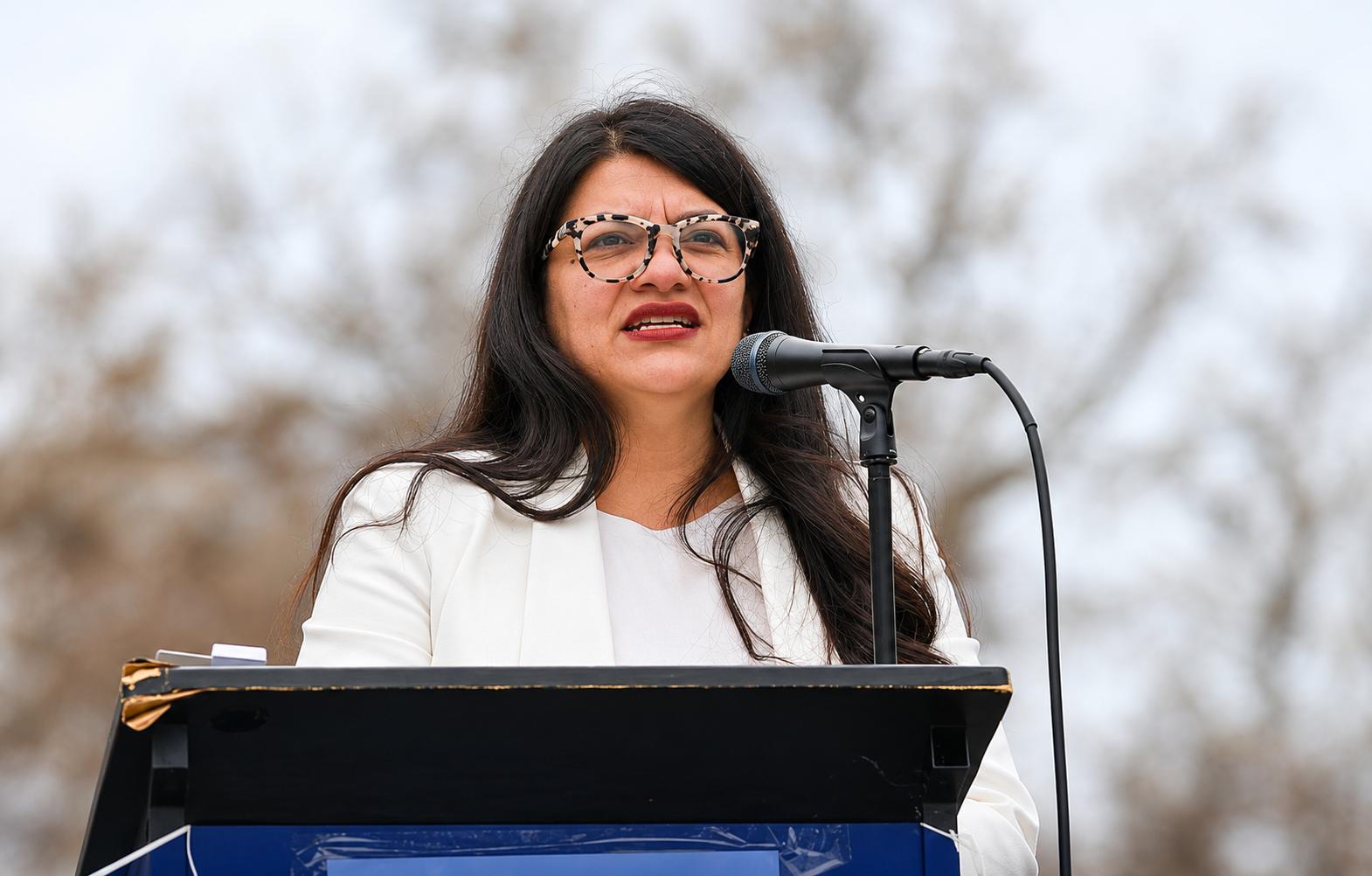
US Congresswoman Rashida Tlaib has called on the incoming Democratic majority in Congress to act immediately to end President Donald Trump's fuel blockade of Cuba, block any military action against the island and lift the US embargo, as Trump renews threats to invade. “The Trump administration is strangling the Cuban people,” the Michigan Democrat wrote on social media. “Our new Democratic majority must act immediately to end Trump's fuel blockade, block military action, and finally end the embargo that has inflicted economic warfare against Cuba for over half a century.”
Blockade since January
Trump imposed the fuel blockade in January as part of an effort to oust Cuba’s communist government. The US embargo has constrained the island's economy for more than six decades. The blockade has deepened hardship for Cuba's roughly 9.4 million residents. Cuba’s ageing electrical grid was already prone to outages, but they have become catastrophic since the blockade began. The country has suffered at least seven major blackouts this year.
The United Nations reported in May that more than 100,000 patients, including 11,000 children, were still waiting for surgery. In June, Cuban state media said nearly 3,000 dialysis patients had faced disruptions to their treatment. About 3.5 million people have faced water shortages as electric pumps lose power, prompting the US embassy to warn of rising diarrheal illness. Energy shortages have also disrupted food production and transport, left families unable to refrigerate food and forced hospitals to operate without reliable electricity.
Cuba's embassy in Washington has called the blockade “collective punishment.” Human rights organisations have said it violates international law.
Sanctions tightened
Earlier this month, Trump expanded sanctions to any country or individual operating in Cuba's electronics, manufacturing, maritime or technology sectors. Trump has described the policy as part of a “friendly takeover” of Cuba. After launching the blockade, he said he believed he would “have the honor taking Cuba,” and hinted at military action once the war with Iran ended.
Days after Republicans suffered a heavy midterm defeat, attributed in large part to the Iran war, Trump said he would certainly consider using military force to overthrow the Cuban government, which he called a "failed" state. He said he wanted to get Cuba done before leaving office in 2029, adding that Secretary of State Marco Rubio, a longtime Cuba hawk, “would love to do it.”
Policy proposals
In an op-ed for the Los Angeles Times, Michael Galant, a senior research and outreach associate at the Center for Economic and Policy Research, argued that congressional Democrats should make ending the blockade a priority when they take power. "This fuel blockade is cruel. It is illegal. It is an act of war. It is unpopular—on the world stage and among US voters. It may even be a national security risk," Galant wrote. "With the new balance of power, Congress has the tools to confront it."
He urged Congress to begin with a war powers resolution barring unauthorised use of military force against Cuba, including the blockade. "Come 2027," he wrote, the new Congress could also 1) terminate the January national emergency declaration, on which many recent sanctions rest, 2) remove Cuba’s “State Sponsor of Terrorism” designation, which he said effectively cuts the country off from the global financial system; and 3) suspend Title III of the Helms-Burton Act, which allows third parties to sue people who “traffic” in property confiscated by the Cuban government.
Democrats could make it harder for Trump to veto such measures by attaching them to "must-pass" legislation such as the annual defense authorization bill, Galant said. He added that Democrats "should not stop at rolling the clock back to 2024" and that "it is well past time to end the embargo that has been intentionally harming Cuban civilians for more than 60 years."
McGovern backs end to embargo
Rep. Jim McGovern, D-Mass., made a similar case in a speech Wednesday, urging colleagues to end both the blockade and the embargo. Earlier this year, he cosponsored a Cuba war powers resolution introduced by Congresswoman Nydia Velázquez, D-N.Y. "Cuba is our neighbour. Our histories are intertwined. Our futures are, too," McGovern said. "The Trump administration is trying to starve them out, like Leningrad in 1942 or Gaza in slow motion."
He took aim at Rubio. “Cuba belongs to the Cuban people, not to Marco Rubio's cabal of ideologues,” McGovern said. "Rubio, the viceroy of Venezuela, wants to be the caudillo of Cuba,” McGovern said while emphasising that any invasion would require congressional approval. “If Trump and Rubio want to invade Cuba, they must come to Congress and seek its approval,” he said. “They must explain to the American people, who just voted resoundingly against endless war, why they must pay for another. Trade and diplomacy, not war, will liberate the people of Cuba.”