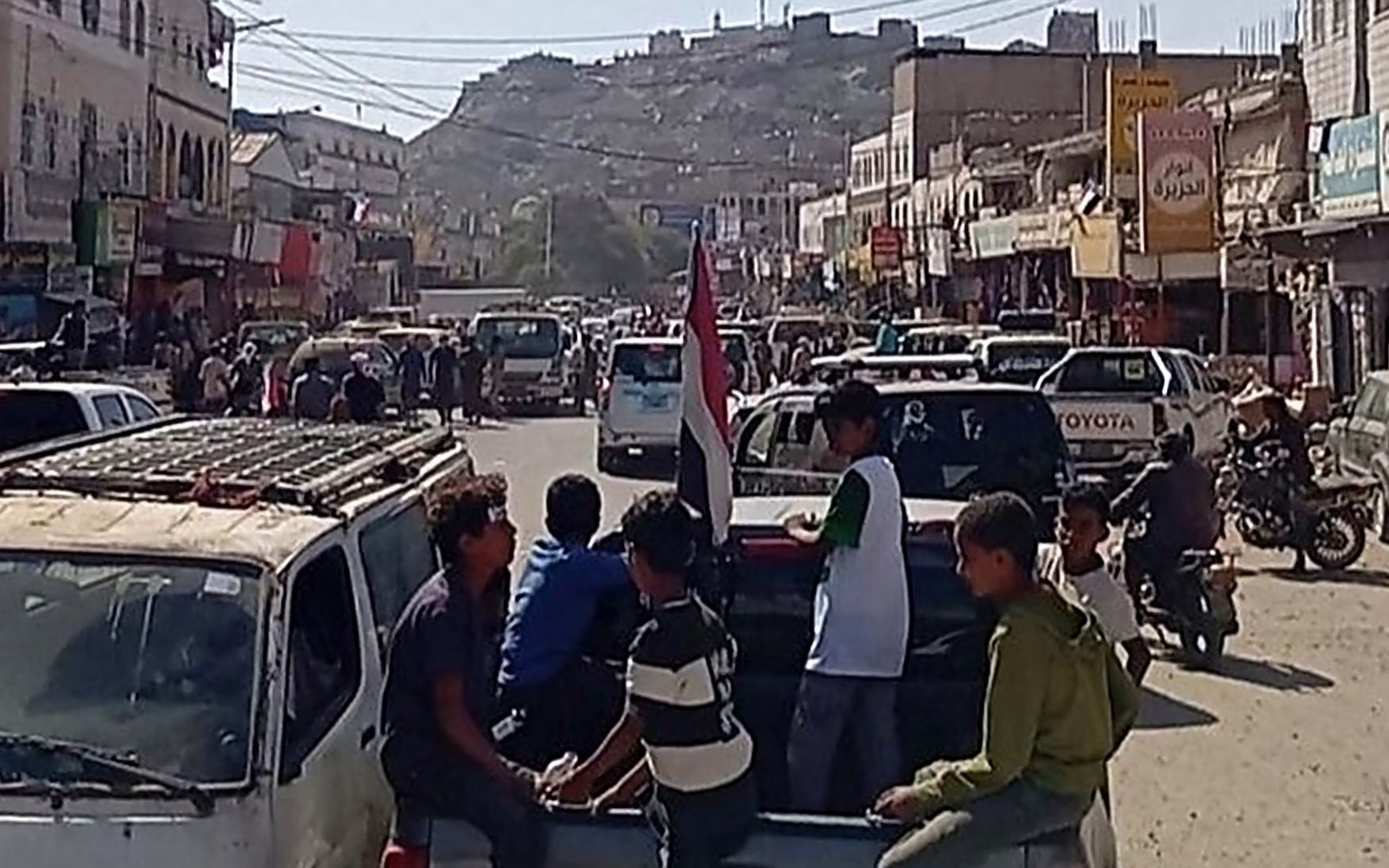
Al-Dhalea, Southern Yemen: On October 9, tens of thousands of families fled fighting around Taiz, Yemen’s most populous governorate. They have moved to Al-Dhalea and other southern governorates as Houthi forces encircled Taiz city in early October. Houthis have cut the road to Aden, the interim capital of the internationally recognised government, cutting off aid to more than 800,000 people. UN Special Envoy for Yemen Hans Grundberg warned that the country had slid back into full-scale war following the collapse of the truce between Saudi Arabia and the Houthis in September this year. Hostilities have spread across multiple fronts, and the humanitarian situation is deteriorating rapidly, particularly in Taiz, which has nearly 4.5 million people. Civilians, especially women and children, are bearing the brunt of the escalating violence, the envoy said.
War on several fronts
Presently, the war is being fought on several fronts in Yemen. The country has been embroiled in war since September 2014, when Houthi forces seized Sanaa, the capital. In 2015, a Saudi-led coalition intervened in support of the internationally recognised government, escalating the conflict into a prolonged war that has fractured the country, devastated public services and triggered one of the world's worst humanitarian crises. The Houthis, backed by Iran, control Sanaa and much of the densely populated north, while the internationally recognised government is based in Aden. A fragile truce brokered in 2022 offered a respite from fighting, but tensions persisted. The conflict has continued to be shaped by competing political, military and regional interests, leaving Yemen divided between rival authorities.
The south, meanwhile, has its own political and military fault lines. The conflict between the Southern Transitional Council (STC) and the Presidential Leadership Council (PLC), which leads the internationally recognised government and is fighting the Houthis, has been a major source of conflict in the south. The STC was formed in 2017 to make southern Yemen an independent country. Though the STC was part of the PLC, it suddenly broke ranks in December 2025 and seized territory in Hadramout and Al-Mahra governorates. The United Arab Emirates (UAE) backed the STC, and speculation suggested the UAE encouraged the division.
The campaign triggered a confrontation with its PLC allies and tensions between Saudi Arabia and the UAE. Saudi-backed forces subsequently drove the STC forces back. On January 9, 2026, STC Secretary-General Abdulrahman Jalal al-Sebaihi announced the council's dissolution from Riyadh. STC officials inside Yemen disputed the announcement, saying he had acted under duress. STC leader Aidarous al-Zubaidi fled to the UAE and was expelled from the PLC. The PLC charged him with treason after he sent STC forces towards Al-Dhalea, where his village lies.
The latest round of escalation began in July, when regional tensions spilled over into Yemen. The Yemeni government and Saudi Arabia have rejected a direct flight connection between Sanaa and Tehran and bombed the international airport in Sanaa when an Iranian flight was landing. The Houthis warned of the collapse of the 2022 truce, and both sides resumed fighting in September 2026. By September, fighting had intensified along several frontlines. The Houthis launched a major offensive along the western coast, capturing Mokha, a strategic port near the Bab al-Mandeb strait, and advancing into areas around Taiz and other governorates.
Life crumbling in Al-Dhalea
The ongoing war has affected daily life across Yemen, with southern Yemen hit particularly hard. NWS toured Al-Dhalea governorate in southern Yemen to understand conditions on the ground. Al-Dhalea lies in southern Yemen, along the divide between Houthi-controlled areas and territories held by forces aligned with the internationally recognised government. The governorate's main city is also called Al-Dhalea and is about 120 km from Aden.
In Al-Dhalea, the conflict is not a distant political or military struggle. It shapes everyday life, from access to food, water, and medicines to children's ability to attend school and families' ability to earn a living. The local market, located in the heart of Al-Dhalea where village and district roads meet, is more than a place for buying and selling. It is a daily mirror of people's lives, a meeting point for displaced people and residents, and for those from nearby camps seeking a livelihood, a bag of flour or temporary work.
From there, we set out to document the conditions of displaced people, listen to their complaints and see how they live and how their children learn under harsh conditions. Our first stop was Al-Sawda camp. On entering, one feels the weight of daily life on its residents. Tents stand close together, with children playing in dusty alleys. Despite their different stories, they share one concern: the search for safety, food and dignity.
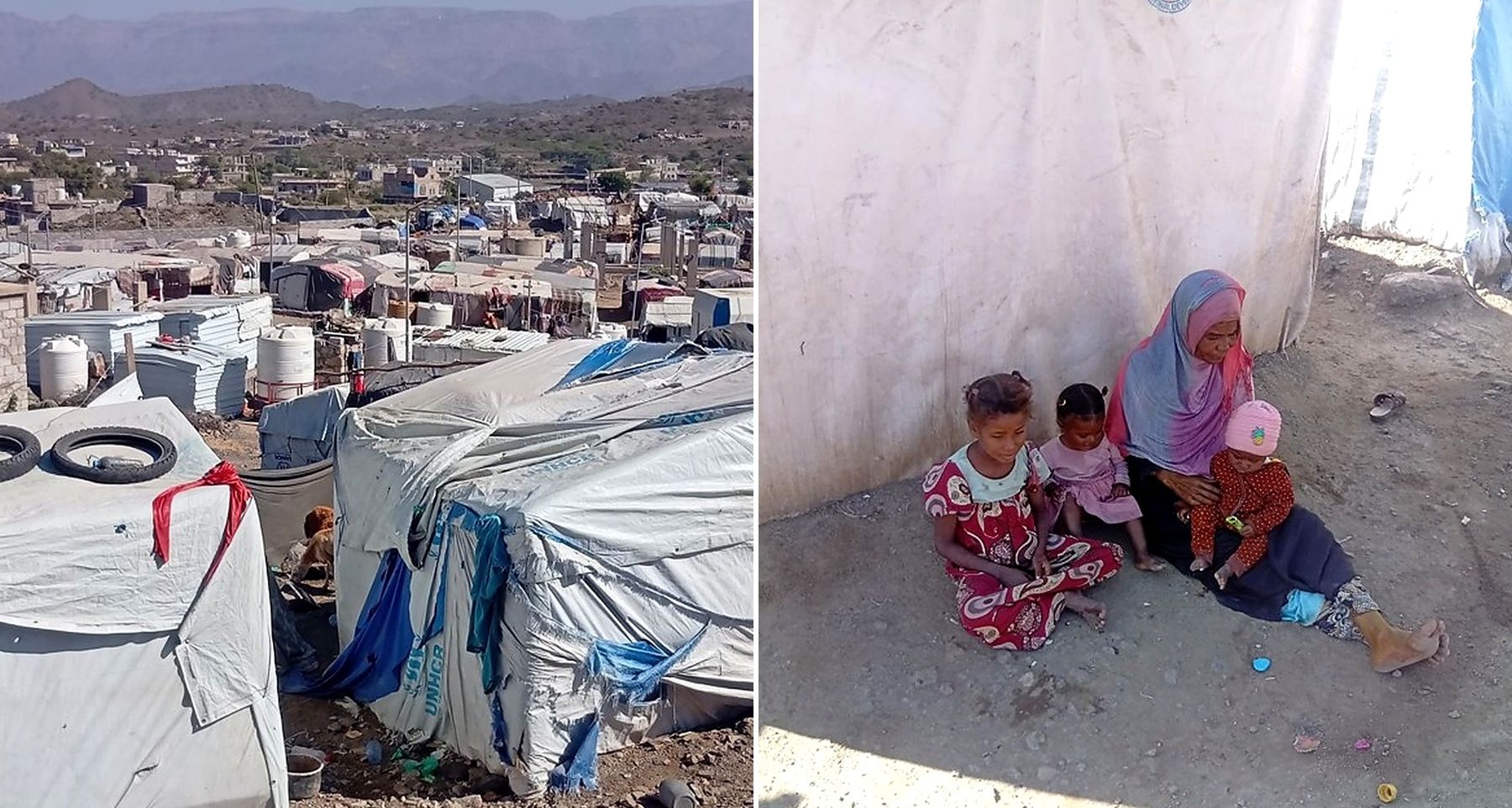
This is the governorate’s largest camp, said Mohammed Al-Salahi, media officer for the Executive Unit for the Management of Displaced People’s Camps. He said about 9,000 displaced families, comprising more than 63,000 people, live in 30 camps across the governorate. These numbers underscore a tragedy beyond the capacity of camps, local authorities, and organisations to address fully.
NWS also visited Ma'shaq camp, about 2 km from Al-Sawda camp. Here, NWS spoke with Amna Saif, a 50-year-old widow displaced from Taiz five years ago who now lives in a tent in the camp. Amna told us that water scarcity was a major problem. “We suffer from water scarcity. For washing, we carry the 20-litre jerrycan on our backs from a nearby well, 700 metres away,” she said. Several camp residents also complained about a lack of food. This is not a passing complaint but a reality repeated every day.
Many families cannot find enough to feed their children, so some resort to begging. Begging here is not a profession or a choice but a direct result of interrupted aid, deteriorating economic conditions and a lack of job opportunities. One displaced man said that if aid arrives, it lasts only a few days before hunger returns. “We resort to begging to provide essential sustenance,” he said. Amna's story is not an exception but a miniature picture of the hardships faced by thousands of displaced women in Al-Dhalea, women who have lost husbands and homes, carry water on their backs and knock on people's doors to provide a meal for their children.
Aid that has thinned out
With tensions flaring, available aid is being cut across Yemen, pushing more people into hunger. Um Abdullah, a 33-year-old mother of four, told NWS that she received food assistance from the World Food Programme (WFP) for two years until a survey removed her from the list last year. “The suffering of my children and me has doubled, and we are now suffering acute poverty,” she said. The WFP has been shifting from general food assistance to a more targeted programme, a shift that Yemen Monitor reports will affect 3.4 million people. UNHCR’s Yemen operation was funded at only 18 per cent this year.
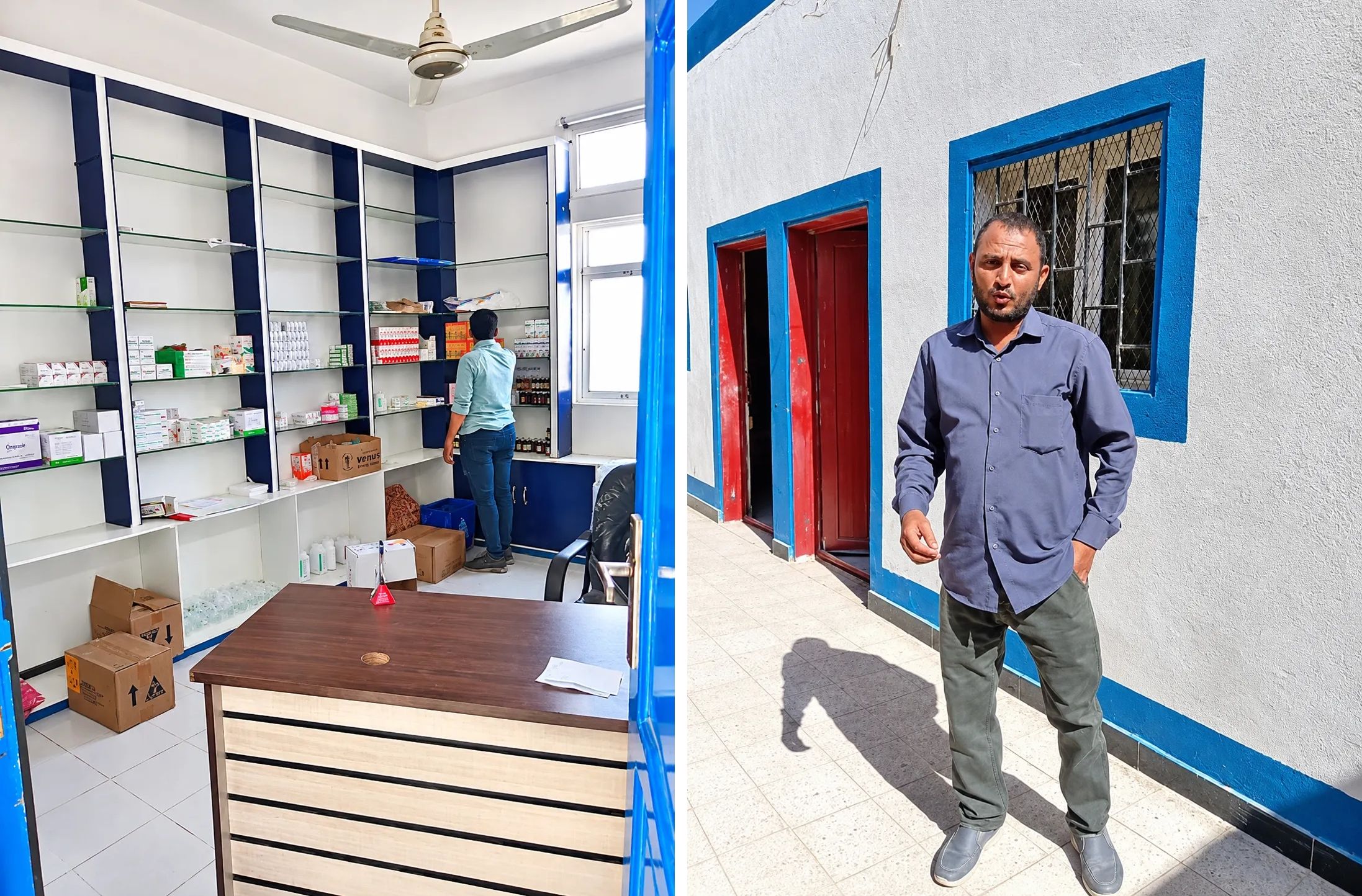
Speaking to NWS about the decline in aid, Akram Ali, a relief coordinator, said there was an “almost complete vacuum” of aid organisations in Al-Dhalea. He called for urgent UN and international intervention to ensure food security and prevent further deterioration. The retreat of humanitarian assistance has also affected healthcare. Mohammed Ali, a pharmacist at Ayoub Medical Dispensary, said the clinic was struggling with a shortage of medicines. Patients who come for consultations are often forced to travel to the city to buy prescribed medicines because the organisations that previously supplied the dispensary are no longer doing so.
Electricity supply is another casualty of the conflict. Residents have electricity for only three hours a day and must live without it for the remaining 21 hours. The decline in aid has hit children, women and the elderly particularly hard.
A school that holds on
Amid this bleak scene, however, there was a completely different stop, one that offered hope. Al-Faqeed Ali Fadhl Obaid School in Lakmat Al-Hajfar village has 350 students, including 201 displaced Black students, studying together without discrimination. There is no difference in seating, treatment or the smiles with which teachers welcome their students each morning.
NWS interviewed principal Yahya Al-Sayed, 55, who spoke proudly about his school and students. Before the war, he earned about $200. Today, because of the currency collapse, he gets only $40. “My salary is not enough to buy 50 kg of rice for my children. The salary’s value has fallen fivefold, while prices have risen sharply. How can a teacher teach hope while searching for his daily sustenance? Despite that, we still perform our educational duty honestly,” he said. He was also proud to emphasise that displaced children study alongside local children without discrimination or racism.
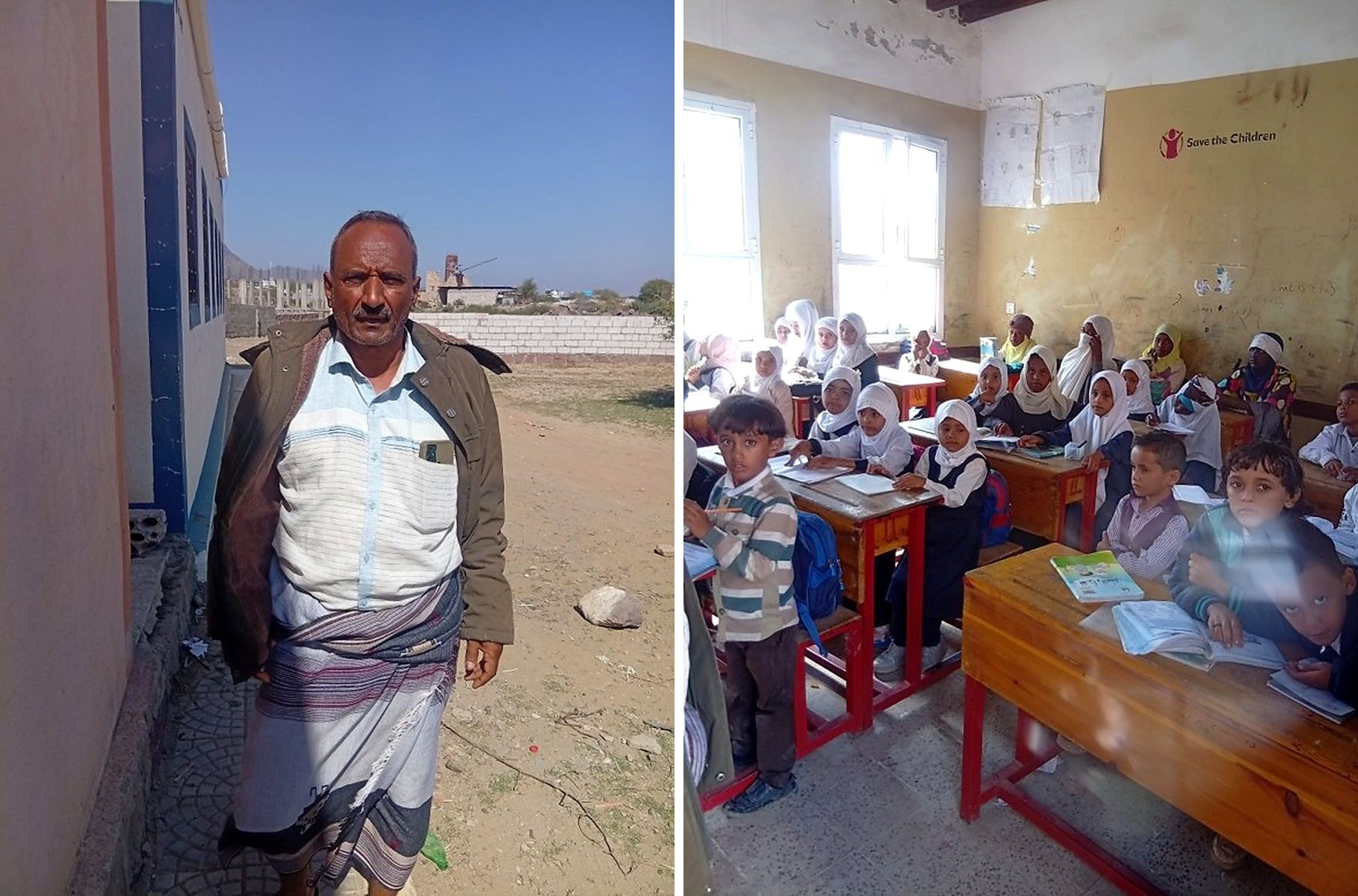
However, the same cannot be said about schooling across the southern governorates. Schooling remains a luxury here. A Save the Children survey conducted at the start of the school year in August 2026 found that 32 per cent of children, almost one in three, had never enrolled in school. The survey covered 2,214 households in four districts across Aden, Lahj and Taiz governorates. The figures point to a generation losing access to education. If nothing changes, these children risk being pushed into child labour, begging, recruitment or early marriage.
Three reasons for poverty
There are at least three major reasons for the acute poverty plaguing the country, especially in the southern governorates: a falling currency, agricultural distress, and dwindling aid supplies. The slump in the currency's value has led to reduced salaries and astronomical inflation. The rial has been falling against the US dollar in the south, while the Houthis have managed to stabilise it in the north.
According to unofficial rates tracked by the Geneva-based Assessment Capacities Project (ACAPS), in early November, the US dollar fetched about 533 rials in Sanaa and about 1,597 in Aden. The Houthis stabilised the currency in January 2020 after their central bank banned the newer banknotes issued by the Aden bank. Aden's reliance on printing new notes has pushed the rial down against the dollar, while the Houthis have largely enforced a fixed exchange rate.
Residents told NWS that the contrast with the north is also visible in agriculture. While scarce rainfall and rising water costs have made cultivation increasingly difficult in Al-Dhalea, they said better rainfall and greater water availability in northern areas allow farmers to cultivate land and produce agricultural goods that subsequently flood southern markets. The reopening of roads between northern and southern governorates more than two years ago has brought cheaper northern produce into the south, leaving local farmers struggling to sell their crops at viable prices. This has made agriculture an increasingly unviable option in southern Yemen.
Residents interviewed by NWS said they believed humanitarian assistance was disproportionately concentrated in the north, citing the presence of aid organisations' headquarters in Sanaa. They also feel that, following the STC's dissolution, northern influence is growing in the administration of the internationally recognised government in Aden. These perceptions, however, may not represent the full picture. In January, the WFP announced that it was shutting down its operations in Houthi-held northern Yemen, citing insecurity and funding shortages. Houthi restrictions and arrests involving UN personnel and humanitarian organisations have also complicated relief operations in the north. Some people also complained that Saudi Arabia, the recognised government's main backer, focuses on military matters while neglecting services and wages.
Politics: the southern cause, and fatigue
Most people interviewed by NWS in Lakmat Al-Hajfar village and Ma'shaq and Al-Sawda camps said they supported the southern cause long championed by the STC. They want the south to decide its own affairs after years of feeling marginalised by governments in Sanaa. They strongly oppose the Houthis, recalling the 2015 fighting, when Houthi forces tried to push into the south, and see today's frontline as a defence of their land.
However, beyond this preference for the southern cause, many have expressed anger at all political factions. Principal Al-Sayed told NWS that people want services, schools and salaries, not mere slogans. Relief coordinator Akram Ali said displaced families care less about who is in charge than about who brings food, water and medicine. They said the Yemeni people could take the refugees in as their family; however, they needed national and international support so that their steadfastness doesn’t turn into another collapse once again.