Amazon is facing pressure from its employees to investigate Israel’s use of its facial-recognition technology after an investigation found that the Israeli military uploaded 3.5 million photographs of Palestinians to Amazon Web Services (AWS) for analysis.
The investigation by The Guardian, based on leaked documents and interviews with military sources, found that the photographs were transferred to an Amazon data centre near Tel Aviv in early 2024. The Israeli military unit responsible for the transfer had told Amazon that it intended to use the company’s Rekognition platform, an artificial intelligence-powered image-analysis service, for facial recognition.
The findings have prompted Amazon Worker Intifada (AWI), a movement of current and former Amazon employees campaigning against the company’s technology ties with Israel and for the protection of pro-Palestinian speech in the workplace, to demand an independent investigation into the alleged use of its technology.
Ahmed Shahrour, an AWI organiser and Palestinian software engineer who was dismissed by Amazon over his pro-Palestine activism, said that the findings appeared to confirm concerns about the company’s role in Israel’s surveillance infrastructure.
“It seems it is shown that Amazon is the technological backbone of Amazon’s Israel’s surveillance and bombing apparatus in Gaza, including storing registries of every Palestinian in Gaza and in the West Bank,” he told The New Arab. “And using that to either train Israel’s AI models, hold them in checkpoints, or to bomb them.” Shahrour added: “I think that it's not just Amazon. I think big tech as a whole has a huge part in the genocide.”
The comments were made in response to the Guardian investigation, which reported that the photographs had been uploaded by an Israeli military department known as Rolling Stone. The unit manages extensive databases on Palestinians in Gaza and the occupied West Bank, containing personal information, family details, property records and movement-related data.
How Israel’s facial-recognition system works
The investigation found that Israeli forces routinely photographed Palestinians passing through military checkpoints in Gaza following the start of Israel’s ground invasion in October 2023. Facial-recognition technology was reportedly used to compare images against military databases, helping identify individuals and flag people suspected of being militants.
However, the investigation could not establish whether the 3.5 million photographs uploaded to Amazon were the same images collected at those checkpoints. Nor did it establish that Amazon’s technology was directly used to select targets for air strikes.
The distinction is significant. While the investigation documented the transfer of a vast collection of Palestinian photographs to Amazon’s cloud and the military’s stated intention to use Rekognition, the precise operational use of the uploaded material remains unclear.
Shahrour said that important questions remained unanswered, including the size of the military database, how the information was being used and whether it was connected to targeting systems. The probe showed that Israeli soldiers visited AWS offices in Tel Aviv in early 2024 to discuss using the company’s cloud infrastructure for a facial-recognition programme in Gaza. It could not establish whether those meetings were directly related to the transfer of the 3.5 million photographs or whether the programme was operational at the time.
Amazon said customers regularly visit its offices for briefings and meetings, describing suggestions that the visits involved anything other than routine customer engagement as “wrong and unsubstantiated”. The Israeli military told the Guardian that it “does not intend to comment on engagements or services related to operational needs”.
A wider surveillance network
Israel’s use of facial-recognition technology in the occupied Palestinian territories predates the Gaza war.
A 2023 Amnesty International investigation documented the use of biometric surveillance systems in Hebron and East Jerusalem. It described how facial-recognition technology was integrated into a wider network of cameras, databases and smartphone applications used to monitor Palestinians and restrict their movement.
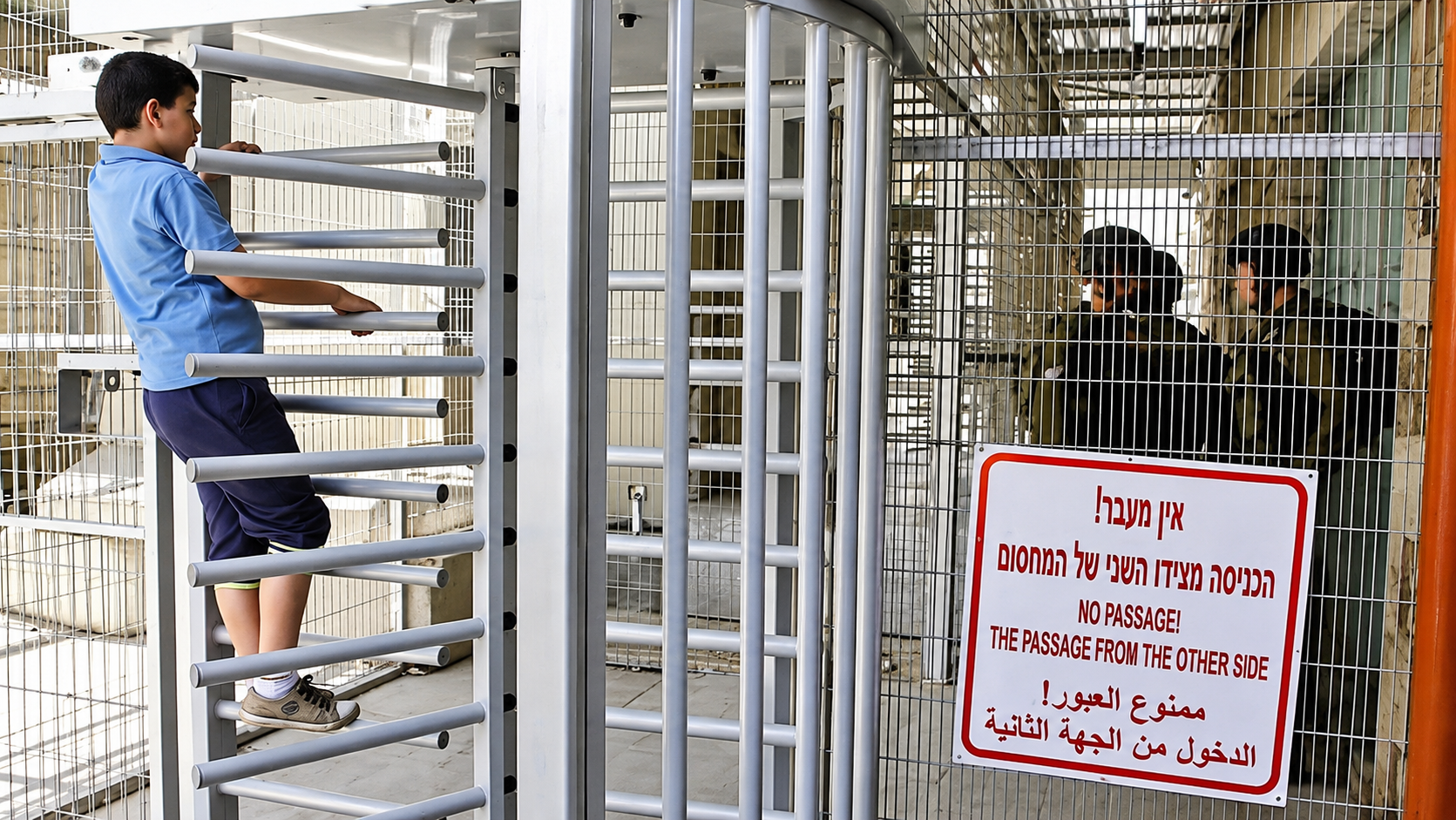
The report examined systems known as Red Wolf, Blue Wolf and Wolf Pack. Red Wolf was used at checkpoints in Hebron to scan Palestinians’ faces, check their identities and record biometric information. Amnesty said the system collected facial data without people’s knowledge or consent and could determine whether they were permitted to pass through checkpoints.
Blue Wolf, meanwhile, was a smartphone application used by Israeli soldiers to retrieve information about Palestinians by scanning their faces. The systems formed part of a broader surveillance infrastructure that Amnesty said reinforced discrimination and restrictions on movement.
In Gaza, the Guardian’s reporting describes a further expansion of this surveillance capacity during the war. Israeli forces reportedly used facial recognition in an effort to identify hostages abducted during the Hamas-led attack of 7 October 2023, as well as people suspected of being militants.
Earlier reporting by The New York Times also documented the use of facial-recognition technology in Gaza. It described how Palestinians, including civilians, were identified through surveillance systems and sometimes detained after being flagged. The report raised concerns about errors in facial recognition and the risk of civilians being wrongly identified.
Project Nimbus and Big Tech’s role
Amazon’s relationship with the Israeli government is underpinned by Project Nimbus, a multibillion-dollar cloud-computing agreement awarded to Amazon and Google in 2021.
The companies were selected to provide cloud infrastructure and computing services to Israeli government departments and security agencies. The initial investment was reported at about 4 billion shekels, or $1.2 billion, with the companies establishing data centres in Israel to keep government information within the country.
The Reuters report on the contract described Nimbus as a multi-phase project intended to provide cloud services to the public sector and military. The agreement has since become a focus of criticism from technology workers and human-rights campaigners concerned about the use of commercial cloud infrastructure in military operations.
A separate investigation by The Guardian and its partners examined contractual provisions that reportedly limit the companies’ ability to restrict Israeli government use of their cloud services, including in circumstances where that use might breach their own terms of service. The reporting also described provisions concerning the disclosure of Israeli data to foreign authorities.
The controversy has intensified scrutiny of the responsibilities of technology companies whose infrastructure supports government and military operations. In September 2025, Microsoft suspended some services used by an Israeli military unit after reports that its Azure cloud platform had been used to store data from mass surveillance of Palestinian phone calls.
Microsoft President Brad Smith said the company did not provide technology to facilitate mass surveillance of civilians.
The episode has become a reference point for campaigners pressing other technology companies to examine how their products and infrastructure are used by military and intelligence agencies.
Workers demand independent investigation
AWI is calling on Amazon to disclose the extent of its involvement in Israel’s surveillance operations, stop providing Rekognition to Israel and commission an independent investigation into the alleged misuse of its technology. The group is also demanding stronger protection for employees expressing pro-Palestinian views and greater transparency over Amazon’s contracts with US Immigration and Customs Enforcement (ICE).
“There is clearly like some sort of inherent Zionist beliefs and ideologies that are being enacted within Amazon and affecting leadership decisions by pursuing projects with government entities like Israel,” Shahrour told The New Arab.
“We need a third-party, independent investigation, like someone that is not Amazon investigating itself.” He added: “We need to have an independent auditor that has no associations with Amazon, being able to go into Amazon servers, go through and do a few months-long investigation to see how it is misused.”
Amazon has said it has no visibility into customers’ workloads. Responding to the Guardian’s questions, the company said: “we respect the privacy of our customers, and we do not discuss our relationship without their consent.”
Shahrour criticised the response, arguing that technology companies have a responsibility to investigate credible allegations that their products are being used to facilitate abuses.
“I think like if you know for a fact that your technology is being used to commit war crimes or crimes against humanity, you have the obligation to conduct the research and an investigation on how that happened, and do an appropriate response into maybe cutting ties with them.” He continued: “I think the way they responded was absolutely hollow and shows a complete lack of accountability to honouring Palestinian human life and dignity.”
The dispute raises broader questions about the accountability of cloud and artificial-intelligence providers when their services are used by state security agencies. While companies maintain that customers control their own workloads, campaigners argue that providers cannot avoid scrutiny when their infrastructure is alleged to support large-scale surveillance or other serious violations.
For Amazon, the immediate question is whether it will agree to the independent scrutiny demanded by its workers. For the wider technology industry, the case adds to growing pressure to explain how commercial AI and cloud services are being used in conflict zones – and what responsibility providers bear when those services become part of military surveillance systems.