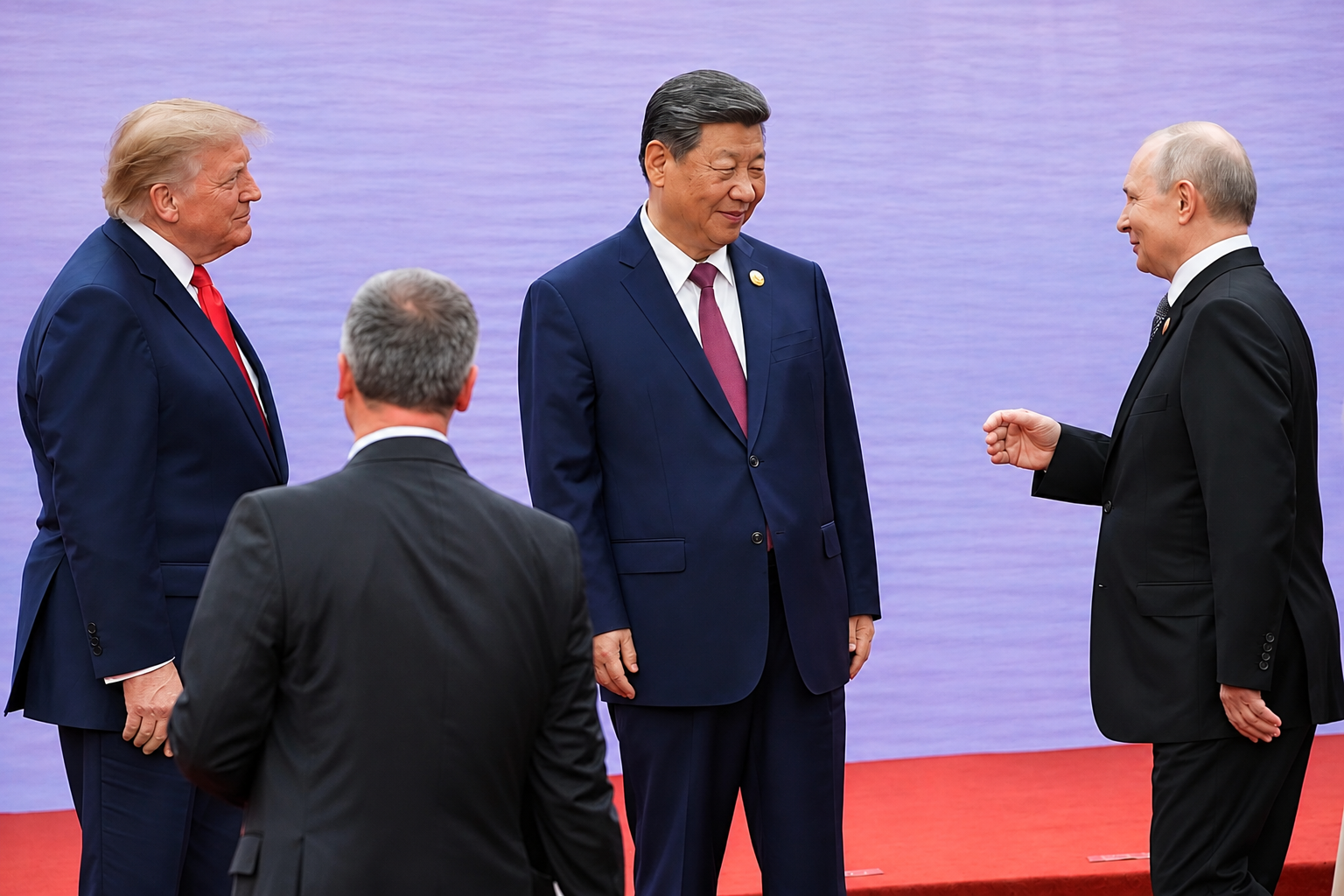
The leaders of China, the United States and Russia at their first three-way summit have called for reform of the United Nations and challenged the reach of international judicial institutions, while pledging to discuss nuclear risks in a joint declaration that conspicuously leaves out the wars in Ukraine and Iran.
The four-point document, titled “Declaration toward Peace”, was issued after approximately 90 minutes of talks between Chinese President Xi Jinping, US President Donald Trump and Russian President Vladimir Putin at Kylin Villa in Shenzhen on Thursday (November 19), on the sidelines of the Asia-Pacific Economic Cooperation (APEC) summit.
The declaration commits the three permanent members of the UN Security Council to promoting institutional reform, questions the jurisdiction of the International Criminal Court (ICC), calls for greater energy cooperation and proposes dialogue on reducing nuclear risks.
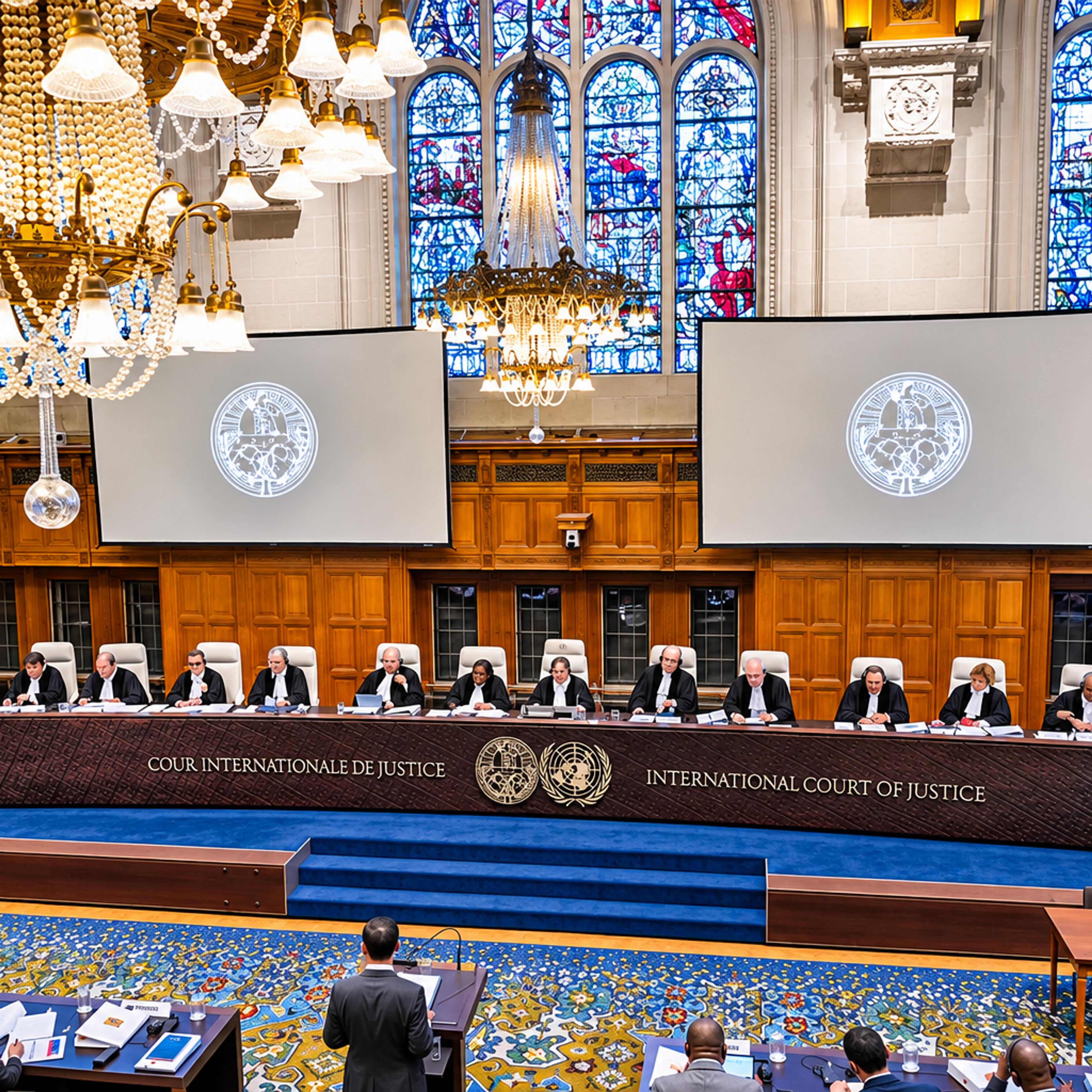
Its most politically contentious provision says that respect for state sovereignty and the immunity of state officials are of “paramount importance”, adding that the ICC and similar bodies “must not abuse their jurisdiction.” The language carries particular significance for Putin, who has been subject to an ICC arrest warrant since March 2023 over alleged war crimes involving the deportation and transfer of Ukrainian children.
The full text of the declaration, published by China’s state news agency Xinhua, says that the three leaders exchanged views on the international situation and committed themselves to maintaining strategic stability and international security. However, it offers no timetable for nuclear negotiations, no concrete arms-control commitments and no collective position on the conflicts in Ukraine and Iran.
A declaration to reshape international institutions
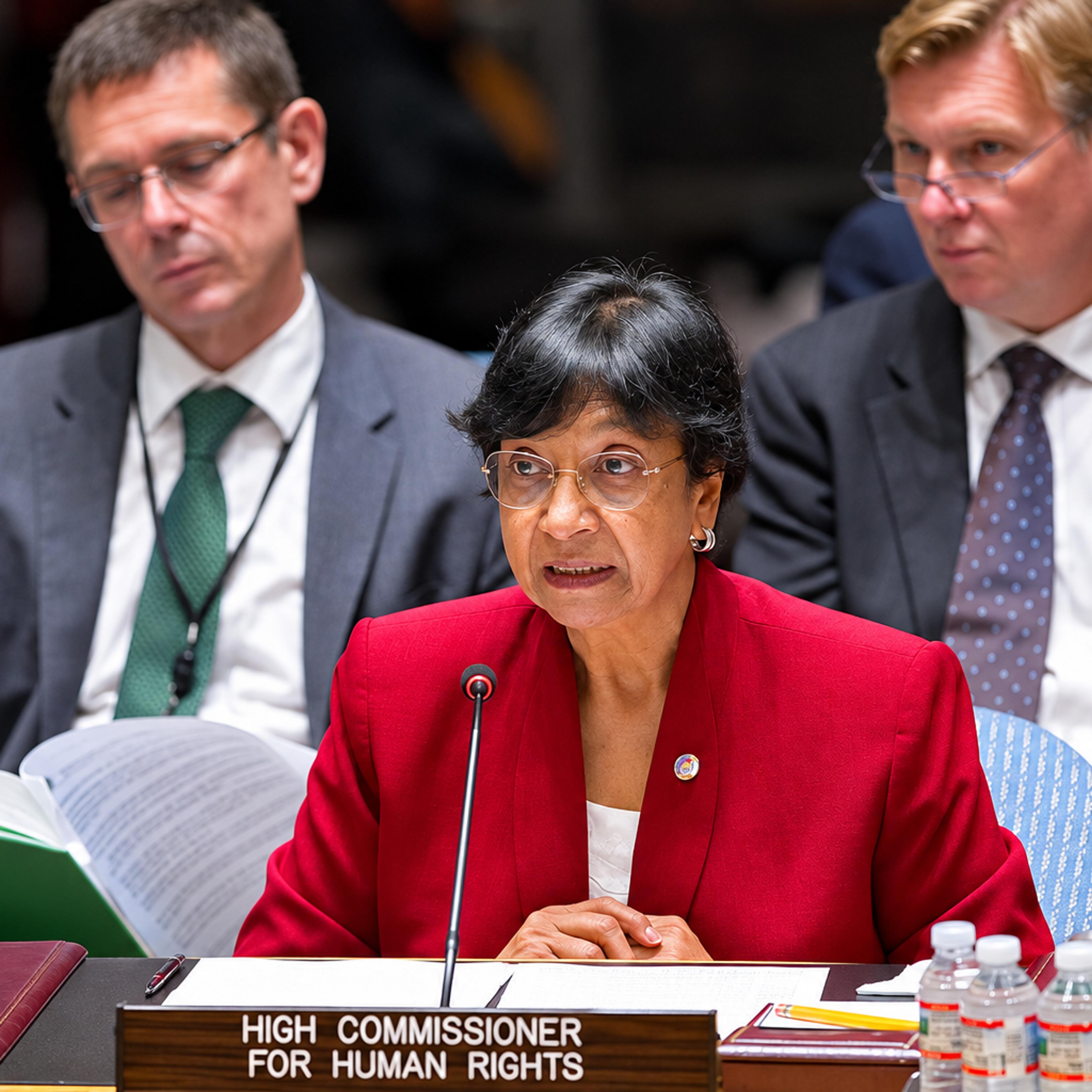
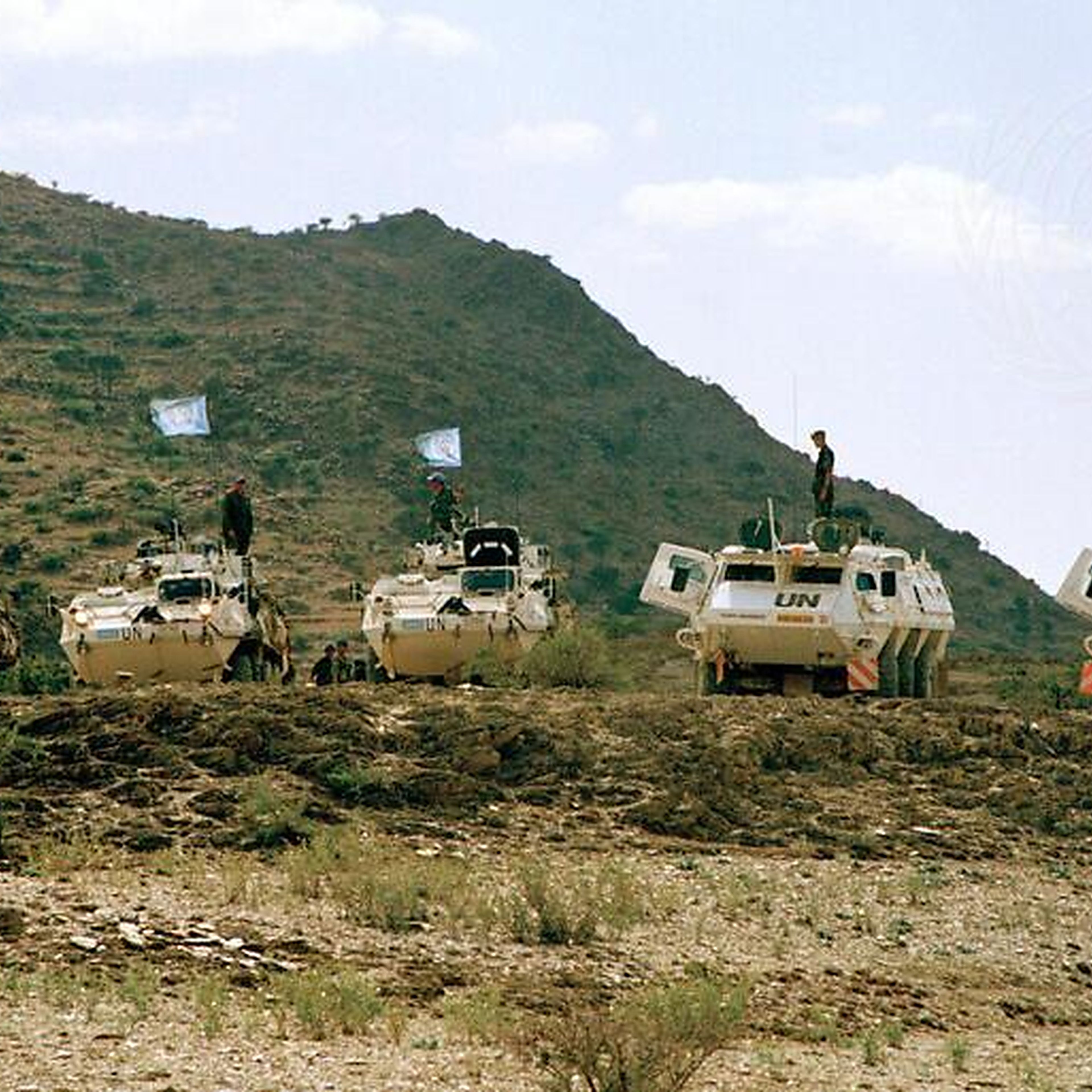
The declaration’s first provision commits China, Russia and the United States, as permanent members of the UN Security Council, to promoting reform of the organisation so that it can respond more effectively to global challenges and fulfil its fundamental mission of maintaining international peace and security. The three countries occupy a particularly influential position within the UN system: all are permanent Security Council members and hold veto powers over substantive resolutions. Their joint call for reform is therefore significant, although the declaration does not specify what changes they intend to pursue or whether they support altering the council’s membership or veto arrangements.
The third provision is more contentious. It states that the leaders recognise the principle of state consent and that respect for the immunities of state officials is of “paramount importance”. They also agree that the ICC and similar international bodies “must not abuse their jurisdiction”.
The provision has particular significance for Putin. The ICC issued arrest warrants for the Russian president and Maria Lvova-Belova, Russia's presidential commissioner for children's rights, on March 17, 2023, over alleged responsibility for the unlawful deportation and transfer of Ukrainian children from occupied areas of Ukraine to Russia. The court said that there were reasonable grounds to believe that the two officials bore criminal responsibility for the alleged war crimes. The warrants remain in force.
The ICC is an independent international court established under the Rome Statute, rather than a UN agency. It prosecutes individuals accused of genocide, war crimes, crimes against humanity and the crime of aggression. Its jurisdiction and the immunity of serving heads of state have been subjects of longstanding legal and diplomatic disputes. Although the declaration does not name Putin or the Ukraine investigation, its language signals a shared political interest among the three governments in challenging aspects of the existing international judicial order and asserting state sovereignty.
Trump had already criticised the ICC ahead of the summit, saying it had “gotten out of control” and arguing that the three countries should work together to protect national sovereignty. The declaration does not change the ICC’s legal mandate or establish a new exemption from prosecution. However, its inclusion alongside the call for UN reform gives the document a wider significance than a conventional nuclear-security agreement.
Nuclear dialogue without disarmament commitments
The declaration’s fourth provision addresses nuclear security, reaffirming that “a nuclear war cannot be won and must never be fought.” It adds that the three countries will engage in dialogue on reducing nuclear risks and preventing nuclear proliferation.
The commitment comes at a time when the international arms-control framework is under considerable strain. The expiry of the New Strategic Arms Reduction Treaty (New START) in February left Washington and Moscow without their last remaining bilateral treaty imposing legally binding limits on their strategic nuclear arsenals.
Trump has argued that any successor arrangement should include China. Beijing, however, has resisted joining trilateral arms-control negotiations, maintaining that its nuclear stockpile remains substantially smaller than those of the United States and Russia.
According to the Associated Press, China has more than 600 nuclear warheads, compared with more than 5,000 believed to be held by each of the US and Russia. The disparity is central to Beijing’s reluctance to accept restrictions designed primarily around the much larger American and Russian arsenals. The declaration does not specify when the proposed dialogue will begin, which officials will participate or whether it will lead to a formal arms-control agreement. Nor does it commit any of the three countries to reducing their nuclear stockpiles.
Xi called for a broader commitment to nuclear disarmament, while Trump emphasised the responsibility of the three largest nuclear powers to prevent a confrontation. “As presidents of three of the world’s largest countries, we have a special responsibility to maintain open, respectful and productive dialogue on issues impacting not just our people but the entire planet,” Trump said in his opening remarks. He added that the three countries were “uniquely positioned to discuss how to reduce the number of nuclear weapons on Earth”, as well as lessen the risk of their use.
Ukraine missing from the declaration despite Putin-Trump talks
Perhaps the most striking omission from the joint statement is Ukraine. Despite Trump’s repeated assertions that he wanted to discuss the war with both leaders, the declaration contains no direct reference to Russia's invasion, a ceasefire, territorial questions or negotiations involving Kyiv. Putin had raised the conflict in his opening remarks, saying the three countries had “numerous shared interests in the settlement of regional conflicts, including obviously the conflict in Ukraine”.
Xi, by contrast, avoided naming Ukraine, instead stressing the importance of cooperation among major powers. “History tells us that when major powers live in harmony, the world is at peace. When major powers clash, the world falls into turmoil,” he said.
The omission is particularly sensitive for Kyiv and European governments, which have repeatedly warned against any arrangement that could determine Ukraine’s future without its participation. Ukrainian President Volodymyr Zelensky had expressed concern before the summit that decisions affecting his country's sovereignty and territorial integrity could be made by Washington, Moscow and Beijing without Ukrainian representation.
Neither Ukraine nor European representatives were present at the trilateral meeting.
There was, however, a separate 40-minute meeting between Trump and Putin earlier on Thursday, during which the Ukraine war was discussed. Kremlin foreign policy aide Yuri Ushakov said the conflict was the main subject of their conversation, alongside bilateral relations and preparations for the three-way summit. He described Putin’s mood after the meeting as “simply excellent”, according to Reuters.
The two presidents did not announce a breakthrough or issue a joint statement following their conversation. Ukraine was therefore discussed directly by Trump and Putin, but the three leaders did not translate that discussion into a collective commitment.
Xi uses summit to project China’s diplomatic influence
Beyond the immediate questions of nuclear weapons and Ukraine, the summit provided Xi with an opportunity to position China as a central actor in international diplomacy. The Chinese president hosted the meeting in Shenzhen, turning the APEC gathering into the setting for an unprecedented encounter between the leaders of the world's three largest nuclear powers. Xi personally welcomed Trump at the airport, an unusual diplomatic gesture that underlined the importance Beijing attached to the visit. The two leaders also held separate bilateral talks before the trilateral meeting.
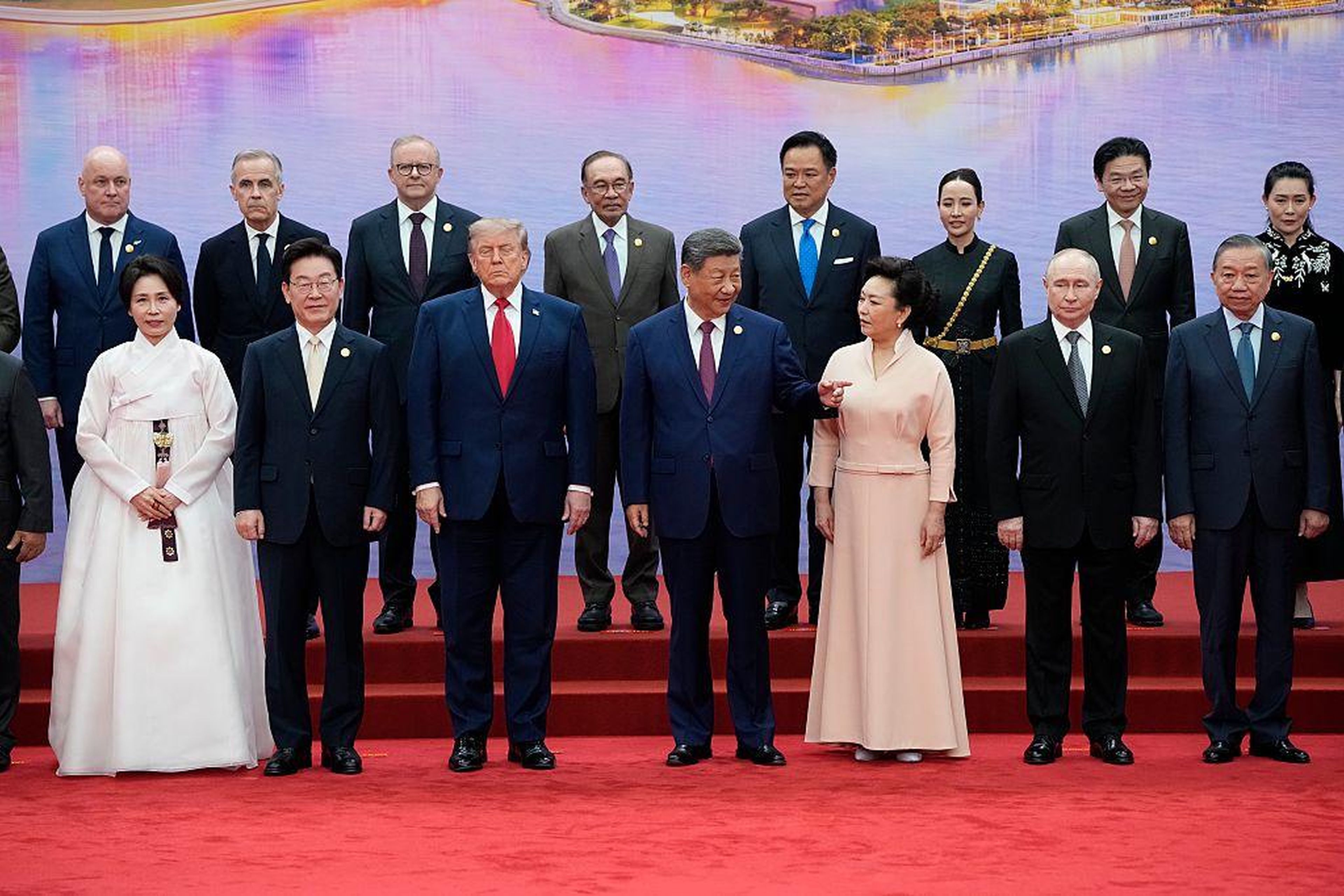
During their discussions, Xi described China-US relations as generally stable and improving, while calling for continued efforts to steer the relationship in a constructive direction. Taiwan remained a sensitive issue. According to Reuters, Xi told Trump that Washington must “do the right thing” on the question, underscoring Beijing’s insistence that the island remains a central red line in its relationship with the US.
Energy Security
The declaration also addresses energy security. Its second provision says the three countries plan to increase the production and supply of refined petroleum products for the benefit of other nations and reaffirms the importance of “stable energy flows”.
The commitment comes amid disruptions to international energy supplies and instability around the Strait of Hormuz, a critical route for global oil shipments that has been affected by the Iran war. The waterway connects the Persian Gulf with the Gulf of Oman and is a major artery for oil and liquefied natural gas exports from the Middle East. Any prolonged disruption has implications for energy-importing economies across Asia, Europe and beyond.
However, the declaration offers no production targets, supply commitments or implementation timetable.
A historic photograph, but what changes next?
The Shenzhen summit has revived comparisons with the great-power diplomacy that shaped the international order after the Second World War. The presence of the US, Chinese and Russian presidents at the same table has raised concerns that smaller countries and those directly involved in conflicts could find themselves excluded from decisions affecting their security.
The analogy with the 1945 Yalta Conference, where the US, Britain and the Soviet Union discussed the post-war settlement of Europe, has been invoked by critics concerned about a possible division of the world into competing spheres of influence.
The Kremlin has rejected suggestions that the Shenzhen meeting was intended to produce a new Yalta-style arrangement. Kremlin spokesman Dmitry Peskov said, according to RT, that “nobody should impose any world order on anyone”.
Yet the summit also exposed the competing interests that limit cooperation among the three powers. Washington wants Beijing to participate in nuclear arms-control negotiations, while China argues that the burden of reductions should first fall on countries with the largest arsenals. Russia wants to use its relationship with Trump to advance discussions on Ukraine, while Beijing has sought to avoid being seen as imposing a settlement on Kyiv. Their disagreements over trade, technology, sanctions, Taiwan and the international security architecture remain unresolved.
The declaration is therefore best understood as an agreement to keep channels of communication open rather than a comprehensive settlement of the issues dividing the three countries. Putin described the discussions as open, candid and productive, while Xi characterised the meeting as positive, constructive and fruitful, according to the Associated Press.
The real test will be whether the three governments turn their nuclear-risk pledge into a sustained negotiating process, and whether their calls for institutional reform translate into concrete changes.
For now, the leaders have agreed on a broad vision of peace, sovereignty and international governance. Whether that vision can accommodate the interests of countries excluded from the negotiations, and deliver tangible progress on the conflicts threatening global security, remains an open question.