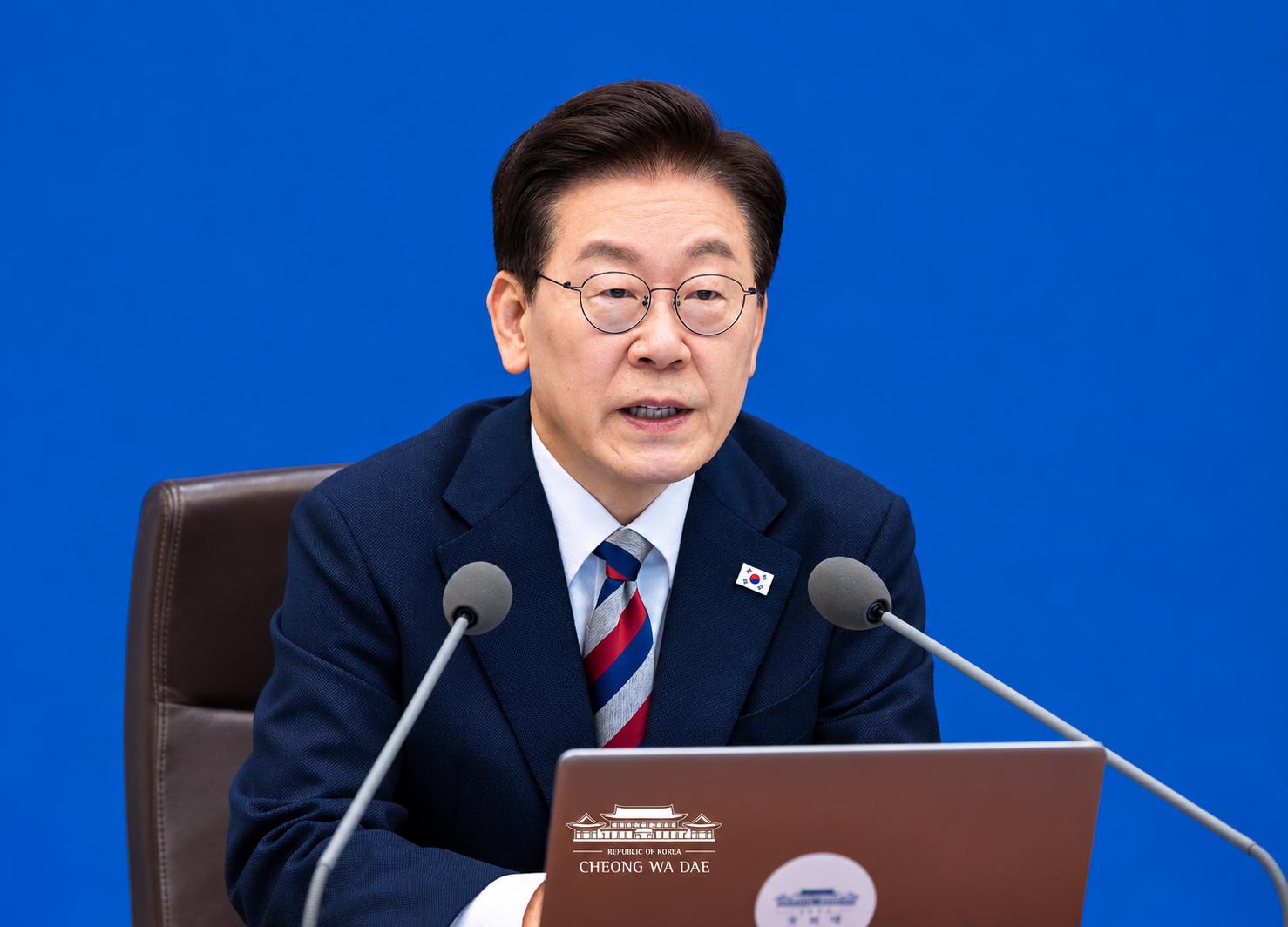
A constitutional reform designed to curb the sweeping powers of South Korea’s presidency, an institution long dubbed the “imperial presidency”, is being pursued by President Lee Jae Myung and the National Assembly as a safeguard against a repeat of the 2024 martial law crisis, but deepening distrust between the ruling Democratic Party and the opposition People Power Party (PPP) threatens to derail the effort before it reaches the voters. The proposed reform is all likely to dominate South Korea’s polity in the days to come.
Lee has proposed replacing the country’s single five-year presidential term with a four-year term renewable once, while transferring some presidential powers to the legislature, including greater oversight of emergency decrees. He argued in August that the current constitution, unchanged since 1987, “no longer suited the times” and should be revised. The reform is intended to prevent a repeat of the December 2024 crisis, in which then-president Yoon Suk-yeol used emergency powers against the National Assembly. Opposition leaders, however, fear the changes could be used to extend Lee’s own time in power.
Last week, National Assembly Speaker Cho Jeong-sik said the legislature would lead the effort through bipartisan consensus and public consent. The PPP’s antipathy to the prospect of Lee seeking another term nonetheless remains the main obstacle to any talks, even though the presidential office, Cheong Wa Dae, has ruled out that possibility. In July, Cho suggested that whether an incumbent could seek another term was “ultimately a matter for the people to decide”, before he clarified that no such change was under discussion.
How a night of martial law shaped the reform
The proposal is rooted in the events of December 2024, when Yoon shocked South Korea and the world by declaring martial law late at night, the first such decree since the country’s democratisation in 1987. Yoon justified the move by claiming that the opposition sympathised with North Korea and was paralysing the government. Troops and police were sent to the National Assembly, but lawmakers broke through the barricades, some scaling walls, and voted unanimously to nullify the decree after about six hours. The Assembly impeached Yoon later that month, and the Constitutional Court removed him from office in April 2025.
The episode exposed what critics regard as a structural weakness in the 1987 constitution, which was drafted after decades of authoritarian rule and gave the presidency a single five-year term as protection against leaders entrenching themselves. In practice, the presidency holds vast executive authority over domestic and foreign policy, appointments, law enforcement and the budget, and the president may propose bills directly to the legislature and wields extensive authority over the military. Yoon’s declaration showed how readily those powers, concentrated in one person, could be turned against the other branches of government.
“The single five-year term was an insurance policy against presidents perpetuating their rule, but it has produced presidents who are overpowering early and lame ducks later,” Hannes Mosler, chair professor of East Asian social sciences at the University of Duisburg-Essen, who specialises in South Korean politics and society was quoted as saying to South China Morning Post (SCMP). “They never face voters again, and their terms run out of sync with the four-year parliamentary cycle.”
Lee, who won the 2025 snap election triggered by Yoon’s removal, had made reform a campaign promise. “Specifically for Lee Jae Myung, as he was elected in the 2025 special election held as a result of Yoon’s impeachment, Lee promised during the presidential campaign to introduce constitutional reform, stating that constitutional changes would prevent the recurrence of the president’s abuse of power,” Lee Jong-eun, assistant professor of political science at North Greenville University, told SCMP.
A Democratic Party short of the numbers
The Democratic Party holds 161 seats in the legislature, well short of the two-thirds majority required to pass a constitutional amendment, so opposition support is indispensable. The PPP has rejected Cho’s approach, accusing Lee of seeking another term in order to extend his presidential immunity. The party’s floor leader, Jeong Jeom-sig, said on Monday that his party would not agree to an amendment while Lee remained in office, even though negotiations were now being led by the Assembly.
The accusation is sharpened by Lee’s legal troubles. He was effectively found guilty of falsifying claims during the 2022 presidential campaign a month before he won the 2025 election, was indicted in 2024 over the misuse of public funds, and faces trials over election law violations and corruption. The president has said he has no intention of seeking a second term, and under the current constitution any change to the term limit will not apply to the incumbent.
Immediately after the porposed reform, the Democratic Party’s floor leader, Han Byung-do, described constitutional reform as “a calling of the times and a mandate from the people” and criticised the PPP for failing to cooperate.
Speaking with SCMP, Jung Kim, a professor at the University of North Korean Studies in Seoul, said political distrust was the central obstacle. “The PPP has portrayed reform as a distraction from controversies surrounding Lee,” Kim said. “These are the opposition’s stated claims, rather than established government intentions. The controversy therefore reflects distrust as much as disagreement over constitutional provisions.”
Will it even prevent another crisis?
Mosler warned that the proposed changes might not stop another constitutional crisis. “The December 2024 crisis was not caused by a single term. It was caused by a president who illegally turned emergency powers against the legislature by breaching the constitution,” he said.
Aligning presidential and National Assembly terms could improve accountability, Mosler added, but was unlikely to resolve the deadlock between the executive and the legislature. “Holding presidential and parliamentary elections together makes a unified government more likely but risks a dominant president,” he said. “A general election in the middle of the presidential term improves accountability but invites a divided government and the zero-sum confrontation seen under Yoon.”
Cho has set a target of completing the amendment next year, noting that no election is scheduled for 2027, the 40th anniversary of the current constitution. Lee Jong-eun said that goal was unlikely to be met unless the PPP felt reassured that it would not be sidelined in the legislature.
“I think the best chance for a constitutional revision would be if the 2028 election ends with a hung parliament outcome, in which neither party wins a majority,” she said. “Such an outcome would then make both parties nervous about losing the next presidential election and be more open to constitutional revision to limit presidential powers.”
South Korea will hold a National Assembly election in 2028, while the next presidential race is set for 2030. “Without electoral, party reform and institutional forbearance, the [executive-legislative] deadlock will persist,” Mosler said. “A constitution both camps can call their own would be the first genuine renewal of the 1987 settlement.”