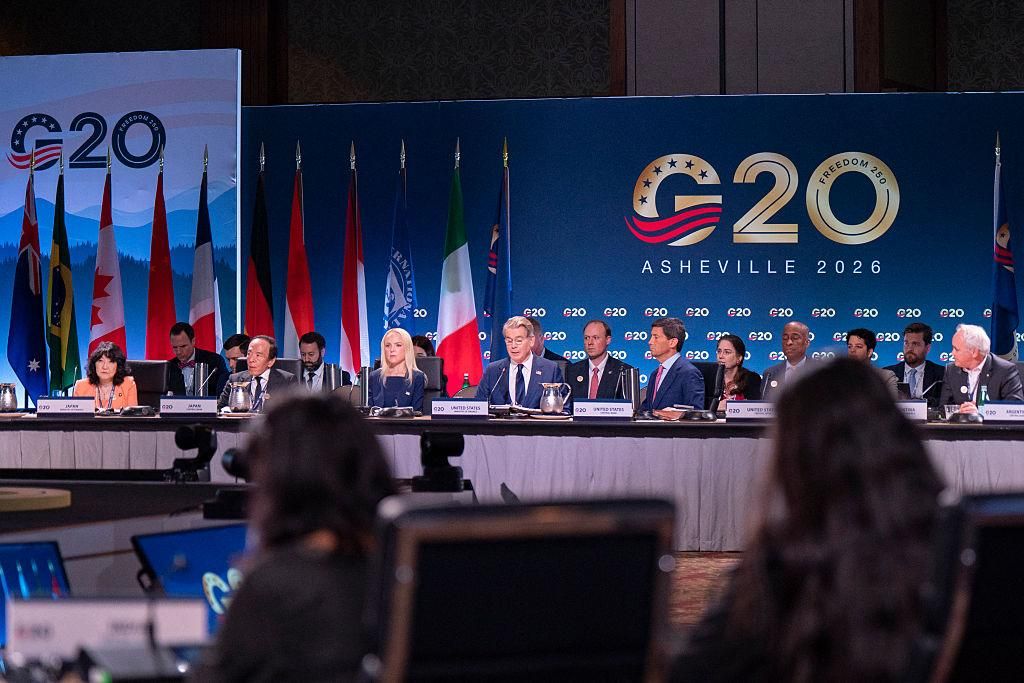
The fallout from a fractured G20 finance meeting held in Asheville, North Carolina, on August 31-September 1, 2026, looks set to colour trade diplomacy for months to come. China refused to sign up to language on trade surpluses, export-led growth, global imbalances and sovereign debt restructuring, leaving the other 19 members to back the disputed wording alone. The US, as host, issued a chair's statement on September 1 in place of the usual joint communiqué – an impasse that will now feed into preparations for the G20 leaders’ summit and Washington’s next moves on tariffs.
Treasury Secretary Scott Bessent said the episode bore out his warning last year that tougher US tariffs would divert Chinese goods into other markets. Non-market economies flooding the world with cheap exports, he argued, is not sustainable. Pressed on the lack of unanimity, he told reporters, “we have 19 other voices”, adding that his chairman’s statement would echo their view.
What the chair’s statement actually said
In place of the blocked communiqué, the US-issued statement called on countries running excessive external surpluses to remove the distortions that restrict domestic consumption and turn exports into an outsized source of growth, while urging countries with persistent deficits to lift domestic savings and pursue fiscal consolidation. It warned that unchecked imbalances could distort markets, weaken supply chains and spill over into other economies, and asked the IMF to sharpen its scrutiny of the policies driving them, along with more detailed analysis of the cost of inaction.
Why the statement matters
G20 joint statements exist to set out where the world’s largest economies agree on shared problems and how to fix them, so a veto from any one member carries weight. The US and its partners wanted the group to call out policies that they see as distorting global competition and inflating trade surpluses – pointed squarely at China’s export-heavy model. Beijing objected to four specific sections: energy trade and the Strait of Hormuz, global economic imbalances, IMF surveillance, and sovereign debt restructuring, blocking the document from being adopted by consensus. Beijing maintains its trade position reflects investment, manufacturing capacity and technological development rather than unfair practice.
The dispute came on the heels of several European ministers voicing their unease after Russian Finance Minister Anton Siluanov made an unannounced appearance and met Bessent on the sidelines on August 31 – his first in-person G20 outing since the invasion of Ukraine in February 2022. It also follows an IMF External Sector Report, published on July 30, 2026, which found that global current-account imbalances widened further in 2025, with China and the US the two largest contributors, and warned that unaddressed imbalances risk fuelling trade tension and financial fragmentation.
Not the first stand-off
Chair’s statements have become something of a G20 convention since Russia’s invasion of Ukraine, in February 2022, split the group. Hosts Indonesia and India each fell back on one after finance ministers failed to agree on a communiqué language in Bali on July 15-16, 2022 and again in Bengaluru on February 25, 2023, when China and Russia resisted language condemning the war. This time the fault line is economic rather than geopolitical, but the mechanism – a watered-down chair’s summary standing in for consensus – is now a familiar pressure valve for a group that increasingly struggles to agree on much beyond its own existence.
Why China’s veto carries weight
China’s refusal exposes how deep the economic tension between Beijing and Washington now runs. Its dominance of critical mineral supply chains and its position as a major creditor to developing economies puts it at the centre of debates the G20 is trying to referee, from supply-chain security to sovereign debt relief – meaning any dispute involving Beijing reverberates well beyond the finance track. With supply-chain security now a front-line economic and national-security concern for the US and its allies, and Beijing viewing Western trade and technology curbs as an attempt to cap its growth, economic policy is being treated less as a technical matter and more as an instrument of strategic power.
IMF Managing Director Kristalina Georgieva told Reuters that she believes China recognises it needs to act, but that Beijing is pushing for coordinated action – including US moves to rein in its own fiscal deficit, which China argues is inflating American import demand. These issues are bound to dictate the next round of talks as Washington wants the G20 to treat trade imbalances as a shared global problem, while Beijing sees the same language as singling out its economic model. Until that gap narrows, one can’t expect the next G20 finance communiqué to fare any better.