
In what may be one of the broadest and most co-ordinated diplomatic rebukes of Israel to emerge from the Muslim world in recent memory, the foreign ministers of eight Arab and Islamic nations, on Sunday (September 6), have jointly condemned remarks by two senior Israeli ministers that appeared to endorse the forced removal of Palestinians from Gaza.
Pakistan, Egypt, Indonesia, Jordan, Qatar, Saudi Arabia, Türkiye and the United Arab Emirates put their names to the joint declaration on Sunday, taking direct aim at Israeli National Security Minister Itamar Ben-Gvir and Defence Minister Israel Katz, whose comments on displacing Palestinians from the Strip have drawn international alarm. It is a rare instance of such a geographically and politically diverse bloc – spanning South Asia, North Africa, Southeast Asia, the Levant and the Gulf – speaking with one voice on the Palestinian question in such rapid succession after the remarks were made.
What the eight ministers said
According to the joint statement, the eight ministers characterised the Israeli ministers’ proposals as a fundamental breach of international law, and condemned “the statements made by Israeli National Security Minister Itamar Ben-Gvir and Israeli Defense Minister Israel Katz regarding the displacement of the Palestinian people from the Gaza Strip, including proposals for plans and mechanisms aimed at forcibly removing Palestinians from their land.” They said the plans for removing Palestinians from Gaza were “flagrantly violating principles of international law, including international humanitarian law”, and warned that they posed a direct threat to Palestinians’ legitimate rights.
“The Ministers reaffirm their unequivocal rejection and condemnation of any attempts or plans aimed at displacing the Palestinian people, whether within or outside the Occupied Palestinian Territory, under any pretext or justification. They warn against the grave consequences of turning calls for forced displacement into declared policy or concrete measures aimed at uprooting Palestinians from their land,” the statement said.
“The Ministers stress that the Gaza Strip is an integral part of the Occupied Palestinian Territory and underscore the imperative of preserving the unity of the Palestinian territory in the Gaza Strip and the West Bank, including East Jerusalem,” it said.
Notably, the ministers pressed the wider international community – the UN Security Council chief among them – to step up and take real ownership of the crisis, pushing back decisively against any effort to reshape the population or borders of the Occupied Palestinian Territory, and to make certain that international law is actually upheld rather than merely invoked.
They also used the statement to renew their backing for the Palestinian people’s right to self-determination to remain on their land, making clear they would resist any attempt to sideline the Palestinian cause or chip away at Palestinians’ fundamental rights.
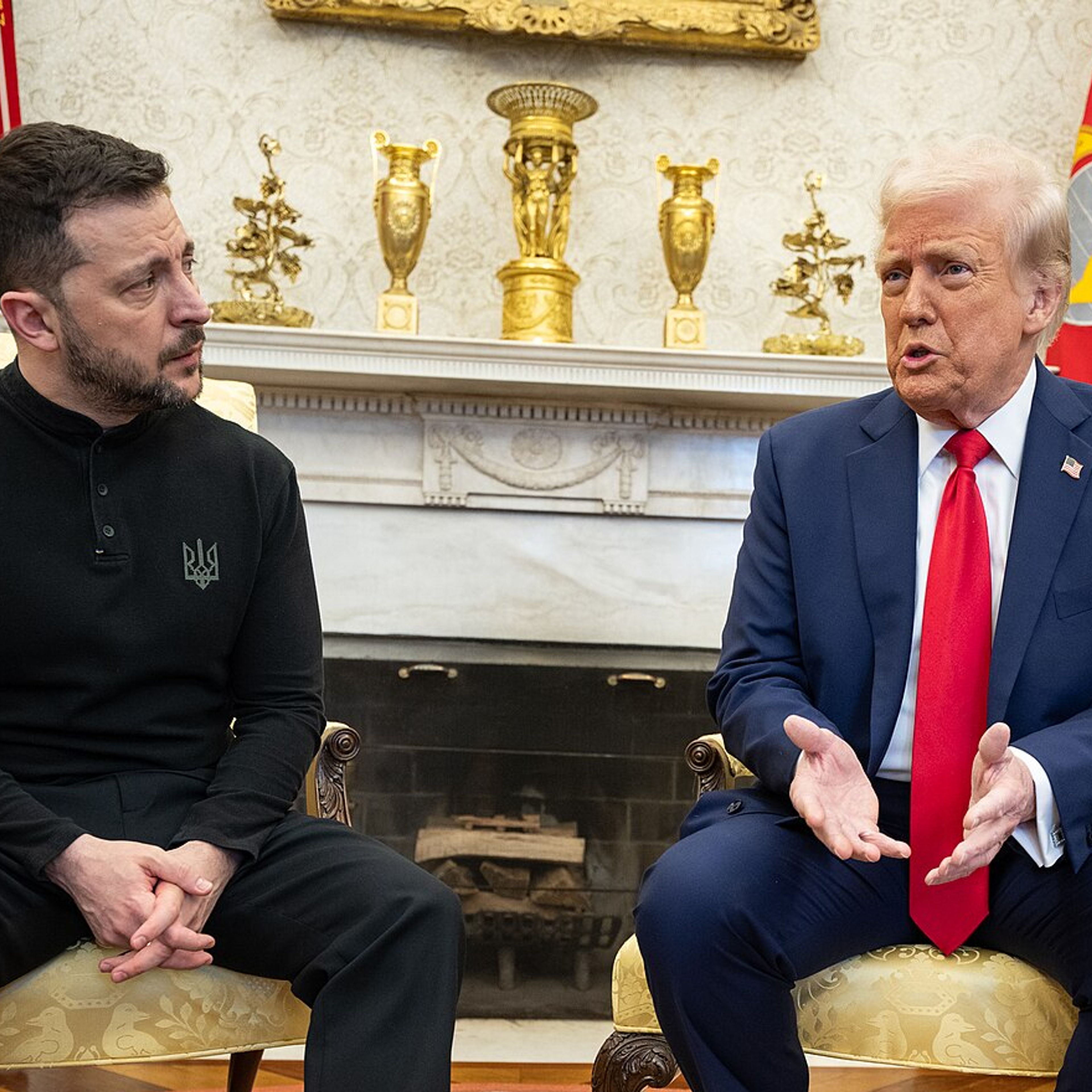
The statement viewed Ben-Gvir and Katz’s remarks as a direct challenge to US president Donald Trump-brokered peace process itself, arguing that displacement proposals undercut a plan whose own terms explicitly rule out forced removal, and that pursuing them “gravely risk[s] undermining prospects for stability” across the wider region.
Central to the ministers’ message was a reassertion of Gaza’s political status: that the Strip is not a separate or negotiable entity but an inseparable part of the Occupied Palestinian Territory, bound together with the West Bank and East Jerusalem. They renewed their call for a two-state solution built “along the lines of June 4, 1967, with East Jerusalem as the capital” of an independent Palestinian state, and urged the UN Security Council specifically to intervene against any attempt to impose a new “demographic or geographic reality” on the ground.
The statement’s trigger came from Israeli Defence Minister Israel Katz who told reporters on September 2 that removing large numbers of Gaza’s population “by land, sea, and air” was, in his view, the only genuine solution for the territory, and that the idea remained “frozen" rather than abandoned. A day later, National Security Minister Itamar Ben-Gvir, known for his rabid far right views, unveiled a detailed 20-page scheme, dubbed “Disengagement 710”, that set out targets for forcibly moving 250,000 Palestinians out of Gaza within a year and the bulk of its roughly two-million population.
Background: a fragile ceasefire, an unravelling consensus
The statement is the latest in a string of joint rebukes issued by overlapping configurations of Arab, Islamic and Western governments over the course of 2026, as Israel’s actions in the West Bank and Gaza have repeatedly tested the coalition of countries that endorsed President Donald Trump’s Comprehensive Plan to End the Gaza Conflict, a framework later underpinned by UN Security Council Resolution 2803.
In recent months, roughly the same core group of Arab and Islamic states – often joined by European counterparts such as the UK, France and a clutch of Nordic and Iberian governments – has condemned Israel’s rejection of the Gaza “road map”, denounced the expansion of the E1 settlement project east of occupied East Jerusalem, and protested the seizure of a UNRWA training facility in Kalandia. Each episode has chipped away at the credibility of the ceasefire architecture painstakingly assembled with US, Qatari, Egyptian and Turkish mediation.
Sunday’s statement indicates that Ben-Gvir and Katz’s remarks on displacement have struck a particularly raw nerve, cutting to the heart of Palestinian fears that a “temporary” military operation could be used as cover for permanent demographic change.
Notably, this is not the first time this exact bloc has acted in concert. The same eight countries – Jordan, the UAE, Indonesia, Pakistan, Türkiye, Saudi Arabia, Qatar and Egypt – previously issued a joint statement in August condemning Israel’s E1 settlement plan, suggesting an increasingly well-rehearsed diplomatic partnership among these states on Palestinian issues.
Why this matters
Diplomats and regional analysts will be watching closely for whether Israel’s Foreign Ministry responds in the same terms that it has used against previous coalitions – as it did last December, when it dismissed a UK-led joint statement on Gaza’s humanitarian situation as “false” and accused signatories of ignoring the necessity of disarming Hamas. That pattern, of swift and pointed Israeli rejection followed by continued policy on the ground, has repeated itself through 2026’s succession of joint statements, from the West Bank settlement condemnations in August to the UNRWA dispute later that month.
What distinguishes Sunday’s statement from similar other statements in the recent past is the speed and unity with which it was issued, within hours of the Israeli ministers’ remarks becoming public.