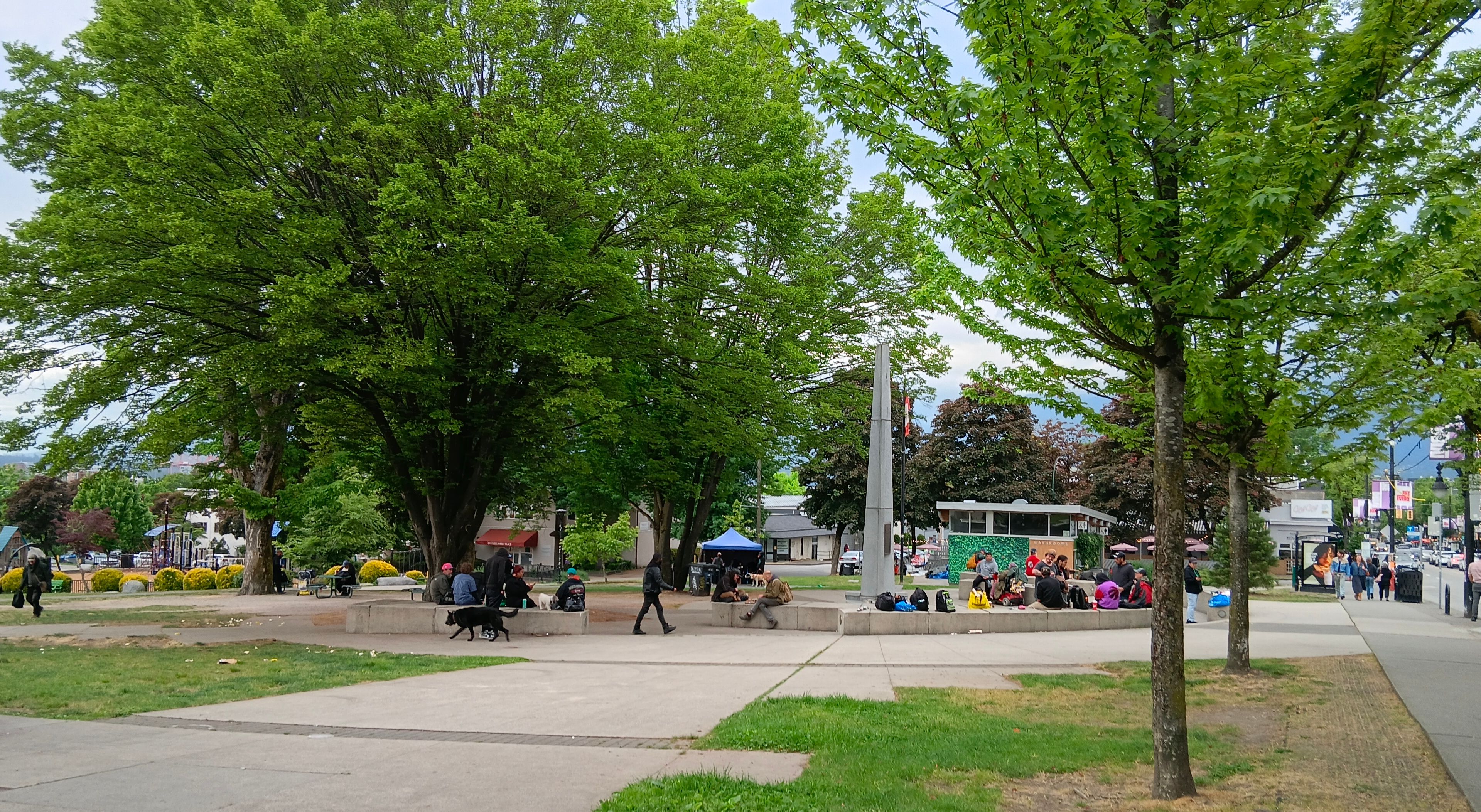
Vancouver: On a warm, sunny summer evening, a group of young to middle-aged people sit in a park smoking marijuana, watching a couple of musicians play an alternative rock song. The scene, reminiscent of New York’s Greenwich Village, unfolds in Grandview Park, in East Vancouver (East Van, as locals call it), a culturally diverse area that stands in contrast to the city’s posher quarters – and, from cash-only Italian cafes to record stores to a storied left-wing cooperative bookshop, one of the last bastions of the Left in a city where gentrification and centre-right politics have pushed property prices to record highs, while homelessness remains a visible, growing problem.
Historically, the eastern working-class neighbourhoods have voted Left, while the wealthy western parts favour centre-right and conservative politics. Commercial Drive (The Drive, to locals) is the heart of East Van, and Grandview Park sits at its centre. “Grandview Park is where protestors against wars, occupations, redrawn voter districts and elitist housing projects often gather after walking down the first half of The Drive,” says Vancouver-based translator and poet Y. R. Radhika. “This is where a food cart vendor will sell you chai (tea) and a campaigner will get your signature.”
“The Drive hasn’t been immune, with rents skyrocketing between 2007 and 2023,” Radhika adds. “But there is at least one cooperative housing project where rents are kept affordable, though there are waiting lists to consider.” With the middle class being priced out of Vancouver’s housing market more broadly, the Coalition of Progressive Electors (COPE), a left-wing municipal party founded in 1968, is running its mayoral candidate Stephanie Allen on the slogan “A Vancouver You Can Afford” for the October 2026 elections. The city also has the Green Party and Vision Vancouver, which emerged from a split in COPE in the 2000s.
A casual visitor spending a few days in the city, where hotels are expensive, would find little reason to venture into East Van. But for those seeking a fuller picture of Vancouver, ranked the ninth most liveable city in the world in 2026 by the Economist Intelligence Unit, a trip east is essential.
Walking down Commercial Drive, I see a middle-aged man in scruffy clothes selling copies of Megaphone, a monthly magazine published by homeless people with support from the city and federal governments, the BC Poverty Reduction Coalition, the independent outlet The Tyee, and the International Network of Street Papers. Published by the Hope in Shadows Society, its articles – written by homeless people – focus on mental health, safety and community resources, with poetry by street poets in every issue. The copy I pick up includes a piece on a collaboration between artists and business owners, spearheaded by a police officer, to help revitalise the city’s Chinatown. I’m struck, too, by a few Indian-sounding names among the authors, a reminder that Canada’s Indian diaspora, often assumed back home to be uniformly wealthy, has its own struggling arrivals as well.
The paper is a good way to help the underprivileged help themselves. Vendors buy a copy for C$1.50 and sell it for $5, keeping the difference to cover basic food costs. Production costs are subsidised by grants that grow scarcer each year, but vendors always keep every penny they earn – which also draws local donors who form personal bonds with particular vendors over repeat visits.
Vancouver, though celebrated by Canadians for its mild climate, is a hard place to be homeless. East Hastings Street, a short walk from the port and the city’s posher areas, is full of homeless drug addicts, a stark reflection of growing inequality. The average gross salary in the city sits above $60,000, while the average apartment costs $743,000. Combined federal and provincial taxes on a $60,000 income run to 23.25 per cent, and with British Columbia’s minimum wage at $18.25 an hour, a working-class resident would struggle to make ends meet.
Further down Commercial Drive, I pop into People’s Co-op Books, a member-owned independent bookshop trading since 1945 – Canada’s oldest surviving cooperative bookstore. I expect plenty on the Latin American Left and Palestine, but what surprises me most is an old Soviet-era poster of Lenin and Stalin, captioned in Russian: “In the name of communism.” I’d happily buy a truckload of books unavailable back in India, but the “capitalist” airlines would charge dearly for every kilo over my baggage limit.
Another haven for East Van’s Left-leaning intellectuals is High Life Records, selling new and secondhand LPs, books and even VHS tapes. In our 21st-century urge to declutter, many of us binned our old video tapes, cassettes and CDs; how nice it would be to slot a tape into a VCR and reconnect with the past. Besides records by jazz legends like Miles Davis, the shop stocks music from Nigeria, Ghana, India and elsewhere in Asia and Latin America. Chatting with the knowledgeable man at the counter, I learn he once visited India himself; the stock here is clearly curated for a discerning, cosmopolitan audience.

Earlier that evening, my Canadian host and I had coffee and pastries at a cash-only Italian cafe run by immigrants from Calabria, which I won’t name, its atmosphere faintly redolent of The Godfather and the Italian mafia south of the border. In the 1950s, this area was known as Little Italy, home to a thriving immigrant community; small Italian flag stickers on the walls are remnants of “Italian Day on the Drive”, held every second Sunday in June, when The Drive turns pedestrian-only for live music, al fresco patios, fashion shows and more.
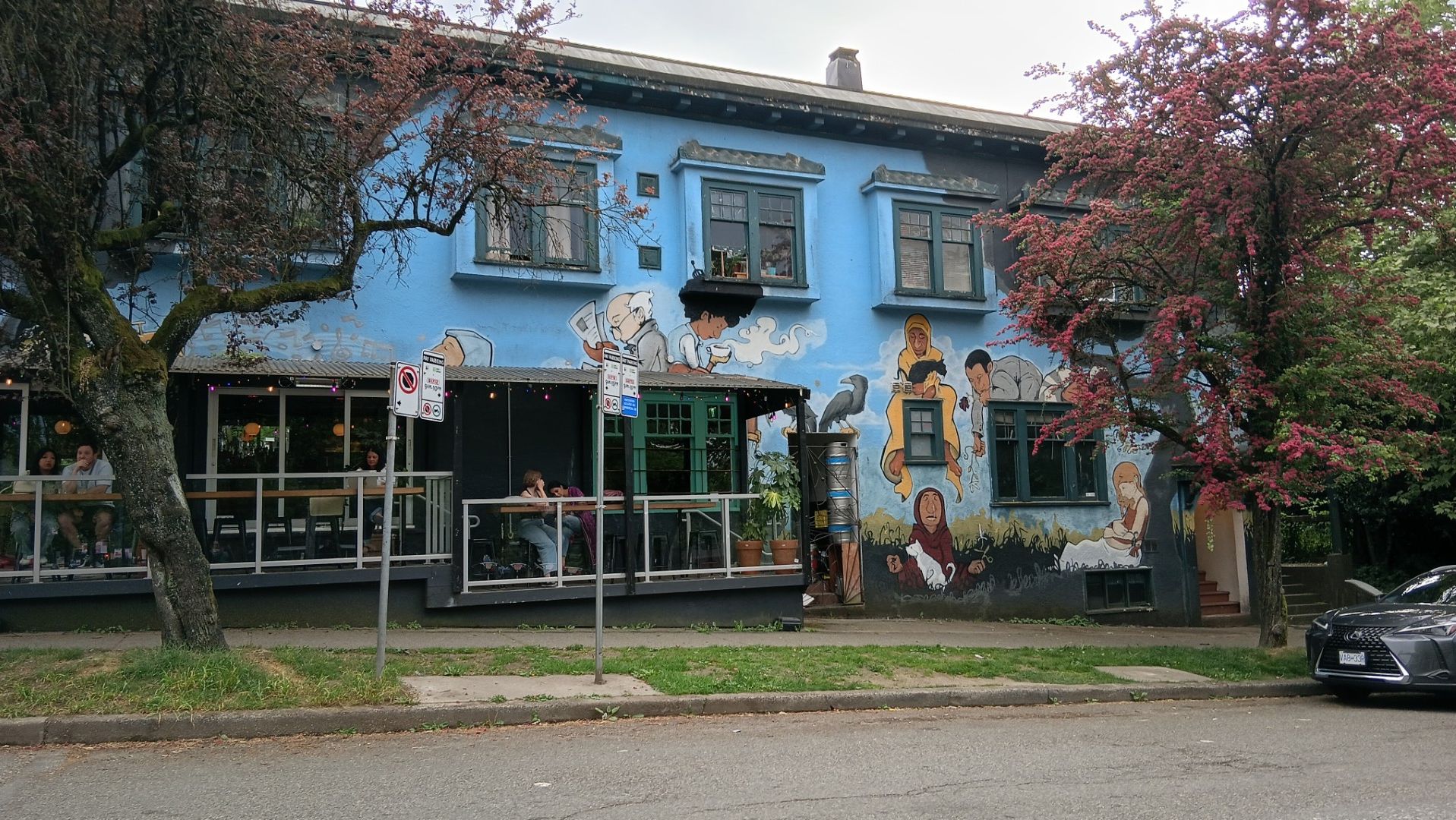
Canada proudly celebrates multiculturalism, and I cap off my time in Vancouver’s reddest quarter with an aperitif at Havana, a Cuban-themed restaurant with a patio perfect for watching the day end in a working-class neighbourhood. With each passing day, gentrification creeps in, slow but visible.