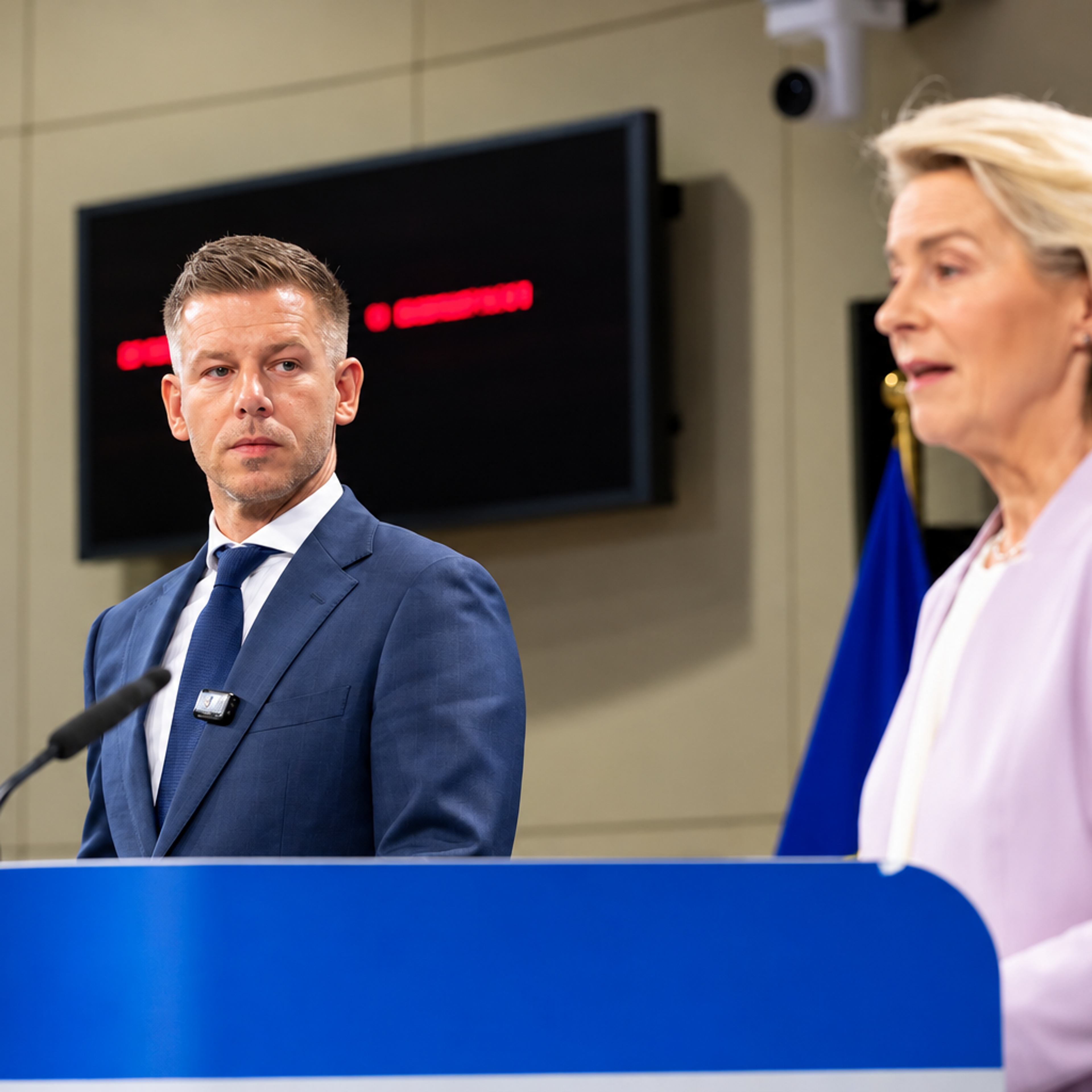

Hollywood actor George Clooney used a press appearance at the Venice Film Festival this week to defend Mark Ruffalo against accusations of antisemitism, lending him his highest-profile backing yet in a controversy that has been building since Ruffalo first spoke out on Gaza in 2024.
Speaking on September 2, ahead of receiving the festival’s Golden Lion for Lifetime Achievement, Clooney said he supported Ruffalo’s “ability to speak freely”, calling the antisemitism accusations against him “ridiculous”. He said he believed in free speech “even when I completely disagree with it”, and described Ruffalo as a “good man”.
Clooney also used the moment to voice unease about the scale of Paramount Skydance’s roughly $111 billion bid for Warner Bros. Discovery, saying large-scale consolidation worried him because of the jobs it typically costs.
Clooney’s intervention is the most prominent single endorsement Ruffalo has received in a dispute that has now stretched across nearly two years – one that, until last week, had left him facing far more criticism than support.
How it got here
Ruffalo’s Gaza advocacy began at the 2024 Academy Awards, where he wore a pin from Artists4Ceasefire, a group he had helped form in the weeks after the October 7, 2023 Hamas attack. He and more than 50 other creatives wrote to President Biden demanding an immediate ceasefire. Later that year, he joined more than 700 members of the Screen Actors Guild – American Federation of Television and Radio Artists (SAG-AFTRA) in a letter urging the union to formally call for a ceasefire and to protect pro-Palestinian members from industry blacklisting.
Ruffalo’s position hardened through 2025. In September, he joined more than 5,500 film industry workers pledging to boycott Israeli film institutions they said were implicated in genocide and apartheid against Palestinians. Around the same time, he publicly aligned himself with the Boycott, Divestment and Sanctions (BDS) movement, telling journalist Mehdi Hasan that Israel should be boycotted, divested from, sanctioned and prosecuted.
August 2026: the Oracle post and backlash
The current controversy began on August 21, when Ruffalo shared an Instagram clip of Oracle executive vice-chair Safra Catz discussing technology that the company supplied to Israel’s military after October 7. Ruffalo described the war as a “genocide” built on an apartheid system of oppression, and linked Oracle co-founder Larry Ellison to it. Ellison is financing his son David Ellison’s bid for Warner Bros. Discovery through Paramount Skydance, and Ruffalo called the takeover a dangerous concentration of corporate power.
Paramount responded within days, accusing Ruffalo of invoking “antisemitic tropes”. A coalition calling itself The Brigade, representing close to a thousand industry figures, condemned him, and groups including the Simon Wiesenthal Center and Creative Community for Peace joined the criticism. Ruffalo rejected the charge as “appalling and fundamentally dishonest”.
Support, however, began building almost immediately. Jane Fonda and John Cusack, both long-standing Hollywood activists, backed Ruffalo early. The decisive moment came on September 1, when more than 180 Jewish artists, writers, faith leaders and entertainment figures – including Joel Coen, Joaquin Phoenix, Jonathan Glazer, Todd Haynes, Ilana Glazer, Tony Kushner, James Schamus, Wallace Shawn, Bella Freud and Naomi Klein – signed an open letter titled “Enough!”, rejecting what they called an “outrageous smear campaign” against their colleague.
Clooney’s remarks two days later carried that momentum beyond Ruffalo’s usual circle of allies and into the industry’s mainstream, turning the episode less as a debate over Israel and more as a test of free speech within Hollywood.
In May 2021, after an earlier round of Israel-Hamas fighting, Ruffalo apologised for using inflammatory language while criticising Israel but warned that it could be used to justify antisemitism. His allies now counter that the context has shifted since 2021 as a UN Human Rights Council commission concluded last September that Israel’s conduct in Gaza constitutes genocide, and US polling has shown growing sympathy for Palestinians.