

Norway’s sovereign wealth fund – the world’s largest, managing roughly US$2.3 trillion in assets – has proposed a sharp reduction in its holdings of United States Treasury bonds, reflecting deepening unease among global institutional investors about America’s fiscal trajectory, Reuters has reported. The recommendation, contained in a formal letter submitted to Norway’s Ministry of Finance, marks one of the most significant strategic reassessments the fund has undertaken in recent times and sends a pointed signal to Washington at a time of mounting concern over its ballooning national debt.
The Government Pension Fund Global, commonly known as the Oil Fund, was established in 1990 to invest revenues from Norway’s North Sea oil and gas production on behalf of future generations. Managed by Norges Bank Investment Management (NBIM), the central bank’s asset management arm, it holds stakes in more than 9,000 companies across 70 countries, owns real estate on several continents, and carries a substantial portfolio of government and corporate bonds. Its governance model is widely regarded as a global benchmark – elected politicians set broad investment parameters, but professional managers at the central bank make day-to-day decisions, insulating the fund from short-term political pressures. When a fund of this scale and credibility shifts its posture, global markets pay close attention.
Why Washington’s Debt Is Losing Its Appeal
The NBIM’s proposal calls for reducing the share of its bond portfolio allocated to the United States and reallocating capital towards markets that it considers more attractively valued or structurally sound. The fund manages its fixed-income holdings against a bespoke benchmark rather than mirroring a standard global index, giving it the flexibility to make active geographical tilts. The letter recommended restructuring this benchmark to reduce American exposure while increasing the weight of bonds from other developed and emerging markets.
The reasoning is rooted in structural and cyclical concerns. America’s national debt has surpassed $35 trillion and shows little sign of stabilising. Years of deficit spending, pandemic-era stimulus programmes, and a political environment that has made fiscal consolidation deeply difficult have contributed to a borrowing trajectory that fixed-income investors are viewing with growing alarm. Higher debt levels typically translate into greater supply of government bonds, depressing prices and eroding returns for existing holders.
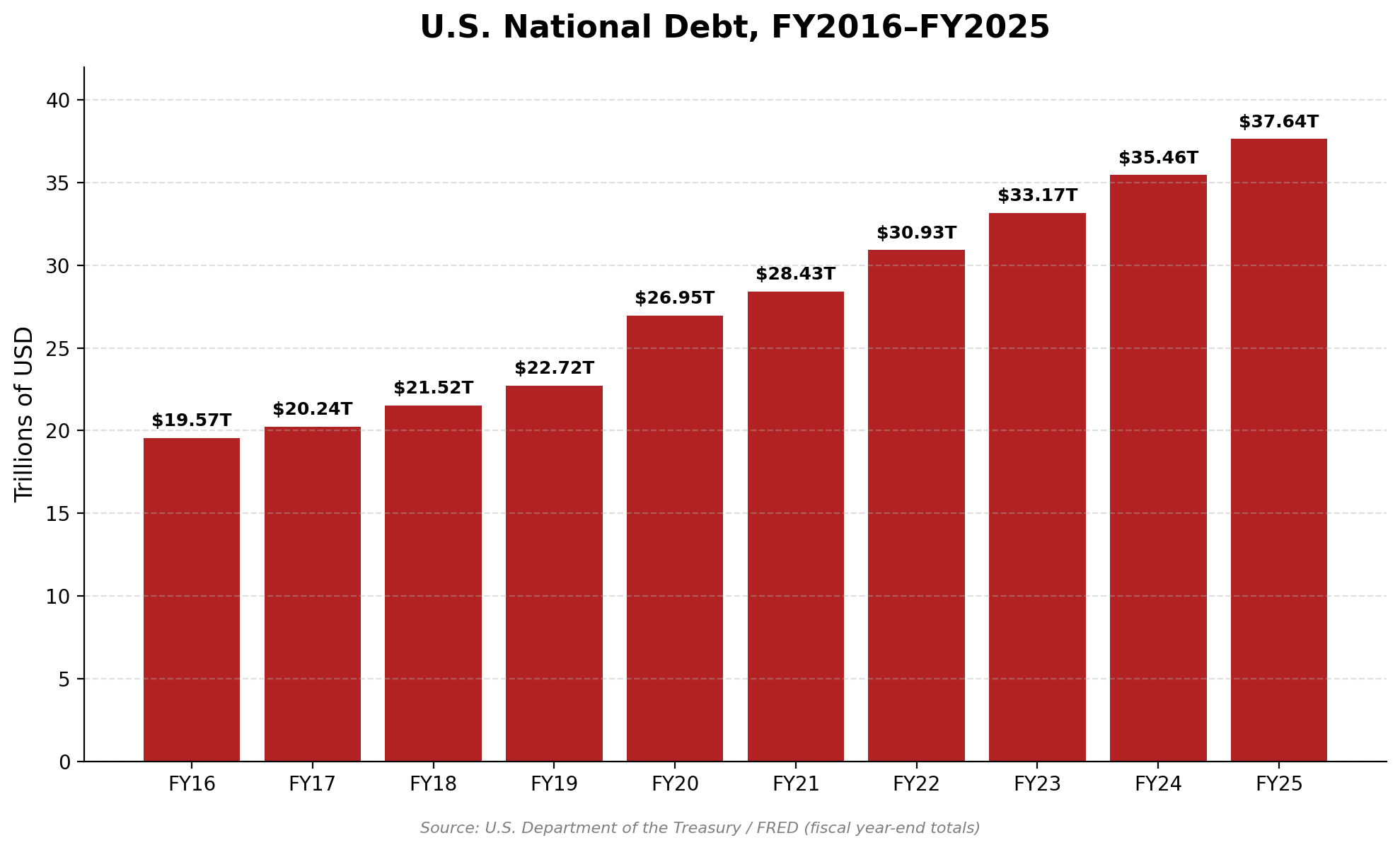
Elevated interest rates have compounded these concerns. As the US Federal Reserve has maintained a restrictive monetary policy stance to combat inflation, questions about long-term debt sustainability have sharpened. While higher rates initially boost yields, they also raise the cost of servicing an already enormous debt pile – making Treasuries a less straightforward bet than they once appeared. US Treasuries have long been regarded as the world’s safest and most liquid investment, but the NBIM’s proposal indicates that even the most sophisticated long-term investors are beginning to weigh that reputation against harder fiscal realities.
Where Could the Money Go?
The proposal has prompted considerable speculation about which markets might benefit from any reallocation. Analysts and bond market participants indicated that European sovereign debt – including bonds issued by Germany and other fiscally stable eurozone members – could be among the primary beneficiaries. Asian markets, including Japan and South Korea, have also been identified as logical candidates.
India, in particular, has drawn attention as a compelling alternative destination. Its inclusion in JPMorgan’s Government Bond Index-Emerging Markets in 2024 was a landmark moment that drew billions of dollars in passive inflows into Indian sovereign debt. Backed by a high-growth economy and a government that has sought to maintain a credible medium-term fiscal path, India’s bond market represents an increasingly attractive proposition for large institutional investors reconsidering their geographical weightings.
However, any reallocation from a fund of NBIM’s size is likely to be gradual and measured. The proposal is a recommendation, not a finalised policy. Norway’s Ministry of Finance is expected to review the submission and consult independent experts before deciding whether to amend the fund’s mandate.
Norway’s Oil Fund has navigated market turbulence earlier, too – it famously used the 2008 global financial crisis as a buying opportunity, rebalancing aggressively into equities when prices collapsed. Its long investment horizon, measured in decades rather than quarters, gives it a tolerance for short-term volatility that few other investors can match. That same long-term discipline now appears to be driving its caution on US Treasuries: not a panic-driven sell-off, but a deliberate reassessment of where value lies in global sovereign debt markets. As Washington grapples with partisan gridlock and recurring debt-ceiling standoffs, the move by one of the world’s most respected institutional investors to formally reconsider its exposure to American debt is a development that policymakers will surely note.