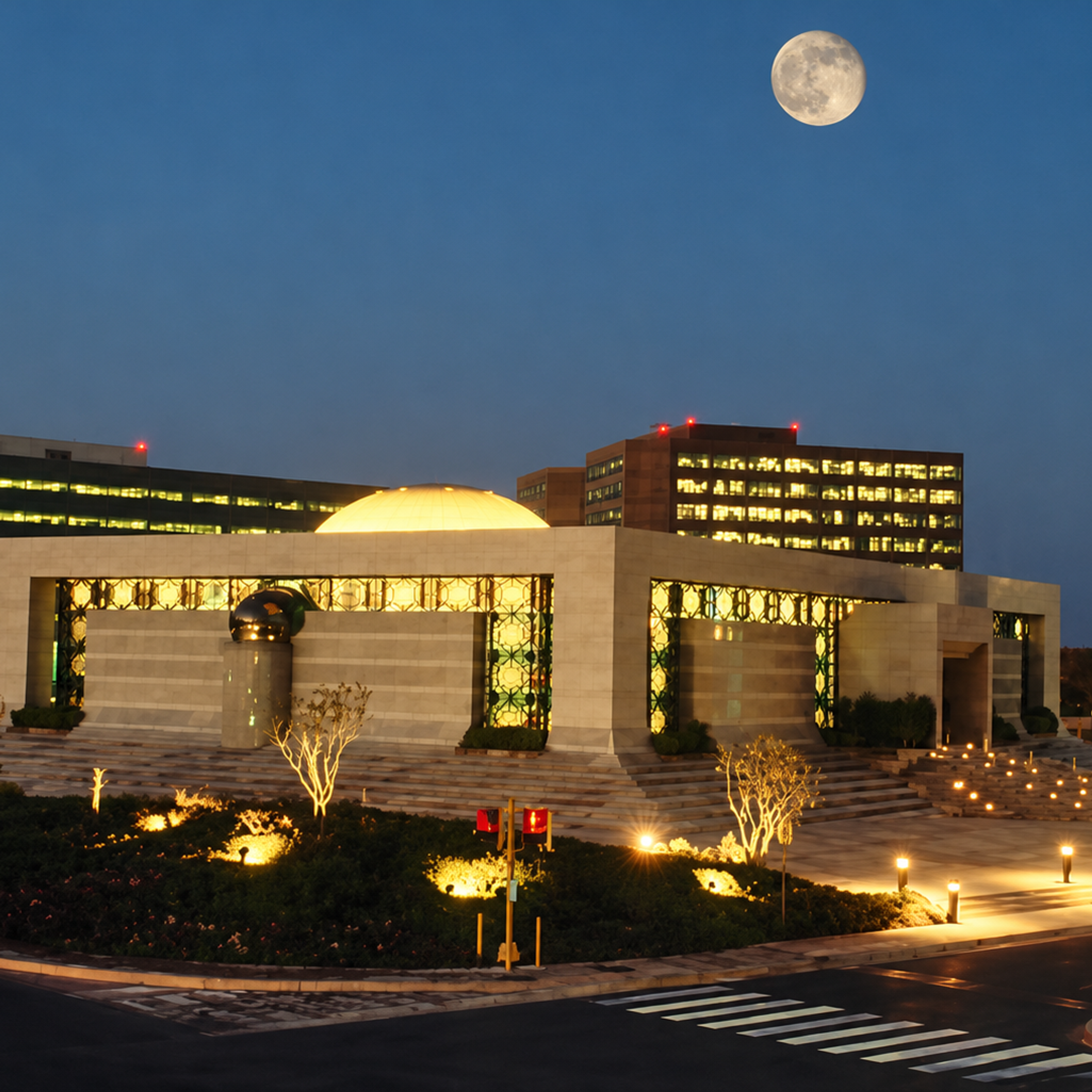

A day after authorities in India’s Uttar Pradesh demolished a mosque inside the Saharanpur district collectorate before dawn on Saturday (September 5), Pakistan’s Ministry of Foreign Affairs, headed by Deputy Prime Minister and Foreign Minister Ishaq Dar, formally condemned the demolition the following day, setting the stage for a diplomatic duel with India.
The Saharanpur mosque was demolished three days after a local court dismissed an appeal against a July eviction order that had declared the structure unauthorised construction on government land – even as defendants were preparing to appeal at a higher appellate body.
Foreign Office spokesperson Ambassador Sajjad Haider Khan said in a statement that the razing of the “historic Islamic place of worship” was “yet another manifestation of the broader Islamophobic and Hindutva-driven campaign to erase the Islamic heritage” in India. He then drew a parallel to the 1992 destruction of the Babri Masjid in Ayodhya, calling it “an enduring symbol of this ideology of religious intolerance, prejudice and hatred”. Khan urged the international community to “take immediate cognizance of the systematic persecution of Muslims by Indian authorities” and called for Indian authorities to be “held accountable” for the “desecration and destruction” of minority places of worship.
What actually happened in Saharanpur
The dispute traces back to a complaint that the roughly 150-year-old mosque, sitting inside the District Magistrate’s office compound, occupied government property; a city magistrate's July 16 order directed the mosque committee’s eviction and imposed a penalty of roughly Rs 6.4 crore (roughly US$634,984). Within India, too, the Saharanpur demolition has so far played out as a state-level political fight rather than a national security one. The Opposition has been unsparing, accusing the Bharatiya Janata Party-led Uttar Pradesh government of using the bulldozer to distract from pressing issues like unemployment and inflation.
Uttar Pradesh under Chief Minister Yogi Adityanath has, over the past several years, made the bulldozer something close to a governing symbol – most visibly in 2022, when the state razed homes and properties linked to men accused of organising protests over blasphemous remarks made by a BJP spokesperson, an episode the state later defended in the Supreme Court as lawful action against illegal construction, not retaliation.
The BJP under Narendra Modi has built much of its electoral identity around a Hindutva project that treats disputes over historic mosque sites as unfinished business – the Ram Temple’s consecration on the site of the demolished Babri Masjid in January 2024 was presented by the government as a civilisational correction, not merely a religious ceremony, even as litigation continues over a number of other mosques such the Gyanvapi mosque in Varanasi and the Shahi Eidgah in Mathura.
It is precisely this pattern that Islamabad’s statement was designed to invoke.
India’s response
New Delhi, however, has been consistent with its criticism over similar Pakistan’s statements in the past and has termed them as interference and turned the accusation back on Islamabad. When Pakistan’s President Asif Ali Zardari raised concerns in June 2026 about threats to a Varanasi mosque, the Ministry of External Affairs called his remarks “absurd” and said he had “no locus standi to comment on matters that are internal to India”, pointing to what it called Pakistan’s own “abysmal record” on minority rights. That is very likely the shape India’s response to the Saharanpur statement will take as well.
This pattern of accusation and counter-accusation has become quite reflexive. The last 48 hours produced a near-perfect case study, running almost exactly parallel to the mosque episode. On September 4, the UN General Assembly adopted a Togo-sponsored resolution, “Correct the Map: Rebalancing Global Cartographic Representation and Promoting Equitable Representation of the World's Regions, Particularly Africa”, encouraging states to move toward equal-area projections – such as the Equal Earth map – that do not visually shrink Africa the way the standard Mercator projection does. India voted for it, along with 163 other countries.
But New Delhi immediately hedged that vote with a pointed caveat. MEA spokesperson Randhir Jaiswal said India’s support was tied strictly to the cartographic principle, not to any particular depiction of borders, and insisted that “any inaccurate or misleading depiction” of India’s territory – explicitly naming Jammu and Kashmir and Ladakh – “is unacceptable”. He added that India’s position on its “sovereignty and territorial integrity is clear, consistent and non-negotiable”.
Pakistan’s Foreign Office response arrived within a day, in almost identical language to its Saharanpur statement, and from the same spokesperson. Ambassador Sajjad Haider Khan said Pakistan “categorically rejects India’s baseless assertions” on Kashmir, arguing they were “contrary to internationally recognised facts”, and reasserted that Jammu and Kashmir remains a disputed territory under UN Security Council resolutions, pending “a free and impartial plebiscite”. A technical UN resolution about map projections had, within 72 hours, become one more occasion to relitigate Kashmir.
The sequence – a cartography vote, an Indian caveat about territory, a Pakistani rejection citing UN resolutions and self-determination, all inside a single week that also carried the Saharanpur exchange – is a tidy illustration of how thin the membrane has become between routine multilateral business and bilateral confrontation. Both foreign offices now appear primed to convert almost any adjacent news event, however unrelated in origin, into an opportunity to restate maximalist positions for domestic and international audiences alike. It is tit-for-tat diplomacy in its purest, most habitual form: not a considered escalation in response to a specific provocation, but a standing reflex that fires the moment either side offers an opening.
India and Pakistan have spent much of 2026 locked in an increasingly bitter standoff over the Indus Waters Treaty, which New Delhi placed in abeyance after last year’s Kashmir attack and has refused to revive despite a Hague arbitration ruling it does not recognise. Shahbaz Sharif has called the treaty’s suspension a “declaration of war”; India’s foreign ministry has responded, in essence, that its position has not moved an inch. Against that backdrop, a mosque demolition is not just a domestic Indian legal matter – it is one more data point in a bilateral relationship that both capitals are actively narrating as adversarial, each to its own domestic and international audience.
Pakistan’s aspirations to become a global player
Throughout this year, Pakistan has been engaged in a deliberate, and reasonably successful, campaign to reposition itself – from a country perpetually defined by internal crisis and dependency, to one that matters again on the wider Islamic and geopolitical stage. The clearest marker of that ambition is the Mecca Joint Defence Agreement, signed on August 7, 2026, by Shehbaz Sharif, Saudi Crown Prince Mohammed bin Salman and Turkish President Recep Tayyip Erdoğan. Pakistan is, for the first time in decades, one of three signatories anchoring a defence architecture for the Muslim-majority world, alongside the Gulf’s financial power and Turkey’s industrial and drone capability. Clearly, Pakistani leaders want the world to see their country as an impactful global player rather than a risky partner needing to be managed.
Pakistan’s role as a mediator between Washington and Tehran is also noteworthy. When the US-Israel-Iran war escalated earlier in 2026, Islamabad – leveraging what officials describe as Shehbaz Sharif’s and army chief Asim Munir’s unusually warm personal rapport with Donald Trump – positioned itself as a go-between, hosting the first direct high-level US-Iran talks since 1979 in Islamabad in April. Pakistan announced the ceasefire that paused the roughly 40-day conflict, and Sharif has since repeatedly offered Islamabad as host for further rounds. Commentators have called this Pakistan’s most significant diplomatic re-emergence since it brokered the US-China rapprochement of the 1970s – a comparison Pakistani officials are visibly happy to encourage.
Yet, that external repositioning has run alongside a domestic drift that is harder for Islamabad to cover up in a favourable way. Shehbaz Sharif’s government has, over the past year, presided over a hardening religious climate rather than a loosening one. It banned the hardline Islamist party Tehreek-e-Labbaik Pakistan in October 2025 after deadly clashes – but only after years in which the state alternately confronted and accommodated the group’s core demand: aggressive enforcement of blasphemy law. Blasphemy prosecutions and death sentences have continued to rise, even as Pakistan faces Western pressure to reform the statute; rights advocates note that any such reform would happen only in tandem with, not against, the military and civilian leadership’s own comfort with religious conservatism as a tool of legitimacy. Sharif’s party, the PML-N, has a long history, since his time as Punjab chief minister – of accommodating hardline religious networks rather than confronting them.
Two neighbours, two nationalisms
That is the uncomfortable symmetry sitting underneath Sunday’s statement. Pakistan condemns Hindutva-driven majoritarianism in India even as its own government leans further into Islamist doctrines of state and society at home; India’s ruling dispensation under Narendra Modi, meanwhile, has built its politics substantially around a Hindu-nationalist identity that critics – including, pointedly, Pakistan’s own foreign ministry – say treats sites like Babri Masjid, Gyanvapi and now Saharanpur’s mosque, as unfinished business in a longer civilizational contest.
Two nuclear-armed neighbours, each moving toward a more religiously assertive nationalism, each treating the other’s domestic disputes – and even routine multilateral votes – as ammunition for its own narrative, are certainly not well positioned for the kind of quiet diplomacy that resolved past crises.