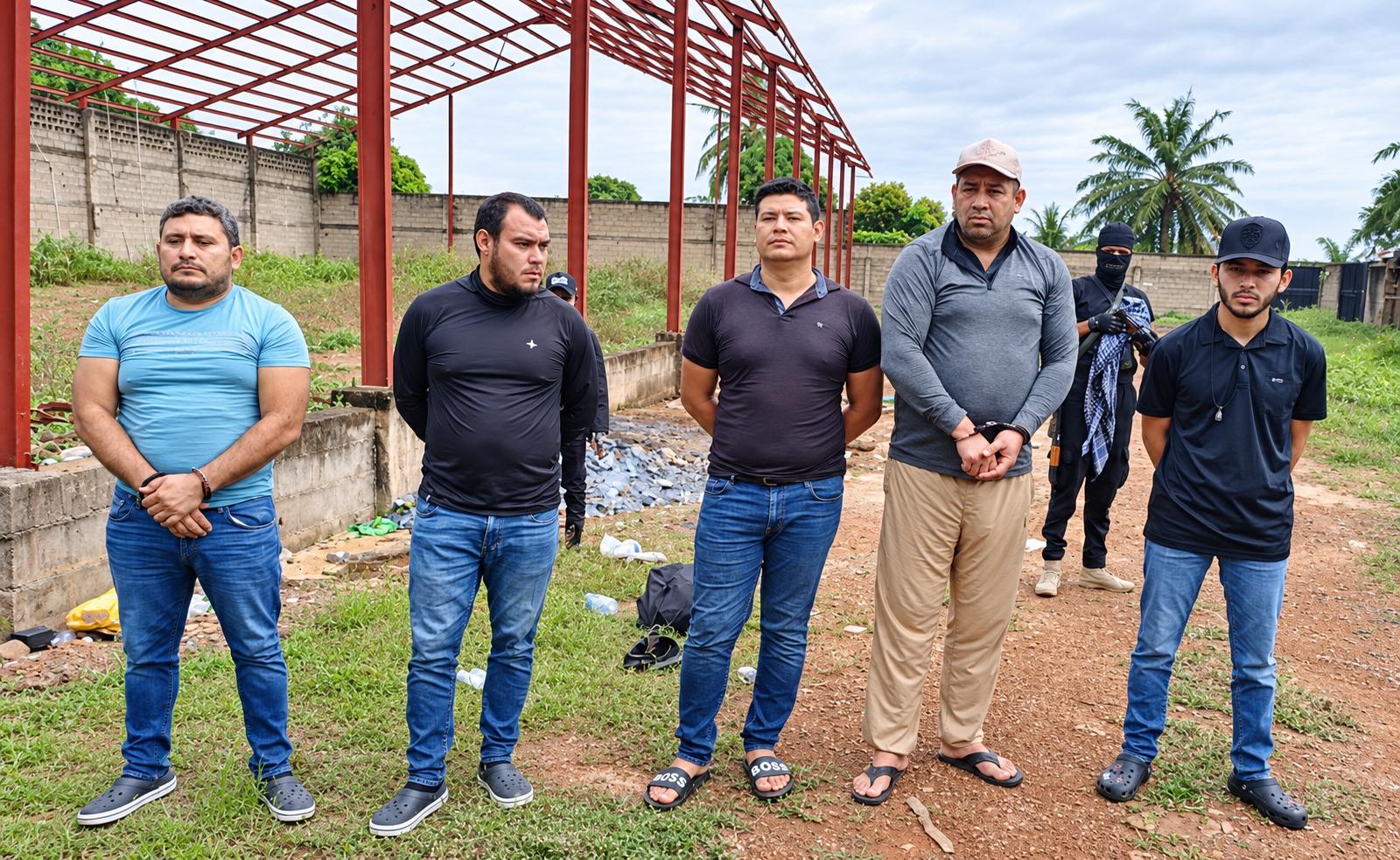
In a major drug bust in Africa, the agents of the National Drug Law Enforcement Agency (NDLEA) have busted an industrial-scale methamphetamine (meth) laboratory in the southeastern city of Enugu, arresting five Mexican nationals and a Nigerian businessman. The teams have seized 1,512 kg of the drug worth an estimated $226.8 million on November 25. With this raid, the number of Mexican meth specialists arrested in Nigeria in the past four months has risen to 10, raising fears that Mexican drug cartels are moving production to Africa.
A lab built for production
NDLEA chairman Buba Marwa disclosed the operation to journalists in Abuja. Agency officials describe the site as a fully equipped factory, not a makeshift arrangement. The NDLEA said operatives stormed an industrial-scale laboratory in Enugu State where “Mexican meth specialists” were arrested. The haul included finished product and drugs still in production, along with 6.68 tonnes of chemical precursors and industrial equipment. The agency valued the seizure at US$226.8 million, equivalent to N303.9 billion. That figure is the agency's own estimate, and it has not said how it was calculated.
How investigation unfolded
According to the agency, the Mexicans did not arrive by accident. They were allegedly recruited by a Nigerian national and entered the country with forged passports. German media outlet DW reported that Nigerian officials first turned the group away in August, and that they re-entered in September through neighbouring Benin, after which authorities put them under surveillance. The agency says it tracked their movements from Lagos to Enugu.
The Nigerian at the centre of the case is a 63-year-old businessman, Chuks Enoch Ezeike, known as “Over Size.” Agents arrested the Mexicans at the lab on 11 November, in the middle of production, and picked him up in a nearby hotel room. The agency says he admitted to owning the laboratory and bringing the Mexicans in to make the drug. He has not commented publicly, and the allegations have not been tested in court.
Not the first, not the last
The Enugu raid is part of a pattern. The agency says it has dismantled four industrial-scale methamphetamine laboratories in Enugu, Ogun, Oyo and Ebonyi states within four months. Five Mexicans arrested in earlier operations are already in custody and facing trial. In May, DW noted, Nigerian authorities detained ten people in a southwestern operation, including three Mexicans. Earlier this autumn, the agency also arrested two suspected local kingpins it said ran an Enugu lab in partnership with a Mexican drug cartel member based in Mexico City.
Why Africa is attractive to cartels
Analysts say the arrests fit a wider shift. Vanda Felbab-Brown of the Brookings Institution, a Washington think tank, told a US Senate caucus in June that Mexican groups such as the Sinaloa Cartel and the Cartel de Jalisco Nueva Generación (CJNG) have expanded beyond the Americas. She said they find "desirable partners" in countries including South Africa and Kenya because of "limited law enforcement capacities and entrenched criminal and corrupt networks." South Africa is another country where Mexicans have been arrested over a meth lab.
Geography also helps traffickers. The UN Office on Drugs and Crime says borders across West and Central Africa are often remote or crowded, and that their porous nature is “a major factor of insecurity.”