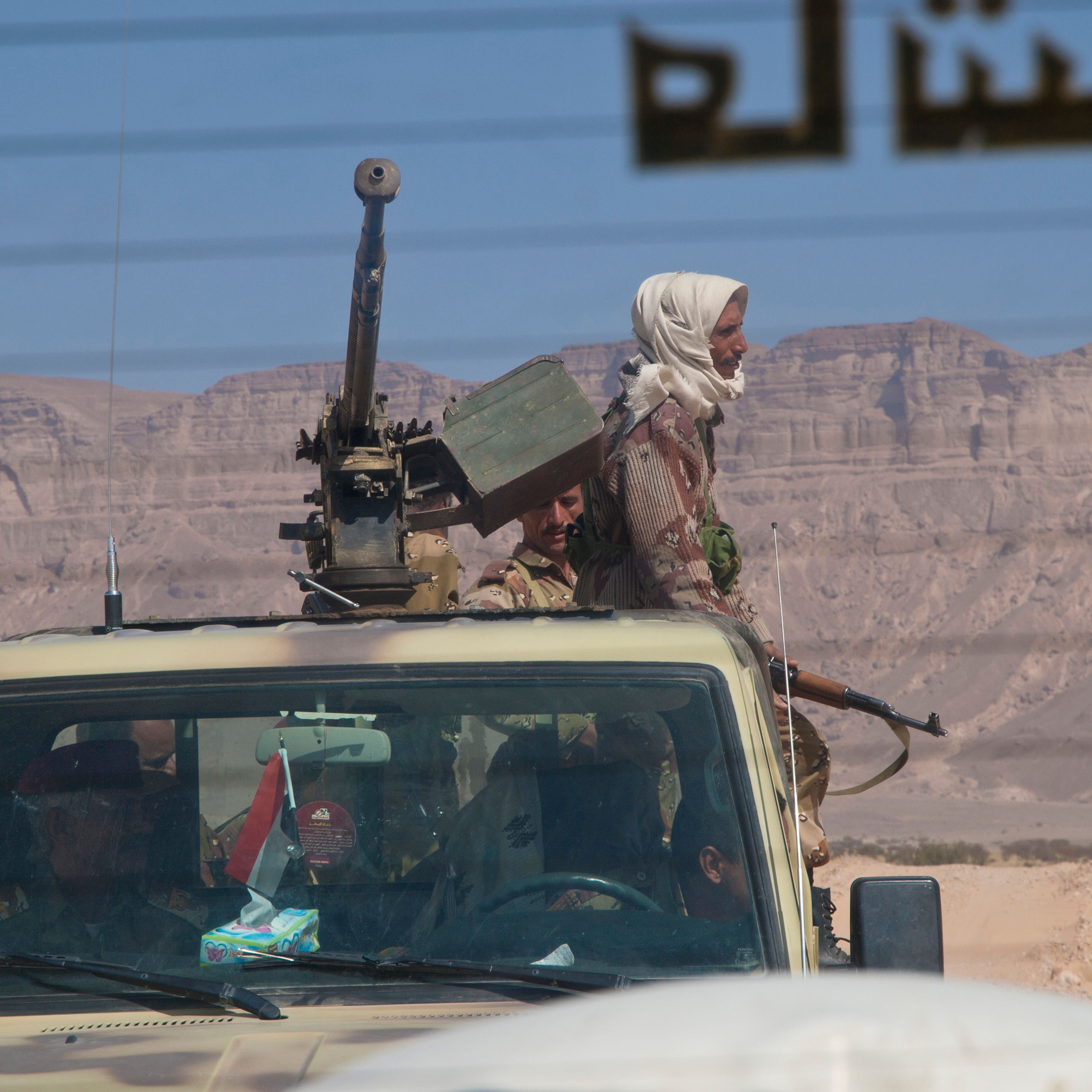
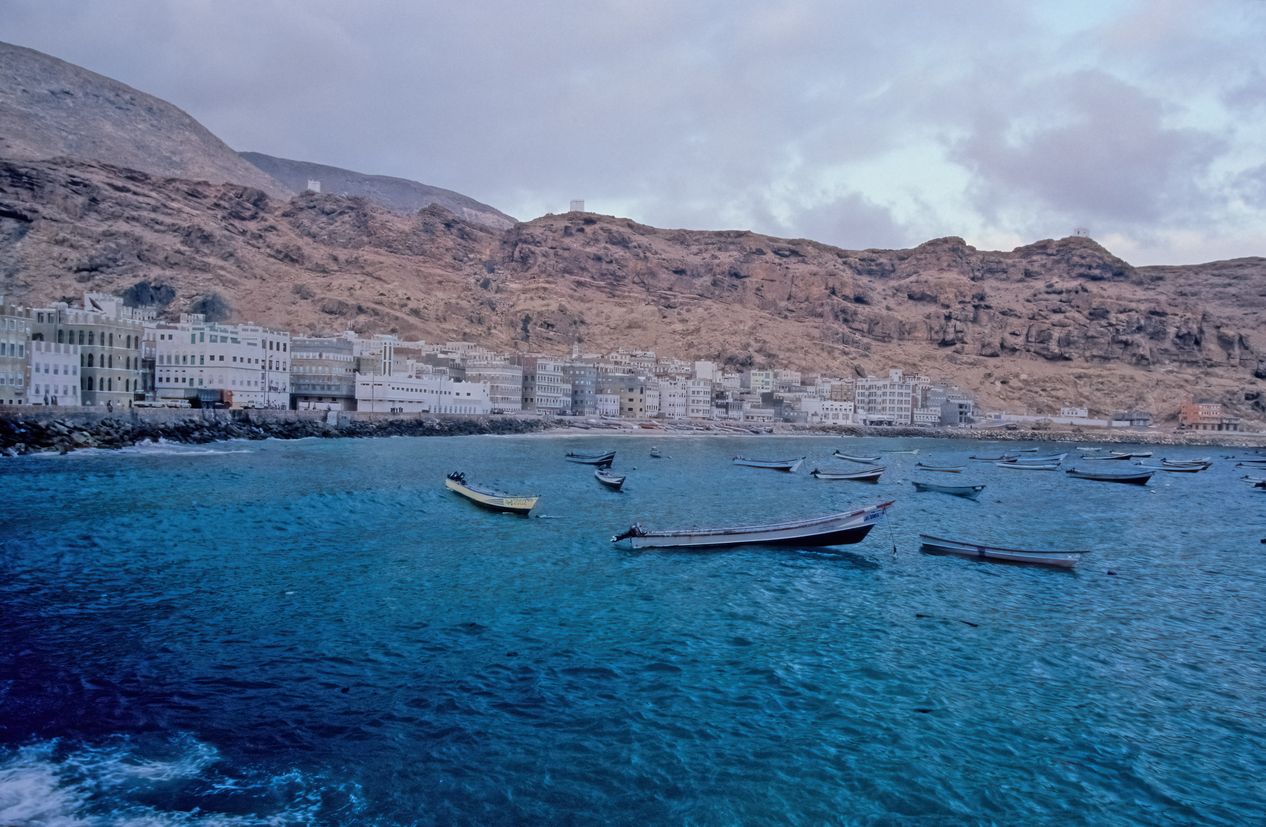
Mocha, a small Yemeni port town, has lately forced its way back into the headlines after Houthi forces overran it during their latest advance, dragging a forgotten name back onto the world’s radar. That name, of course, is already famous – forever fused to the cup of coffee that it lent its identity to, even though not a single bean was ever grown in the region. The beans came down instead from highland terraces further inland, around Bani Mattar, Haraz and Ta'izz, and were simply shipped out through Mocha’s docks – as they gradually borrowed the port’s name as their own.
But Mocha holds a second, far quieter secret, one with a surprising Indian address. For nearly two hundred years, a community of merchants from Gujarat effectively ran the port’s economy, so completely that trade there ran on a currency of their own making – a “Gujarati dollar” that was bartered in nearly every deal struck on the docks. Their reign didn’t end quietly either; a tax dispute became the spark that exposed the cracks already running through it, and brought the whole edifice down. This is the story of how a community of Indian traders built an empire in an Arab port city – and how they lost it.
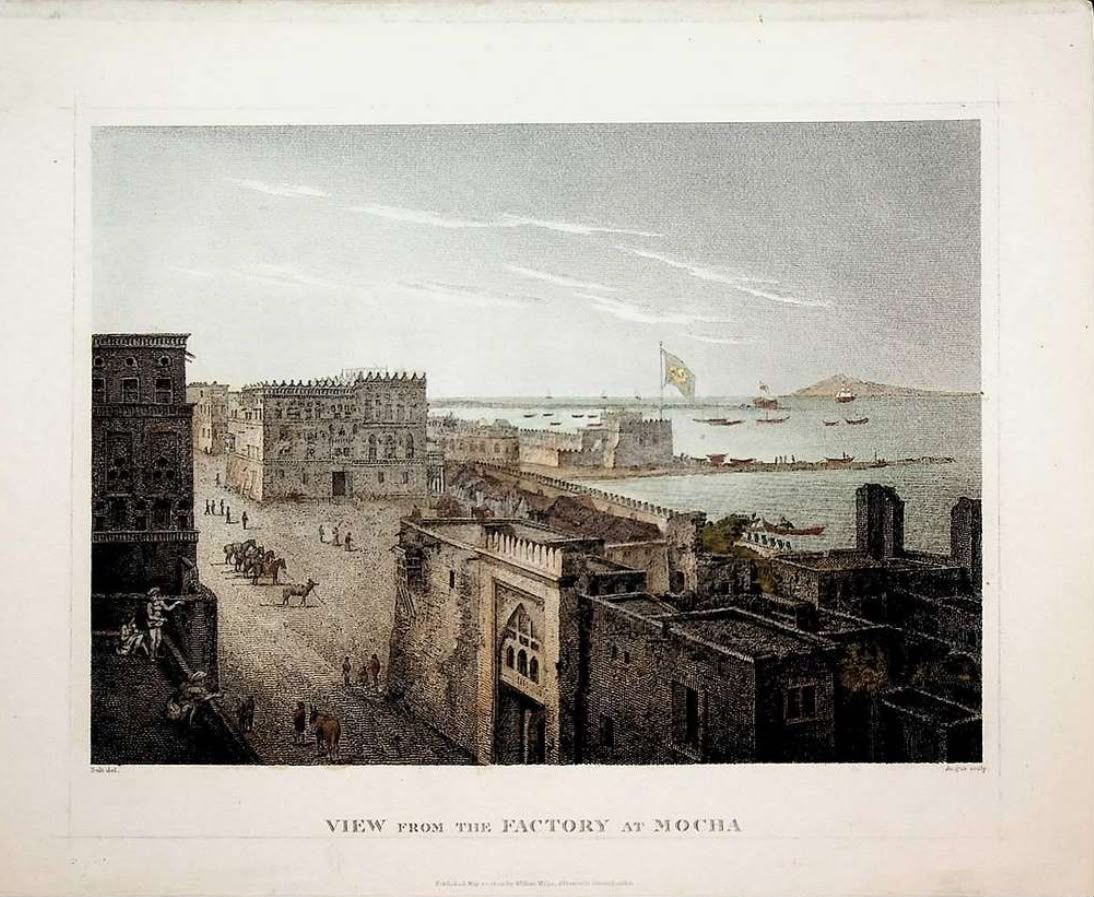
At its height, Mocha was one of the busiest entrepôts on the Indian Ocean’s western rim. Ships from Surat, Bombay, the Persian Gulf, East Africa and Europe crowded its roadstead, trading coffee and Arabian aromatics for Indian textiles, Asian spices and silver carried over from the ‘New World’; for roughly a century and a half after the 1500s, virtually all the coffee consumed in the world passed through this one port. Mocha itself was never an independent city-state. It was governed on behalf of the Qasimi dynasty, the Zaidi Imams who had ruled Yemen’s highlands and coast from Sana'a since the 1600s, with local governors administering the port in the Imam's name.
In October 1821, an envoy of Mocha’s governor sailed across the Arabian Sea and reached Bombay. He carried a complaint from the governor, Amir Fathulla, about a Gujarati merchant named Bhimji Kalyanji. Bhimji was an Indian broker who handled a huge volume of business in the Mocha port, acting as an intermediary for nearly every foreign trader passing through. By law, he owed the governor a brokerage tax on this business. But whenever he was asked to pay, Bhimji refused, claiming that he was a servant of the British government and therefore exempt. “Bheemjee is a treacherous and perfidious man,” the envoy told British officials in Bombay, in a complaint recorded in East India Company correspondence. “When the duties on Brokerage are demanded from him, he declares that he is a servant of your government.”
Bhimji was leaning on a treaty that Britain had imposed on Mocha’s government the previous year – one that was supposed to place Indian merchants beyond the reach of local jurisdiction entirely. The envoy’s complaint went further in saying that Bhimji was also refusing to repay a $20,000 (Spanish silver dollars) forced loan that the imam of Sana'a had demanded of him, and he separately pursued $31,500 that earlier governors of Mocha owed him. Bhimji was depending on the English version of that treaty.
As it would turn out, the Arabic version told a very different story – one that would take Bombay years to untangle.
How did the Gujarati traders come to call Mocha home, and run its port economy, for the better part of two centuries? Gujaratis were, by tradition, skilled seafarers and traders, and their commercial reach across the Indian Ocean was well established long before Mocha ever entered the picture. Historical scholarship shows that Gujarati traders had settled in Mocha around 1650, mostly Bohra and Bania merchants from mainland Gujarat and the Kutch region. Many of them settled permanently, and their dominance of the port continued for close to two centuries afterward.
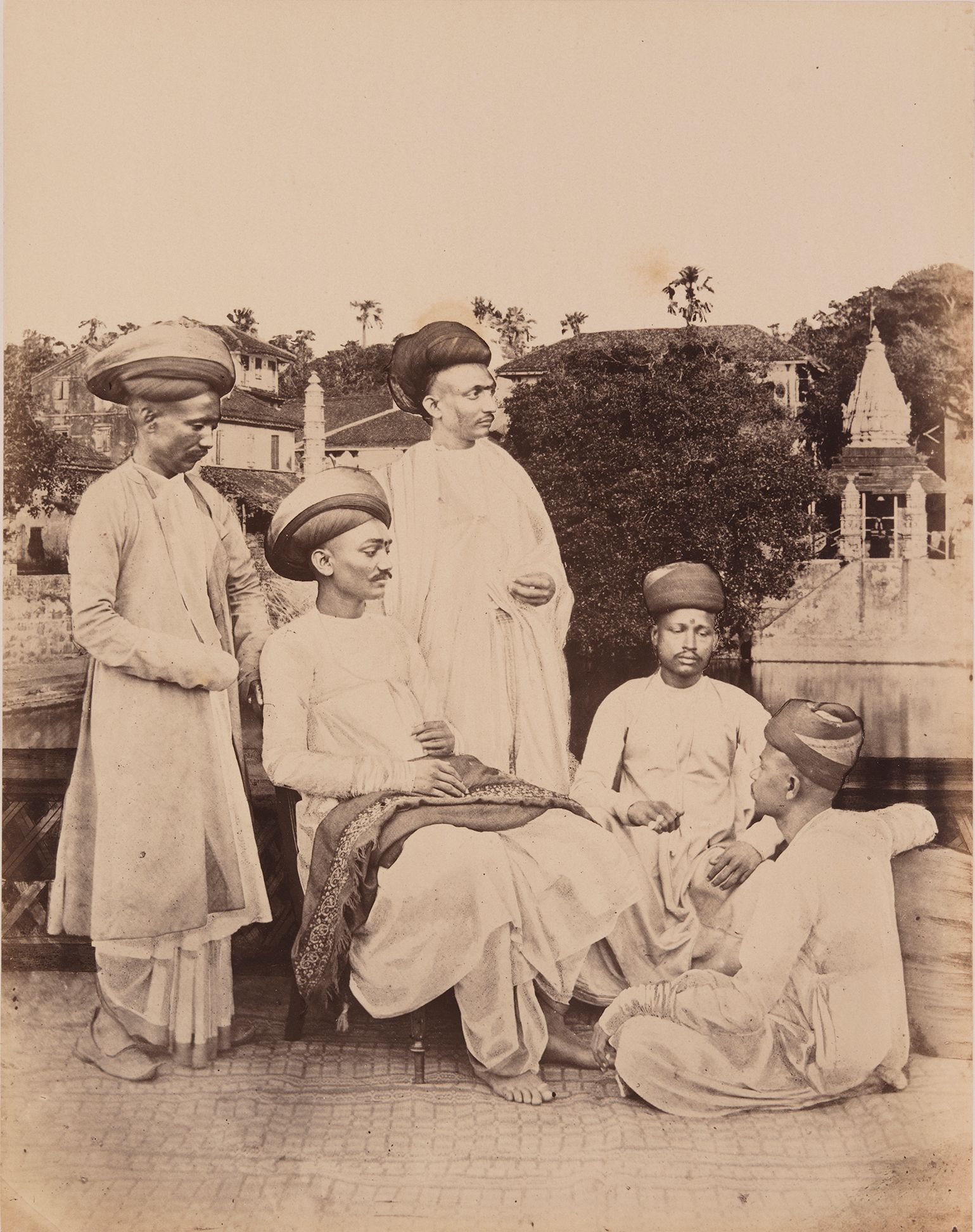
That dominance shaped the very rhythm of Mocha’s commercial life. High-value trade at the port ran on deferred payment rather than cash, so accounts were settled on a fixed schedule which followed “the Banias' calendar.” This calendar began each year with the arrival of the Indian merchant fleet, rather than following the Islamic lunar calendar. Every year, the arrival of that fleet marked the formal start of Mocha’s trading season.
Even the port’s money was Gujarati-made. Coffee sales were usually settled in Spanish silver dollars, the standard currency of the wider region and the one foreign buyers trusted enough to carry home. Almost everything else – the day-to-day credit and barter that ran between local merchants – settled instead in the Mocha dollar, a currency invented by Gujarati traders themselves, its value fixed at 21 per cent below the Spanish dollar. Because the Gujaratis controlled so much of the port’s commerce, the rest of the community had little real choice but to adopt it.
They conducted this trade without even needing a public marketplace – a striking departure from how business was usually done elsewhere in the Arab and Ottoman world. In most Islamic port cities of the period, trade took place in a dedicated public hall known as a khana. Mocha had no such shared building. Instead, all trading business, including deals involving European companies, took place privately, inside individual merchants’ own houses. These homes were tall and layered: storerooms and reception areas occupied the ground floor, while family quarters were kept separate, usually above.
Milch cows
This near-total economic control did not buy the Gujaratis real security. Under Islamic law, non-Muslims living under a Muslim ruler’s protection were classified as dhimmis, a status normally reserved for Jews and Christians – the “People of the Book”. Hindus and Jains, the religions of most Gujarati merchants, technically didn’t qualify at all. Yemen’s rulers granted them the status anyway; their commercial value simply outweighed the theological technicality. Even within this grudging accommodation, wealth decided everything – the richest Banias lived inside Mocha’s fortified walls, while poorer Gujaratis were pushed out to the suburbs.
That same wealth also made them targets. According to a review of Nancy Um’s history of the port, one European trader who watched the arrangement closely described the Banias as the “milch cows” of the Arab government. Mocha’s governors extracted money from wealthy Banias whenever the treasury ran dry, often through brutal means – simple beatings in some cases, and in one documented instance, locking a merchant inside a room and burning sulphur there until the fumes became unbearable enough for him to pay up. The men who effectively ran Mocha’s economy could still be tortured for cash by the very rulers who depended on them.
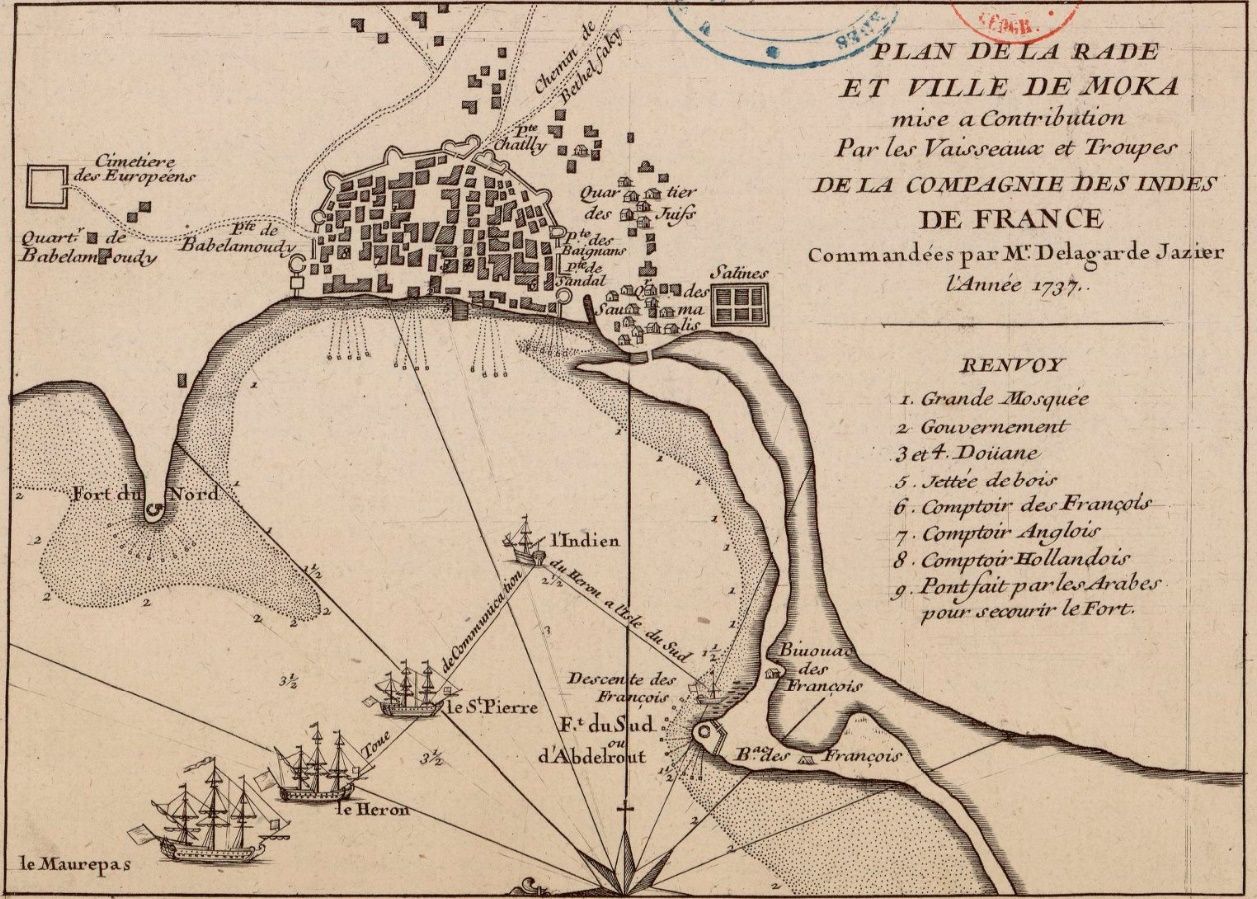
The Gujaratis, however, had their own method of pushing back. Because their economic dominance was so complete, they could simply halt commercial activity altogether, crippling trade across the port until rulers promised redress and coaxed them back. This leverage had its limits, though. In 1700, a serious plan emerged to massacre three hundred Hindu Bania merchants in Mocha. It was ultimately abandoned, and only because Mocha’s own Muslim merchant community objected – they evidently needed the Banias too much to let it happen.
Broken treaty
This long-standing arrangement began to unravel with a single dispute in 1817. A mob in Mocha attacked a British naval officer, Lieutenant Bartholomew Dominicetti, dragging him half-naked through the streets over a dispute involving a chartered ship. Britain’s response came three years later: in 1820, warships blockaded and bombarded Mocha, forcing its governor to surrender unconditionally. Out of that surrender came a treaty – signed in January 1821 – that sought to place every Indian merchant in Mocha under British protection, removing them from the governor's authority altogether.
But when that treaty was translated into Arabic for the Imam’s signature, key clauses simply vanished. The Arabic version quietly dropped the clause granting Gujaratis reduced duties. It dropped the clause granting Britain exclusive jurisdiction over them too. Even the English word “subjects” was rendered inconsistently throughout the Arabic text. In effect, the sweeping claim Britain had drafted never became binding law at all – it existed only in English, in a draft that nobody in Yemen had actually signed. This episode is detailed in a study published in the Law and History Review, which suggests the vanished clauses may have been deliberate sabotage by the residency’s own translator, or simply a symptom of two legal traditions with no shared vocabulary for the idea of “subjecthood”.
Bhimji, unaware of this discrepancy, assumed that British protection covered him regardless, and kept insisting so. That assumption carried consequences far beyond his own case. News of Britain’s sweeping legal claims in Mocha spread across the Arab and Ottoman worlds. The Ottoman Sultan, already anxious over territorial losses to Russia, an uprising in Serbia and a brewing war in Greece, read British manoeuvring in Mocha as the opening move of a wider land grab across Arabia. Unwilling to risk its relationship with Istanbul over the legal status of a handful of Indian brokers, Britain quietly dropped its claim.
Quiet exit
The British decision left Bhimji and his fellow Gujarati traders exposed. What followed was a slow slide from periodic extortion into sustained ruin. Forced loans exacted by local governors went unrepaid year after year. Customs officials overcharged Surati merchants on their goods, and at least one governor seized merchandise outright, promising repayment that never came. The strain drove several of Surat’s most respected trading families into bankruptcy.
Then the ground shifted further still. Having failed to secure any lasting legal or political foothold in Mocha, Britain abandoned the port altogether in 1827, redirecting its ambitions to Aden – a harbour better suited to direct colonial control. As British trade and investment drained away, so did much of the commerce the Gujaratis had built their livelihoods on.
There was no single dramatic exodus, no expulsion order, no mass departure on one ship. This winding-down stretched across the 1820s and 1830s; by the time the Ottomans reclaimed Yemen’s coast in the mid-1800s, Mocha’s Gujarati quarter had all but emptied out. Most of these merchants had always been sojourners rather than settlers, living out working careers in Mocha without ever bringing their wives or families along. When the trade that had sustained them for nearly two centuries finally dried up, there was simply nothing left to stay for. They left the port city quietly, one after another – until almost nothing remained to mark that they had ever run it at all.