US President Donald Trump has barred three of America’s biggest news organisations from the White House, in the sharpest escalation yet of his long-running war with the press.
The president announced on Friday (September 18) that he was banning CNN, MS NOW, and Politico from the White House, setting up a new test of the First Amendment’s protection of a free press. Posting on Truth Social, Trump wrote: “I am proud to announce that, effective immediately, I am banning Fake News CNN, MSNOW… and Politico… from the White House as a result of their constant 'reporting' FAKE NEWS!”. He went further, warning that other outlets could face similar treatment, and told reporters gathered in the Oval Office: “Because they’re fake news. I get so tired of reading and seeing fake news.”
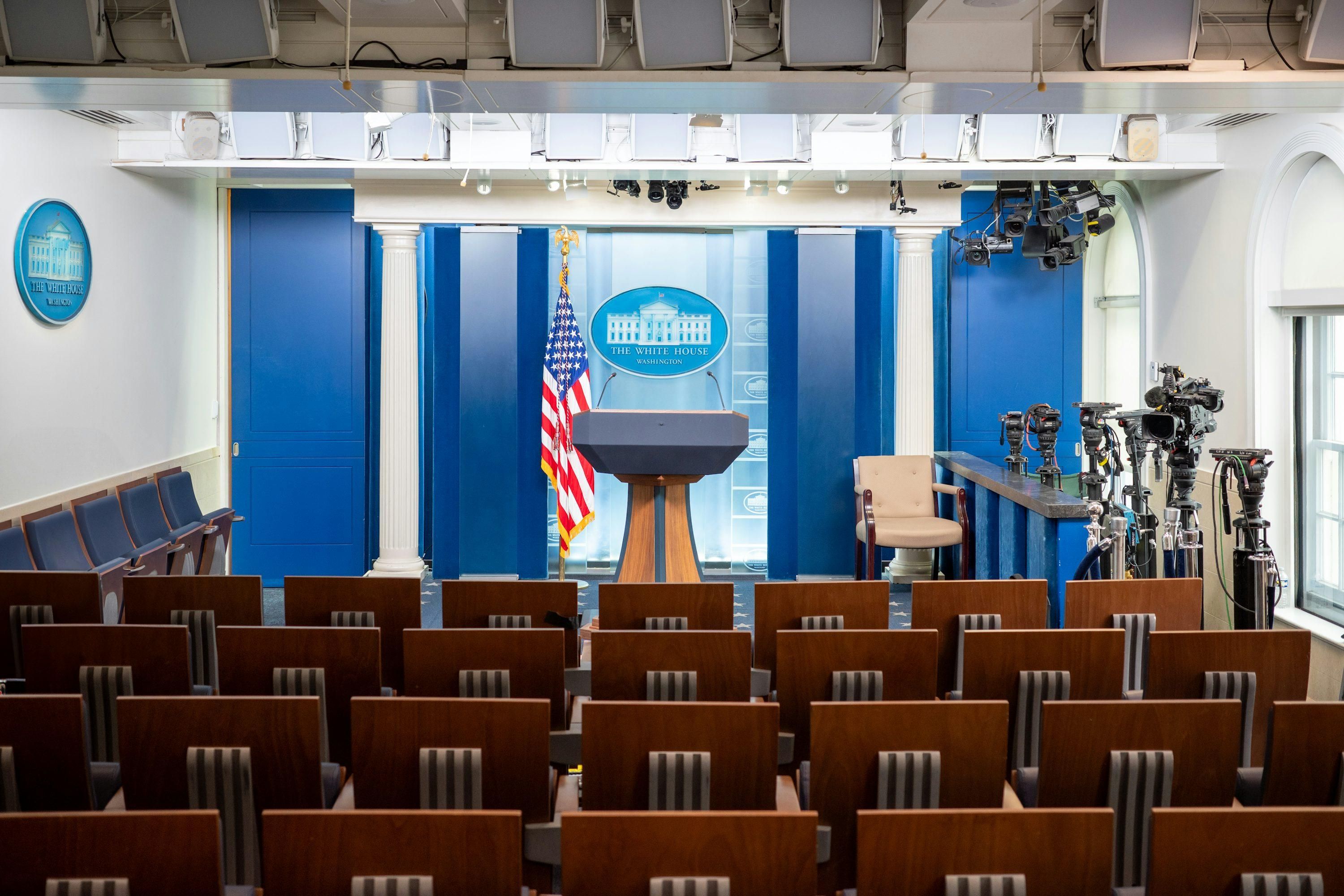
Quite what the ban actually means in practice remains unclear. Trump said there were no particular stories that prompted the decision, and it was not immediately clear if the White House intended to enforce the prohibition. Indeed, despite the presidential decree, reporters from CNN were seen to be present at the White House and were continuing to cover the administration on Friday. The episode nonetheless marks a striking breach of convention: CNN’s exclusion is particularly consequential because it could disrupt the five-network television pool that has traditionally travelled with the president to provide independent coverage for the public.
The reaction from press-freedom bodies was naturally severely critical. Reporters Without Borders said it was “appalled by Trump’s threat to ban CNN, MS NOW News, and Politico from the White House over coverage he dislikes,” insisting that “press access is not a privilege for journalists. It's a right to ensure the American people can be independently informed.” It added that it was exploring legal avenues to respond.
Seth Stern of the Freedom of the Press Foundation told Reuters that it was “difficult to imagine a more blatant violation of the First Amendment than Trump banning news outlets from the People's House for criticising the government.” Jameel Jaffer of Columbia University’s Knight First Amendment Institute said that the Constitution simply prohibits a president from punishing journalists for coverage he dislikes. Politico, for its part, vowed to “continue to fairly report on this White House and future ones” and to “vigorously defend” its First Amendment rights.
The ban follows the president’s decision, in February 2025, to keep Associated Press journalists out of the Oval Office, Air Force One and other events too small for a full press corps, after the AP refused to adopt his renaming of the Gulf of Mexico. That dispute remains before the courts, with the AP’s lawsuit still ongoing. More recently, in October 2025, the National Security Council restricted reporters’ access to the section of the White House housing the press secretary’s office, citing “sensitive material”. These moves chart a steady tightening of the relationship between the administration and the correspondents who cover it.
Trump has also institutionalised his grievances against the press in a more permanent form. The White House now runs a page titled “Media Offenders”, which brands itself a “Media Bias Tracker” that “fact checks and holds Fake News accountable,” and publishes with a weekly “Media Offender,” an “Offender Hall of Shame” and a “Leaderboard” ranking networks by what it calls “Repeated Lies”. Its current target is CNN, accused of lying about the president’s health after a guest doctor raised concerns about him appearing drowsy in public; the page dismisses this as a “moronic conspiracy theory.”
Whatever one makes of individual grievances, the broader manoeuvre will be seen by the media as a blatant attack on the First Amendment, which explicitly guards freedom of the press and has long been read by American courts to forbid government retaliation against journalists for the content of their reporting.
Constitutional lawyers cited across US outlets this week were near-unanimous that viewpoint-based exclusion of this kind is difficult to reconcile with that doctrine, and legal challenges look all but inevitable, much as the AP’s case has proved. Yet the political calculation may matter more to Trump than the legal one: casting “fake news” outlets as adversaries has been a defining feature of his public persona since his first term, and formalising it through both banishment and a permanent White House “offenders” list allows him to keep the grievance visible to supporters, regardless of how courts eventually rule.
Democrats, including Representative Frank Pallone, have called the move straightforward censorship, while the White House has offered little clarity on enforcement – leaving, for now, an uneasy stand-off between presidential rhetoric and journalistic practice on the ground.