Washington has approved visas for Iran’s President Masoud Pezeshkian, Foreign Minister Abbas Araghchi and their “core delegation” to attend next week’s high-level session of the United Nations General Assembly (UNGA) in New York – even as the US and Iran remain locked in a stalemated war that has now run for more than six months.
The State Department confirmed the decision on Wednesday (September 17), saying it was acting in keeping with its obligations as host nation to the UN. “Consistent with our host country obligations, the core delegation from the Iranian regime will be able to attend UN General Assembly High Level week,” the department stated, adding that the delegation would face travel restrictions and prohibitions on purchasing luxury goods, and noting that this year’s delegation was smaller than 2025.
Officials have historically confined Iranian delegations to a narrow radius around their UN mission in New York and have barred them from shopping at wholesale stores such as Costco and Sam’s Club.
The development is striking as Iran and the US remain embroiled in a conflict for more than six months, with no sign that talks to reopen the Strait of Hormuz or resume nuclear negotiations are close. The approval also comes as Iranian-backed Houthi rebels in Yemen have stepped up attacks on Saudi infrastructure and Red Sea shipping, helping drive up global oil prices. Pezeshkian has previously insisted that Tehran has no wish to “expand or continue” the war with Washington.
Abbas barred for the second year running
The Iranian approval arrived just a day after Washington took the opposite decision on the Palestinians. On Wednesday, September 16, the Trump administration denied visas to a high-level Palestinian delegation, including President Mahmoud Abbas, for the second year in a row, with the State Department saying Palestinian officials had failed to live up to prior commitments to seek peace with Israel.
The US state department said: "As a consequence of their failure to reform, contrary to their commitments to the United States, and their ongoing activities that undermine the prospects for peace, the United States will extend sanctions that deny visas to PLO members and PA officials.” Officials separately pointed to Palestinian moves to pursue cases against Israel at international tribunals as part of the justification.
Israel’s UN ambassador, Danny Danon, has argued that legitimacy cannot be extended to the Palestinian leadership without conditions attached, and said, “...you cannot reward terror and demand legitimacy.”
With Abbas barred from travelling for a second consecutive year, the General Assembly moved to work around the restriction. Member states voted on Thursday to again let Abbas address the gathering via video, after Washington denied him a travel visa. The resolution passed by 152 votes to three, with four abstentions, and also allows Abbas and other senior Palestinian officials to join UN meetings by video over the coming year, should they again be barred. Palestinian representatives had to seek fresh approval this year because last year’s authorisation applied only to that session. Abbas addressed last year’s Assembly by video for the same reason, after an earlier visa refusal.
Backdrop and agenda
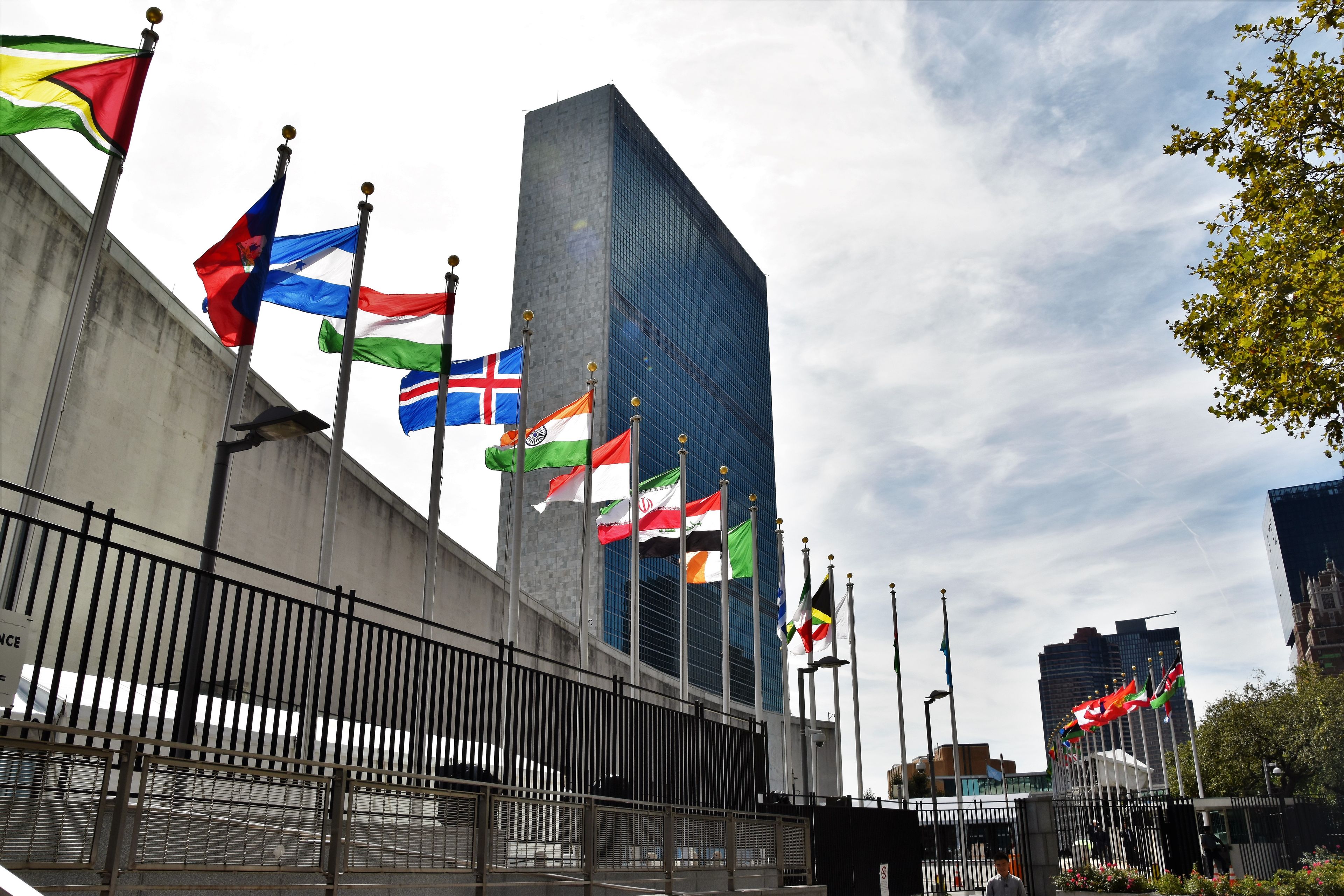
The 81st session of the UN General Assembly formally opened on Tuesday, with the high-level General Debate due to begin on 22 September 2026, when heads of state and government converge on UN headquarters in Manhattan for the busiest week on the diplomatic calendar.
This year’s gathering unfolds against a fraught backdrop. Beyond the unresolved Iran-US war and the disrupted Red Sea shipping routes, leaders are expected to focus heavily on the continuing devastation in Gaza, the war in Ukraine, and a push by several Western governments to formally recognise Palestinian statehood. Discussions on Sudan, growing concern over democratic backsliding, and newer items such as artificial intelligence governance and climate action are also expected to feature prominently in meetings through the week.
For Tehran, the session offers a rare platform: even as fighting with Washington continues without a diplomatic off-ramp, its president and foreign minister will be able to use the world’s foremost multilateral stage to press Iran’s case, much as Pezeshkian did previously, when he told the Assembly that Iran had “never sought to build a nuclear bomb and will not do so.” For the Palestinians, the week will instead be marked, for the second year running, by a president compelled to address world leaders from a screen rather than a podium.