
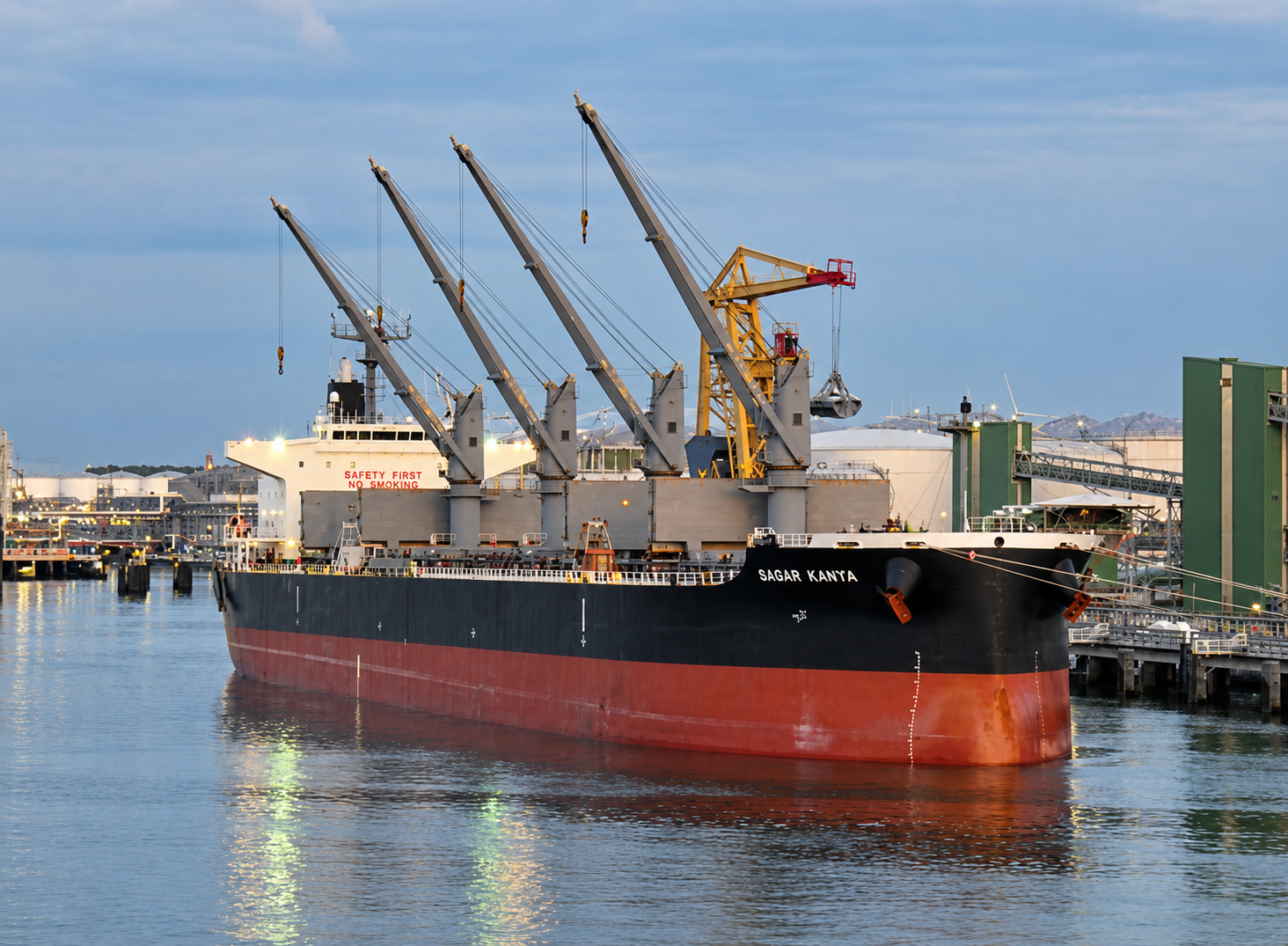
In 2024-25, India’s merchandise imports hit $720.24 billion (Rs 6,914,152 crore). The country's seaborne trade volumes are growing twice as fast as the global average. Yet more than 93 per cent of India's international cargo is now carried on foreign-flagged vessels. This results in an estimated annual freight outflow of $75 billion, roughly a tenth of the value of those imports. Despite the growth in maritime activity, Indian-flagged tonnage has grown by just 1.4 per cent over the past decade. Compounding the problem, India’s share of global ship registration has continued to decline, according to a 2025 discussion paper by the Research and Information System for Developing Countries (RIS).
Why foreign flags?
One major reason for the slow growth of Indian-flagged tonnage is that Indian shipowners are increasingly choosing not to use the Indian flag, with a growing number registering their vessels abroad. A major reason is that shipping is one of the world's most globalised industries, allowing the shipowner, flag, classification society, and office to be located in different countries. Talking to NWS “I could be based in India’s Visakhapatnam, buy a ship in China, register it in Palau, use Norway-based DNV as the classification society and run my office from Dubai. The ship may never even come to Visakhapatnam,” explained Capt. Prasad, President of the Merchant Navy Association in Visakhapatnam and General Manager of Greenfields Group, a shipping company. However, an increasing number of Indian shipowners choosing foreign flags is a concern.
Flag factor
Another reason for the preference for foreign flags is that India has failed to make its own flag attractive. For the shipowner, the flag is a legal and business decision, since a ship registry determines a vessel's legal nationality. The flag determines which country's laws govern the ship, including its safety standards, crew rules and regulatory obligations. The world's major open registries, such as Liberia, Panama, and the Marshall Islands, attract shipowners worldwide with low taxes, flexible crewing, and fast administration. Because of issues in the Indian ship registration ecosystem, Indian owners increasingly prefer foreign flags. As a result, the foreign-flagged share of the total Indian-owned fleet surged from 17 per cent in 2010 to 56.5 per cent in 2024, more than tripling in 14 years. By 2024, more than half of all commercial ships owned by Indian companies were registered under foreign flags.
Regulatory burden
Owners point first to the difficulty of dealing with the Indian system. “The officials are very strict in India. If you want to register and operate a ship under the Indian flag, the documentation and the application process can be very difficult. Every process in India is unbelievably tough,” Satish, a shipowner, told NWS. Registration is only the beginning. Once a vessel carries the Indian flag, its owner must navigate the country's broader maritime regulatory system. Complaints filed with the Indian government and Parliament have pointed out slow processing, high certification fees, outdated procedures and alleged conflicts of interest involving the Indian Register of Shipping (IRS), India's home-grown classification society, the Directorate General of Shipping (DGS), the national maritime regulator, and the Mercantile Marine Departments (MMDs), its port-level offices.
In October 2025, Indian MP M. Gurumoorthy sought a review of IRS's functioning and its relationship with DGS and MMDs. He questioned the concentration of certification work with IRS, the operation of DGS and MMD offices from IRS premises, the use of IRS concurrence in government approvals and the absence of clear processing timelines. A separate complaint by MP R. Sudha alleged misuse of authority, conflicts of interest and undue proximity between government officials and IRS. Responding to the complaints, Indian Shipping Minister Sarbananda Sonowal said he was “having the matter looked into”. At the same time, the ministry later told the Lok Sabha that it was examining four complaints against the IRS. No outcome or disciplinary action was disclosed. For owners already concerned about delays and costs, such complaints reinforce the perception that the Indian flag comes with a regulatory burden foreign registries can avoid.
Legal constraints
The Indian law added to the existing regulatory burden. Under Sections 21 and 22 of the Merchant Shipping Act, 1958, ships wholly owned by Indian citizens or companies were generally required to be registered in India. An Indian owner therefore could not simply choose a foreign flag because it offered easier financing, lower compliance costs, or faster administration. The rule was intended to keep Indian-owned shipping within India's regulatory framework. But as international shipping became more competitive, the requirement increasingly clashed with how ships were financed and operated globally. Despite persistent industry demand, the Indian government did not remove the legal restrictions. Instead, it created a separate route to bypass the problem.
In 2014, the DGS introduced the Indian Controlled Tonnage (ICT) mechanism, allowing Indian entities to control ships registered under foreign flags. The stated purpose was to help Indian companies access overseas finance and compete in international shipping. In effect, instead of removing the regulatory barriers that made the Indian flag less attractive, the system created a parallel route around them. For shipowners already complaining about delays, costs and regulatory complexity, foreign registration offered flexibility while allowing them to retain Indian ownership or control. The RIS discussion paper argues that this encouraged Indian owners to place ships in third-country registries to reduce tax and compliance costs, with related banking, insurance and other commercial activity also moving overseas.
The scale
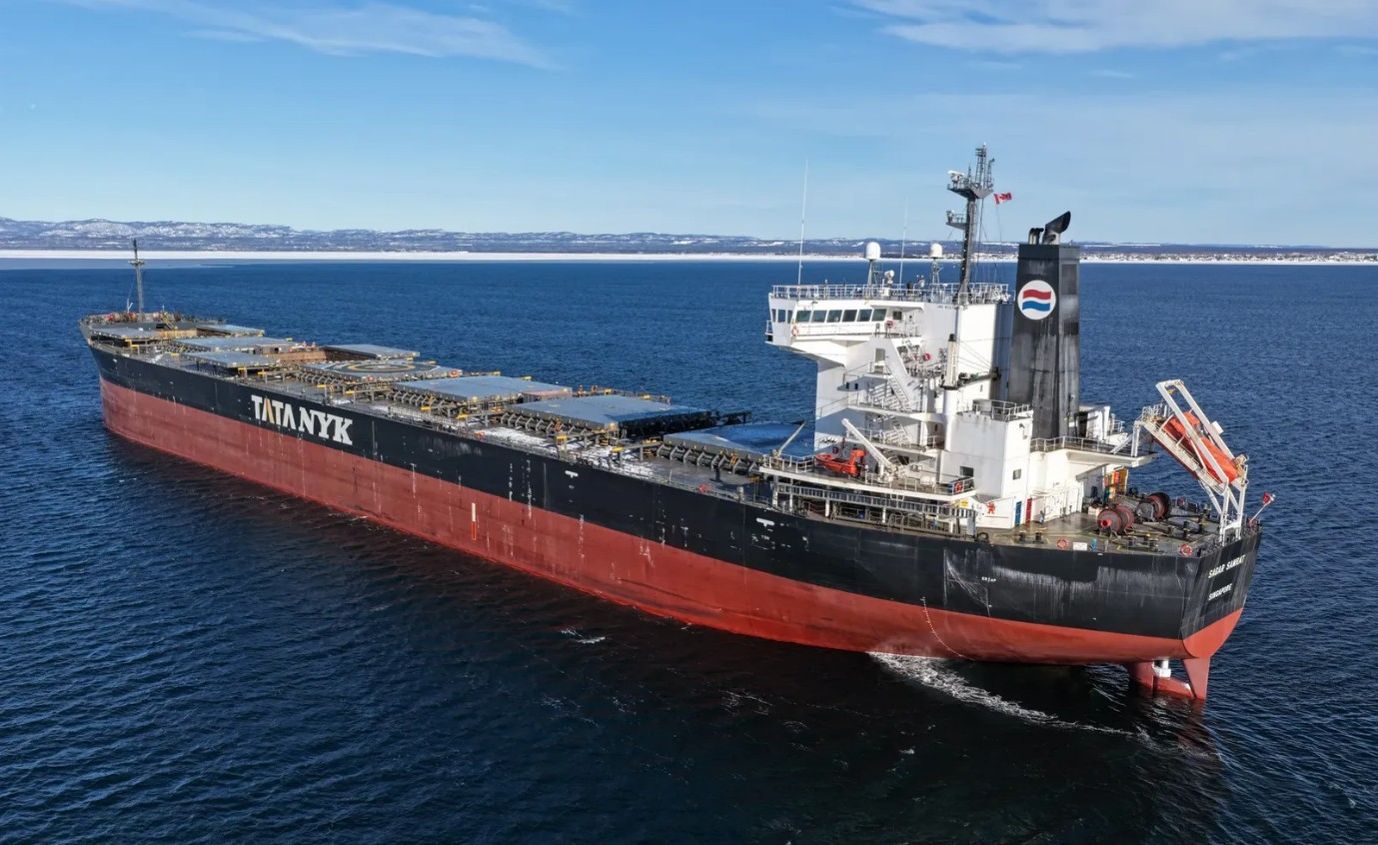
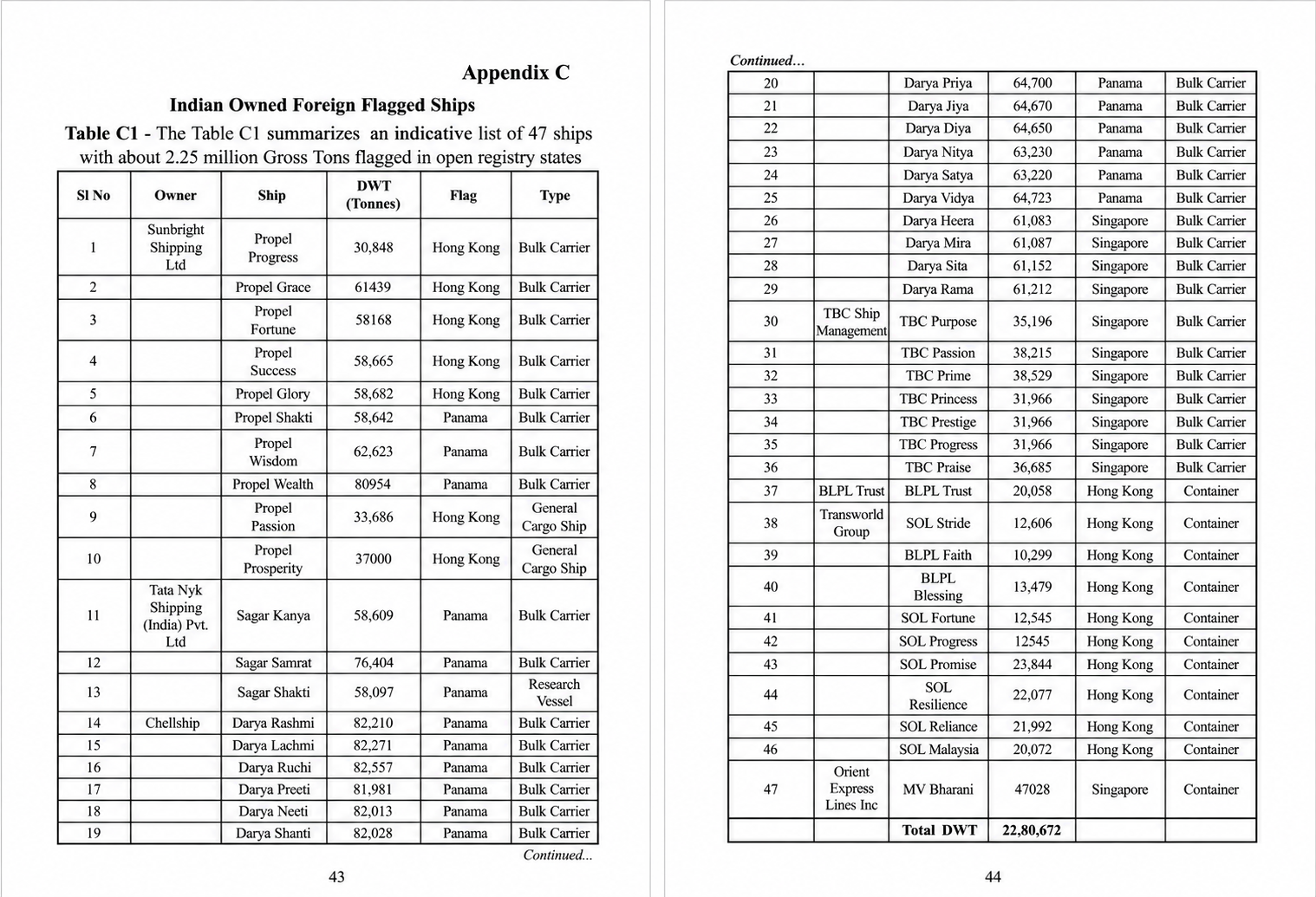
The RIS paper provides a snapshot of this shift in its appendix. It identifies 47 Indian-owned vessels, together accounting for about 2.25 million gross tons, sailing under the flags of Panama, Hong Kong and Singapore. The list includes Tata NYK Shipping's Sagar Kanya, Sagar Samrat and Sagar Shakti under the Panama flag, more than a dozen Chellship bulk carriers registered in Panama and Singapore, 10 Sunbright Shipping vessels, seven TBC Ship Management bulk carriers and container ships linked to Transworld Group and BLPL Trust under the Hong Kong flag. The list offers a snapshot of how Indian-owned tonnage has moved to foreign registries. Individual owners may have different commercial, financing or tax reasons for choosing a foreign registry. But the broader pattern is clear: Indian ownership does not necessarily translate into Indian registration.
Owner's choice
For a shipowner, the choice ultimately comes down to economics. “In shipping, every day is valuable. Cargo can perish, or if you miss the next port, you may lose that opportunity. There are so many links in the chain,” Captain Prasad explained. Several business variables such as registration costs, taxation, financing, insurance, crewing rules, and access to international markets are determined by the vessel's flag. Banks and charterers may also prefer particular registries. An owner considering registration therefore asks several questions: How quickly can the vessel be registered? What will compliance cost? How easy is it to obtain finance and insurance? What crewing rules apply? How will foreign ports and charterers treat the vessel? And how much administrative uncertainty will the owner face?
Lessons from abroad
India is not the first country to try to stem the movement of its ships to foreign flags. Norway and Denmark faced a similar problem in the 1980s but responded differently from India. They created international ship registries designed to make their own flags more competitive for international shipping. Norway introduced the Norwegian International Ship Register in 1987, and Denmark followed with the Danish International Ship Register in 1988. Unlike India’s ICT mechanism, these registers were designed to keep nationally owned ships under the national flag while giving owners greater flexibility on issues such as crewing and operating costs.Norway's approach had some success. The share of Norwegian-owned tonnage under its national registry rose from about 22 per cent in 2017 to 32.4 per cent in 2025, while Denmark's rose from 44 per cent to 50 per cent. Japan had a different experience. Its international registry, introduced in 1996, did not stop the shift to foreign flags. The share of Japanese-owned tonnage under foreign flags rose from 74.66 per cent in 1997 to 87.43 per cent in 2025. The comparison suggests that an international registry can help only if it makes the national flag commercially competitive enough for owners to choose it.
India's proposals
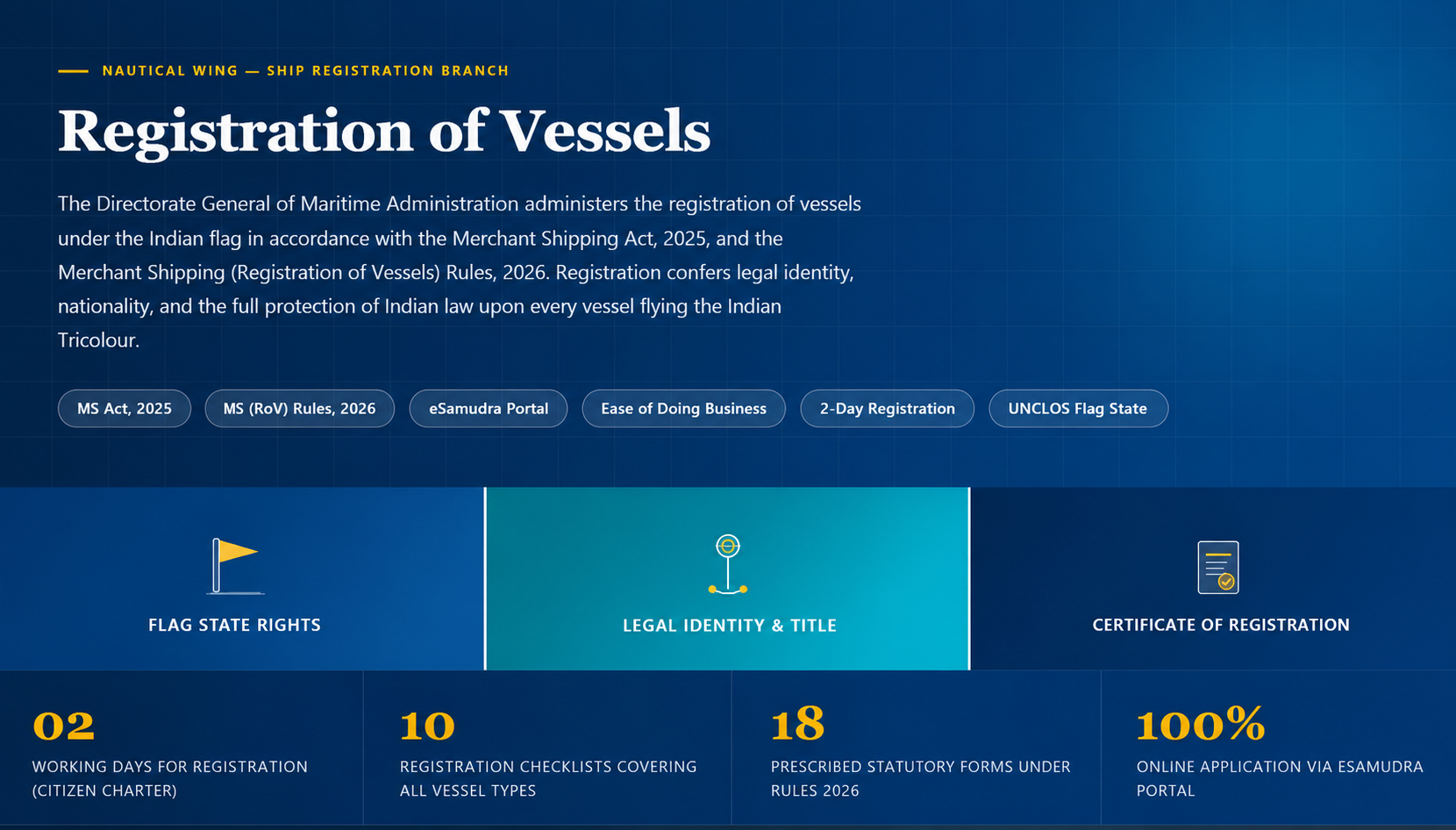
That is the challenge facing India's proposed International Ship Registry at GIFT City. The RIS paper warns that delays and inconsistent registration procedures could undermine the new system, and that an international registry could end up competing with the existing Indian registry instead of strengthening it. Creating another registry alone will not be enough. The new system must address the factors that drive an owner's decision in the first place—cost, speed, financing, crewing, compliance, and access to international markets. At the same time, the government is trying to make the existing Indian registry easier to use. The Merchant Shipping Act, 2025 and the Merchant Shipping (Registration of Vessels) Rules, 2026 have moved registration to the eSamudra portal, with standard checklists, defined timelines, a three-level grievance mechanism and a two-working-day target for complete applications. The maritime administration has notified the new registration framework. The government has also proposed changes to taxation and other costs, while a Rs 1,624 crore subsidy approved in 2022 was intended to encourage Indian flagging over five years. However, these measures have yet to deliver tangible results and could face the aforementioned problems given the nature of our governing bodies. Even if a faster registration portal can address delays, it cannot close the gap in taxes, financing, insurance, crewing and other costs that determine where a ship is registered. Nor does it automatically resolve the allegations of conflicts of interest and institutional proximity raised in complaints against India's maritime regulatory bodies.
Safety questions
Another factor in choosing a flag is safety. A foreign flag does not automatically mean a poorly regulated ship, and an Indian flag does not guarantee a well-run one. Port-state inspections, compliance with international conventions and classification-society oversight are more meaningful measures of safety. Two regional groups of port authorities -- the Paris MoU, covering Europe and the North Atlantic, and the Tokyo MoU, covering the Asia-Pacific -- classify flags as White, Grey or Black based on inspection and detention records. India's recent movement from the Paris MoU White List to the Grey List can mean closer scrutiny of Indian-flagged ships at foreign ports. India is also absent from the Tokyo MoU White List, which includes Panama, Liberia, the Marshall Islands, Hong Kong and Singapore. The RIS list offers another interesting insight. The 47 Indian-owned vessels identified in the study are not concentrated only in the most permissive registries. Panama, Hong Kong, and Singapore registries are “closed” or “quasi-closed” registries, meaning ships generally need some genuine connection to the country to register there. So, the choice facing an Indian owner is not necessarily between a strict Indian flag and a lax foreign one. It can be a choice between different regulatory systems, costs and commercial advantages.
Real test
India's challenge is therefore larger than simply registering more ships. It must make the Indian flag commercially attractive without compromising safety, labour standards, or regulatory oversight. The proposed International Ship Registry at GIFT City and the reforms under the 2025 law are attempts to address that problem. Their real test will be whether Indian shipowners who have spent years choosing foreign flags see enough reason to bring their ships back. The scale of the gap is already clear: 56.5 per cent of Indian-owned ships fly foreign flags and more than 93 per cent of India's international cargo moves on foreign-flagged vessels. Indian government apparently wants more ships to fly the Indian flag. The harder task, then, is giving their owners a reason to do so.