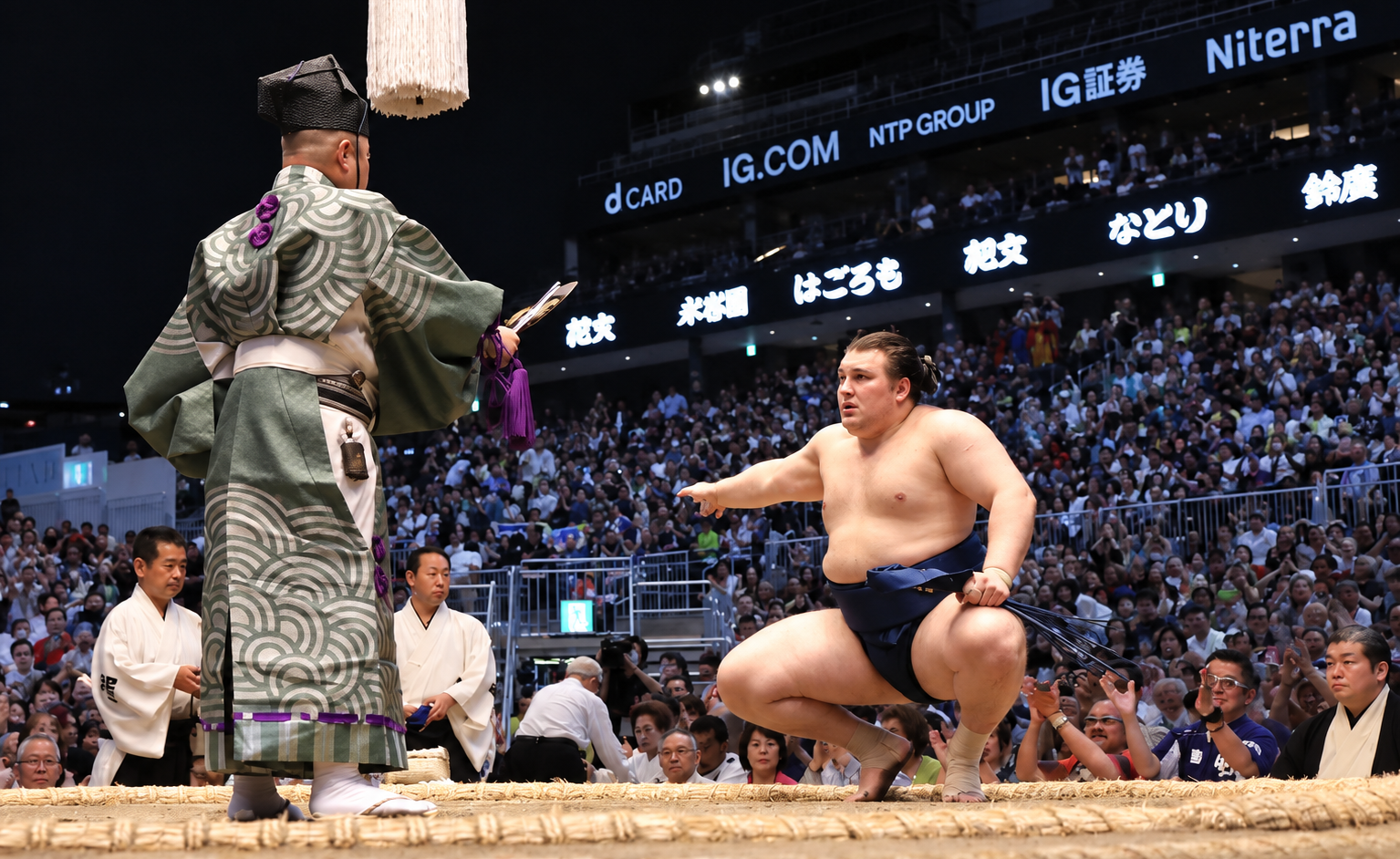
In a Tokyo sumo stable, a 22-year-old Ukraine-born wrestler wakes up every morning with one goal: to reach the highest ranking in the 1,500-year-old Japanese sport. He is now popular in Japan with his ring name Aonishiki Arata or simply Aonishiki. He was born as Danylo Yavhusishyn in Vinnytsia, Ukraine, in 2004. Aonishiki started sumo wrestling at 7, building a background in freestyle wrestling and judo sporting careers alongside it. He went on to win third place at the 2019 Sumo World Junior Championships.
However, moving to Japan was never part of his plan. It was Russia’s invasion of Ukraine that forced him to flee his homeland. After initially escaping to Germany with his parents, he reached out to Arata Yamanaka, a Japanese university sumo captain he had befriended at the 2019 world championships. Yamanaka's family generously agreed to host him in Japan. When he entered the professional ring, he was given the name Aonishiki, opening with the Japanese character for “blue” (Ao) as a proud homage to the Ukrainian flag.
Not for foreigners
Getting into professional sumo is notoriously difficult, especially for outsiders. The Ajigawa stable that took him in actually held a strict policy against accepting foreign-born wrestlers. Its stablemaster Aminishiki, a former sekiwake (sumo’s third-highest rank), made a rare exception for Aonishiki after a high-school sumo coach introduced him. Impressed by the teenager’s sheer sincerity and work ethic, the stablemaster welcomed him. Danylo officially joined as a trainee at the end of 2022, passed his apprentice exam, and made his professional debut in September 2023.
How sumo works?
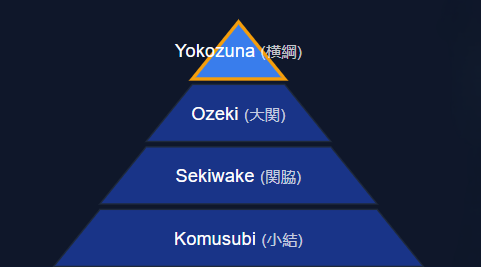
To understand why Aonishiki’s rise has been so meteoric, it helps to understand how professional sumo operates. Unlike most combat sports, sumo has no weight classes; a lighter, agile wrestler can face a massive heavyweight. A wrestler wins simply by forcing their opponent out of the ring or making any part of their body, other than the soles of their feet, touch the clay surface. While the sacred rituals and psychological positioning before a bout can take minutes, the actual clash often lasts only a few seconds. Wrestlers, known as rikishi, live and train communally in stables. Based strictly on their win-loss records, they climb a ladder that spans six divisions. The top division, Makuuchi, consists of the top four ranks: Sekiwake, Komusubi, Ozeki, and Yokozuna. The professional sumo calendar consists of six major 15-day tournaments (Honbasho) held every odd-numbered month across Japan. Elite wrestlers fight one high-stakes match per day. The wrestler with the best record on the final day lifts the Emperor’s Cup -- a prestigious 30-kg silver trophy that is rotated among tournament winners, who receive smaller replicas to keep.
Fastest rise
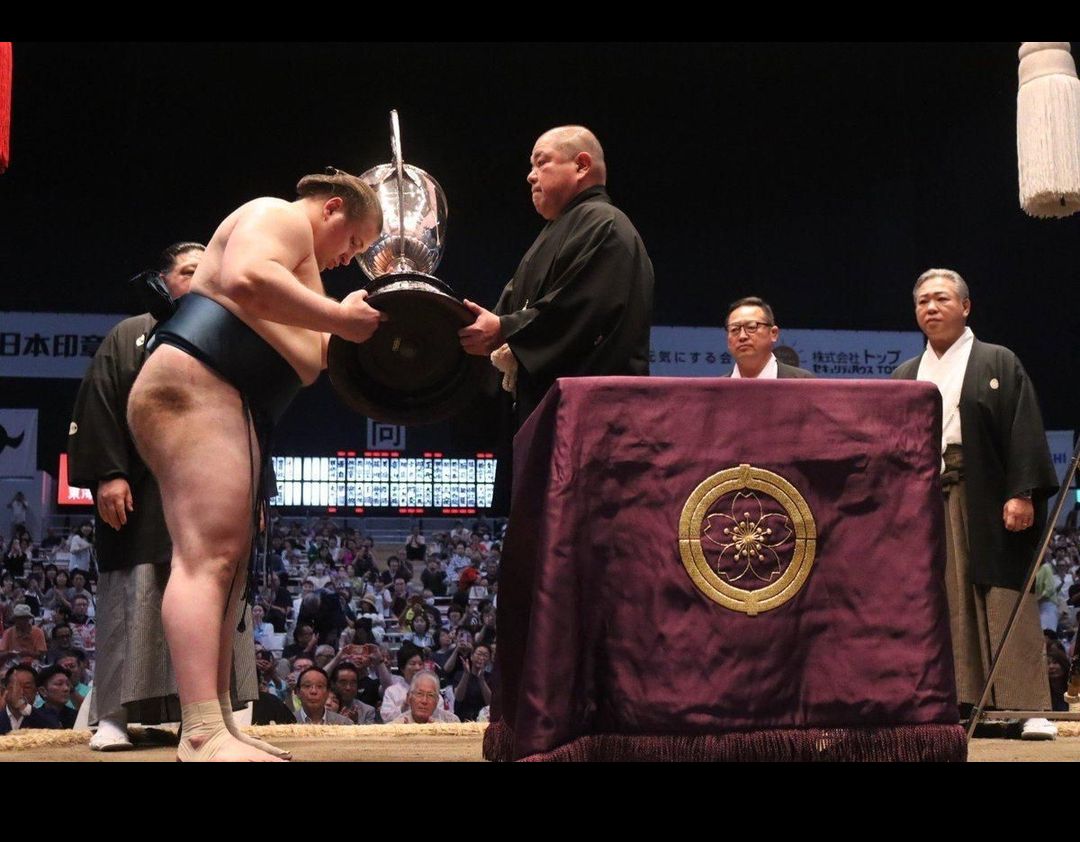
Aonishiki stunned the sumo world by storming into the top division by March 2025, less than two years after his debut. By November of that year, he won the Kyushu Grand Sumo Tournament outright by defeating the reigning Mongolian Yokozuna (Grand Champion) Hoshoryu twice in the same meet -- including a dramatic tie-breaking playoff. This historic victory made him the first-ever Ukrainian-born champion in sumo history.The triumph fast-tracked his path to Ozeki, sumo’s second-highest rank, which the Japan Sumo Association formally confirmed on November 26, 2025. Aonishiki reached the rank in just 14 tournaments, the fastest ascent to Ozeki since the modern six-tournament system was established in 1958. At his promotion ceremony, he remained characteristically humble: “I will strive diligently to live up to the name of Ozeki and aim even higher.”
Becoming Yokozuna
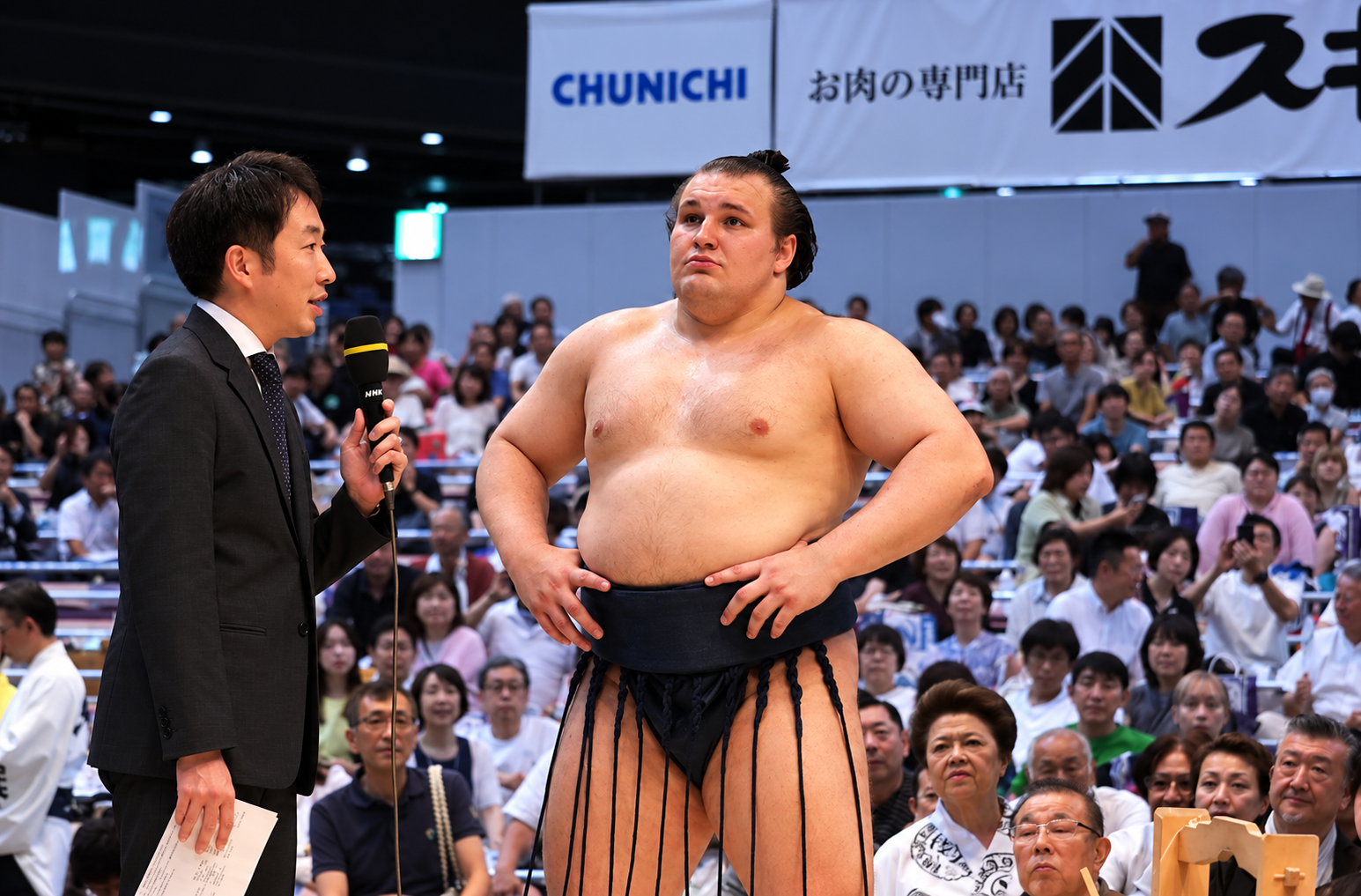
Aonishiki kept climbing the top-division rankings. By January 2026, he had won a second consecutive tournament, putting himself in contention for Yokozuna -- sumo's highest rank. In sumo, Yokozuna is a lifetime distinction requiring not just results but also the dignity and conduct traditionally expected of a grand champion, with a Yokozuna Deliberation Council advising on promotions. Speaking to reporters that month, Aonishiki said becoming the sport’s first European-born grand champion was now the only thing on his mind. What I think about when I wake up every morning.” In an earlier interview with Japanese TV NHK, Aonishiki explained the decision more simply: he didn’t want his athletic career to end when he left Ukraine, so he decided to try sumo instead.
Setback, redemption
However, his journey wasn't without setbacks. Aonishiki entered the March 2026 tournament with a chance to strengthen his position. However, he lost the tournament, winning only 7 of 15 matches. He then missed the May tournament and lost his Ozeki rank. For many athletes, that would be a great collapse after an extraordinary rise. Aonishiki produced another twist instead: competing in July as a Sekiwake, he won the Nagoya tournament with a 12–3 score. This was his third top-division championship and earned an immediate return to Ozeki for September.Yet, the gruelling sport soon exacted a physical toll.
Aonishiki entered the March 2026 tournament carrying immense pressure but faltered, finishing with a losing 7–8 record; he won 7 out of 15 matches. Worse, he suffered a fractured toe and a subsequent ankle injury, forcing him to sit out the May 2025 tournament. Missing a tournament while in danger of demotion (kadoban) meant he automatically lost his Ozeki rank.For many athletes, such a rapid fall would be devastating. Aonishiki, however, engineered a stunning comeback. Competing in July 2026 at the demoted rank of Sekiwake, he defied the odds to win the Nagoya tournament with a dominant 12–3 record. This captured his third career Emperor's Cup and earned him an immediate re-promotion back to Ozeki for the September 2026 meet.
Not the first
However,Aonishiki is not the only foreign-born sumo wrestler at the top, nor even the first Ukrainian to turn professional. Another wrestler, Shishi Masaru, joined a different stable in 2020. Foreigners have been part of professional sumo for quite a long time. Aonishiki’s rise makes Ukraine the fourth European country to produce a tournament-winning wrestler, after Bulgaria, Estonia and Georgia.Hawaii-born Jesse Kuhaulua, wrestling as Takamiyama, became the first foreign-born wrestler to win a top-division title in 1972. With this historic victory, Jesse Kuhaulua (known as Takamiyama) broke barriers and paved the way for a future generation of powerhouse Hawaiian wrestlers. His success directly opened the door for Konishiki, who made history as the first-ever foreign-born Ozeki (Champion rank). Following in those footsteps, fellow Hawaiian legends Akebono and Musashimaru climbed even higher, ultimately reaching the sport's absolute pinnacle rank of Yokozuna (Grand Champion)Europe's breakthrough came later, through Georgia’s Kokkai and, eventually, Bulgaria's Kotooshu, who reached Ozeki and later took Japanese citizenship. Mongolian wrestlers arrived in force from the 1990s onward and came to dominate the sport’s top ranks. Hoshoryu, the Yokozuna Aonishiki beat on his way up, is part of that lineage, so is his fellow Mongolia-born Yokozuna Onosato.
Foreign talent
However, sumo has always tightly controlled and limited entry opportunities for foreigners. After controversies involving groups of Mongolian recruits in the 1990s, the Japan Sumo Association (JSA) briefly barred stables from recruiting foreign wrestlers. When the ban lifted in 1998, it came with a cap of one foreign-born wrestler per stable. The rule was further tightened in 2010 - a sumo wrestler would be considered foreign-born even after taking Japanese citizenship. That rule mattered directly for Aonishiki. A stable cannot simply stockpile promising foreign talent, so his entry depended on Ajigawa stable having an open slot, not just on his ability. It also explains why foreign-born wrestlers remain rare overall: only 28 of 590 ranked professionals are foreign-born as of July 2026, under 5 per cent, despite their outsized share of the sport’s top honours.
Empty pipeline
That contrast sits against a striking backdrop. Sumo is thriving by most outward measures: tournaments have drawn sellout crowds for more than 300 consecutive days. JSA revenues are strong, and a 2025 exhibition at London's Royal Albert Hall sold out across five days. Yet domestically, the talent pipeline is drying up. Only 20 hopefuls sat the March 2026 entry exam -- the lowest since a 1973 rule requiring completed junior high schooling took effect -- down sharply from 160 applicants in 1992. Asked about the collapse, one stablemaster called it “simply shocking”. There is no single proven cause. Sumo is a demanding sport, and the live-in training system may simply be losing out to other paths as young Japanese men weigh their options.
The ceiling
The path to top position in sumo has another hurdle. Reaching sumo’s top competitive ranks is one thing and becoming one of the elders who run stables after retirement is another. Stablemaster qualification requires Japanese citizenship, among other conditions. However, that is not an absolute wall. Mongolia-born Hakuho took citizenship and became a stablemaster after retiring. Kotooshu, the Bulgaria-born sumo wrestler, followed the same route. However, foreign roots still draw a line between competing at the top of sumo wrestling and eventually shaping the institution from inside.
New inspiration
For now, the question in front of Aonishiki is narrower than any of that. No European-born wrestler has ever held the rank of Yokozuna. He has come closer than any of them, lost the chance once and fought his way back. As of September 2026, the JSA lists him as an Ozeki with three top-division championships. He is now 22 and has been a professional sumo wrestler for only three years. During this time, he saw the fastest rise to the sport’s second-highest rank and the sting of losing it. Aonishiki’s story could inspire more Europeans to take up the Japanese ancient sport.