Abuse aimed at South Asians in the US has grown sharply on X, with the monthly count of hateful posts rising 240 per cent between January 2024 and June 2026, according to a new study by the Center for the Study of Organized Hate (CSOH), a Washington research group.
The study logged 12,904 hate posts in January 2024 and 43,843 in June 2026. It counted about 542,000 in the 18 months from January 2025, with the busiest months falling between November 2025 and June 2026. CSOH included only content that met the United Nations definition of hate speech and excluded ordinary criticism.
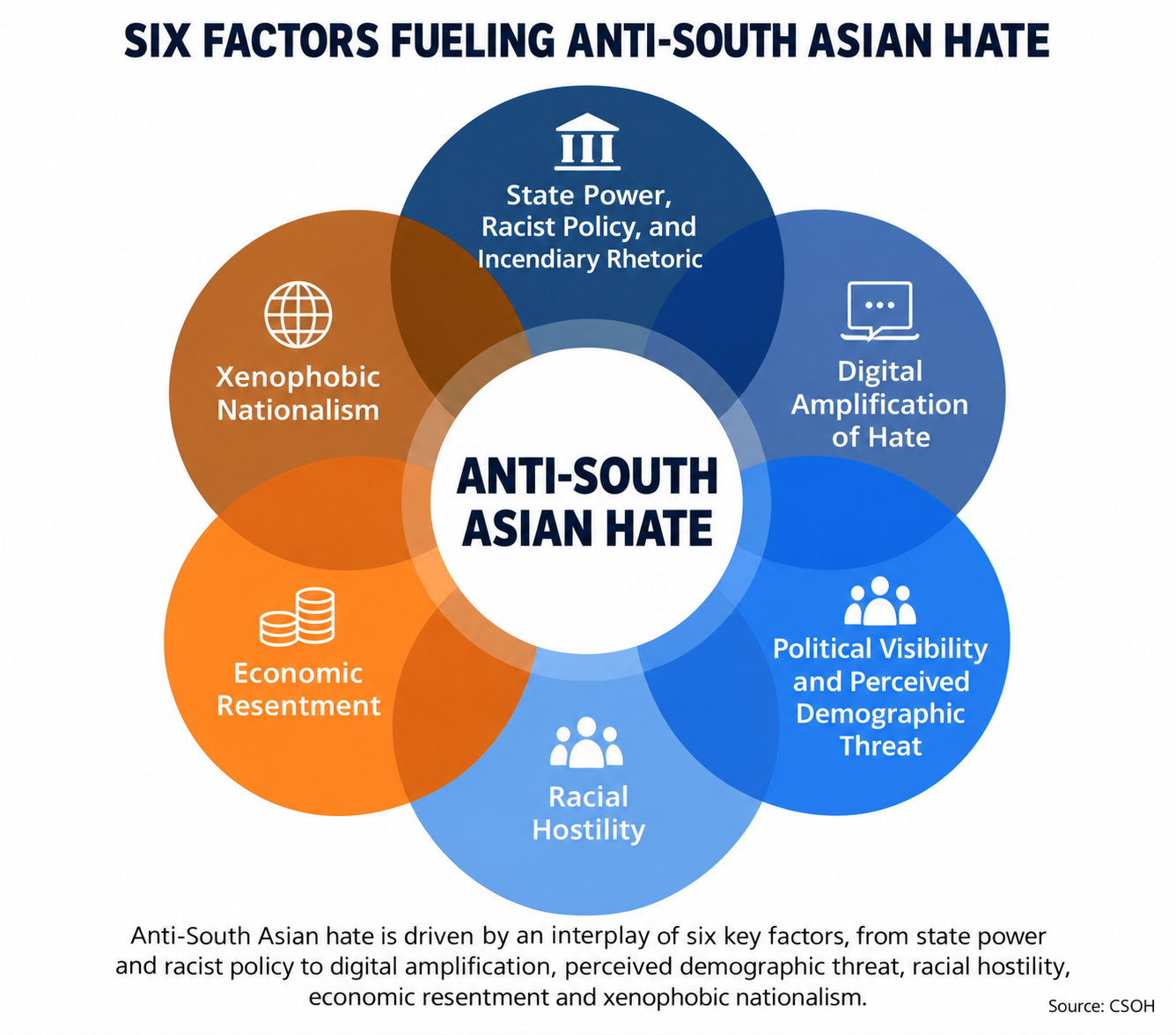
“In recent years, South Asians in the United States have increasingly become targets of online hate, with their identities, languages, accents, appearance, cultural customs, and religious practices subjected to mockery and abuse. They are denigrated with xenophobic slurs, racist memes, and dehumanizing rhetoric that depicts them as vermin, parasites, and invaders who are taking over American jobs, communities, and institutions,” the report said.
The findings
The most common theme, making up roughly 45 per cent of the material on X, was the claim that South Asians were a demographic threat; they are “invading” the country, taking jobs or changing its demographics. The slur “pajeet” and its spin-offs appeared in about 30 per cent of posts on X and 45 per cent on other fringe platforms such as 4chan, 8chan, and Gab. Posts branding South Asians “unhygienic” rose 171 per cent, the steepest climb among the narratives tracked. The researchers also found accounts that publish photographs and workplace details of South Asians accused, often without evidence, of visa fraud, along with AI-generated caricatures of the community.
Why it is rising
The report argues that the H-1B programme is the biggest flashpoint. Indians receive more than 70 per cent of these visas, which allows critics to recast a visa scheme as a grievance against one nationality. CSOH tied the surges to the $100,000 fee the Trump administration added in September 2025 and to a July 2025 speech in which the president attacked tech companies for sending jobs to India.
Official messaging has added fuel, the report says. On September 9, the Department of Homeland Security published an AI-made poster styled as a “Transformers” sequel, titled “Age of Deportations”. It showed a turbaned Sikh man addressed as “Mr. Singh” and told to get off American roads. The Sikh Coalition condemned it as stereotyping, and Hasbro said it had not authorised use of its brand. The post came down within a day, though a post by Indian television channel NDTV World preserves the image. On September 19, the Education Department posted a stadium image captioned “Make College Football Great Again”.
Influencers have supplied much of the momentum, according to the researchers. In January, commentator Sara Gonzales, who has more than half a million followers on X, posted a video of herself confronting a South Asian man in Texas whom she accused of exploiting the H-1B visa. A Turning Point USA outlet went further with a documentary on an alleged Indian and Muslim “takeover” of Texas, which has drawn more than 900,000 views. CSOH pointed to Frisco, a Dallas suburb frequently featured in such videos, where census-based figures put white residents at 45.5 per cent and Asian residents at 33.6 per cent.
“These narratives frequently draw on conspiracy theories of demographic and cultural replacement and, in their extreme forms, include calls to deport, denaturalize, or otherwise remove South Asians from the country. Far-right and anti-immigration influencers have amplified these narratives and circulated videos featuring or encouraging the public harassment and humiliation of South Asians,” the report points out.
The community’s own profile plays a part too, the report suggests. It puts the Indian-origin population at about 5.2 million and notes that Indian Americans had the highest median income of any ethnic group in 2023, at $151,200 against a national figure of about $80,600. CSOH argues that this visibility has made the community an easy target. A Carnegie Endowment survey found that one in four Indian Americans said they had faced racism or hate in 2025.
Violence and fear
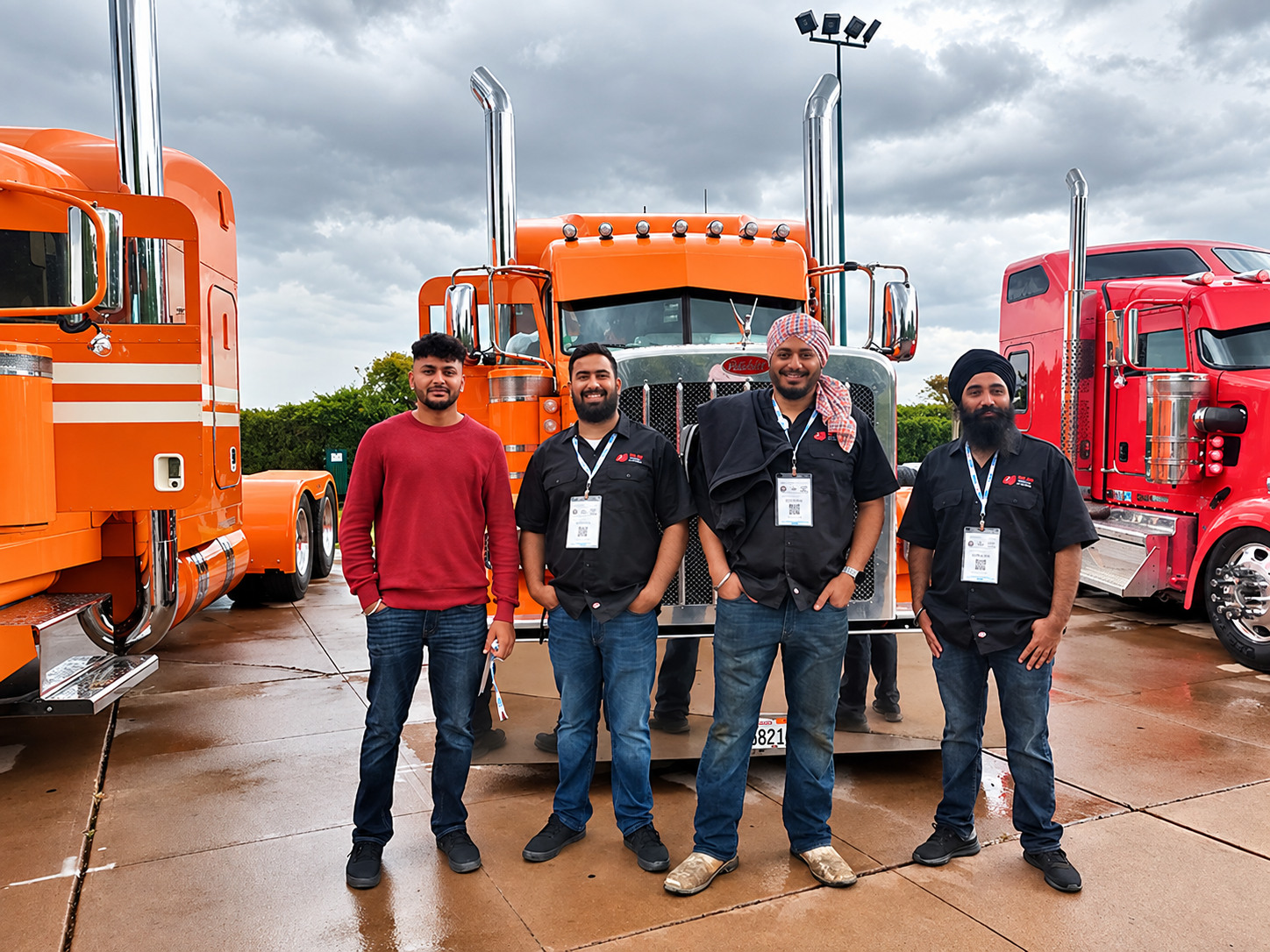
The report was released weeks after an attack that has unsettled Sikh drivers. Early on September 13, a Sacramento truck driver stopped at a rest area on Interstate 80 in Wyoming was stabbed 17 times, according to CNN’s account of the arrest warrant. Police arrested Andrew Bzdak, 44, another trucker. The driver’s lawyers told reporters there has been no official finding that the assault was motivated by bias, and investigators are still looking into why it happened.
Congressman Raja Krishnamoorthi wrote on X: “I’m horrified by the brutal attack on a Sikh truck driver who was stabbed 17 times at a Wyoming rest stop. This comes amid rising hatred targeting Sikh and South Asian Americans, with even the Trump Department of Homeland Security recently posting a racist caricature of a Sikh truck driver telling him to ‘get off our roads’ and ‘self-deport or find out.’ Those spreading this hate, including officials in our own federal government, need to stop.”
Advocacy groups say the timing has deepened fear among Sikh truckers, who make up about one in five US drivers by an unofficial industry estimate reported by the Associated Press. CSOH says such violence and online hostility reinforce each other. It also cites a July case in Utah, where an Indian Muslim mall worker was stabbed repeatedly and federal prosecutors brought hate-crime charges.
The study concludes: “Following Elon Musk's acquisition of Twitter in 2022 and its rebranding as X, the platform has become a cesspool of hate. For example, as of January 2025, posts solely emphasizing anti-Indian hate and racism on X had drawn a staggering 138.54M views. The culture of hate on X exemplifies the hypocrisy of Musk’s alleged commitment to ‘free speech absolutism.’ The principle is invoked, not least by Musk himself, to justify the proliferation of hateful narratives on X, while at the same time the platform has restricted or censored voices at the behest of foreign governments such as Turkey and India.”