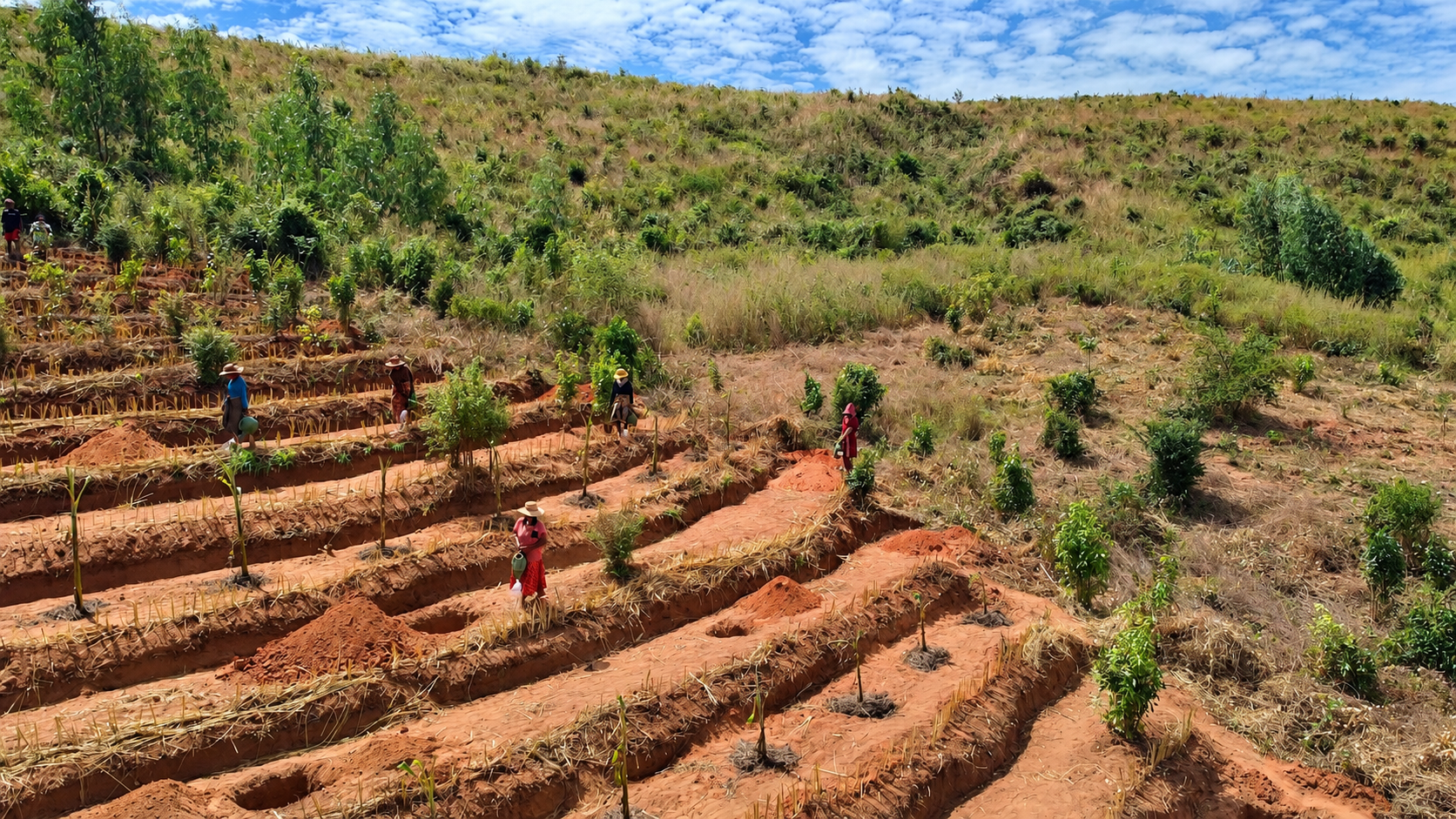
More than a billion hectares of forest and degraded land have been earmarked for restoration worldwide, but only about a fifth is actually being restored. The UN Food and Agriculture Organization (FAO) that collated the stark data has warned that the window to reverse the damage is narrowing, with the UN Decade on Ecosystem Restoration due to end in 2030 and the gap between promises and delivery still widening.
Some 489 million hectares of forest, an area about one and a half times the size of India, were lost to deforestation between 1990 and 2025. Another 460 million hectares of forest ecosystems are degraded. Although deforestation has slowed in some regions, the FAO expects forest and land degradation to keep expanding.
What is at stake goes well beyond trees. Forests cover about 4.14 billion hectares, roughly a third of the world’s land, and store an estimated 714 gigatonnes of carbon. They support up to 80 per cent of terrestrial biodiversity, help regulate rainfall, and provide food, income and other resources to nearly a third of the world’s population.
Short on action
Governments have made ambitious pledges: 91 countries have committed to restore more than 190 million hectares, according to the FAO. But implementation is lagging. The agency’s The State of the World's Forests 2026, released on September 28 at the 28th Session of the FAO Committee on Forestry and the 10th World Forest Week in Rome, acknowledges growing efforts but says action is not keeping pace. “Progress is uneven, and it is insufficient to meet growing global needs,” the report says.
“This widening gap between demand and sustainable supply highlights a structural imbalance that threatens both ecological integrity and the long-term viability of forest-based economies,” the report adds.
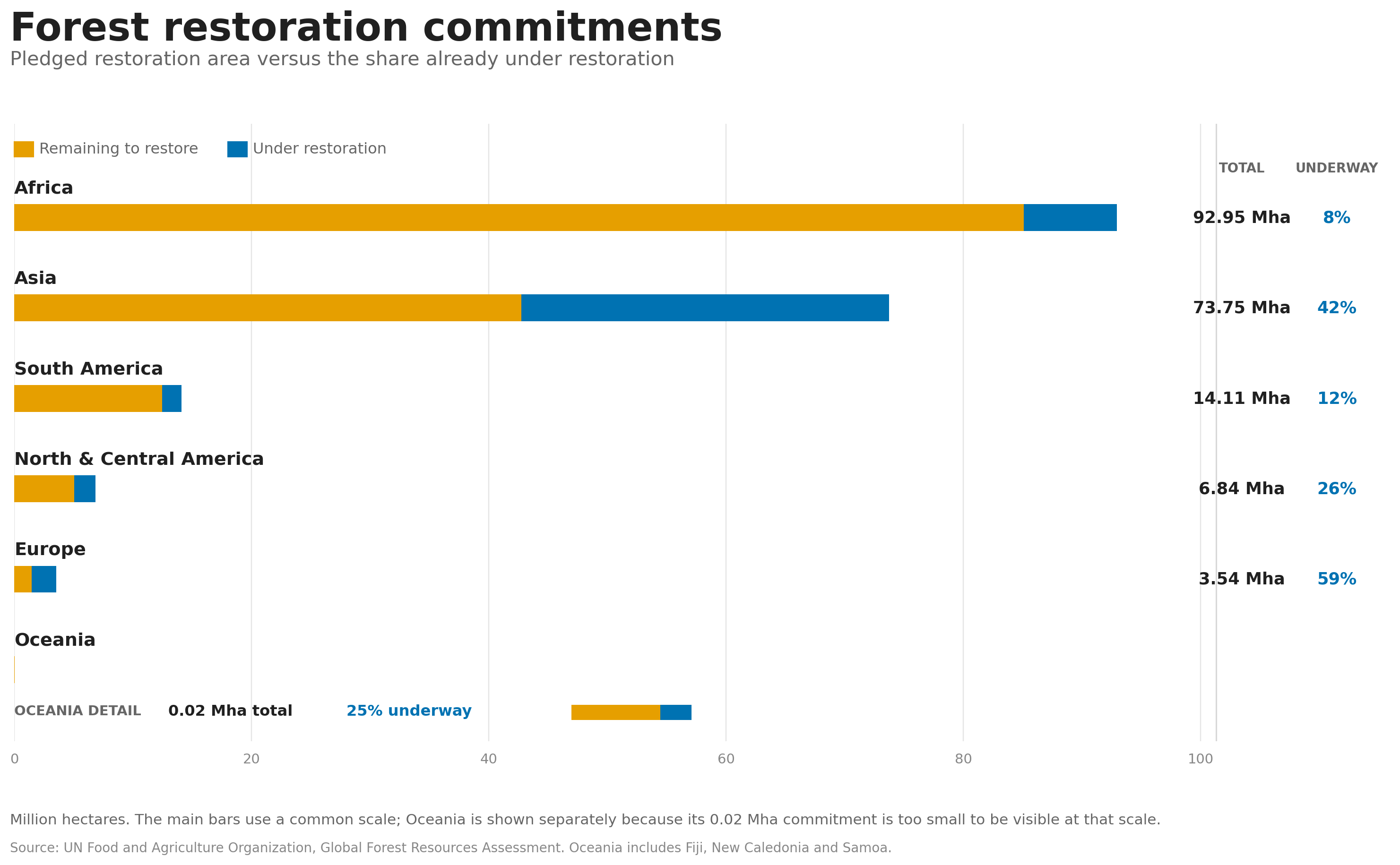
The problem extends beyond forests: more than 1.56 billion hectares of land worldwide are degraded. The report blames agricultural expansion, population growth and rising demand for natural resources.
Increasing pressure
About 127 million hectares of forest are affected by fires every year, while insects, diseases and extreme weather cause further damage. Climate change, pollution and fossil-fuel extraction compound the strain.
The FAO describes this as a structural imbalance between growing demand for resources and the sustainable expansion of forest landscapes. If it persists, the report warns, it could undermine both ecosystems and the economies and communities that depend on them.
The report examines 18 restoration programmes, including the Great Green Wall for the Sahara and the Sahel Initiative, China’s Three-North Programme and the Trinational Atlantic Forest Pact involving Argentina, Brazil and Paraguay. From these it identifies four priorities for scaling up: strengthening people’s rights and participation, adopting landscape-scale approaches, mobilising long-term finance, and improving policies, laws and institutions.
Economic benefits
The FAO estimates that failing to restore degraded land and forests could cost the world between $878 billion and $6.3 trillion a year. Restoration, by contrast, can return up to $30 for every dollar invested, and restoring one billion hectares could yield about $1.8 trillion in benefits annually.
In the report’s foreword, FAO Director-General Qu Dongyu calls restoration “more than an environmental priority”. “The State of the World’s Forests 2026 makes clear that forest and landscape restoration is more than an environmental priority – it is a strategic investment in resilient agrifood systems and rural development,” he wrote.
He goes on to warn: “The window for action is narrowing. and delayed or poorly designed restoration will increase long-term costs, exacerbate inequalities and risk locking landscapes into unsustainable trajectories. Given the continued loss and degradation of forest ecosystems, as well as growing global demand for land-based products and services, there is an urgent need to scale up effective restoration.”
Problem of finance
However, finance remains one of the biggest obstacles. Restoration often needs sustained investment over decades, and many programmes still depend heavily on public funding. Commitments, the report suggests, are expanding faster than the world’s ability to demonstrate lasting ecological recovery.
The FAO says closing the gap will require greater investment, inclusive governance and sustained political commitment. It has urged governments to make forest restoration a national priority before further degradation makes recovery harder and costlier.