Lahore: For residents of Khyber Pakhtunkhwa (KP), the threat of militancy has persisted through years of military operations, counter-terrorism campaigns and changes of government. Police personnel continue to face deadly attacks, while businesses, schools and communities in affected districts live with the consequences.
On October 11, Pakistan’s federal government imposed emergency and Governor’s Rule in KP, transferring executive authority from the Pakistan Tehreek-e-Insaf (PTI)-led provincial government to Governor Faisal Karim Kundi. The move followed an escalation in political tensions after Chief Minister Sohail Afridi announced a march towards Islamabad to demand the release of jailed former prime minister Imran Khan and press other PTI demands. Islamabad justified its intervention on security grounds, citing militant violence and alleging that the provincial administration had failed to cooperate effectively in counter-terrorism efforts.
Under the new arrangement, an 11-member advisory council was established to assist in provincial administration, along with a separate secretariat for 12 of KP’s 35 districts, designated priority areas because of persistent security challenges and a history of militancy. Critics question whether Afridi’s announced march became the immediate trigger for a move that, according to some political observers, had been under consideration earlier.
The decision has opened a new confrontation between Islamabad and the PTI, which has governed the province since 2013. But beyond the political dispute lies a more difficult question: why has Pakistan struggled to establish lasting peace in a province where security forces have conducted years of operations against militant groups?
The scale of the security challenge
The deterioration in security is reflected in rising attacks and casualties among law-enforcement personnel. According to the Pakistan Institute for Conflict and Security Studies (PICSS), an Islamabad-based independent think tank monitoring anti-state violence, militant violence intensified in 2026. A recent report cited 680 attacks in KP between January and September 2026, compared with 508 in the same period of 2025. It also reported that 122 police personnel were killed in the first half of 2026, up from 63 a year earlier. The figures underscore the pressure on a provincial police force operating amidst an expanding security crisis. They also raise questions about the capacity of the Counter Terrorism Department (CTD), which investigates militant networks and supports counter-terrorism operations.
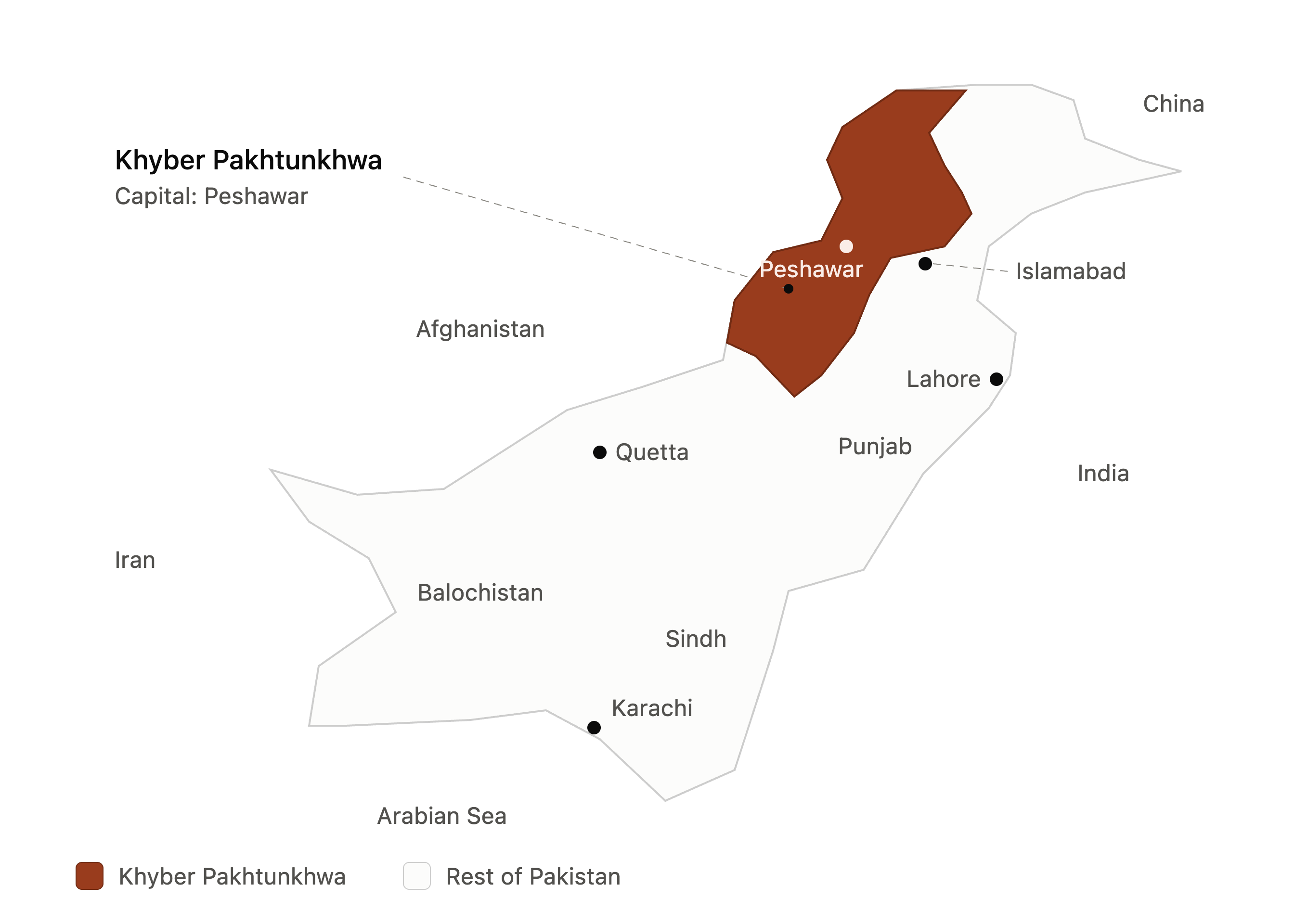
The resurgence of the Tehreek-e-Taliban Pakistan (TTP) has been central to the deterioration. The group has expanded its activity across KP, particularly in districts near the Afghan border, while attacks on police, security installations and government officials have continued in settled areas. Senior Peshawar journalist Shamim Shahid cited to NWS recent incidents in Karak, Dera Ismail Khan and Bajaur, describing a situation in which attacks continued despite the presence of security forces and counter-terrorism institutions.
A security strategy under pressure
The federal government has accused the former provincial administration of failing to show sufficient commitment to counter-terrorism. Federal ministers have questioned PTI’s approach towards the TTP, the effectiveness of provincial policing and the use of funds allocated for security. The government argues that counter-terrorism requires stronger coordination between Islamabad and the provinces, and cites these allegations in justifying emergency rule.
PTI rejects the intervention as unconstitutional and politically motivated. The party maintains that security concerns are being used to remove an elected government and undermine provincial autonomy, and it disputes the allegations about its counter-terrorism record. Critics also question the consistency of the federal response, pointing out that Balochistan faces its own serious security crisis. They ask why deteriorating security has justified Governor’s Rule in KP but not there. The two sides disagree not only over responsibility for the crisis, but also over whether the federal takeover is an appropriate response to it.
Syed Akhtar Ali Shah, a former secretary of the Home and Tribal Affairs Department in KP, said an effective counter-terrorism strategy requires both kinetic measures, including security operations, and non-kinetic approaches that build public trust and political support. According to Shah, security forces were already conducting intelligence-based operations, while the provincial police and CTD were carrying out counter-terrorism activities under the existing legal and operational framework.
He identified a lack of coordination between the provincial government, the federal government and other state institutions as a key obstacle, particularly where political differences undermined a common approach. Effective civilian institutions and public ownership of counter-terrorism efforts, he said, are essential for sustainable results. He also indicated that political negotiations could have offered an alternative to emergency rule, a position consistent with calls for dialogue by PPP Chairman Bilawal Bhutto-Zardari. Shah’s assessment raises a fundamental question: if operations were already under way, what additional obstacles will emergency rule remove, and how will the new arrangement improve security beyond what coordinated civilian and security institutions could achieve?
The cross-border dimension
KP’s security crisis is closely connected to developments in Afghanistan. The Afghan Taliban’s return to power in 2021 coincided with a resurgence of militant activity in Pakistan. Islamabad has repeatedly accused the Afghan Taliban authorities of allowing the TTP to maintain sanctuaries across the border. Kabul rejects the accusation.
The border complicates Pakistan’s counter-terrorism strategy. Militants operating through networks on both sides can exploit difficult terrain, local connections and gaps in coordination. Military operations may disrupt individual groups, but lasting security also requires effective intelligence, border management, policing and cooperation with communities in affected areas.
However, attributing the persistence of militancy entirely to cross-border activity would overlook domestic factors, including law-enforcement capacity, the relationship between civilian institutions and security agencies, and the political grievances of communities in the former tribal districts.
The integration of the former Federally Administered Tribal Areas into KP in 2018 was intended to extend the province’s constitutional and administrative system into these areas. Yet administrative integration alone could not resolve decades of conflict, displacement, weak public services and contested state authority. Extending formal governance and establishing security are separate challenges, and effective civilian institutions need resources, personnel and public confidence to function consistently even when military operations are under way.
A Longer History of Security Control and the Human Cost of Insecurity
The expanding role of security institutions in civilian affairs did not begin with the October emergency. Shahid traces its growth to the December 2014 Army Public School attack in Peshawar, after which security coordination and military involvement in counter-terrorism became increasingly prominent. According to Shahid, military sector commanders had gained substantial influence over security-related decisions across much of the province by the period preceding the 2024 general elections, while civilian officials, including commissioners and deputy commissioners, continued to perform administrative functions.
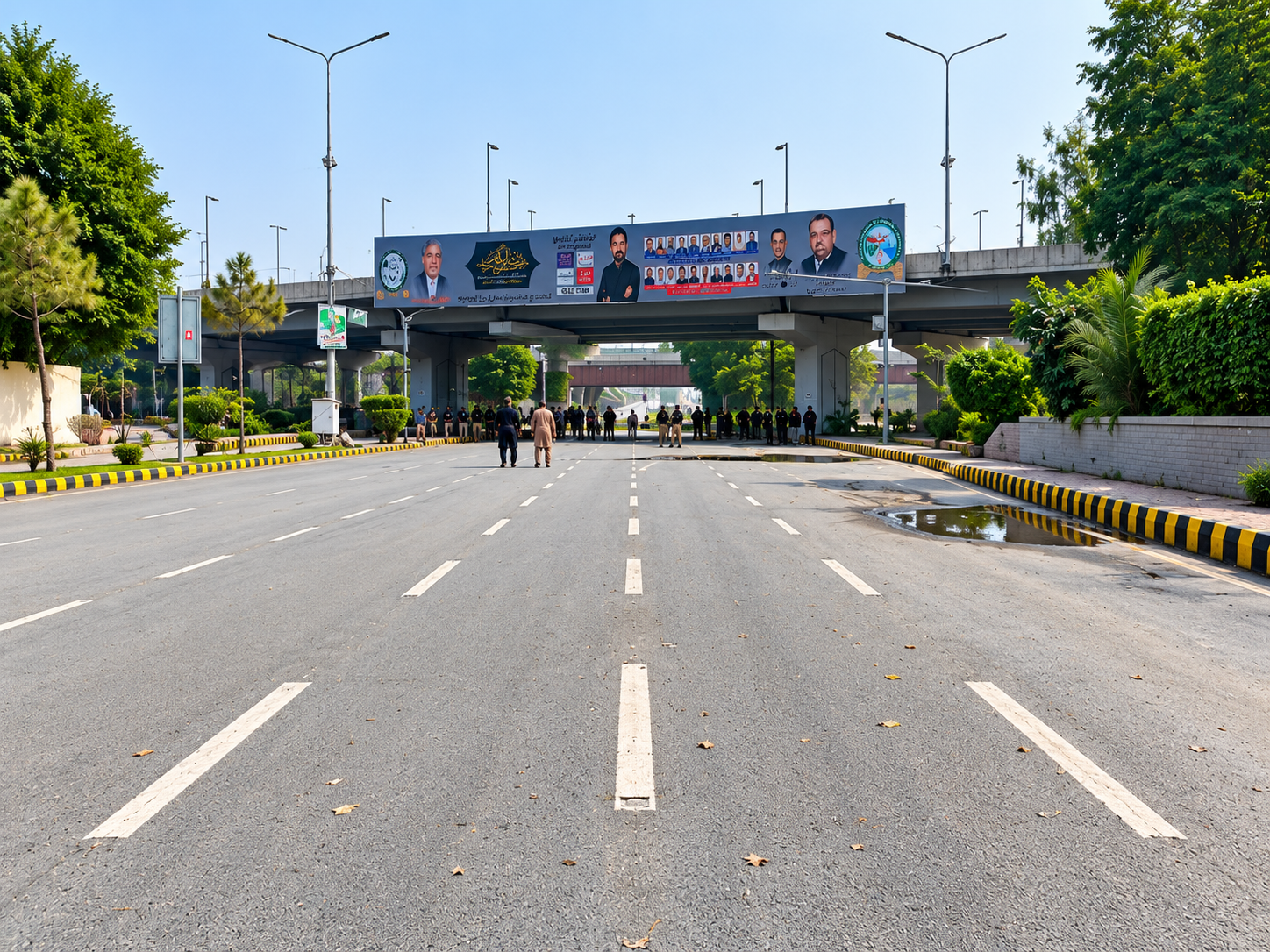
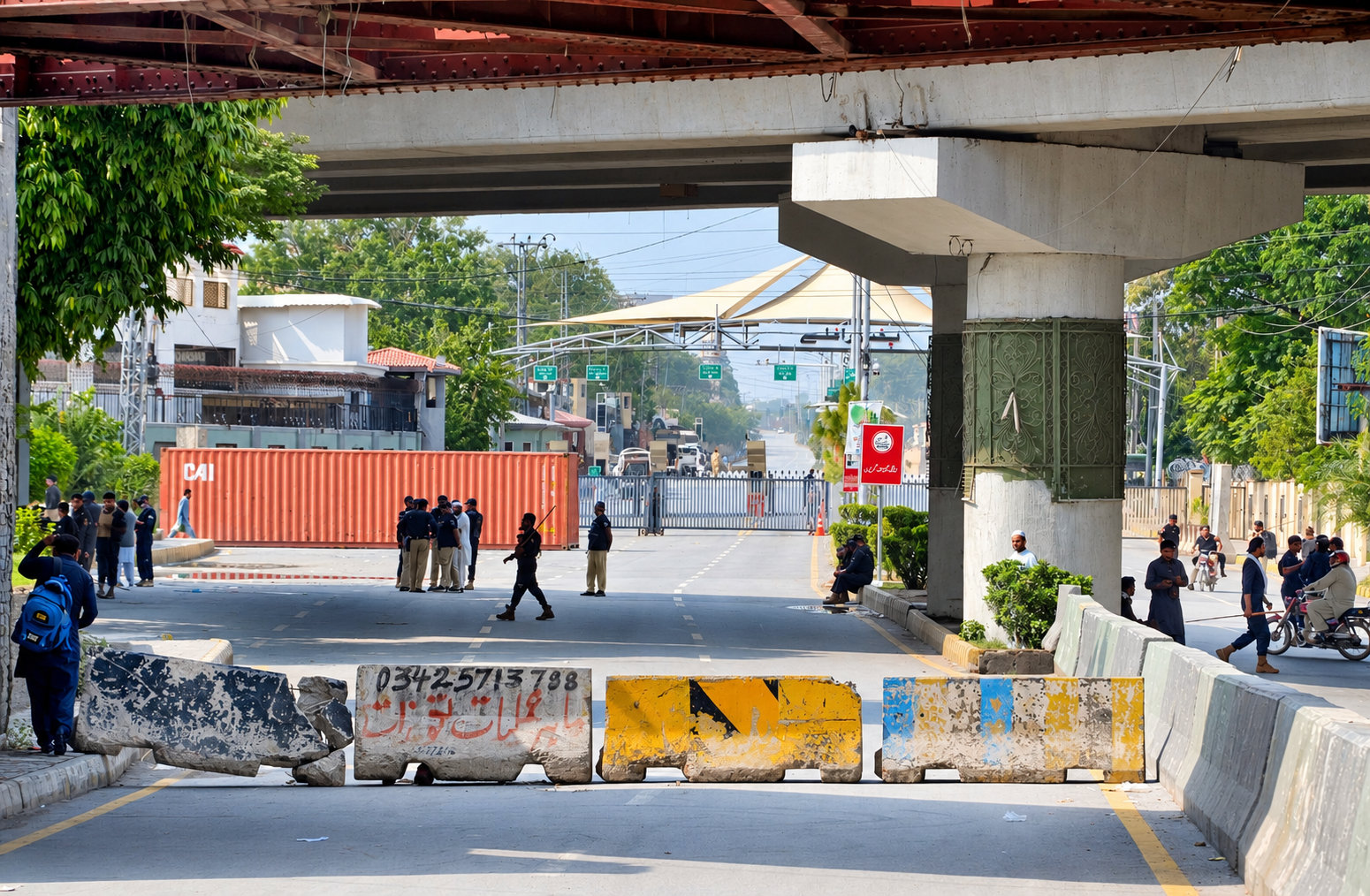
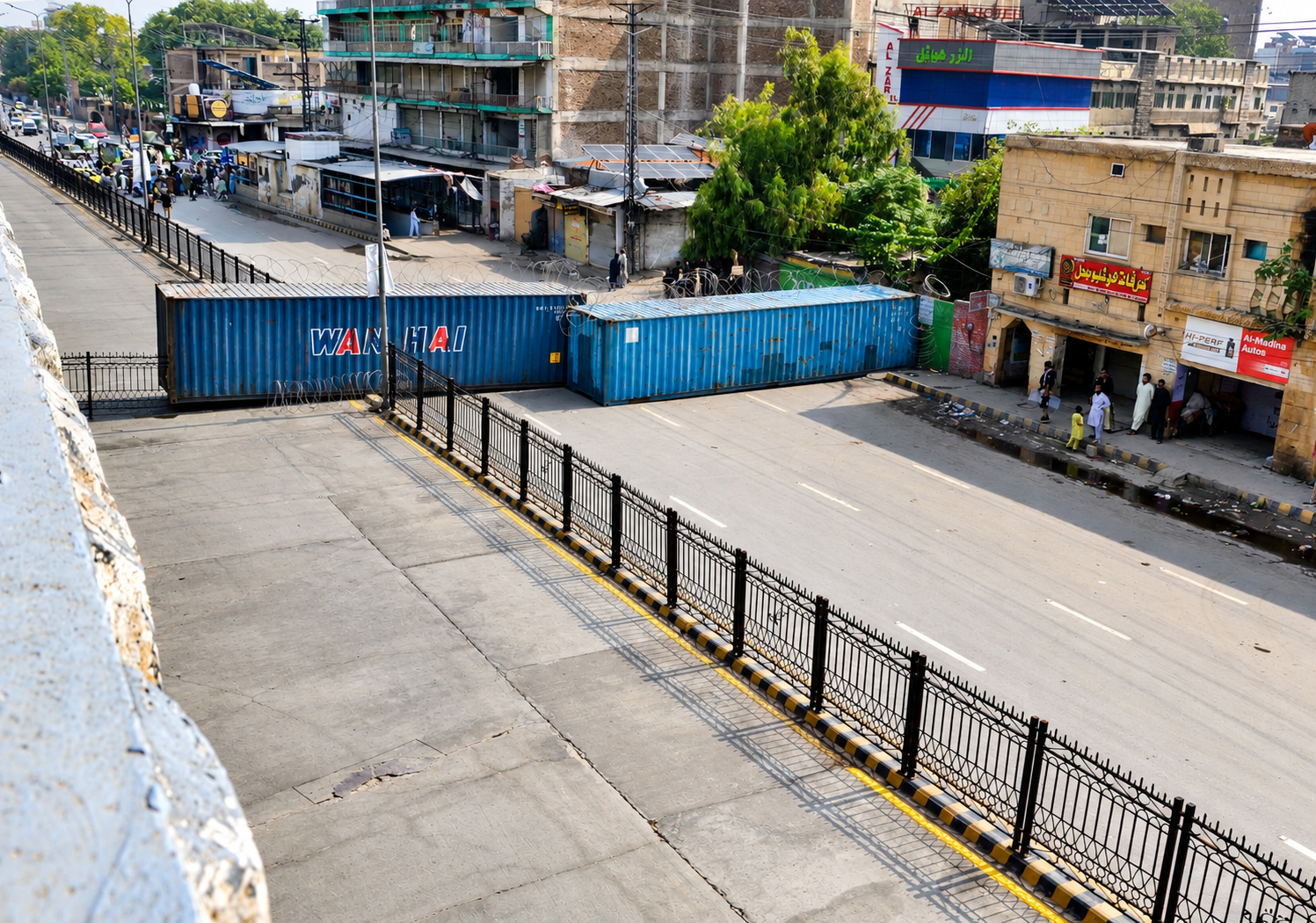
The effects of prolonged insecurity and extensive security measures are felt in the daily lives of ordinary people. Attacks, security operations, checkpoints and movement restrictions disrupt travel, education, trade and access to healthcare, while escalating violence forces families to leave their homes. Citing Peshawar as an example, Shahid said that reaching Bacha Khan International Airport can involve travelling a considerable distance on foot because checkpoints and restrictions limit access. Unlike at many other airports, he noted, passengers cannot always drive directly to the premises and park nearby. The restrictions affect not only ordinary citizens but government representatives, including members of the former PTI-led provincial government. Road closures near the Governor House and restrictions on access to sensitive locations further illustrate how security arrangements shape movement around the provincial capital.
Why PTI retains support
The political dimension cannot be separated from the security crisis. During its years in power in KP, PTI has maintained electoral support while facing criticism over its governance.
Fazal Muhammad, a PTI supporter, said he had consistently supported the party but acknowledged that internal factionalism had left some workers and elected representatives disillusioned with its leadership. PTI’s provincial performance has also drawn criticism over employment opportunities, economic development, alleged favouritism and its failure to end insecurity.
However, dissatisfaction with a government’s performance does not necessarily translate into support for its removal. Many PTI supporters continue to view the party as an alternative to established political forces. For them, Imran Khan's politics is also associated with resistance to the traditional political elite and demands for greater political autonomy.
Muhammad acknowledged that other parties, including the Awami National Party (ANP) and Jamiat Ulema-e-Islam (JUI-F), had also been attracting support in different parts of the province. Nevertheless, he believes Governor’s Rule could revive support for a party whose performance had come under growing criticism, by letting PTI argue that its electoral mandate had been disregarded and mobilise supporters around that claim. This remains a political assessment, but it highlights a risk for the new administration: if the intervention is widely perceived as politically motivated, it could deepen public distrust rather than strengthen the collective support needed to address the security crisis.
Emergency powers and provincial autonomy
The imposition of emergency and Governor’s Rule has been challenged in the Peshawar High Court. On October 11, 2026, President Asif Ali Zardari issued proclamations under Articles 232 and 234 of the Constitution. Article 232 provides for an emergency in specified circumstances, including war, external aggression or internal disturbance, subject to constitutional conditions. Article 234 addresses situations in which a provincial government cannot be carried on in accordance with the Constitution. Parliament subsequently approved the proclamations in a joint sitting, reportedly for an initial period of two months. The court heard petitions challenging the measures on October 20, issued notices to the relevant authorities and adjourned the proceedings until November 10. It has yet to issue a final ruling.
Advocate Sameer Khosa, counsel for the petitioners, maintains that the constitutional requirements were not met. He argues that an emergency based on internal disturbance required a resolution from the provincial assembly, which had not been passed. He also contends that Article 234 was not applicable because the provincial government remained functional, the chief minister retained the assembly's confidence and the assembly continued to operate.
The petitioners maintain that the proclamations do not automatically authorise the detention of provincial officeholders or proceedings against them. Their petitions seek to have the proclamations declared unconstitutional, restore the elected provincial government and secure the recovery and reinstatement of Chief Minister Afridi and Provincial Assembly Speaker Babar Salim Swati, whose whereabouts, they say, are unknown to them. Federal Minister of State for Interior Talal Chaudhry has said that Afridi is in detention. The petitioners also challenge the separate district secretariat and the advisory council as lacking a clear constitutional basis, and argue that the dispute extends beyond the removal of one government to provincial autonomy and the federal system strengthened by the 18th Amendment.
Security Crisis or a Struggle for Resource Control?
While the federal government has justified emergency measures on security grounds, the province’s mineral wealth has raised questions about who controls its resources and who benefits from them.
ANP’s Nisar Baz Khan questioned royalty payments, claiming the province was entitled to approximately Rs 34.5 billion ((about $124 million) but that the Mines and Minerals Department had received only Rs 169 million ((about $608,000). Defence Minister Khawaja Asif shared figures showing that 4,917 mining licences had been issued across the province and defended the role of the Frontier Works Organisation (FWO), saying it held only one licence.
Former provincial mines minister Arif Ahmadzai defended PTI’s record, saying the increase in mining licences had expanded economic activity and raised provincial revenue from Rs 700 million ((about $2.5 million) to Rs 14 billion ((about $50 million). He also acknowledged difficulties in collecting royalties and argued that local communities should have the first right to benefit from their mineral resources.
The Muhammad Khel copper project in North Waziristan, operated by an FWO subsidiary, has brought these questions into sharper focus. A provincial assembly document records 952,878 metric tonnes of mineral production between 2016 and 2024, while Rs 189.803 million (about $683,000) was received through royalties, rents and joint-venture revenue. The document also mentions notices issued over government dues.
These figures raise questions about transparency, royalty collection and the distribution of mining revenues. However, they do not establish that mineral interests motivated the imposition of Governor’s Rule. Without direct evidence linking the intervention to mining decisions, resource control remains an important question, not a proven motive.
Will Emergency Rule Address the Roots of Militancy?
What began amid political tensions surrounding a long march has evolved into a broader controversy over security, governance, constitutional autonomy, Afghanistan and control over the province’s mineral wealth. The federal government says emergency measures are necessary to restore security and improve coordination. PTI has challenged their legality and political purpose, while security experts argue that counter-terrorism requires more than a transfer of executive authority. The persistence of militancy underscores the limits of relying on security operations alone without effective civilian institutions, political engagement and public trust.
Ultimately, the success of emergency rule will be measured not by which institution holds executive authority, but by whether violence declines, governance improves and people regain the freedom to travel, work and educate their children without fear. Unless the intervention delivers lasting security while strengthening public trust and addressing the wider causes of instability, a change in administrative control alone will not resolve KP’s crisis.