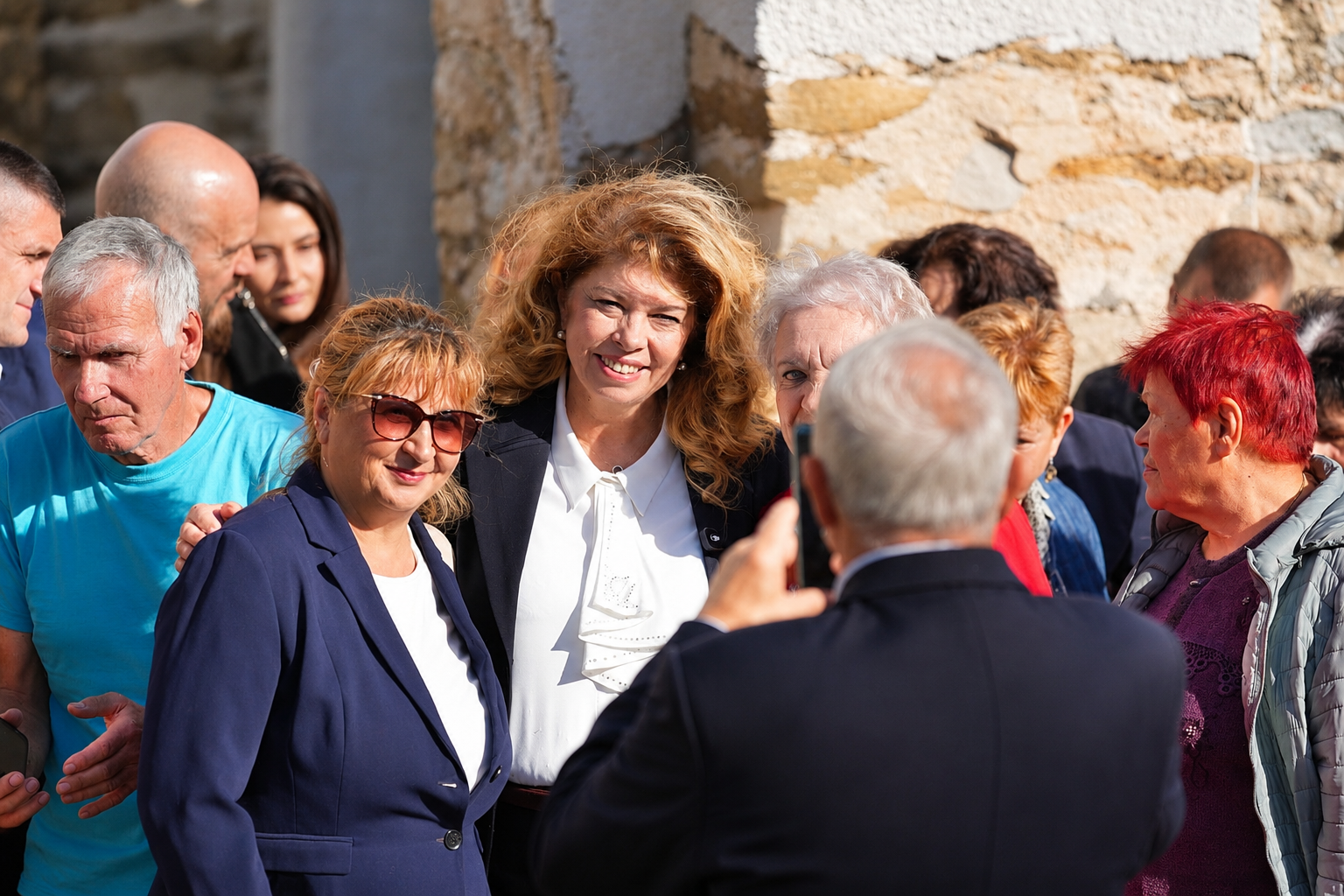
Bulgaria has elected as president Iliana Yotova, who opposes military aid to Ukraine and favours dialogue with Moscow. The result extends the grip of Prime Minister Rumen Radev’s Ukraine-sceptic government on a European Union and NATO member on the alliance’s Black Sea flank.
Yotova, 62, won the runoff with about 58 per cent, according to official counts released Monday (November 2). She will be Bulgaria’s first directly elected woman head of state. Parallel counts put turnout below 30 per cent, which raises questions about the weight of her mandate.
With 99.68 per cent of polling-station protocols processed, the Central Election Commission has put Yotova on 57.66 per cent, or about 1.09 million votes, against about 39 per cent for former caretaker prime minister Andrey Gyurov. Final results are due by November 4. Gyurov, backed by the pro-Western opposition, conceded on election night and urged Bulgarians to seek unity rather than division.
Yotova took over the presidency in January when Radev resigned to contest the parliamentary election. His party, Progressive Bulgaria, won an outright majority in April with about 44.6 per cent of the vote, the first single-party majority in decades, and he became prime minister in May. The presidential vote was the first major test of his government, and the party backed Yotova’s campaign.
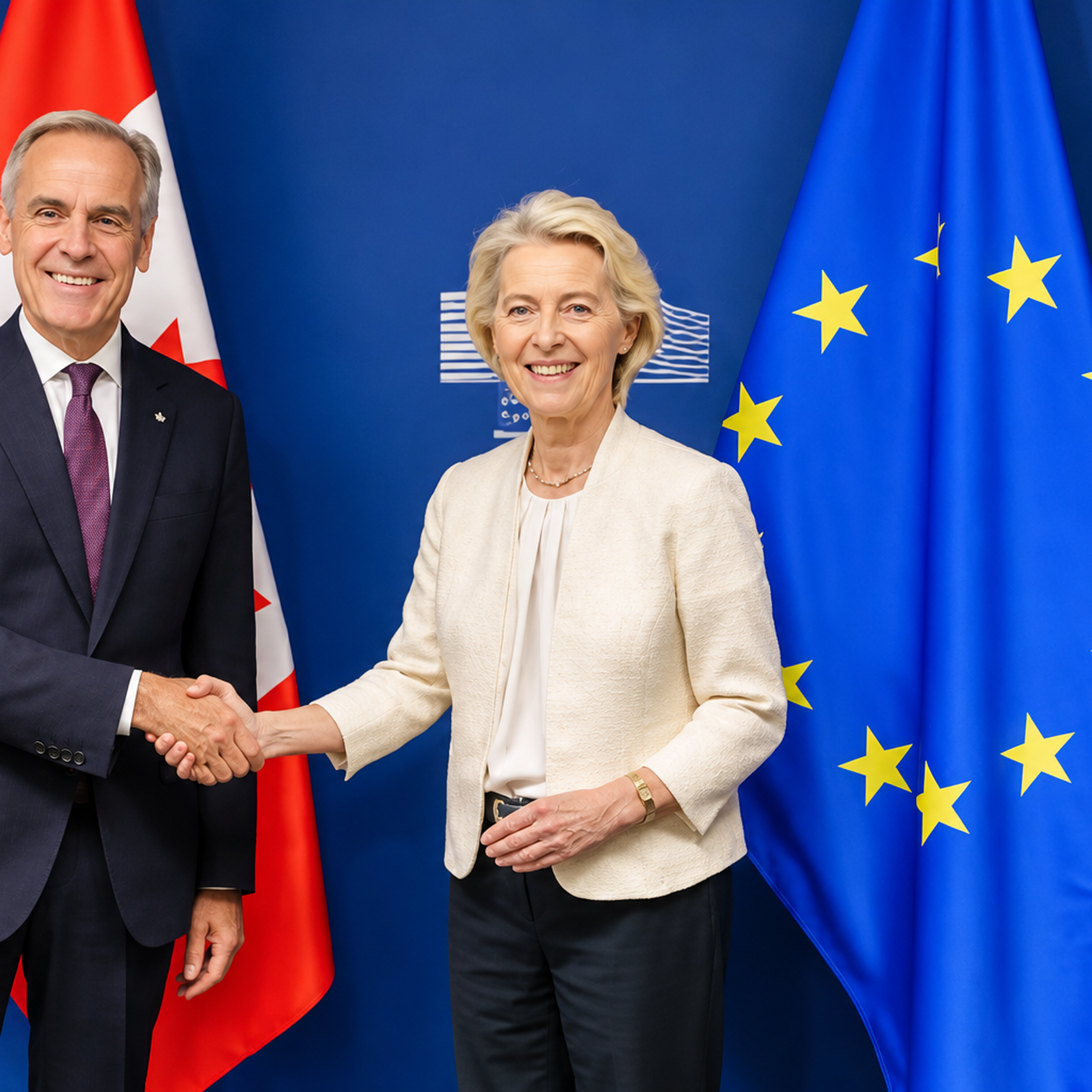
After voting, Yotova said she wanted Bulgaria to be “sovereign in its decisions.” European Commission President Ursula von der Leyen congratulated her, calling for “a strong Bulgaria in a strong Europe.” Asen Vassilev, leader of the opposition We Continue the Change, called the result a “red card” for the Radev government. Gyurov had earlier said he voted for a “secure, stable and European Bulgaria.”
What the president does
Bulgaria is a parliamentary republic, and the presidency has no executive powers. The president is commander-in-chief, can veto legislation (parliament can override), sign treaties, appoint ambassadors, and name caretaker governments during political crises. That last power matters in a country that has held eight parliamentary elections in five years. A direct vote gives the office more political weight than its formal powers suggest. Turnout in the first round was only about 22.5 per cent, down from 40.5 per cent in 2021.
On the Russia–Ukraine war
In July, Radev pulled Bulgaria out of the “coalition of the willing” backing Ukraine, saying its “place is not there.” His government has halted military aid, though it has not stopped arms sales to Kyiv. On October 21, Sofia refused to finance new lethal weapons through the EU’s European Peace Facility, offering only non-lethal assistance and equipment repair.
Yotova is expected to continue that line while keeping Bulgaria in the EU and NATO, and to argue for lifting sanctions on Russia. She called the 10-year security agreement Gyurov signed with Zelensky in Kyiv on March 30 inadequate, given his caretaker government’s limited horizon.
Outsiders often read Bulgaria’s politics as a pull towards Moscow. The reality is more tangled, and the poll numbers show it. Many Bulgarians credit Russia with ending nearly five centuries of Ottoman rule after the war of 1877–78, and the “liberator” idea runs deep in school history and public monuments. Bulgaria was one of Moscow’s most loyal Warsaw Pact allies. It joined NATO in 2004 and the EU in 2007, but the cultural and religious affinity with Russia never disappeared.
An August 2025 poll by the Myara agency found that 31 per cent of Bulgarians viewed Russia positively and 50 per cent negatively. Ukraine fared worse, with only a quarter viewing it favourably and 55 per cent unfavourably. The same poll showed the EU at 65 per cent positive. Bulgarians are cool towards both belligerents, and the more consistent feeling is a wish to stay out. A Eurobarometer survey in autumn 2024 found 68 per cent of Bulgarians opposed EU financing of weapons for Ukraine, against 37 per cent across the bloc. A 2024 European Council on Foreign Relations survey described Bulgarians as notable pacifists among 15 European countries, preferring European-led peace talks to escalation. Some 61 per cent wanted Europe to push Ukraine towards a settlement.
The country is among the EU’s poorest members, and its economy was built around Russian energy. It depended almost entirely on Russian gas until Gazprom cut it off in 2022. Russian-owned Lukoil ran the Black Sea refinery near Burgas that dominated fuel supply. Voters worried about prices, and the switch to the euro in January 2026 added to that anxiety. Against this background, arguments that sanctions and arms deliveries cost Bulgarians more than they help Ukraine land easily.
Years of corruption scandals and repeated elections left many voters disillusioned. When Radev quit the presidency, he said the political class had betrayed Bulgarians’ hopes. Support for his stance on Ukraine is tied up with a wider protest against the establishment.
A divided country
The pro-Western camp is concentrated in cities. Gyurov, an economist and former central bank deputy governor, led in Sofia and among Bulgarian voters across most of Europe in the first round, while Yotova dominated most provinces. Parties such as GERB and PP-DB, which support aid to Ukraine, were not enough to carry the national vote.
Gyurov’s first-round showing, 32 per cent against Yotova’s 35, surprised observers who had expected a double-digit gap.
The Black Sea
The war reached Bulgaria’s doorstep this autumn. Drones struck two merchant ships in Bulgaria’s economic zone on October 6, sinking one, and 18 sailors on the other were rescued. About ten crew on the sunken vessel were lost. Radev condemned the attack as a violation of international law. A second sinking a week later left 11 sailors missing, and Bulgaria summoned Russia’s ambassador. A third attack on October 28 hit a container ship off the coast, and its 18 crew were rescued. Responsibility has not been officially confirmed.
In a pre-runoff TV debate, Gyurov said the threats had to be attributed to Russia. Yotova answered that peace can come only through negotiations and that more aid for Ukraine means more deaths on both sides. Both campaigns used the security fears to make their case.
Analysts and some European officials have asked whether a Radev-aligned government and president could slow EU and NATO decisions on sanctions and aid, as Hungary did under Viktor Orbán. Radev has already broken ranks. He backed the diesel agreement that US President Donald Trump announced with Russian President Vladimir Putin on October 9, which eases sanctions on Russian diesel until April 2027. EU foreign policy chief Kaja Kallas had called it a gift to Putin. Radev has also said “I don’t support strikes on any refineries”, arguing that attacks on energy infrastructure on either side drive up fuel prices in Europe. Hungary’s prime minister, Péter Magyar, has since said the waiver also matters for his country.