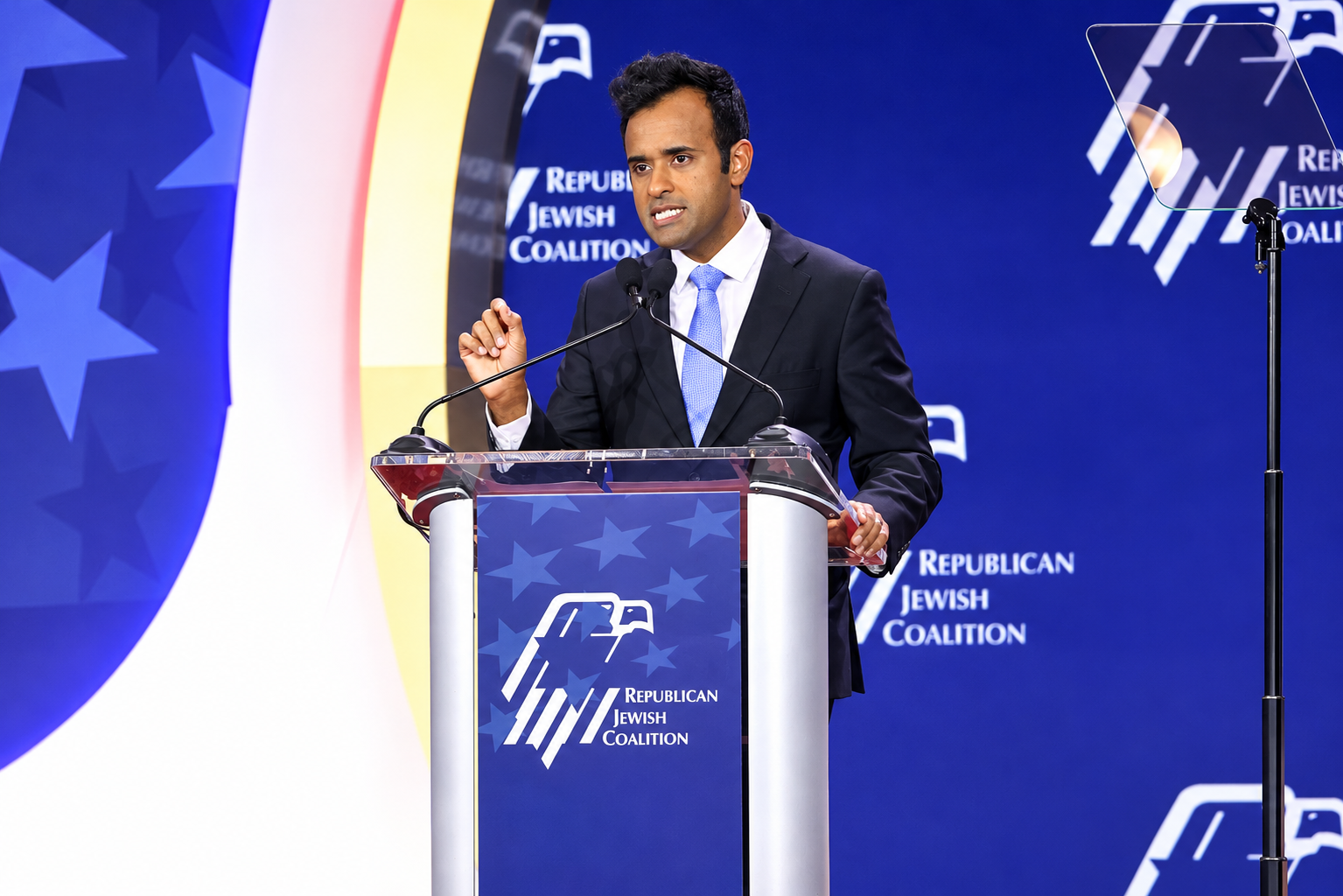
Vivek Ramaswamy, the Republican candidate in Ohio's governor race, appears to have squandered his opportunity with a malicious ad against his Democratic opponent, Amy Acton. His campaign aired an ad featuring Acton’s estranged mother, Donna Arthur, who calls her daughter a liar and urges Ohio voters not to elect her. Acton was 12 when she was reportedly abused by her stepfather, Cledith Arthur. Her mother lost custody of her and her brother after he was charged, and Arthur stayed married to him until his death.
Finally, the ad was pulled on October 29, after spending massive amounts on it and just days before the November 3 elections. The Ohio race, once in favour of Republicans, is now tilted toward Democrats, if pollsters are right.
The ad and the confirmation
The ad titled “Donna” began circulating online on October 19, barely two weeks before Election Day. Ramaswamy’s campaign at first did not confirm its role, saying only that Ohioans “deserve to know” what Acton’s mother says about her daughter. Later that day, Ramaswamy acknowledged it: “It is an ad from our campaign.” He then said he would spend $4 million to air it online and on television.
In the ad, Arthur calls her daughter a “liar” for claiming to have lived in a tent, then warns Ohioans not to elect her. The video also insinuates that Acton has mental health issues. The campaign confirmed it produced a one-minute version of the ad. Days later it switched to a 30-second cut, a person close to the campaign told NBC News.
Unintended effects
However, the ad created several unintended consequences. Acton’s traumatic childhood came to light, and the argument that Vivek’s campaign wanted to make about Amy Acton is completely sidelined. Facing the ad head-on, Acton spoke publicly about homelessness and abuse in her childhood, and the record behind it is documented. Police and court records show her stepfather was arrested and charged with raping her in July 1978, after her biological father reported him to authorities.
The abuse allegedly occurred between December 1976 and April 1978. Arthur failed to appear in court and went on the run. He was charged but never stood trial, and no verdict was reached. Acton’s campaign says her mother protected the man. It also posted a video of Acton’s brother backing her account of living in a tent and being abused. Acton called the ad “despicable.” The Democratic Governors Association said child abuse and sexual assault should never be weaponised for partisan points. The Ohio Capital Journal commentary argued the ad had an unintended side effect: drawing national attention to the adversity Acton overcame.
Republicans divided
All the living governors of Ohio state condemned the ad. However, the sharpest criticism came from Ramaswamy’s own Republican Party. Ohio Governor Mike DeWine, who endorsed Ramaswamy and worked with Acton when she was his state health director, called the ad “deeply, deeply troubling” and urged Ramaswamy’s campaign to pull it. He said her abuse history made airing it “more serious” and “more wrong.” He stopped short of withdrawing his endorsement.
Senator Jon Husted, who is in a tight race of his own against Democrat Sherrod Brown, said he would not have run the ad. Secretary of State Frank LaRose did, too. Iowa Senate nominee Ashley Hinson called it “absolutely terrible.” Nikki Haley, who clashed with Ramaswamy in the 2024 presidential primary, called him “a bad guy.” Casey Putsch, who ran against Ramaswamy for the nomination, said he will vote for Acton. The state party chairman, Alex Triantafilou, hinted at consequences for Republicans who criticised the ad, writing that “we are keeping score.”
Ramaswamy initially kept airing it, backed by President Donald Trump, who said Acton is “fair game” and attacked DeWine’s loyalty. Vice President JD Vance dismissed Republicans “whining” about the ad. Ramaswamy’s campaign manager, Jonathan Ewing, called it “a campaign-ending moment for Amy Acton.” The campaign initially said it would not pull the ad and argued that Ramaswamy is held to a different standard than Democrats who have attacked Republicans’ families. Spokesperson Connie Luck pointed to Democratic claims about Ramaswamy’s mother’s role at his company, which the campaign calls “slanderous.”
Warnings ignored
Axios reported that the ad did not come out of nowhere. A source close to the campaign said it was filmed months ago and met internal resistance, with the candidate himself pushing to run it. It began as an online test shown to poll respondents, and the campaign didn’t plan a wide release. “But Vivek got what he wanted,” the source said. The campaign said it pressed ahead because the ad tested well with swing voters. GOP strategists David Urban and Mary Katharine Ham warned it could generate sympathy for Acton. At least one other Ohio GOP candidate personally asked Ramaswamy not to run it. Zeteo reported that its sources said Acton’s mother seemed mentally unwell around the time the ad was filmed. That claim comes from unnamed sources at a single outlet and has not been independently confirmed.
The ad comes down
Ramaswamy said during a campaign appearance in Vandalia, Ohio, on Thursday, October 29, that the ad’s planned run was over. The ad was supposed to air through the election, and he made a quick comment to reporters. He did not apologise. The campaign had originally said it would spend $4 million on the ad, but data from the ad-tracking firm AdImpact showed it spent roughly $1 million, about a quarter of the pledge. The campaign had also defended the ad but later released a version that trimmed some portions.
Ohio past and present governors, alumni of Ramaswamy’s Catholic high school in Cincinnati and several others urged him to pull it. Protests followed him around the state, and Republicans told the Ohio Capital Journal they feared it would bring down the whole ticket. Trump and Vance had backed airing it, with Trump saying he told Ramaswamy to leave it up. Acton’s campaign said the ad should never have run. Spokesperson Addie Bullock said Ramaswamy took it off the air “in the most cowardly way possible,” without an apology to Acton, her family or Ohioans.
What the polls say
Ramaswamy was already trailing when the ad was withdrawn. A Cook poll taken October 9–13 had Acton ahead 49 per cent to 44 per cent. A Fox News poll from October 15–19 had her up 50 per cent to 48 per cent. CNN reported Ramaswamy had largely run behind other Ohio Republicans in polling for months.
After the ad, the numbers moved against him in some surveys. A private poll commissioned by a Republican group and obtained by Axios found Acton leading 50 per cent to 42 per cent, up from two points earlier this month. The survey of 800 likely voters, conducted October 23–26, found 86 per cent aware of the ad. Among those aware, people who said it made them more likely to back Acton outnumbered those who said it made them less likely by 2 to 1. A memo with the poll said the ad “is having a significant effect on the gubernatorial race.” A GOP operative told Axios the ad “put the whole Republican ticket on defence.”
The picture is not uniform. A Suffolk University poll showed Ramaswamy trailing by four points, 48 per cent to 44 per cent, up from a nine-point deficit in late September. Suffolk found 72 per cent of respondents had seen or heard about the ad. It moved just one respondent from Acton to Ramaswamy, while seven moved from Ramaswamy to Acton. Libertarian Don Kissick drew 3.6 per cent. An Echelon Insights poll showed Ramaswamy ahead by two points, while Marist gave Acton a seven-point lead. Sabato’s Crystal Ball moved the race to Lean Democratic on October 22, and the Cook Political Report followed on October 23, citing Acton’s polling lead. Cook warned of collateral damage to other Republicans. Illinois first lady M.K. Pritzker said she donated $500,000 to Acton’s campaign because of the ad.
Days to go
With the ad off the air, Ramaswamy heads into the November 3 election trailing in most polls and facing questions about whether the roughly $1 million spot cost him more than it gained. Republican private polling suggested the ad was hurting him, though at least one public poll showed the race tightening. Decision Desk HQ gave Acton a 61 per cent chance to win. Ohioans will decide how they remember the ad on November 3.