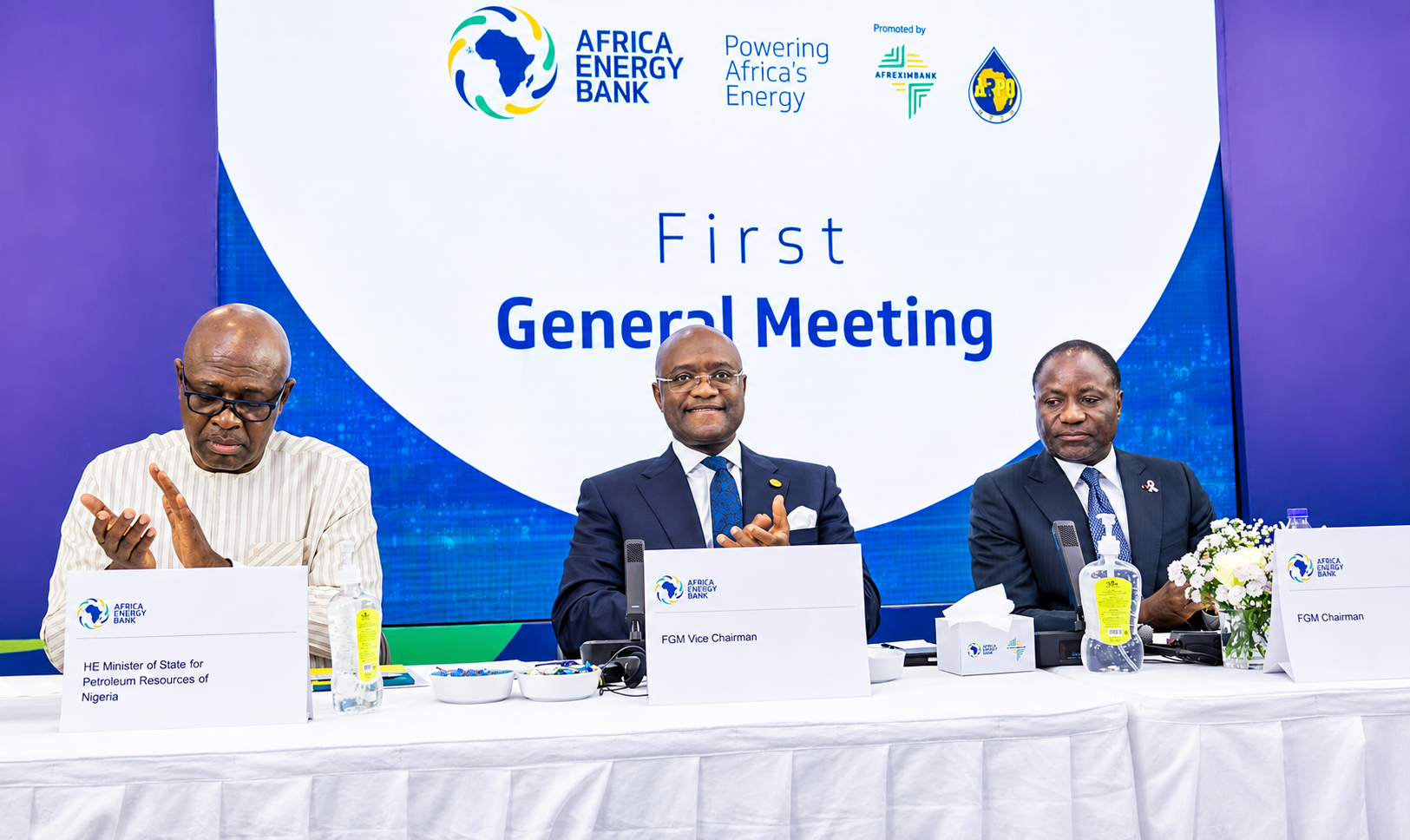
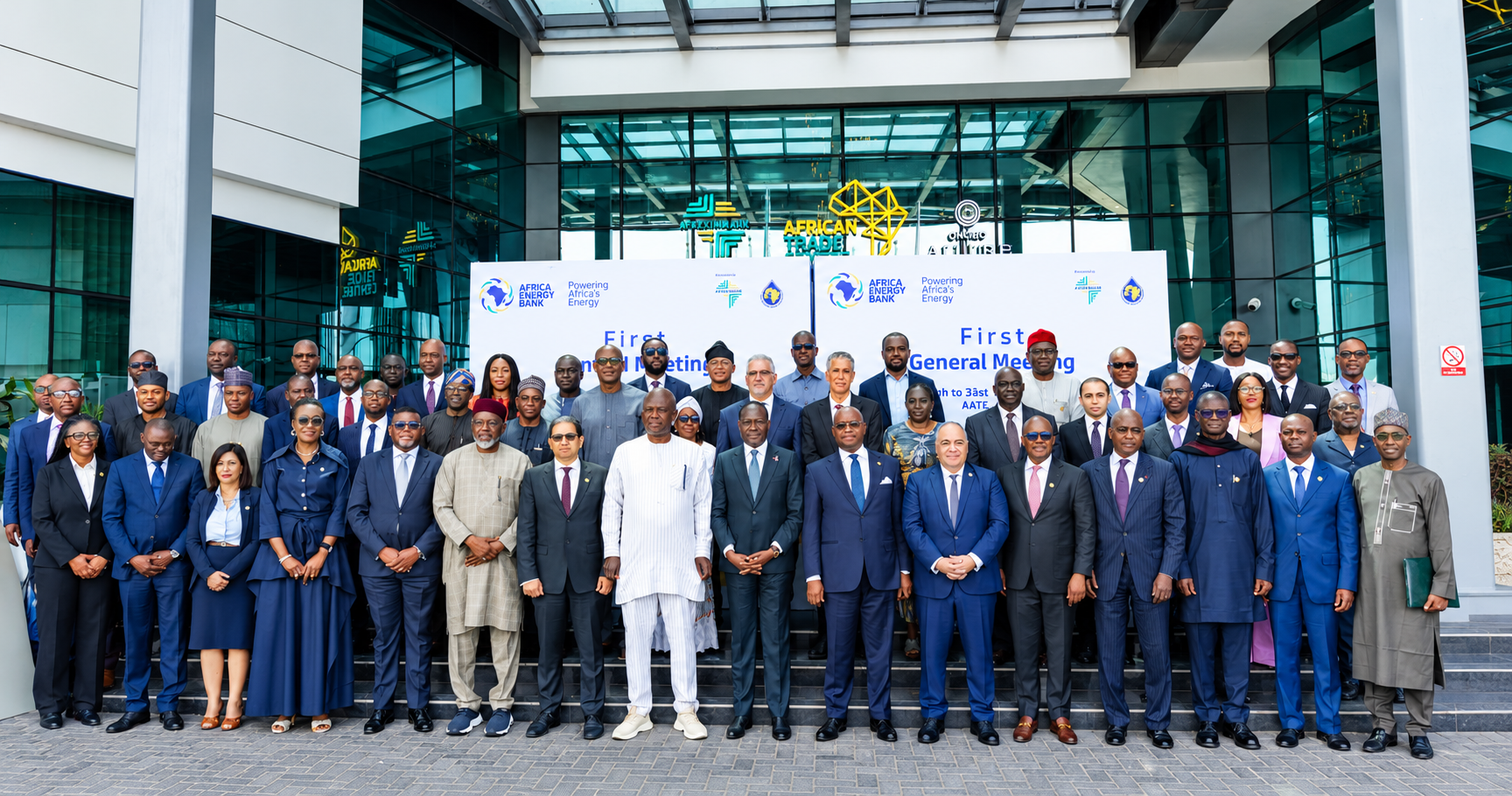
The African Export-Import Bank (Afreximbank) and the African Petroleum Producers’ Organisation (APPO) on Saturday (October 31) announced the establishment of the Africa Energy Bank (AEB), a pan-African institution with $5 billion in authorised capital to finance oil, gas and wider energy projects across the continent. The announcement came at the bank’s inaugural general meeting in Abuja, Nigeria, on October 31.
Heineken Lokpobiri, Nigeria’s Minister of State for Petroleum Resources (Oil), Dr George Elombi, Afreximbank President and Chairman, and Mamadou Sangafowa-Coulibaly, Côte d’Ivoire’s Minister of Petroleum, led the inaugural session. Farid Ghezali, APPO's Secretary General, represented the association. Shareholders appointed Helmy Ghazi as the bank’s first President. They formed its first Board of Directors, drawn from the public and private sectors and from leading policy institutions across the continent.
A press release from the AEB said the bank "will operate as an independent, supranational pan-African financial institution. It will seek to attract investments from governments, national oil companies, financial institutions, and private investors to support energy development across the continent." It says the bank's creation “reaffirms African governments’ determination to secure their own energy future.” Large investments in power generation and transmission are needed to speed industrial growth and to seize opportunities from emerging technologies, particularly artificial intelligence, the release said.
The bank says the continent’s energy investment needs total $200 billion. Traditional financiers of Africa’s energy sector are withdrawing funding from fossil fuels, the release says, even as oil and gas remain vital to the continent’s energy systems. The AEB aims to bridge this gap while supporting a just energy transition. The release does not say when the bank will begin lending, and it gives no headquarters location, paid-up capital, shareholder list or first projects.
Afreximbank and APPO
Afreximbank is a pan-African multilateral institution mandated to finance and promote intra- and extra-African trade. Member states signed its founding agreement in Abidjan on 8 May 1993, and it launched at its first shareholders’ meeting in Abuja, Nigeria, that October; the bank is headquartered in Cairo. As of December 2024, it had 53 African and 12 Caribbean member states and 164 shareholders across four classes. The release says it backs the African Continental Free Trade Agreement and has established a $10 billion Adjustment Fund to help members participate. As of the end of September 2026, its total assets and contingencies stood at over $54.1 billion, and shareholder funds at $9 billion. APPO, formerly the African Petroleum Producers’ Association, was founded in Lagos, Nigeria, in 1987 to coordinate policy among oil-producing countries.
Objectives of AEB
The AEB will support projects across the energy value chain, from exploration and production to transportation, processing, refining and distribution. The release says the aim is to strengthen productive capacity, reduce reliance on imported petroleum products and promote intra-African trade in energy goods, with African participation ensuring the continent’s energy future “is shaped by Africans.” The bank aims to raise $200 billion in funding eventually.
The idea has been in the making for years. APPO’s ministerial council passed the initial resolution in 2022, and the charter was signed in Cairo in June 2024. Afreximbank and APPO received the keys to the Abuja headquarters on 2 February 2026. The bank missed earlier take-off dates in January and June 2025. APPO has argued that financing is the main obstacle. APPO’s Secretary General Ghezali said more than 150 projects, from refineries to pipelines, remain stalled. He also highlighted that financing costs in Africa are between 15 and 20 per cent, compared with 4 to 6 per cent in Asia.
Possible opportunities
APPO has said the first phase would focus on a handful of producers. It would launch with 10 pillar projects involving countries such as Nigeria, Angola and Libya. Ghezali named the Dangote Refinery and the Ajaokuta-Kaduna-Kano gas pipeline, both from Nigeria, as flagship projects that could be listed. That would let investors buy stakes in projects instead of only lending to them. He added that the AEB would allow national oil company shares to be listed and link certified projects to sovereign wealth funds and capital markets. These listings and certifications could help attract global funding at competitive prices.
APPO has said that “a unified intra-African oil and gas pricing” could save members up to 30 per cent on energy imports, or $1.4 billion, and the AEB could create over 500,000 direct jobs in local midstream. APPO says the bank is being positioned to raise about $15 billion by 2030. However, APPO has not explained how it would set a unified price or who would bear the gap if it differed from world prices.
Questions that remain
Some African experts criticised AEB’s focus on fossil fuels. Bhekumuzi Dean Bhebhe of Africa Change Lab has called it a “Trojan horse” that runs against the energy transition. The release says the bank will support a just transition but does not explain how that sits beside its oil and gas focus. Climate Home News reported that the bank is expected to start with $500 million in seed capital, with a plan to scale to $120 billion in five years. However, further details on this funding are yet to emerge. Details are still emerging on how the AEB would coordinate without other pan-African institutions, such as the recently launched Africa Credit Rating Agency (AfCRA), the first African credit rating agency.