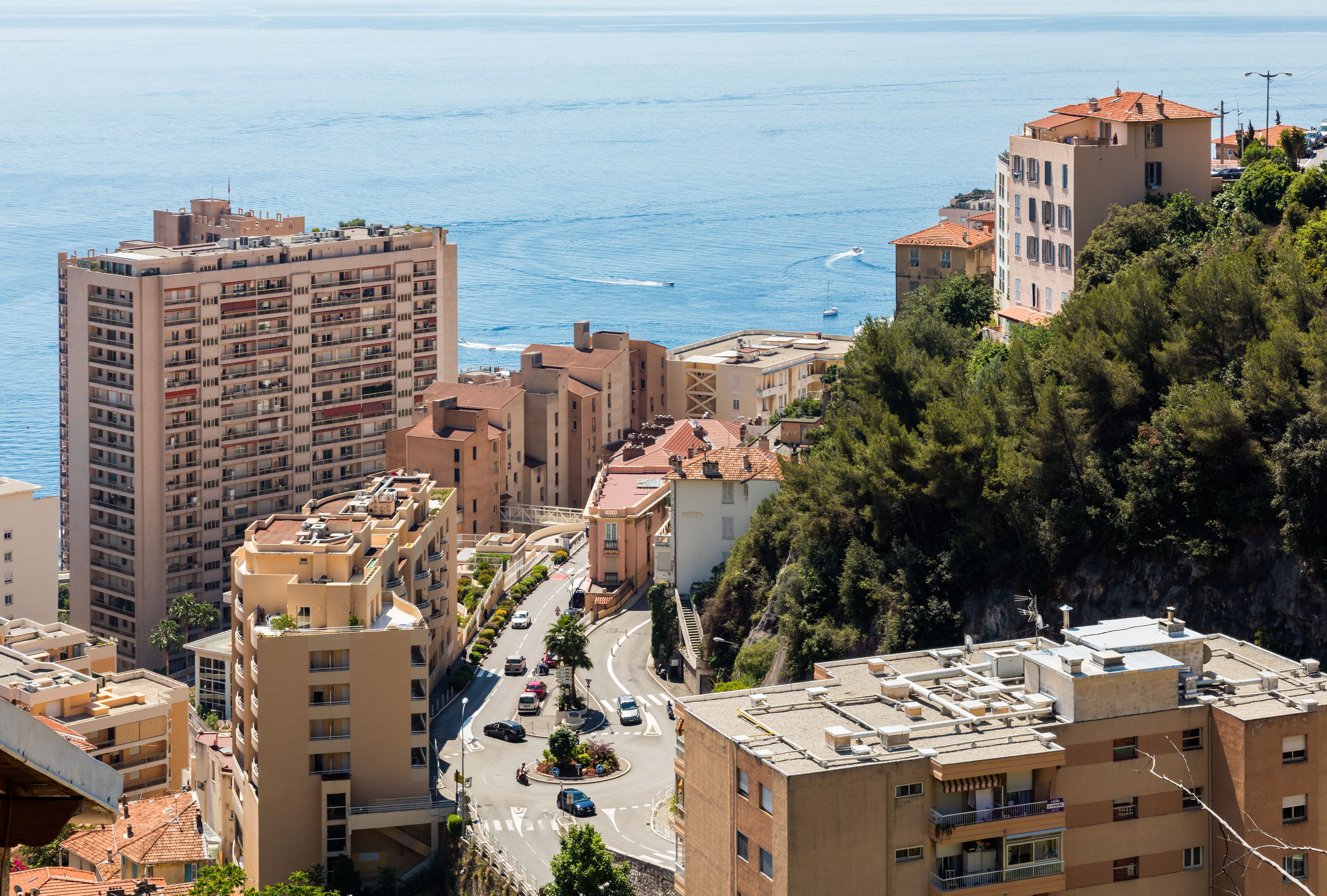
The world’s main anti-financial-crime watchdog has removed Monaco, Bulgaria, Côte d'Ivoire (Ivory Coast) and the Democratic Republic of the Congo from its “grey list” of jurisdictions under increased monitoring. The Financial Action Task Force (FATF) took the decision on October 30 at the close of its plenary in Paris. The list now holds 18 jurisdictions, down from 22. The FATF cited positive progress on weaknesses found in the four countries’ mutual evaluations, and warned Vietnam, which stays on the list, over its pace of reform.
The FATF said it “welcomes Monaco’s significant progress in improving its AML/CFT regime”(anti-money laundering and countering the financing of terrorism), and urged the principality to keep working with MONEYVAL, the Council of Europe’s anti-money-laundering evaluation body, to sustain the gains. AFP reported that all four countries had completed their promised action plans and would no longer face the watchdog’s enhanced monitoring.
What the grey list is, and why it matters
The FATF is an inter-governmental body set up in 1989 to set global rules against money laundering, terrorist financing and the funding of weapons proliferation. Its secretariat is based in Paris, hosted by the Organisation for Economic Co-operation and Development (OECD). Its core tool is a set of 40 Recommendations that governments are expected to write into national law. It cannot prosecute or sanction anyone. Its power lies in peer pressure, and in banks, regulators and lenders treating its verdicts as a guide to risk. Regional bodies such as MONEYVAL in Europe and GIABA in West Africa carry out much of the assessment work.
Countries are judged through mutual evaluations, which test whether their laws match the recommendations and whether their authorities investigate, prosecute, supervise and seize assets in practice. A country with serious shortcomings joins the grey list after committing to a time-bound action plan. Exit requires completing the plan and passing an on-site visit, according to a compliance-industry summary of the latest round. A tougher “call for action” list, popularly called the blacklist, is reserved for the gravest cases. It currently names North Korea, Iran and Myanmar.
Grey-listing is not a sanctions regime or an accusation of criminality. It does, however, raise costs, because banks scrutinise transactions more closely, which can dampen investment and capital flows. Regulators in major markets remind their institutions of due-diligence duties towards listed countries.
Four exits, four different routes
Monaco was added in June 2024 and leaves after about two years. The FATF had urged it to give more resources to investigators and prosecutors and to seize more suspected criminal assets. The principality introduced an offence of presumed money laundering, raised funding for its regulator and created a dedicated unit in the public prosecutor's office. Its government chief, Christophe Mirmand, said the work was not a "final destination".
Bulgaria had been listed since October 2023 and was the only European Union member on the list. Sofia had argued that the listing deterred foreign investment, and it adopted the euro in January while still on the list. Côte d'Ivoire was added in October 2024, the most recent of the four. The DR Congo, a major producer of cobalt and copper, had been listed since October 2022, and its finance minister, Doudou Fwamba, welcomed the decision.
The FATF told Monaco and Côte d'Ivoire to keep working with MONEYVAL and GIABA to sustain their gains. Analysts say lasting compliance depends on enforcement rather than one-off legislation. The plenary also adopted a report making fraud and scam compounds a global priority, and agreed to speed up implementation of its standards on virtual assets.
Who are the world’s worst offenders?
No official ranking of the countries most “culpable” for dirty money exists, and the answer depends on what is measured. Past grey-listings have included Panama, the Cayman Islands, Jordan and Albania, which were removed in 2023, and Türkiye and Jamaica, which left in 2024.
Independent indices point in different directions. The Basel Institute on Governance’s 2025 index rated Myanmar, Haiti and the DR Congo as highest risk, with Chad and Equatorial Guinea close behind. That index measures vulnerability and capacity to respond, not the volume of money laundered, so the DR Congo can leave the grey list and still score badly. The Tax Justice Network’s Financial Secrecy Index, which ranks who supplies secrecy to the world, placed the United States first in 2025, followed by Switzerland, Singapore and Hong Kong. Its authors argue that the largest financial centres, rather than the poorest states, do most to enable illicit flows. The Tax Justice Network is a UK-based campaign group, and its methodology and conclusions are contested.