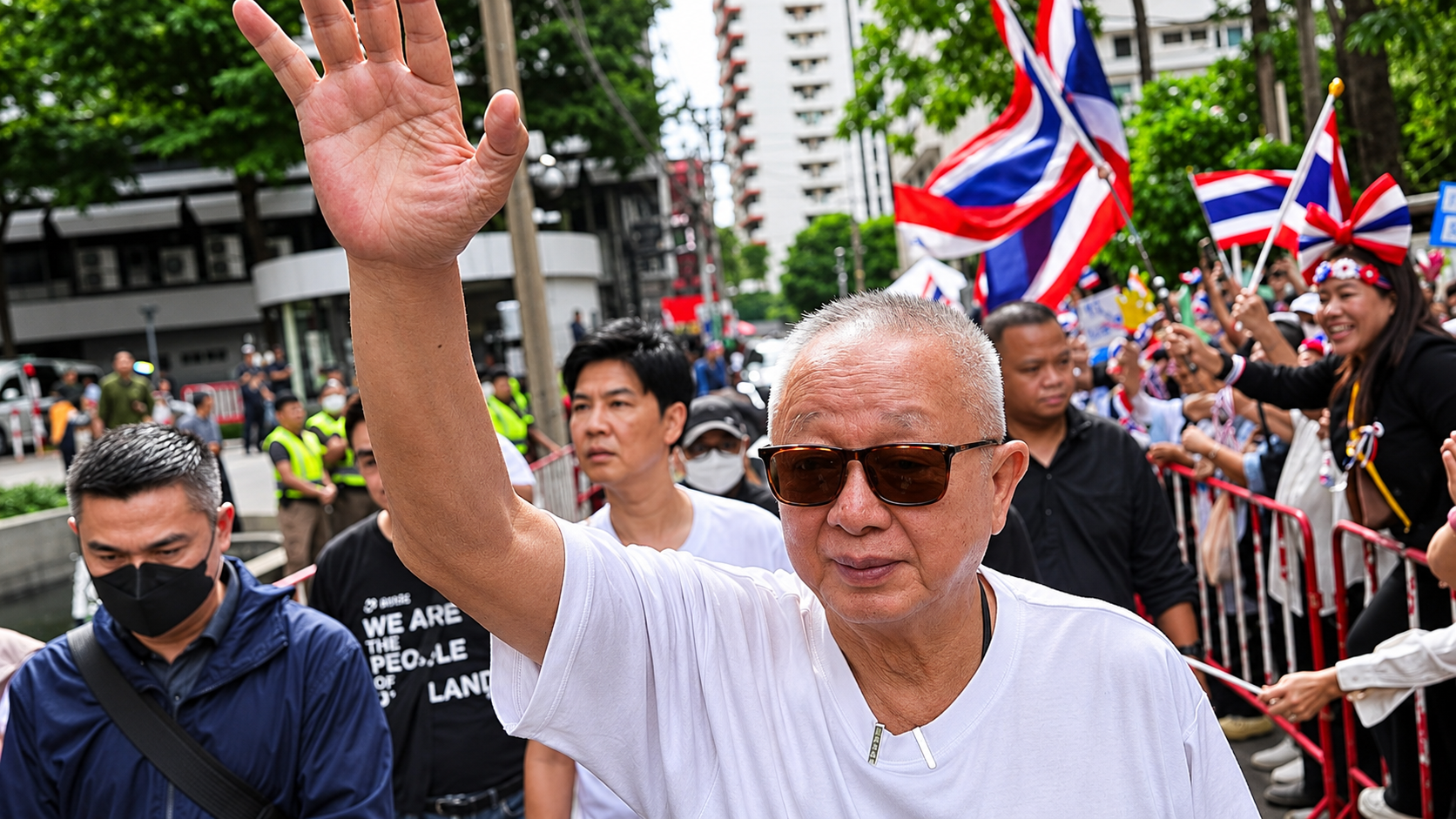
A veteran Thai nationalist and media tycoon has called for Israeli tourists to be limited to a two-week stay. It is the latest escalation in a months-long backlash that has put Israeli visitors and the Jewish Chabad movement under unusual scrutiny. Sondhi Limthongkul made the demand at a rally on the resort island of Phuket on Saturday (October 31), carrying a banner reading "No Israel - Save Phuket" Thailand currently lets Israelis in visa-free for 30 days, and the government has not adopted his proposal.
Two protests, one day
Phuket saw two demonstrations on Saturday.. In the morning, activists gathered outside the Chabad House in Patong, a Jewish religious and community centre, reading out a statement against Chabad’s activities and the presence of Israelis in the area. Police secured the site. The protest took place on Saturday, the Jewish day of rest.
Later, a rally under the slogan “Taking Back Thailand” drew about 400 people from around 20 groups at Saphan Hin, Phuket Town, according to local reports. Sondhi, the keynote speaker, accused Israelis of harming local businesses, running ventures that mainly serve other Israelis and driving away European tourists. He also accused the government of being subservient to Israelis and hinted at hidden deals, without offering evidence. He also proposed that Phuket, Phang Nga and Krabi become a tax-free special economic zone.
Another leader, Saichol Noochot of the Phuket Land Protection group, demanded that all Chabad houses be closed and that naturalised Israelis lose their Thai citizenship. No evidence was presented for the “Israeli network” claims, and that the demands do not reflect government decisions. Sondhi claimed 40,000 Jews live in the northern town of Pai, a figure inconsistent with known population data.
Who is Sondhi?
Sondhi founded the Manager Daily media group and later led the ultra-royalist “Yellow Shirt” movement. In 2008, its supporters occupied Government House and closed Bangkok’s two airports for several days. He is also an opponent of the current government. He has pledged ฿100,000 (about US$2,966) towards a separate convoy protest against Prime Minister Anutin Charnvirakul over fuel costs and weak tourism, so the Israel campaign overlaps with wider discontent.
How the pressure built
In July, the Interior Ministry widened its checks to 361 Phuket businesses after a man at the Patong Chabad House reportedly challenged inspectors over who controlled the premises. The deputy interior minister’s reply, as reported by the Thaiger, was “This is Thailand”. The ministry added the checks target nominee ownership and unlicensed businesses, not religion.
In September, Sondhi led hundreds to the Israeli embassy in Bangkok. There were reported signs reading “Jews Out” at that march. Thailand’s foreign minister summoned Israel’s ambassador, saying tourists of any nationality cannot “do whatever they want”. Thai authorities have also revoked the visas of several Israelis on Koh Phangan over alleged aggression and unpaid fees.
On October 8, the Department of Special Investigation, which falls under the Justice Ministry, searched three Bangkok sites linked to Gan Chabad with the anti-money-laundering office. Investigators reportedly found records for more than 60 companies registered at one address, and were examining land, donations and whether Thai shareholders acted as nominees. An initial Phuket inspection in late September found no irregularities in the financial transactions it examined, though it noted deficiencies in how a building was used.
On October 28, Anutin revoked the citizenship of Rabbi Yosef Chaim Kantor, who has led Chabad in Thailand since the 1990s. The Interior Ministry says that he used his US passport 16 times for travel to and from Australia after being naturalised in 2013, most recently in January. The order makes no criminal findings in the separate business inquiries. Chabad Thailand said the decision “saddens us”, and Chabad has said it will challenge the order legally.
The visa rules and the numbers
Thailand cut visa-free stays from 60 to 30 days from September 15, for citizens of 60 countries, not just Israel. A one-off 30-day extension is possible. Israeli arrivals topped 277,000 in the first eight months of 2026, up seven per cent on a year earlier. About 450,000 Israelis are expected this year, and around 60,000 Thais work in Israel, some reports indicated.
Accusations of antisemitism
Critics say that parts of the campaign have turned prejudiced. Ynet reported an AI-generated antisemitic poster at Saturday’s rally, and the Jerusalem Post described a sign at the rally using a stereotypical image of a Jew surrounded by money. Israel’s ambassador, Alona Fisher-Kamm, told the Bangkok Post it was very hard to use the word antisemitic in Thailand. Thai officials have said enforcement is aimed at conduct, not nationality or faith.
Unlike protests elsewhere since 2023, Thailand’s demonstrations have focused on local grievances rather than the Gaza war. The situation may lead to a self-feeding cycle, in which protests press the authorities to act and the enforcement then fuels further hostility.