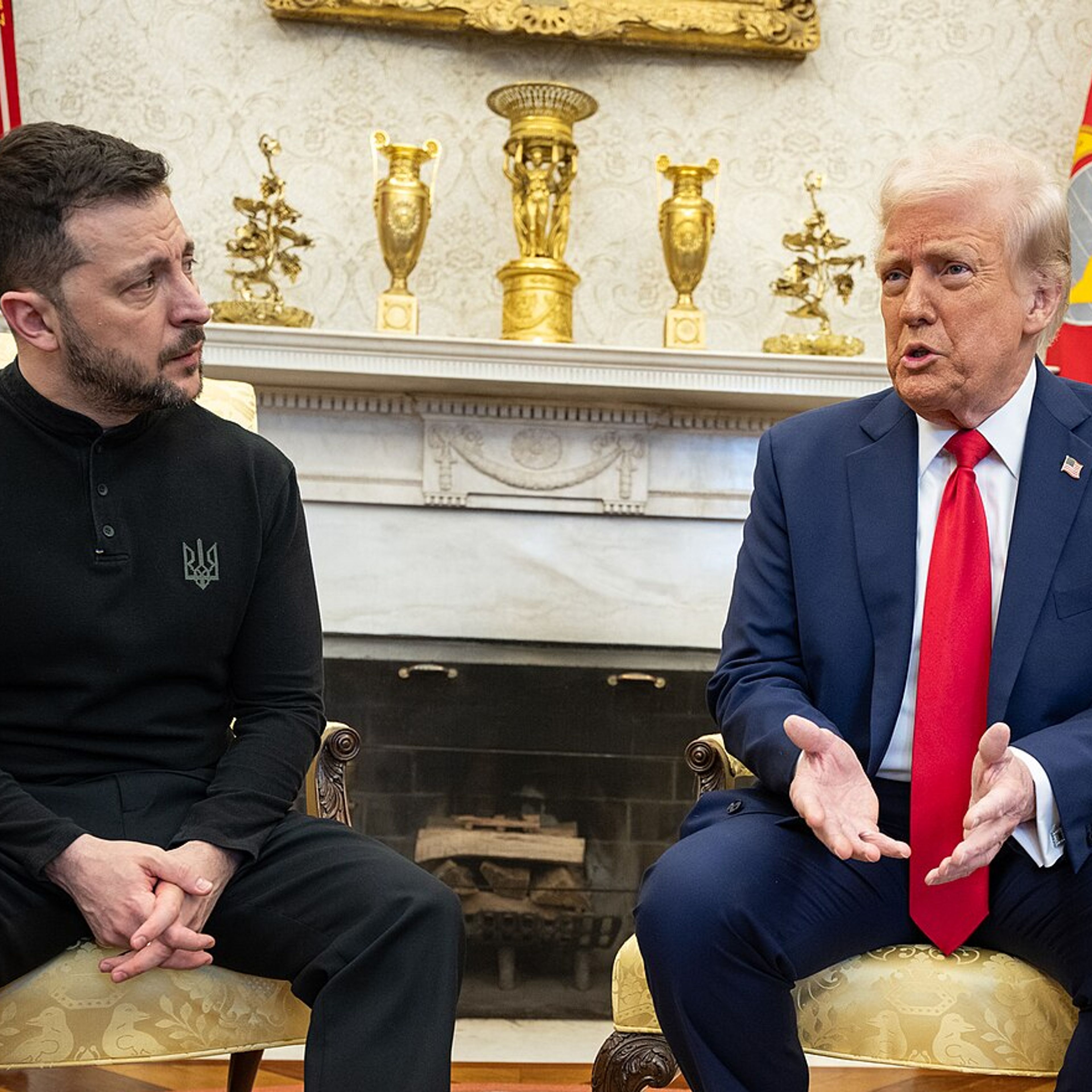
On October 10, US President Donald Trump said that he thought “it’s time for Ukraine to get a new president”, as he grappled with Volodymyr Zelensky’s criticism of the US diesel deal with Russia. He made the remark outside the White House, before leaving for a rally in Tennessee, a day after announcing the deal. Ukraine’s ambassador to Australia and New Zealand, Vasyl Myroshnychenko, dismissed the statement as unserious, given similar remarks Trump has made about other world leaders, including his description of Zelensky as “a dictator without elections” in February 2025.
Announcing the deal after a phone call with Russian President Vladimir Putin on October 9, Trump said that Russia would supply over 300,000 tonnes of diesel immediately, 500,000 tonnes in November and three million tonnes in all. The US Treasury temporarily waived sanctions on Russian diesel until April 2027. Zelensky blasted the deal as a “weak decision taken by a strong leader” and ordered immediate strikes on Russian oil refineries. He called it “a birthday gift to Putin”, who turned 74 on October 7, and said it was “unfair and dishonest”. Trump replied that Zelensky “had better damn well stop” hitting the refineries, and blamed him for higher fuel prices ahead of the November 3 midterms. Trump also had to sweat to convince Zelensky to accept the “energy truce”.
This has been Zelensky’s method: calling out and publicly shaming Western leaders who did not fully support him. It has worked so far, with Western leaders often qualifying their statements or actions. This time, however, Trump has moved in an unprecedented way to make himself clear to his Ukrainian counterpart. Zelensky’s first White House scandal, on February 28, 2025, went almost unpunished beyond a week-long pause in US military aid and intelligence sharing. His second face-off appears to have irked the US president far more. A raft of White House measures, and differences within the European Union over the way forward, appear to indicate a serious turn in the Russia-Ukraine war.
Starlink curbs and softer sanctions
The first announcement came on October 14, and not from the American side. Ukraine said its Starlink data access had been considerably slowed without notice, and that it learned of the restriction only after complaining to customer support. Zelensky again attributed the decision to Trump and demanded immediate restoration of data services, warning that “people will die” otherwise. Ukrainian officials later said service was partly restored. SpaceX chief Elon Musk said the military-grade Starshield network is owned by the US government and that restrictions on it are ultimately the president’s call. The slowdown of Starlink and Starshield appeared to be the first Trump administration decision that went against Ukraine. Two more measures have since surfaced, though neither is being implemented yet.
On October 15, the Financial Times reported that the Trump administration had proposed unfreezing some Russian assets, and that European partners responded reluctantly. The EU and G7 hold an estimated $300 billion of such assets. According to the report, the idea was presented last week during talks in Miami involving representatives of the US, Ukraine, France, Germany, the United Kingdom, the EU and NATO. It was put forward by Trump’s special envoys, Steve Witkoff and Jared Kushner, who suggested several ways to unfreeze the assets, including transferring them to a special fund overseen by Washington.
The report quoted a US official as saying the mechanisms for releasing the funds and their allocation remain part of discussions on a comprehensive peace agreement. European participants opposed both the transfer of control over the assets to the US and the return of any portion of them to Russia.
Reuters reported on October 14 that the administration is also planning to ease sanctions on the “shadow fleet”, the vessels sanctioned for transporting Russian or Iranian oil. Addressing the World Petroleum Congress in Riyadh by video, US Energy Secretary Chris Wright confirmed that the administration is considering easing restrictions on the fleet to move crude that is non-Russian and non-Iranian. Companies would need Treasury approval to use the vessels.
Wright stressed that a surge in freight rates had significantly reduced demand for US crude. Trade analysts say the move is expected to benefit neither Russia, which could not use the vessels to carry its own oil, nor the US, as the ageing fleet is unlikely to add much capacity. EU and UK sanctions would also remain in force. Even so, easing sanctions on Russian diesel and the shadow fleet indicates a more conciliatory approach towards Russia.
Cracks in Europe’s front
So far, the European Union has supported Zelensky during his troubled time with the US administration. This time too, the leaders of Germany, Italy and France have backed him, rejecting Trump’s energy truce. Berlin said it would stand by its Russia sanctions, and EU officials warned the diesel waiver gives Moscow more revenue to wage war. Despite facing higher fuel prices, European leaders have so far refused to seek a negotiated settlement.
However, Slovakia has said it will press ahead with improving its ties with Russia, and Bulgarian Prime Minister Rumen Radev broke ranks with the EU at the October 15 summit in Brussels to support Trump. Slovak Prime Minister Robert Fico has refused state military aid to Ukraine since returning to power in 2023, and has announced plans to improve Slovakia’s economic and military contacts with Russia. Radev’s government also halted arms supplies to Ukraine in June.
Support for Russia from a few Eastern European countries such as Slovakia, Hungary and Bulgaria is not uncommon. What counts this time is the Trump administration’s pragmatic approach towards Russia. The November midterms are seen as the reason for the urgent price de-escalation measures, but that may not be the full story. With this spate of decisions, Trump could produce at least two important effects on his administration’s handling of the war.
What it means for the war
Firstly, the US government’s soft approach towards Russia could reduce the help Ukraine gets on the world stage. Secretary of State Marco Rubio confirmed on 23 September that the US has invited Putin to the G20 summit at Trump National Doral in Miami on 14-15 December, and several direct and indirect discussions have taken place since. Secondly, the Lindsey Graham Act, signed on September 18, which requires tariffs of up to 100 per cent on the top five importers of Russian crude and gas, could lose its power. Its initial determinations are due by 18 October. Countries like India and China, the two biggest buyers of Russian crude, could cite the US energy truce and bargain their way out of the punitive tariffs. This also gives Russia some wiggle room in international trade.
The Kyiv Post reported that the Starshield connection was restored by the morning of October 15, and Ukraine has already resumed attacks on Russian oil refineries. Missile attacks have also resumed. Though the Trump administration has not abandoned Ukraine, it has indicated a change of direction in its future dealings with the conflict.