China has renewed its insistence that Taiwan will eventually be reunified with the mainland, declaring that changes in the island’s political landscape cannot alter what it calls the historical course of cross-strait relations.
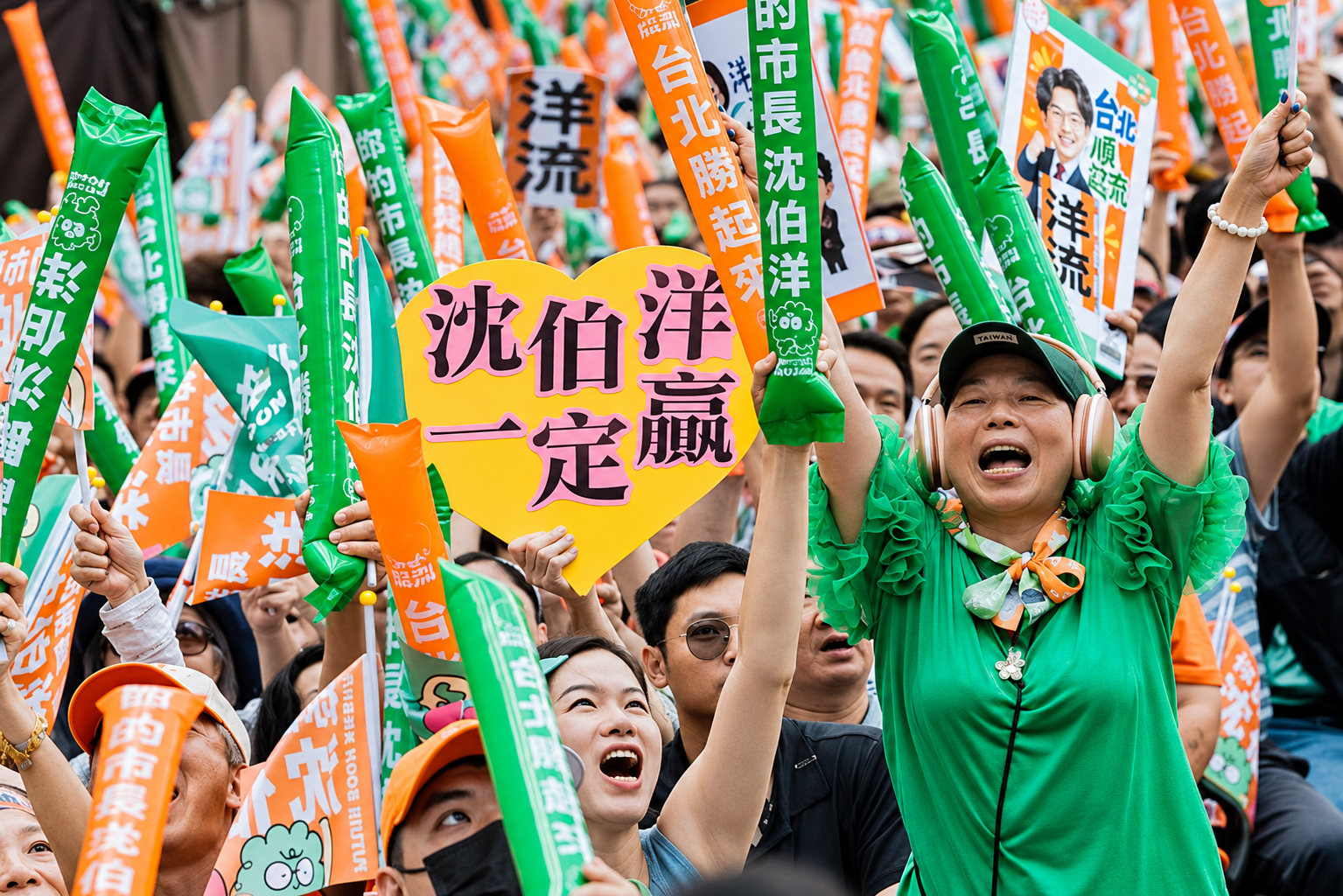
The statement came on Sunday (November 29), a day after Taiwan’s governing Democratic Progressive Party (DPP) doubled the number of city and county governments it controls in local elections, strengthening its political position despite losing the mayoral contest in the capital, Taipei.
“No matter how Taiwan’s political landscape changes, it cannot alter the direction and trend of cross-Strait relations moving forward, and it cannot stop the historical trend that the motherland must and will inevitably be reunified,” China’s Taiwan Affairs Office said in a statement.
The remarks underline Beijing’s determination to keep reunification at the centre of its Taiwan policy, regardless of electoral outcomes on the island. China also reiterated its opposition to what it describes as Taiwan independence separatist forces and external interference, pledging to advance national reunification.
Taiwan’s Mainland Affairs Council immediately pushed back, calling on Beijing to respect the island’s democratic system and the choices of its voters. It urged China to engage with Taiwan’s democratically elected government in dialogue without preconditions and on the basis of equality and dignity.
The exchange highlights a fundamental divide: Beijing considers Taiwan part of China, while the island’s government rejects its sovereignty claims and maintains that its future must be decided by its people.
Taiwan’s local elections: A boost for the DPP, but no outright victory
The November 28 elections covered mayoral and county leadership contests across Taiwan’s 22 cities and counties. They were an important test of the political standing of the island’s two main parties ahead of the next presidential election, scheduled for early 2028.
The DPP, led nationally by President Lai Ching-te, won 10 of the 22 contests, doubling its tally from five in the 2022 elections. The main opposition Kuomintang (KMT), which favours closer relations with Beijing, won 11, down from 14. An independent candidate secured the remaining position.
The DPP regained control of Taichung, Taiwan’s second-largest city, after eight years of KMT rule. But the opposition retained Taipei, where incumbent mayor Chiang Wan-an defeated the DPP’s candidate, Puma Shen.
The two parties now each control three of Taiwan’s six special municipalities. The results therefore represent a significant recovery for the governing party, but not an overall electoral victory. The campaigns largely focused on domestic concerns, including water safety, school meals and local governance, rather than relations with mainland China. The outcome should not be read as a direct referendum on independence or reunification.
Nevertheless, the results will shape political calculations ahead of the 2028 presidential election. Lai is expected to seek a second term, while the KMT has yet to settle on its candidate.
Why Beijing responded with a reunification message
China’s reaction reflects its longstanding opposition to the DPP, which it regards as an independence-leaning political force. Beijing has refused to resume official cross-strait dialogue since the DPP returned to power in 2016, largely because the party refuses to endorse the so-called 1992 Consensus.
The formula emerged from discussions between representatives of the two sides in 1992. The KMT interprets it as an understanding that there is one China, with each side free to interpret what that means. Beijing also invokes the principle of one China, but rejects any interpretation that recognises Taiwan as a separate sovereign state. The DPP rejects the consensus, arguing that it would undermine Taiwan’s sovereignty.
For Beijing, the DPP’s stronger local showing reinforces its concerns about the island’s political direction. But the elections were fought largely on local issues, making it difficult to draw conclusions about voters’ views on cross-strait relations. The political tensions were accompanied by military activity. Taiwan’s Defence Ministry reported Chinese aircraft and naval vessels operating around the island in the run-up to Saturday’s vote. Beijing has repeatedly conducted military exercises and patrols in the Taiwan Strait, adding to concerns about regional security.
China and Taiwan: A decades-old dispute
The dispute dates back to the Chinese civil war. In 1949, after Communist forces under Mao Zedong took control of mainland China, the defeated Nationalist government led by Chiang Kai-shek retreated to Taiwan and continued to govern under the name Republic of China. The Communist leadership established the People’s Republic of China on the mainland.
The two sides have since followed separate political paths. Taiwan has evolved into a democratic, self-governing society, while Beijing continues to claim the island as part of China and has never ruled out using force to bring it under its control. The People’s Republic of China has never governed Taiwan.
The dispute remains one of the most consequential geopolitical flashpoints in East Asia, with implications for regional security, US-China relations and global semiconductor supply chains.
The road to 2028
The local election results will now feed into political calculations ahead of Taiwan’s next presidential election in early 2028. For Lai and the DPP, doubling their local government tally offers an opportunity to rebuild political momentum. For the KMT, retaining 11 local governments, including Taipei, provides a substantial platform for the next national contest.
Beijing, meanwhile, has made clear that it will not alter its reunification position in response to electoral changes on the island.
The central question remains unresolved: China insists that reunification is inevitable, while Taiwan’s elected leadership maintains that its people alone have the right to determine the island’s future.