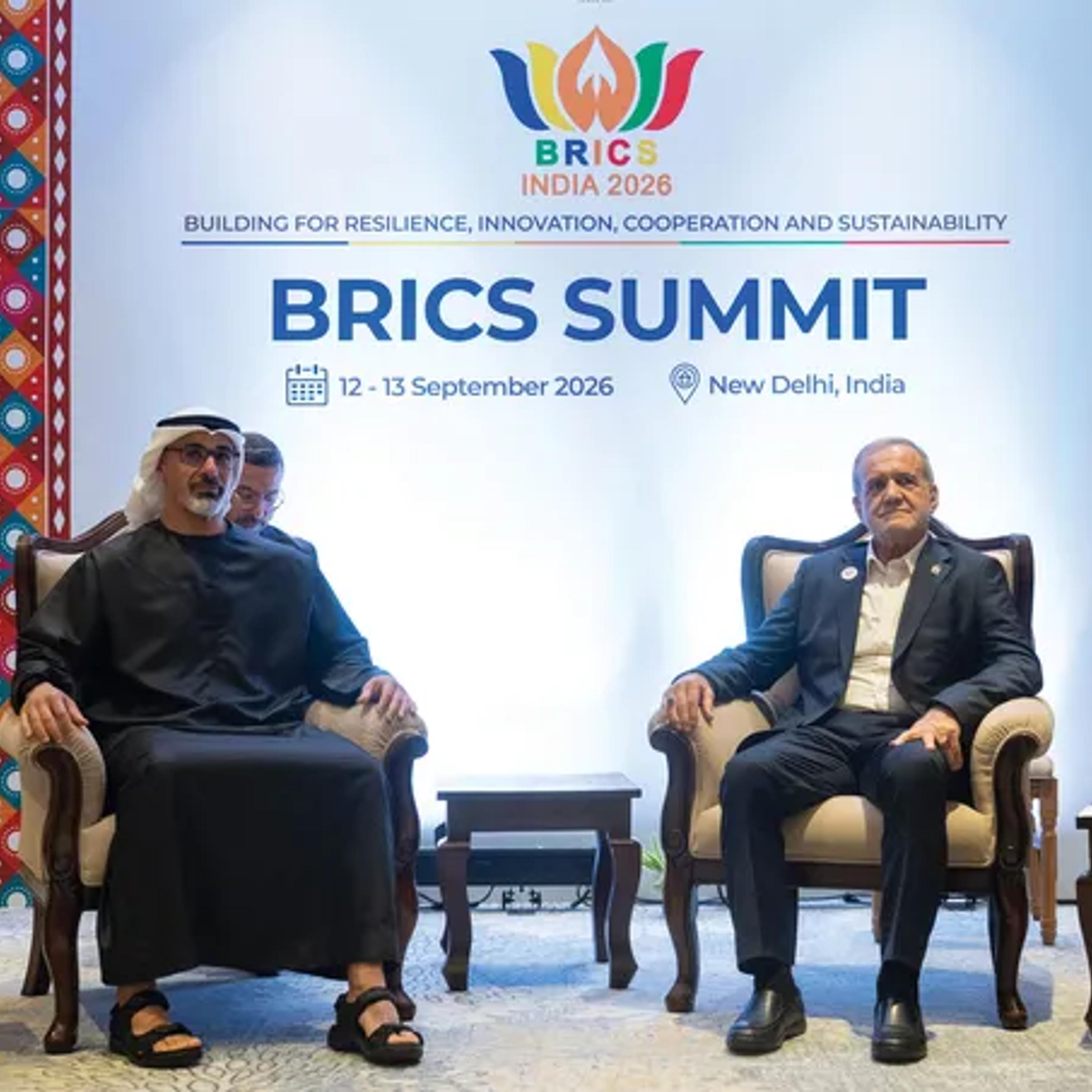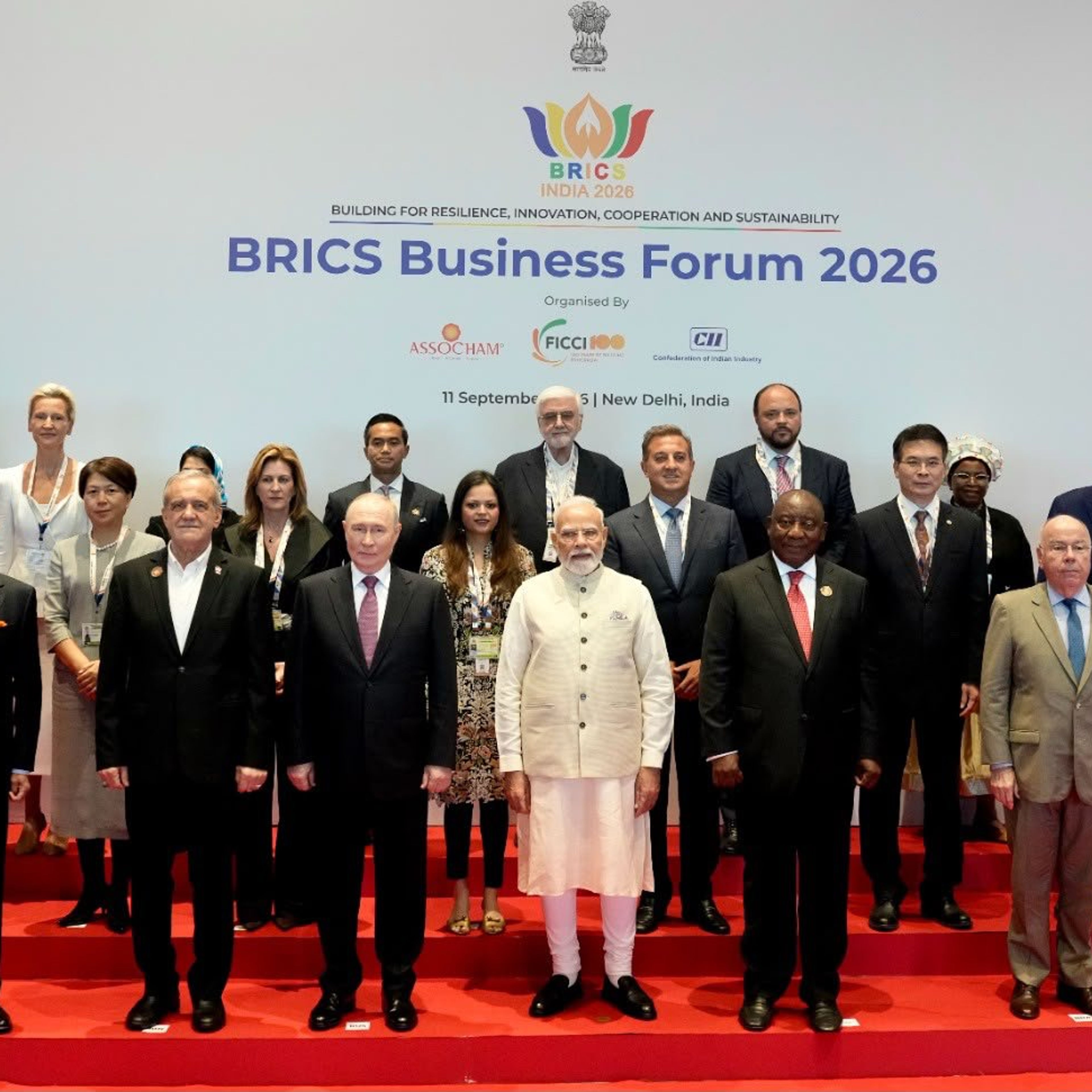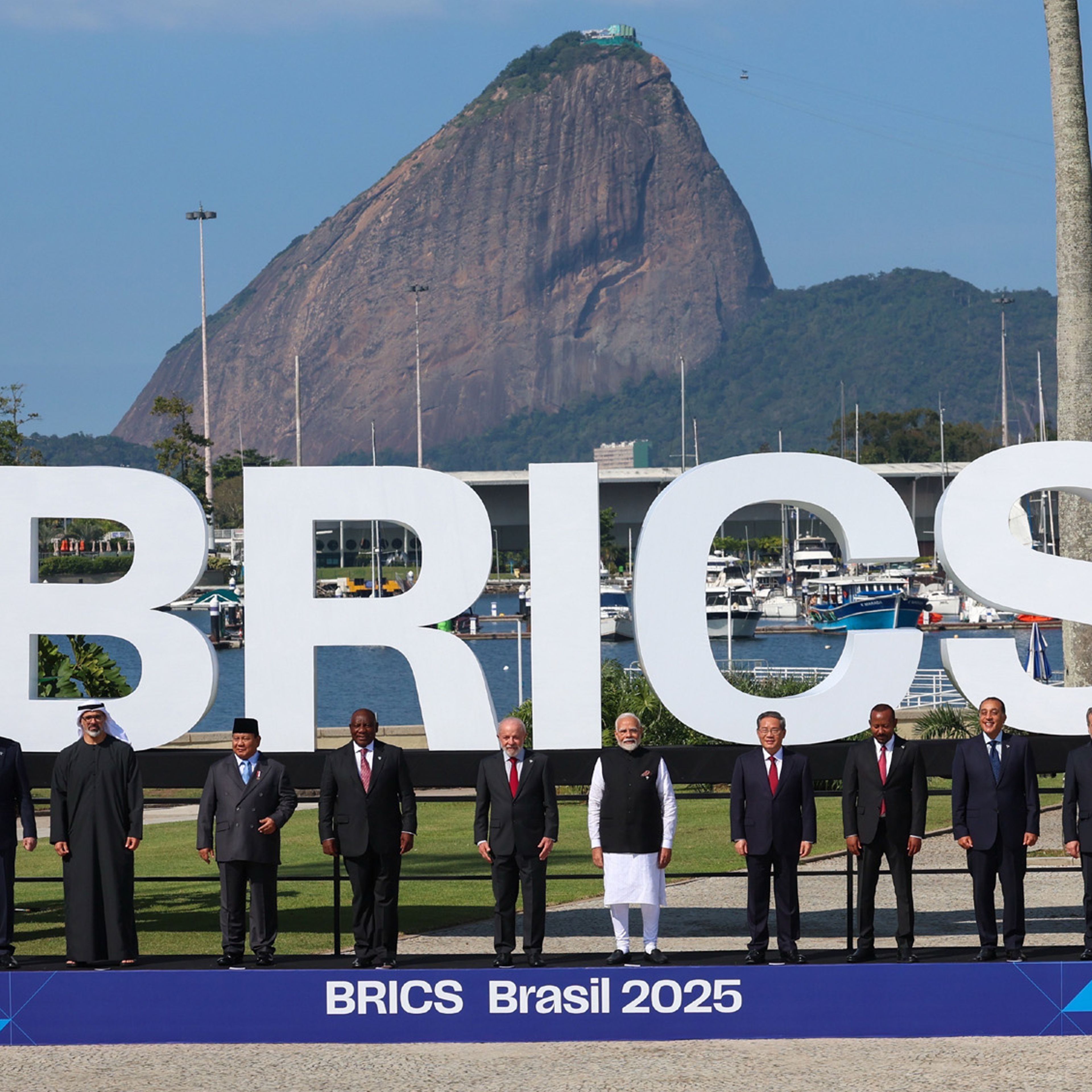
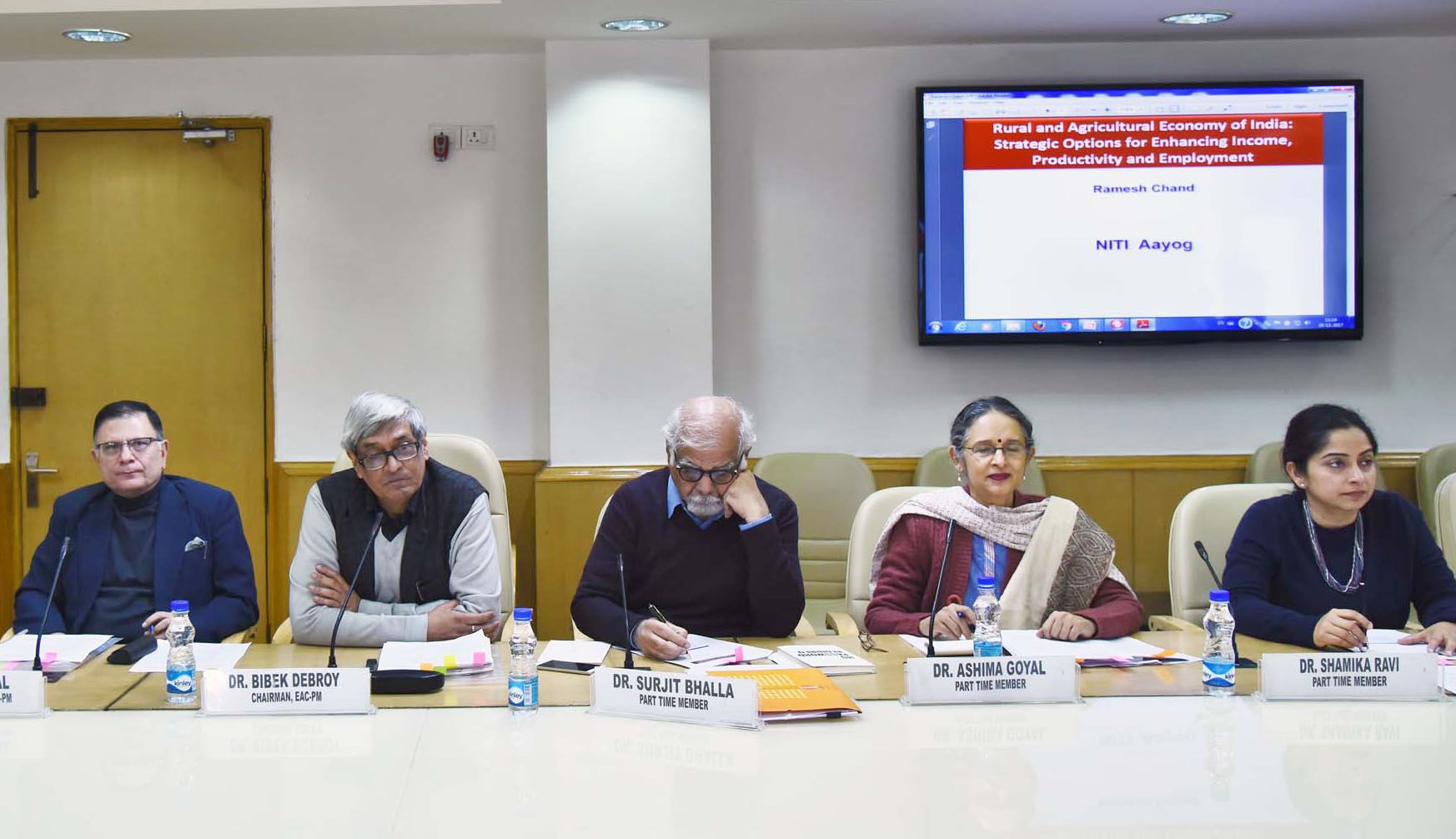
The meetings and speeches at the ongoing 18th BRICS summit in New Delhi have reflected its members’ aspiration to emerge as a rising counterweight to the West. However, a widely shared thread from Surjit Bhalla – economist and former Executive Director at the IMF for India, Bangladesh, Bhutan and Sri Lanka – argues that almost the entire rise is really just one country’s story. His X thread, published on the eve of the bloc’s 18th summit in New Delhi, has come at an especially awkward moment for the host nation.
“BRICS went from 21.9% of world income in 2011 to 28.9% in 2025,” Bhalla wrote. “Now take out China. The other ten members went from 11.9% to 11.5%. They did not rise. They fell.” His table, sourced to the World Bank and the IMF’s World Economic Outlook, breaks down each group's share of global income (measured as GNI on the World Bank’s Atlas method) across five snapshot years.
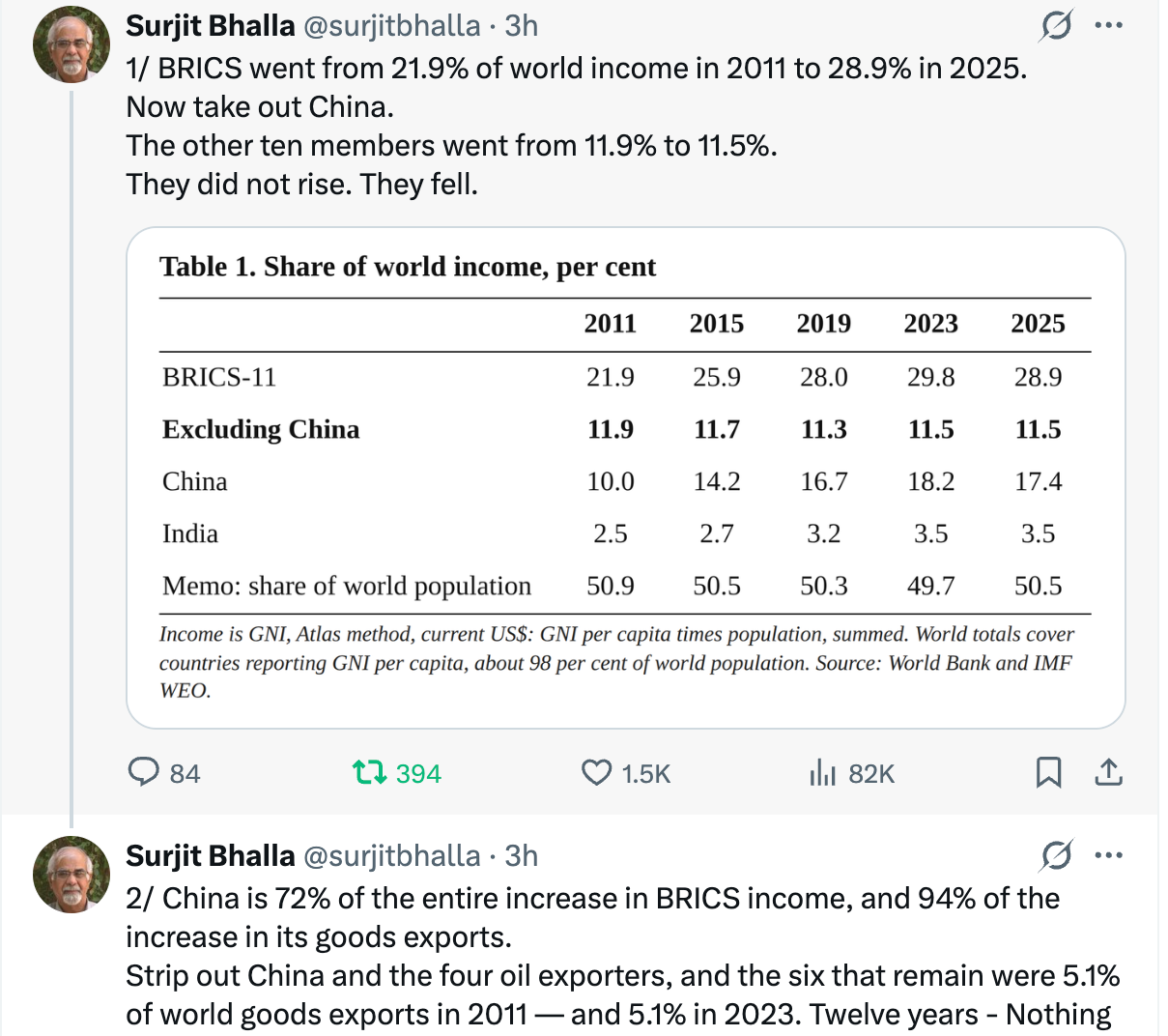
On these figures, China’s share of world income rose from a tenth to nearly a fifth over 14 years, while the other ten members combined – India, Russia, Brazil, South Africa, Egypt, Ethiopia, Indonesia, Iran, Saudi Arabia and the UAE – actually ended up marginally smaller as a group than where they started, despite representing roughly half the world’s population throughout. India’s own share did grow, from 2.5 per cent to 3.5 per cent, but that gain was modest next to China’s.
In a follow-up post, Bhalla went further on trade: China, he said, accounts for 72 per cent of the entire increase in BRICS income and 94 per cent of the bloc’s added goods exports. Strip out China and the four oil-exporting members – Russia, Saudi Arabia, the UAE and Iran, whose export growth is driven largely by energy prices rather than manufacturing – and the remaining six members’ combined share of world goods exports was 5.1% in 2011 and 5.1% in 2023. “Twelve years –,” he wrote, “Nothing.”
The bloc India is hosting
BRICS has expanded from the original five – Brazil, Russia, India, China and South Africa – into an eleven-member bloc (Saudi Arabia’s status remains contested, as Riyadh has never formally confirmed accession despite appearing on BRICS’ own membership list) that its backers say now accounts for around 41 per cent of global GDP on a purchasing-power-parity basis, ahead of the G7’s 28 per cent. The bloc has built its own lender, the New Development Bank, founded in 2014 and based in Shanghai as an alternative to the World Bank, and its members have spent years discussing ways to reduce dependence on the dollar – including a possible common currency and, more concretely, a shared cross-border payments system. At a foreign ministers’ meeting in May, India offered its UPI digital-payments platform as a reference model for such a system, though members remain divided enough that the bloc has struggled to agree even on joint communiqués on some issues.
“Forget BRICS, look West”
Bhalla’s thread follows a separate opinion piece that he wrote for The Indian Express around the summit, arguing India should reorient away from the bloc entirely. Drawing on his years representing India’s constituency on the IMF’s Executive Board, he said, “It’s a good time to ask: in 17 years of summits, what has membership bought India,” he asked. According to his figures, the US takes a fifth of India’s goods exports and over half its software exports, sends 28 per cent of remittances, holds US$390 billion in Indian securities and has put around $100 billion into direct investment. China, by contrast, has invested just $2.5 billion cumulatively, ran up a record $112 billion trade deficit with India in 2025-26, and, Bhalla noted, has restricted rare-earth magnet supplies and pulled Foxconn engineers from Indian iPhone plants. Russia, he added, sold India $47 billion of oil while buying just $4.9 billion of everything in return.
“Forget BRICS,” Bhalla concluded, “Our future is as a global partner of the West – Europe and the US.” He also pointed to what he called unresolved questions hanging over two of the bloc’s biggest members: the war in Ukraine, and Beijing’s silence on the origins of Covid-19 along with its allegedly domineering trade practices.