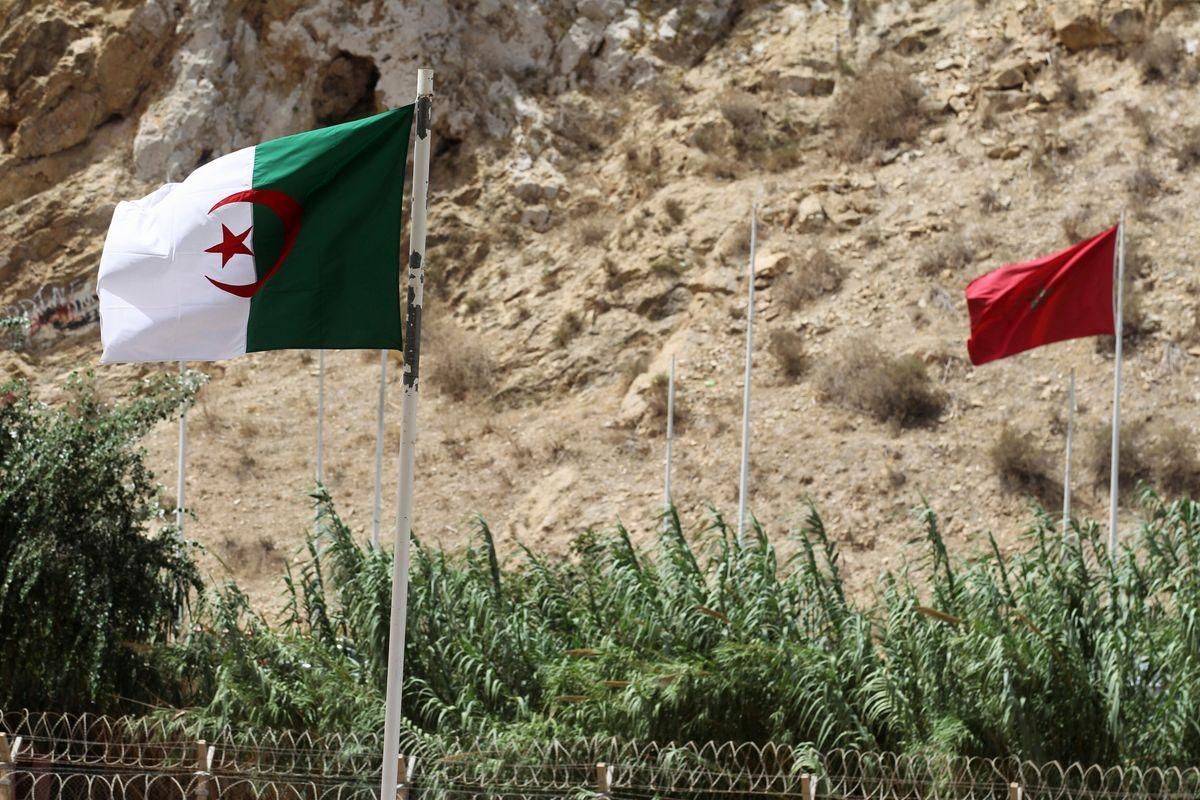
Algeria has shut its airspace for every UAE-registered civil and military aircraft since Friday (September 11), the first consequential outcome of Algiers’ decision earlier this week to sever diplomatic relations with Abu Dhabi and expel its ambassador within 48 hours. Algeria’s foreign ministry blamed a pattern of “provocative and hostile actions” against UAE without naming a single triggering incident but analysts believe that the rupture traces back to a single rival capital: Rabat. As Farhad Ibragimov argues in his RT Africa analysis, Algiers has watched Abu Dhabi deepen its embrace of Morocco – in Western Sahara, in the Sahel and even, Algeria alleges, inside its own restive Kabylia region – until the Gulf state came to look less like a partner than an extension of Algeria’s oldest adversary.
The break was announced on September 10, when Algeria’s foreign ministry summoned the UAE’s ambassador and gave him 48 hours to leave, having concluded, in its own words, that it had “exhausted all means of preserving bilateral relations”. Algeria’s defence ministry moved swiftly to close its skies to all UAE-registered civil and military aircraft from September 12, though it carved out a temporary exemption for commercial flights to and from Algiers’ Houari Boumediene airport, which will continue to run until the 2013 air services agreement expires at the end of 2026.
Abu Dhabi’s response was notably restrained. Presidential adviser Anwar Gargash wrote on social media that diplomacy should rest on clarity of interests rather than “riddles and signals that require decoding” – a remark in which he stopped short of linking explicitly to Algeria. The UAE’s foreign ministry, for its part, expressed hope that the rupture would prove temporary and stressed its regard for ordinary Algerians. Neither side, notably, has pointed to any single incident as the immediate cause – though Algerian outlets have since pointed to a recent Sky News Arabia interview in which a historian’s remarks on Algeria’s Amazigh identity caused offence, alongside long-standing allegations that Abu Dhabi has cultivated links to the banned Movement for the Self-Determination of Kabylia (MAK).
Morocco at the centre of it
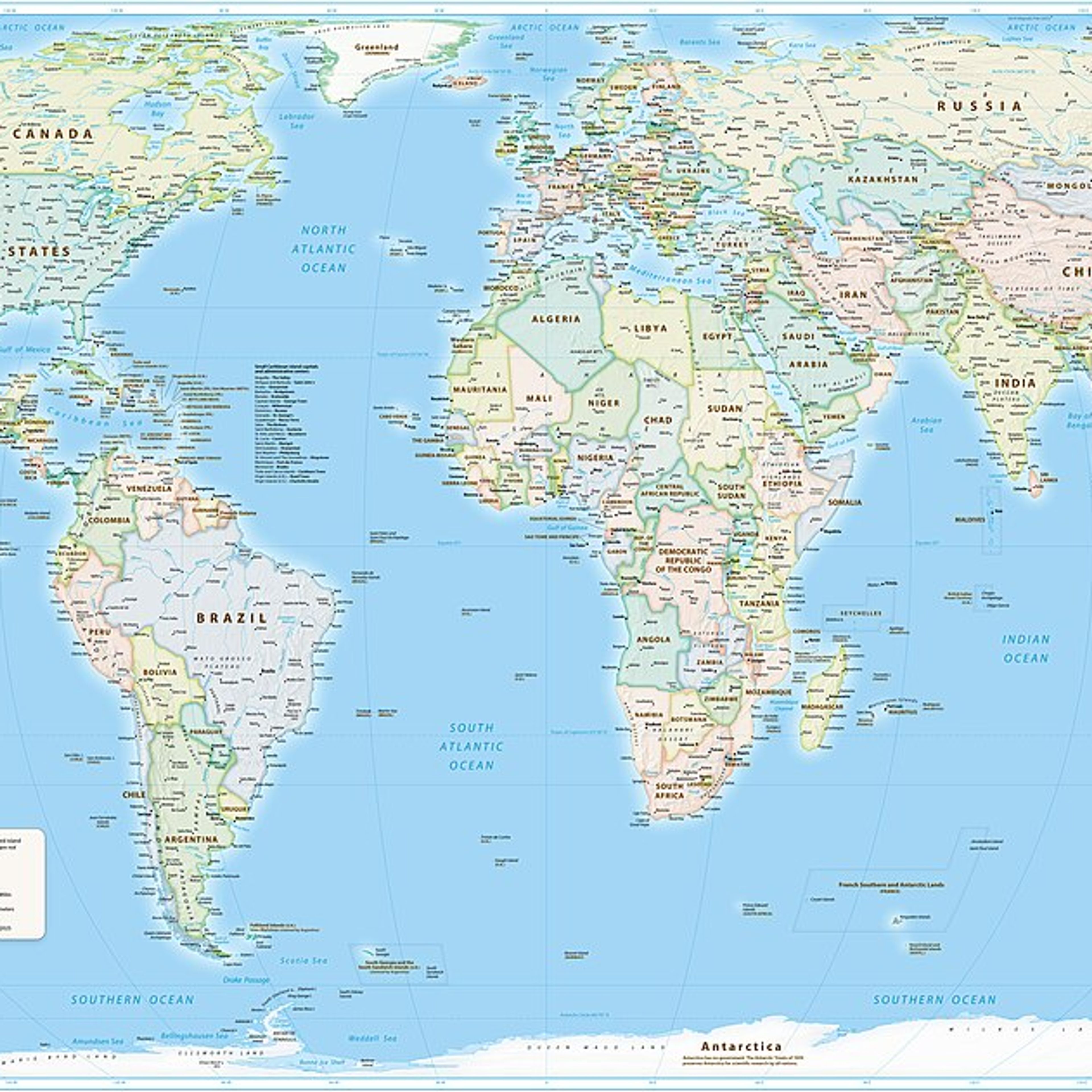
To understand why a Gulf monarchy with no land border with Algeria has become its principal foreign-policy adversary, Ibragimov’s piece turns to Western Sahara. Algiers and Rabat have been locked in dispute over the territory for decades; their land border has stayed shut since 1994, and they cut diplomatic relations altogether in 2021. The UAE tilted decisively towards Morocco in November 2020, becoming the first Arab state to open a consulate general in Laayoune, the Moroccan-administered Sahrawi city – a move Rabat celebrated and Algiers read as a hostile signal.
That same year, both Morocco and the UAE normalised relations with Israel under the US-brokered Abraham Accords, a pact that has since expanded into military and intelligence cooperation between Rabat and Tel Aviv – deepening Algiers’ sense that it now faces an informal Moroccan-Emirati-Israeli axis on its western flank.
Gulf capital pours into North Africa
Money has followed the politics, as over time the UAE has become one of Morocco’s largest foreign investors, with media outlets estimating its investment footprint to nearly $30 billion including bonds and joint ventures. Emirati capital has flowed into a $14 billion renewable-energy and desalination package signed in May 2025, a proposed $25 billion green-ammonia project at Dakhla, and the new deep-water ports at Nador and Dakhla, the latter designed explicitly to plug Morocco into Sahel supply chains. In Rabat, this money has largely been welcomed as evidence of growing international confidence and a vote for Morocco's claim over Western Sahara.
Elsewhere, the reception has been decidedly more mixed. The UAE has built comparable influence through ports and infrastructure deals across Egypt and the wider region, pairing capital with military and political backing – most controversially its long-standing support for Khalifa Haftar’s forces in eastern Libya, which Ibragimov’s article notes borders Algeria’s own Fezzan-adjacent territory directly. Abu Dhabi has also extended loans to Chad and deepened ties with authorities across the Sahel, a region where Algeria’s own influence has waned since a string of coups in Mali. From Algiers’ vantage point, this pattern amounts to what the RT analysis calls a troubling “belt” – Morocco to the west, an unstable Sahel to the south, UAE-aligned forces in Libya to the east – even if, as the article concedes, no coordinated plan to encircle Algeria has ever been demonstrated.
A conflict that outgrew its bilateral origins
Algerian and Emirati diplomats had avoided naming each other directly for years, even as President Abdelmadjid Tebboune in 2024 reasserted the claim that the Algeria’s High Security Council had made earlier that year – that UAE’s allegedly was fuelling conflicts in Libya and Mali. Tebboune complained publicly of good relations with every Gulf state “except one”, a barely-veiled reference to the UAE.
The formal break has been building since February 2026, when Algeria began cancelling its air services agreement with the UAE. It also came against the backdrop of Algeria repairing its ties with Mali, having reinstated ambassadors and reopened airspace with Bamako this summer, indicating that the UAE rift forms part of a broader Algerian push to reassert itself across the Sahel rather than a purely defensive reaction.
Two rival doctrines, not just two rival states
Beneath the personal and territorial disputes sits a genuine ideological divide. Algeria’s foreign policy still draws heavily on the non-aligned, anti-colonial doctrine that it inherited from its 1954-62 war of independence: strict non-interference in other states’ affairs, firm opposition to normalising relations with Israel, and reflexive solidarity with self-determination movements such as the Polisario Front in Western Sahara.
Algiers has also kept its security relationships largely outside the Western orbit, relying on Russia as its principal arms supplier and expanding military ties with Iran. The UAE embodies almost the opposite model: a transactional, investment-led foreign policy that combines capital with security backing for favoured factions, an early and unapologetic normalisation with Israel under the Abraham Accords, and close alignment with Washington. Algeria’s rupture with Abu Dhabi, in this context, may not merely be a reaction to Moroccan encirclement but a clash between two competing regional philosophies – one built on sovereignty and non-alignment, the other on capital and strategic partnership.
Trade between Algeria and the UAE, once valued at roughly $800 million in non-oil turnover and about $600 million in Emirati investment, remains modest enough to be tolerated. The political signal, though, is harder to miss. Algeria shares no land border with the UAE, so shutting its airspace amounts to drawing a border that does not otherwise exist – a narrow air corridor will stay open only until the end of the year, after which even that last connection lapses.