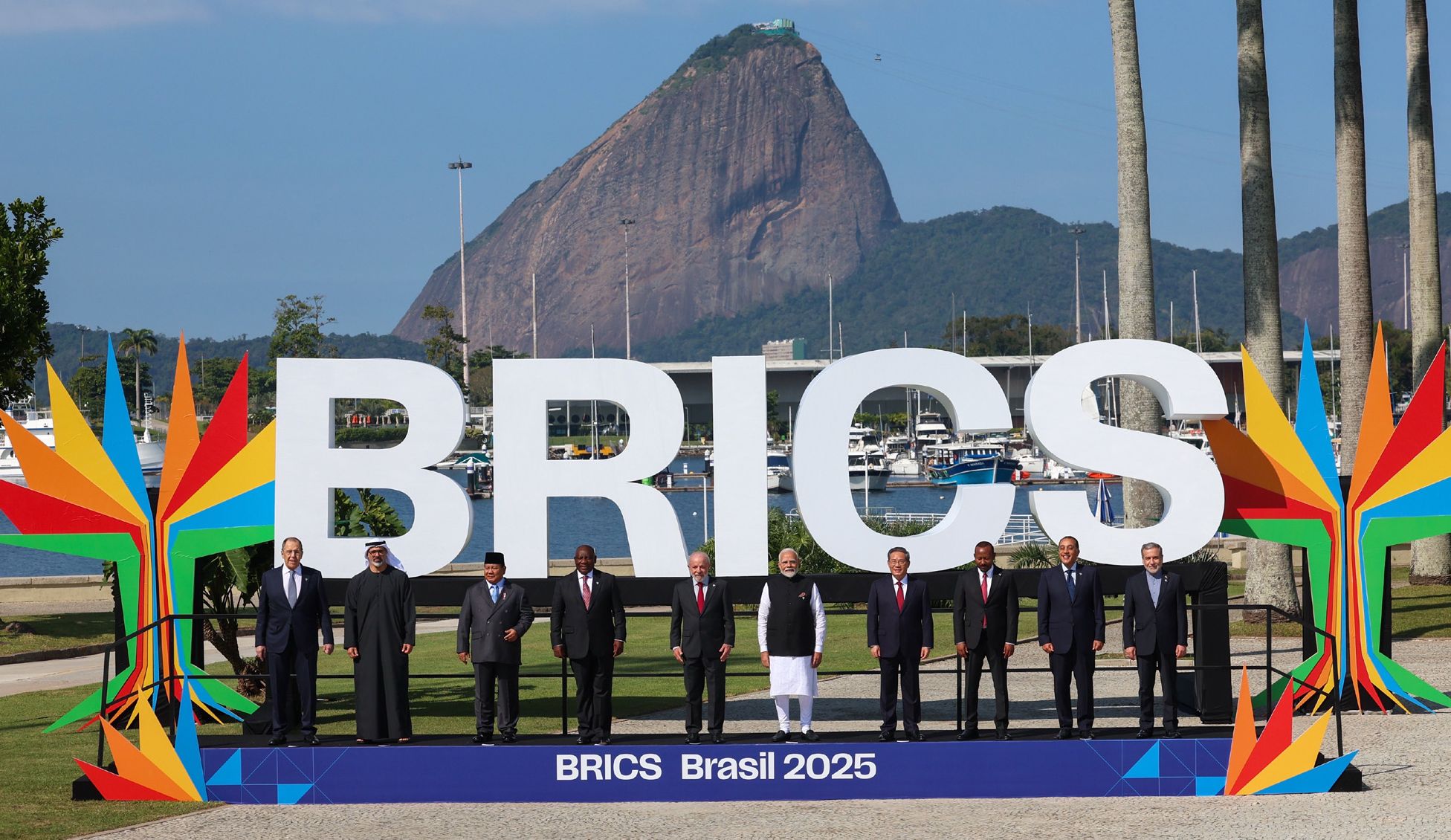
China ended days of suspense on Thursday (September 10), confirming Xi Jinping will fly into New Delhi this weekend to end a near seven-year freeze dating back to the deadly 2020 Galwan clash, just as India’s central bank pushes a fresh plan to link BRICS digital currencies onto the summit's agenda. The 18th BRICS Summit, running from September 11 to 13 arrives twenty years after the bloc’s founding, amidst an unfinished war in Ukraine, a fragile Gaza ceasefire, and an American president who has twice threatened it with tariffs simply for existing.
Xi’s long-delayed handshake
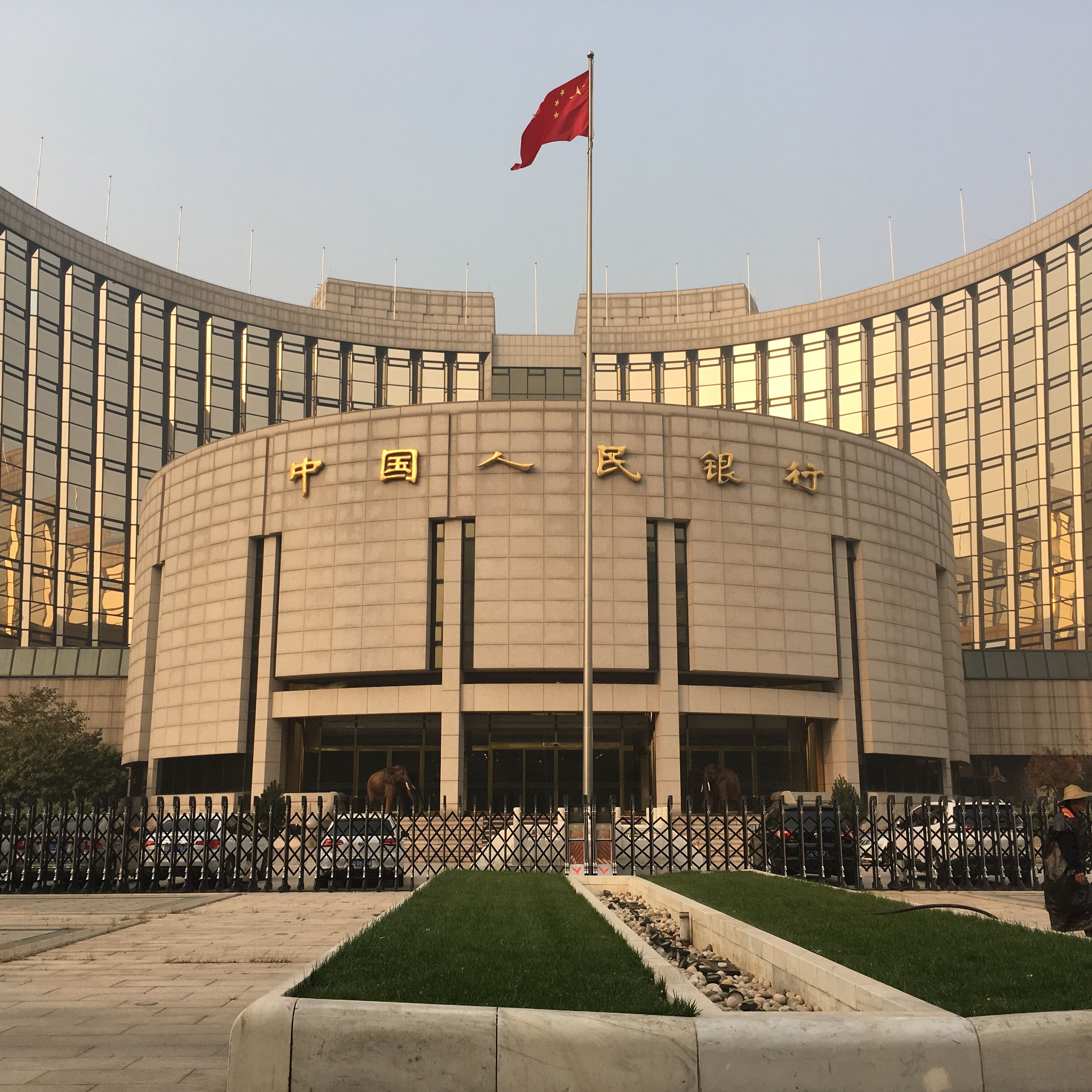
China’s foreign ministry confirmed on Thursday that Xi will attend the summit with a delegation of roughly 400 officials, his first visit since 2019 and a marked signal that Beijing and New Delhi are managing, if not resolving, their border rivalry. A bilateral meeting with Narendra Modi has been pencilled in, continuing a thaw built on months of contact between national security adviser Ajit Doval and Chinese counterparts over the disputed Line of Actual Control.
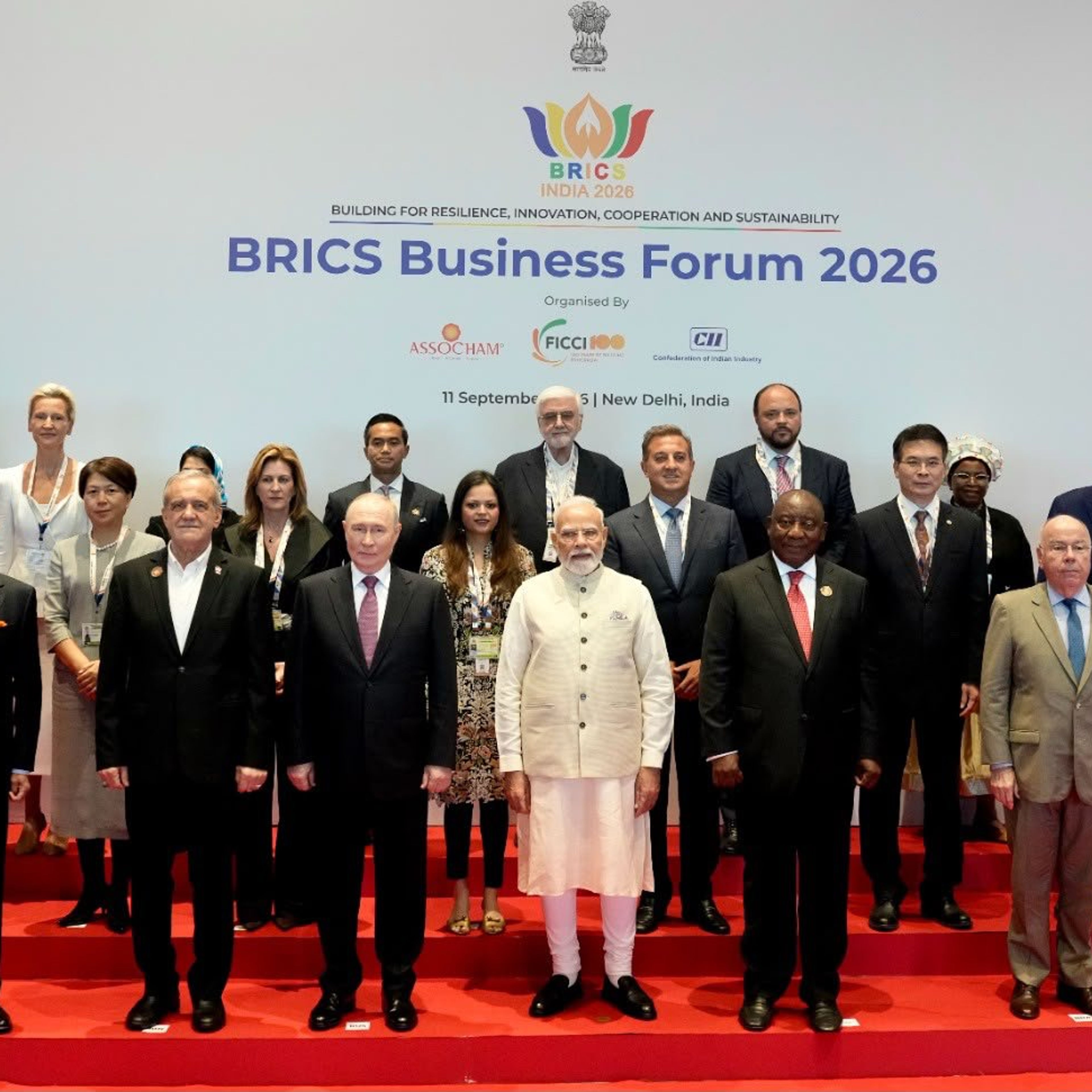
Strategically, it lets both capitals project “competitive coexistence” while using BRICS as diplomatic cover for a relationship that neither wants to warm too fast nor let freeze again. Yet, China’s ambiguity can be seen from what Wang Youming, a BRICS specialist at China’s Foreign Ministry-affiliated China Institute of International Studies, has suggested. He said that New Delhi may primarily be angling for a “big BRICS family photo” with Modi at its centre, arguing that improving ties will not blunt the two Asian giants’ contest for Global South influence.
Russia’s stage amid sanctions
Vladimir Putin, on the other hand, would want the Delhi as proof that Western efforts at isolation have limits - something what Kazan and Johannesburg offered before. The Kremlin has confirmed Putin will attend and hold bilateral talks with Modi, reportedly discussing a possible sale of Su-57 fighter jets. Putin’s press secretary Dmitry Peskov has noted that 90 per cent of Russia-BRICS transactions now use national currencies rather than the dollar – a sanctions-evasion workaround that predates any grand BRICS currency scheme. NWS earlier reported that India continues to buy discounted Russian crude even as Washington leans on New Delhi over the trade, one reason the summit is read as much through Western pressure on India as through Delhi’s ties with Moscow.
A bloc built for a fractured world
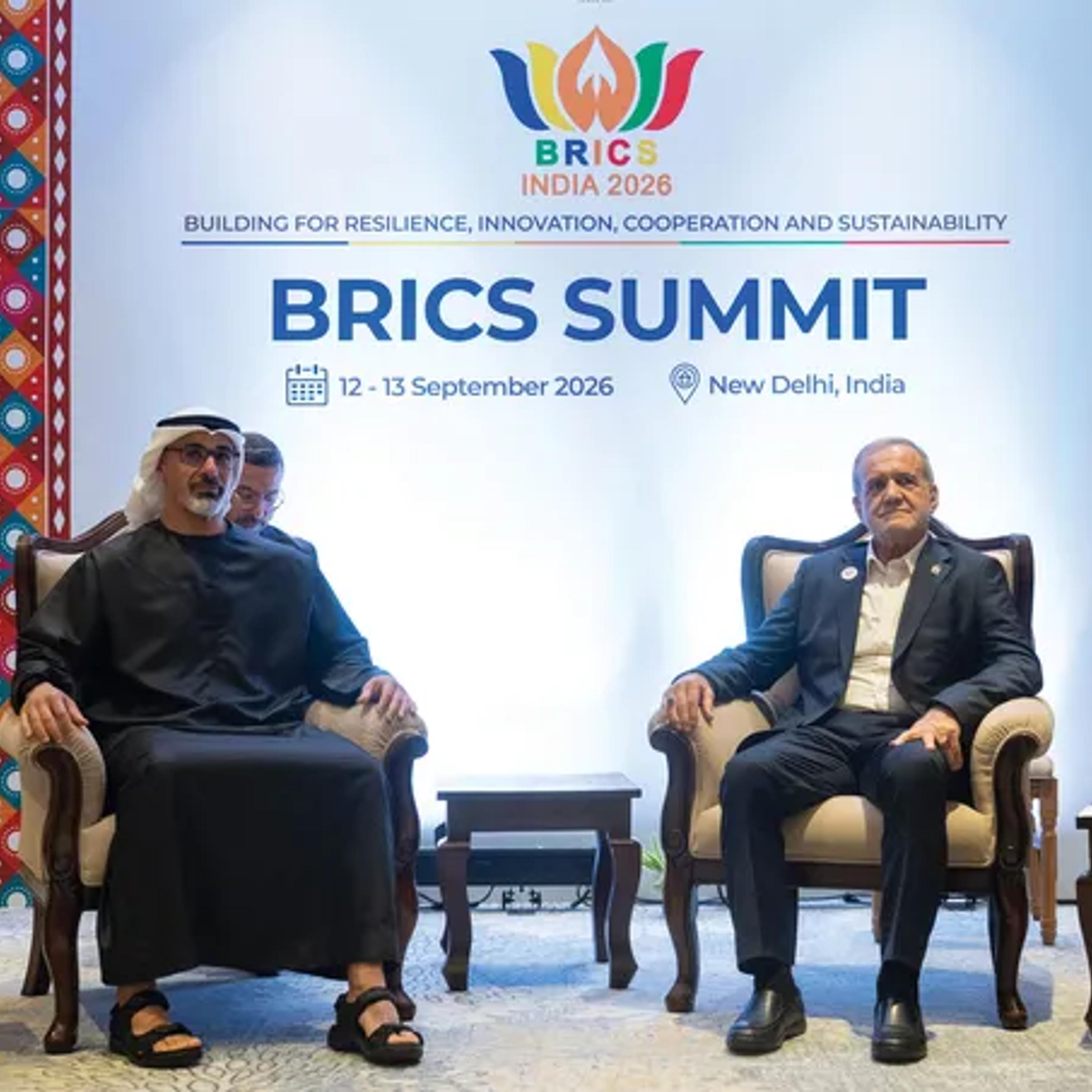
BRICS now spans eleven members – Brazil, Russia, India, China, South Africa, Egypt, Ethiopia, Indonesia, Iran, Saudi Arabia and the UAE – representing roughly 40 per cent of global GDP and nearly half the world’s population, alongside a growing tier of “partner countries” such as Vietnam, Nigeria and Malaysia that sit one rung below full membership. Its 2023 expansion to include Iran gives this summit edge: President Masoud Pezeshkian’s presence means that India must balance ties with Washington against hosting a country under heavy US sanctions. Against continuing war in Ukraine and West Asian tension, the summit’s theme will likely be as much like risk management as ambition.
Brazil and South Africa: the other tariff-hit founders
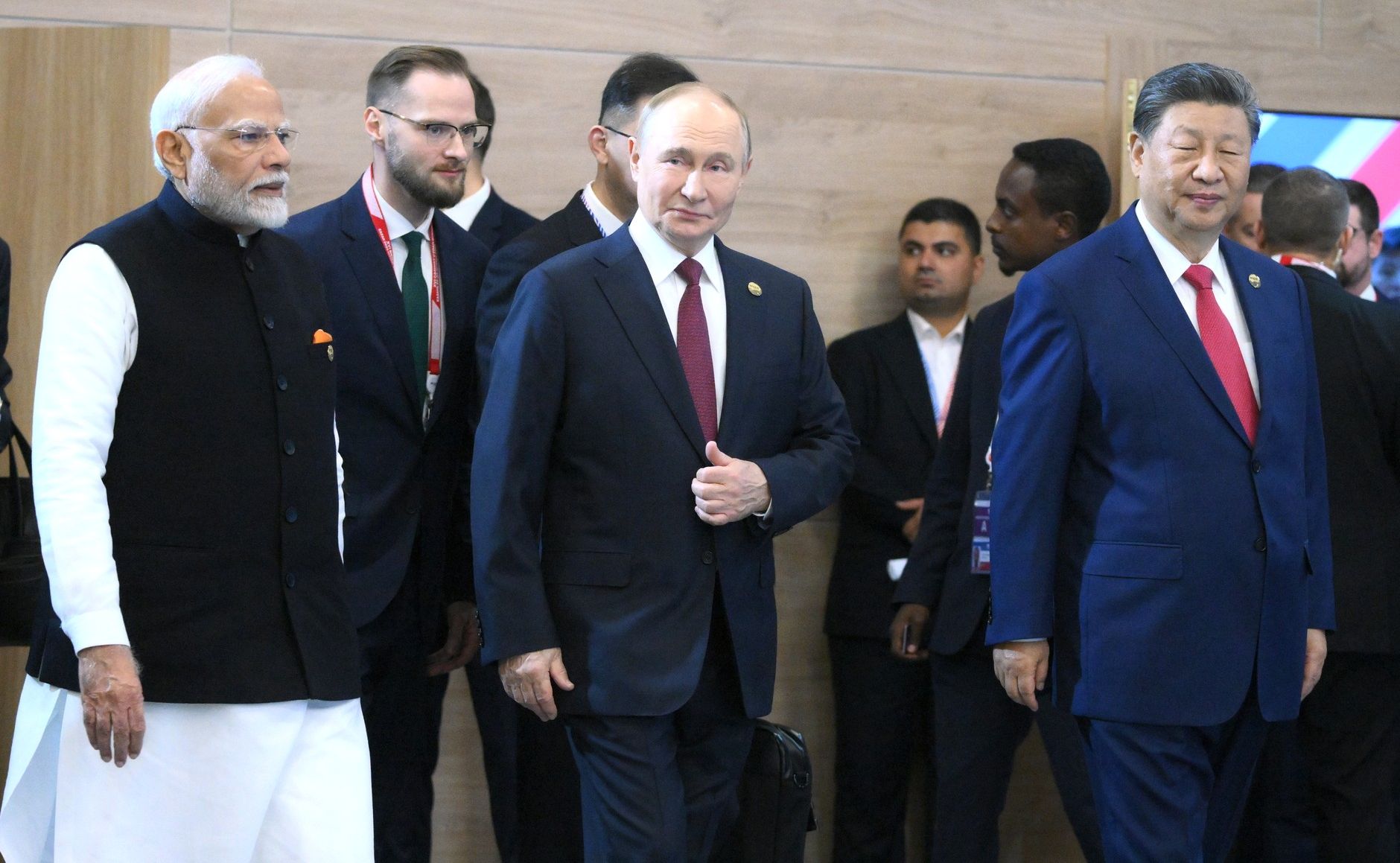
Xi and Putin dominate headlines, but Brazil and South Africa arrive with their own scars from Washington. Brasília has faced a 50 per cent US tariff since July 2025, with President Lula branding the move “blackmail” and lodging a WTO complaint, though an agreement with Trump has since eased some duties. Pretoria fared a little better in the sense that a 30 per cent “reciprocal” tariff imposed in August 2025 was later replaced, after a US Supreme Court ruling, with a lower blanket levy.
Neither country is retreating into BRICS alone – Modi and Lula have separately set a bilateral trade target of $30 billion by 2030, roughly double current volumes, along with a critical-minerals pact. President Ramaphosa heads to Delhi to use the platform for economic diplomacy, focusing on expanding intra-BRICS trade and investment, industrialisation and value addition, and channelling capital into African infrastructure aligned with the African Continental Free Trade Area.
Both leaders’ pitch is the same that with Washington’s tariff regime volatile and litigious, BRICS’s own institutions – primarily the New Development Bank, which has approved over $40 billion in loans and now counts ten members after Bangladesh, the UAE, Egypt, Algeria and Uzbekistan joined the original five – offer a hedge, even as intra-BRICS trade itself remains a fraction of members’ trade with the West and no bloc-wide free-trade agreement exists to bind it together.
What Delhi wants, and whether it can deliver
India’s chairmanship agenda, built across ministerial meetings in more than 25 cities this year, covers trade facilitation, digital infrastructure, critical minerals, health and climate finance – technocratic ground where consensus among disparate members is achievable. The harder test is the declaration itself, which must satisfy China’s expansive language, Russia’s anti-sanctions rhetoric, and India’s careful, non-aligned phrasing.
Given BRICS’s record of consensus-based but non-binding communiqués, incremental cooperation frameworks are far likelier than any dramatic institutional leap. JNU’s Professor Srikanth Kondapalli, a widely cited China-BRICS scholar, has said that India’s approach as “a decentralisation process compared to many centralised initiatives” – cooperation pushed to business and civil-society level rather than staked on one leaders’ communiqué.
“This is the fourth time that India is hosting the BRICS Summit meeting. Previously, the meetings have been very substantial. A previous India hosting of the BRICS led to the formation of NDB, New Development Bank of the BRICS,” he said.
“There is no organisation which is intercontinental other than the United Nations. BRICS has over these two decades established itself as an intercontinental organisation,” Kondapalli added.
De-dollarisation: agenda or myth?
Despite persistent headlines, BRICS has shelved the idea of a common currency; Brazil dropped the proposal during its own 2025 presidency, and India’s foreign ministry has repeatedly stated that “de-dollarisation is not on the agenda”, stressing on only local-currency payments.
What is, however, on Delhi’s agenda is BRICS Pay, linking Russia’s SPFS, China’s CIPS, India’s UPI and Brazil’s Pix, targeted for unveiling at this summit, which is clearly not meant to be a rival currency. India’s central bank is pushing it with zeal. Sources briefed Reuters that discussions on technology, governance and settlement-imbalance questions remain unresolved for a CBDC adoption – but if agreed, it would be the first time such a linkage is formally tabled within the bloc. All of these will happen against a backdrop in which Donald Trump has twice threatened 100 per cent tariffs on any country backing a BRICS currency, and a further 10 per cent on states aligning with “anti-American” BRICS policies – a standing complication every member must price into its diplomacy.
New Delhi has always insisted that BRICS is not anti-Western but non-Western – a platform for IMF and World Bank reform, developing-world voice, and diversified supply chains, not confrontation with Washington. It is this understanding with which India keeps hosting a bloc that includes Iran and Russia while simultaneously deepening ties with the US through the Quad – a balancing act unthinkable inside a formal alliance structure like NATO’s.
While speaking with PTI, ORF Distinguished Fellow Manoj Joshi has said India’s priority should be to forge a common agenda among the expanded BRICS membership while managing its strategic competition with China.
Joshi stressed that reducing reliance on dollar-based financial channels does not amount to creating a rival global currency. India, he said, is “definitely not trying to take an anti-Western stance”, but is instead pursuing practical cooperation in areas such as local-currency trade, digital public infrastructure and space.
With India’s Western partnerships, Sino-Indian rivalry and Iran’s pariah status all in the same room, BRICS looks better suited to slowly reshaping global governance. The New Delhi declaration, when it comes, is likely to read less like a manifesto and more like a lowest-common-denominator statement of intent – real on trade parameters and development finance, and deliberately vague on everything geopolitical.