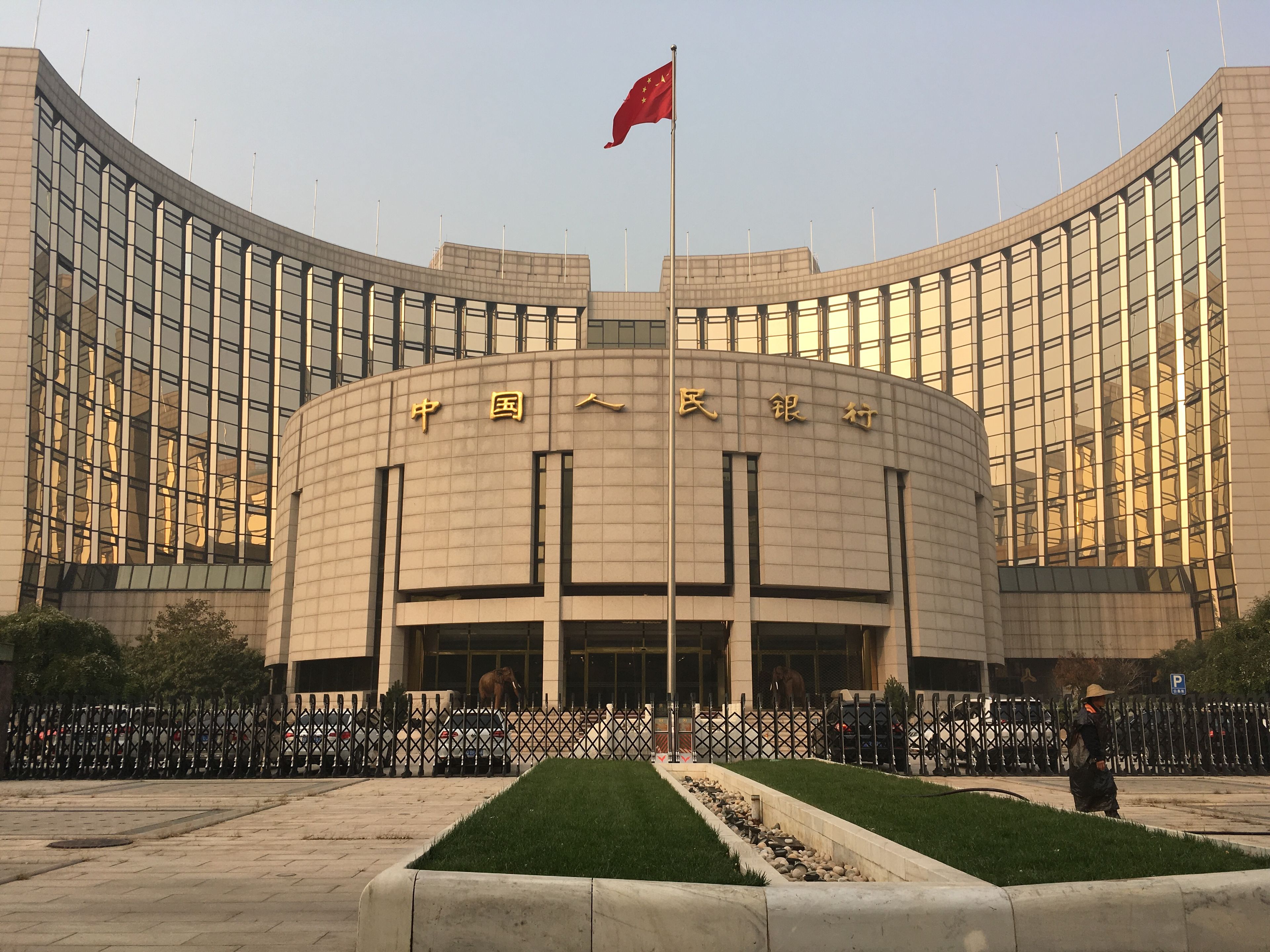
China’s central bank has declared that the yuan’s march towards becoming a truly global currency is now “irreversible”, laying out a blueprint to accelerate the process while keeping the country’s most valuable companies listed at home. At a press conference in Beijing this week, Lu Lei, deputy governor of the People’s Bank of China (PBOC), told reporters: “The internationalisation of the yuan is a continuous and steady process, and an irreversible trend.”
The declaration comes even as Xi Jinping is scheduled to travel to New Delhi for the BRICS summit, where India is pushing its own BRICS Pay proposal – linking Russia’s SPFS, China’s CIPS, India’s UPI and Brazil’s Pix. Officials insist that the system is not a rival currency, but a separate channel for settling trade outside the dollar system, distinct from Beijing’s own, unilateral push to internationalise the yuan.
To push yuan expansion, Lu said China would increase bilateral currency swap agreements and expand local-currency settlement arrangements. He also pointed to plans to improve the Cross-Border Interbank Payment System (CIPS), China's homegrown alternative to the Western-dominated Society for Worldwide Interbank Financial Telecommunication (SWIFT).
Beyond payments infrastructure, Lu said the central bank intends to widen cross-border use of the digital yuan and QR-code payments, while fine-tuning existing market-access channels – including Stock Connect, Bond Connect and Swap Connect – to further open China’s onshore financial markets to international investors. Hong Kong’s position as the leading offshore yuan hub will be reinforced, he said, while Beijing continues to support tailored development of yuan business in London, Singapore and Dubai. Shanghai's role as a global centre for yuan asset allocation and risk management will be strengthened further.
Lu cited figures to underline how far the currency has come – the yuan is now China’s top settlement currency for cross-border receipts and payments, the world’s second-largest trade finance currency, the third-largest payment currency, and holds the third-highest weighting in the IMF’s Special Drawing Rights basket. He added that overseas entities now hold more than 11 trillion yuan in onshore RMB financial assets, that central banks or monetary authorities in over 80 countries and regions have added the RMB to their foreign exchange reserves, and that panda bond issuance has topped 1.3 trillion yuan, with issuers spanning 26 countries and regions across five continents.
Proof in Trade Flows
That official narrative is backed up, at least partly, by what is already happening on the ground. Chinese external trade settled in yuan reached 30 per cent in 2025, up from 13 per cent in 2017. Russia and China now settle around 99 per cent of their bilateral trade – worth roughly $245 billion in 2024 – in rouble and yuan, a dramatic shift from near-zero yuan usage before 2022, driven largely by Moscow’s exclusion from SWIFT and the dollar system. China has also paid for a large share of Russian and Iranian oil imports directly in yuan, while India has separately arranged to pay Russia in yuan and UAE dirhams for some oil purchases.
The UAE has gone further still, conducting an early cross-border transaction in digital yuan via the China-led mBridge platform and completing an LNG trade with China priced in RMB through the Shanghai Petroleum and Natural Gas Exchange. China’s push for a “petro-yuan” has drawn interest, if not yet commitment, from Saudi Arabia and other Gulf oil exporters. Brazil has struck a similar local-currency settlement arrangement with Beijing.
SWIFT vs CIPS
Despite the yuan’s rising use, SWIFT’s monthly tracker puts its share of global payments at only around three per cent – well behind the dollar, euro, pound and even the Canadian dollar. Analysts say that the gap exists because SWIFT can only capture transactions passing through its own messaging network, and a growing share of yuan payments now bypass it entirely, flowing instead through CIPS and a widening web of bilateral local-currency deals built specifically to sit outside SWIFT’s reach.
CIPS itself has surged. The system overhauled its business rules for the first time in eight years this February to enable multi-currency clearing, and transaction volumes have since hit repeated records, including a single-day peak of 1.22 trillion yuan. Because that volume never registers in SWIFT’s tally, economists argue that the yuan’s standing within SWIFT’s statistics may no longer be the most meaningful measure of its real international reach – even though no outside institution has yet produced a verified alternative figure to replace it.
The Bigger Plan
The yuan push has come against the backdrop of China’s larger vision. These commitments align with Beijing’s new five-year plan, which frames turning China into a “financial powerhouse” as a national priority – currency internationalisation is only half of it.
At the same briefing, Li Chao, vice-chairman of the China Securities Regulatory Commission (CSRC), said regulators would work to make the A-share market the primary listing destination for the country’s leading companies, and would accelerate the development of world-class exchanges to strengthen the overall competitiveness of China’s domestic capital markets.
Many of China’s best-known technology companies have historically gone public in New York or Hong Kong first, drawn by listing rules seen as more flexible than the mainland’s. But tightening scrutiny of overseas listings, combined with persistent geopolitical tensions, has pushed Beijing to actively court home-grown tech leaders to stay on mainland exchanges instead.
No Devaluation Plan
Lu also pushed back on concerns that Beijing might deliberately weaken the yuan to cheapen Chinese exports, saying the country has neither the need nor the intention to do so. Chinese companies, he argued, have steadily built up their bargaining power and their ability to manage exchange-rate risk, making trade less vulnerable to currency swings. Exporters are increasingly turning to hedging tools, he added, and the growing share of trade settled in yuan has further reduced how sensitive trade flows are to exchange-rate fluctuations.
Taken together, the remarks describe a government moving on two fronts at once: expanding the financial plumbing that carries the yuan around the world, while keeping the companies that generate China's economic weight anchored to its own stock exchanges.