Nepal’s landmark electricity export deal with India is under threat, with six of seven major Indian-secured hydropower projects, with a combined capacity of 4,700 megawatts, yet to start construction.
Nepal’s plan to export 10,000 megawatts of electricity to India over a decade faces serious questions after hydropower projects awarded to Indian developers stalled at the planning stage, the Kathmandu Post has reported. The delays threaten the revenue Kathmandu is counting on to narrow its widening trade deficit with India.
Nepal signed the export agreement with India in January 2024. For India, long one of the world's most coal-dependent economies, importing Nepali hydropower is part of a broader drive to decarbonise its grid. For Nepal, exports were expected to generate substantial revenue and ease a persistent trade deficit. Industry observers described the arrangement as mutually beneficial, but the gains are far from guaranteed.
Of seven major hydropower projects secured by Indian government-owned and private companies in Nepal, only one is under construction. The delays raise questions about Nepal’s ability to capitalise on its export potential within the agreed timeframe and are likely to push back expected revenue.
Arun-III: the sole project under way
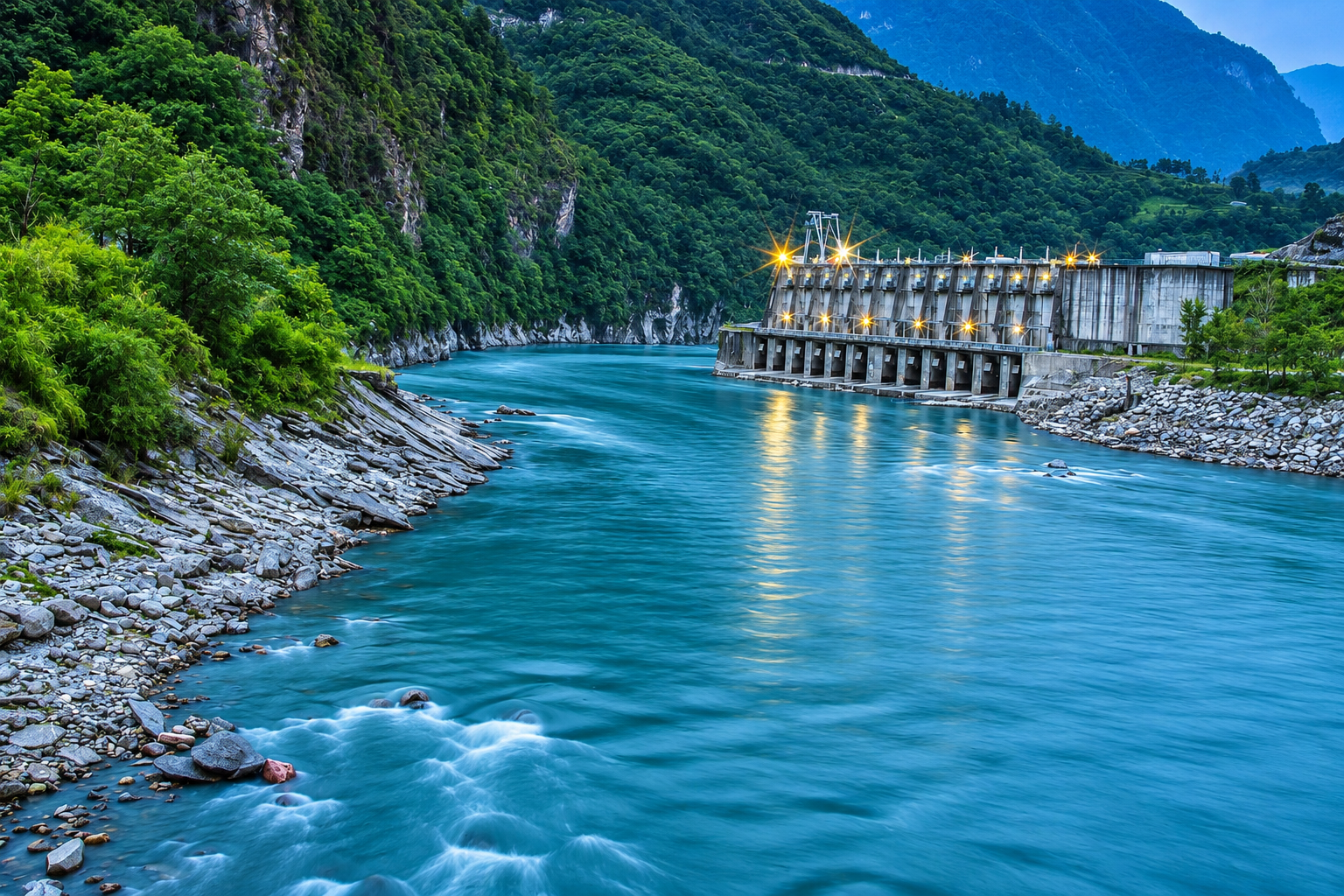
The 900-megawatt Arun-III project is being developed by SJVN Arun-3 Power Development Company, a subsidiary of India's state-owned SJVN Limited. Construction began in 2018, with a five-year completion target. Commercial production was initially scheduled to begin by mid-April 2025. The deadline has since been pushed back repeatedly, partly owing to the Covid-19 pandemic, and now stands at mid-March 2028.
So far, 77.5 per cent of the power generation component and 60 per cent of the transmission line component are complete. The total estimated cost is Rs 144 billion ($954 million).
A 253-kilometre 400kV cross-border transmission line connecting the powerhouse to Sitamarhi in India is also under construction. The developer has signed an agreement with India's state-owned Damodar Valley Corporation to sell 200 megawatts from the project. Nepal will receive 21.9 per cent of the electricity generated free of cost, plus a capacity royalty of Rs 400 per kilowatt ($2.65) and an energy royalty of 7.5 per cent for the first 15 years of generation, rising thereafter to Rs 1,800 per kilowatt ($11.93) and 12 per cent. Nepal is expected to receive Rs 348 billion ($2.31 billion) over 25 years from the project, plus an estimated Rs 155 billion (1.03 billion) in free electricity plus an estimated Rs 155 billion (1.03 billion) in free electricity and Rs 107 billion ($709 million) in royalties.
Former energy minister Pampha Bhusal said Nepal had long been dissatisfied with India’s failure to advance construction on the projects it had secured. “Arun-III was already under construction before I became minister,” she said. “During my tenure, we emphasised policy decisions, including those related to land, to ensure that it was completed by 2026. Now, I hear that completion has been pushed back to 2028. The incumbent authorities should be asked what policy or technical issues have stalled projects such as Lower Arun and Upper Karnali.”
Upper Karnali and Lower Arun: movement at last, but slowly
The 900-megawatt Upper Karnali project is being developed by India’s GMR, which was selected through international competitive bidding. A memorandum of understanding was first signed in 2008, followed by a project development agreement in September 2014, but the project spent years stalled over financial closure. At its 68th meeting last month, the Investment Board cleared the developer's financial documents, including an in-principle loan of INR 65 billion ($689 million) from the Indian Renewable Energy Development Agency (IREDA) and Rs 20 billion ($133 million) from a consortium of Nepali banks, allowing construction to move forward.
GMR’s shareholding has been revised: GMR and SJVN will each hold 34 per cent, IREDA five per cent and the Nepal Electricity Authority 27 per cent. Under the project development agreement, Nepal will receive 12 per cent of the electricity free of cost.
The 679-megawatt Lower Arun project, also awarded to SJVN through competitive bidding in January 2021, had its project development agreement signed in June 2023. It is being developed as a tailrace project of Arun-III, using water discharged from the latter’s powerhouse.
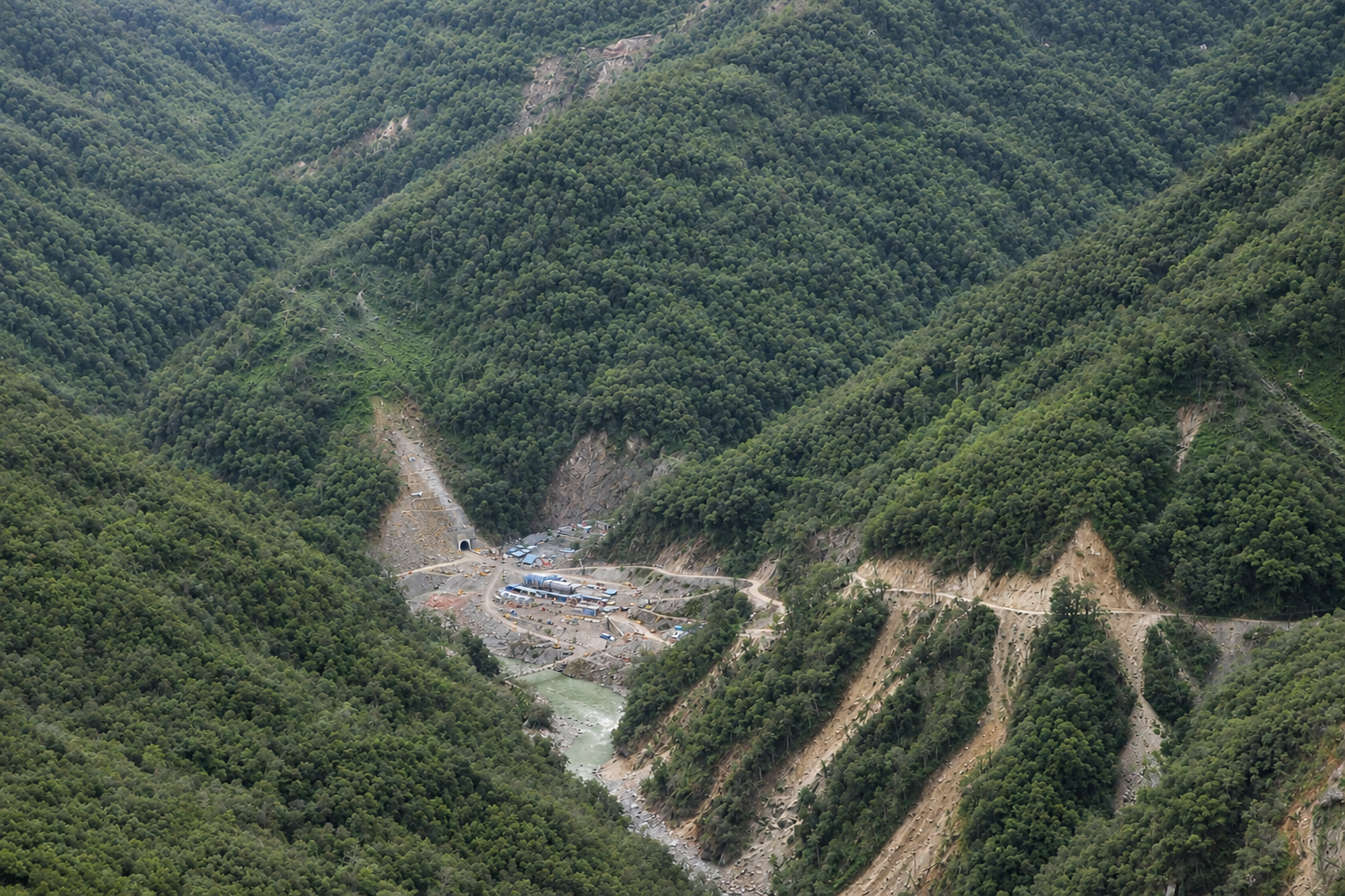
Construction contracts have been awarded for two packages. Package 1, covering the main tunnel, spillway tunnel, audit facilities and access roads, went to Dineshchandra R Agrawal Infracon for Rs 11.49 billion ($76 million). Package 2 was secured by Patel Engineering for INR 15.93 billion ($169 million), though the project development company has not officially disclosed contractor details. Nepal will receive 21 per cent of the electricity free of cost, with the same royalty structure as Arun-III.
Investment Board spokesperson Bhupendra Thapa said financial management and bidding procedures were being advanced simultaneously. “The company has already acquired the land required for Lower Arun using its own funds,” he said.
West Seti, Seti River-6 and Phukot Karnali: viability disputes drag on
The 800-megawatt West Seti and 450-megawatt Seti River-6 projects, awarded to India’s state-owned National Hydroelectric Power Corporation (NHPC) in August 2022 after China withdrew, remain stuck in negotiations over project development agreements. NHPC has submitted detailed project reports, which the Investment Board is studying. A negotiation committee formed in September 2025 to prepare a draft agreement, but the board has made no further decisions. The projects are estimated to cost Rs 172.51 billion ($1.14 billion) and Rs 98.22 billion ($651 million) respectively. Under the August 2022 memoranda of understanding, which have since expired, Nepal was to receive 21.9 per cent of electricity from each project free of cost.
Pradip Rana, an adviser to NHPC, said that the company had warned the government that mandatory free-electricity provisions across West Seti, Seti River-6 and the 480-megawatt Phukot Karnali project would make all three financially unviable, and had requested viability gap funding. “No further decisions have been taken on the matter,” he said. The memoranda of understanding for all three have expired.
Phukot Karnali, estimated to cost Rs 100 billion ($663 million), was awarded to NHPC under a memorandum of understanding signed with the Electricity Generation Company in May 2023. Further uncertainty arose when the Supreme Court directed the government last September to increase Nepal’s share of free electricity, following a writ petition by two Kalikot district residents. NHPC has said a larger share could make construction difficult.
The 490-megawatt Arun-IV, a semi-reservoir project to be developed by a joint venture between the Nepal Electricity Authority and SJVN (49 and 51 per cent stakes respectively), is also stalled. The memorandum of understanding signed in May 2022 has expired and an extension has been initiated. A project development agreement has yet to be signed.
Blame on all sides
Former energy secretary Anup Upadhyay cautioned against blaming developers alone. “Government agencies responsible for facilitating the projects have also failed to complete necessary decisions and procedures on time,” he said. On free electricity, he was equally direct: “On the one hand, Chinese companies walked away from the projects saying they were not financially viable. On the other hand, we are demanding free electricity from the same projects. We need to think about that as well.”
Former energy secretary Chiranjibi Chataut agreed. “There is no single reason why large hydropower projects awarded to Indian companies have not moved forward,” he said. “The factors include the consequences of our failure to make decisions on time, investment challenges and uncertainty over the market for electricity.”
India’s import rules add another barrier
Rules issued by India's Central Electricity Authority in January 2022 effectively bar Nepal from exporting electricity from projects involving Chinese investment, unless India has a bilateral power-sector cooperation agreement with the country concerned. No such agreement exists with China.
The rule has prevented exports from the 456-megawatt Upper Tamakoshi Hydropower Project, Nepal's largest operational plant, even though Indian companies won contracts for its hydromechanical, electromechanical and transmission line works. A Chinese firm undertook the civil construction, and India has withheld export approval. Nepal has repeatedly raised the issue at bilateral energy meetings without resolution.
Transmission infrastructure pushes ahead
Cross-border transmission work has nevertheless continued. Electricity is currently traded through the 1,000-megawatt 400kV Dhalkebar-Muzaffarpur line and other 132kV lines. The two countries have agreed to raise combined export capacity to around 1,850 megawatts through the under-construction Dhalkebar-Sitamarhi and Butwal-Gorakhpur lines. The Nepal section of the Butwal-Gorakhpur line is targeted for completion by August 2027, with its substation expected by December 2027.
Efforts are also under way to advance the Inaruwa-New Purnea and Dododhara-Bareilly lines. SJVN has said it aims to develop 5,000 megawatts of projects in Nepal by 2030. With construction stalled on most of its secured projects, that target looks increasingly difficult to meet.